
TL;DR

Get garden gear delivered free with Prime
- Fast, free delivery on millions of items
- Prime Video, Amazon Music and more included
- Member-only deals all year
Gardening Know How recommends serviceberry as a native alternative for homeowners considering an ornamental tree instead of Bradford pear. The report highlights serviceberry’s spring blossoms, berries, autumn foliage and value to wildlife, while noting it may not match Bradford pear’s growth rate or uniform shape.
Gardening Know How recommends serviceberry as a native ornamental alternative for homeowners choosing a tree instead of Bradford pear, citing its spring blossoms, edible berries and fall foliage. The report also says serviceberry can provide food for pollinators and birds, while cautioning that its growth and shape may differ from the familiar Bradford pear.
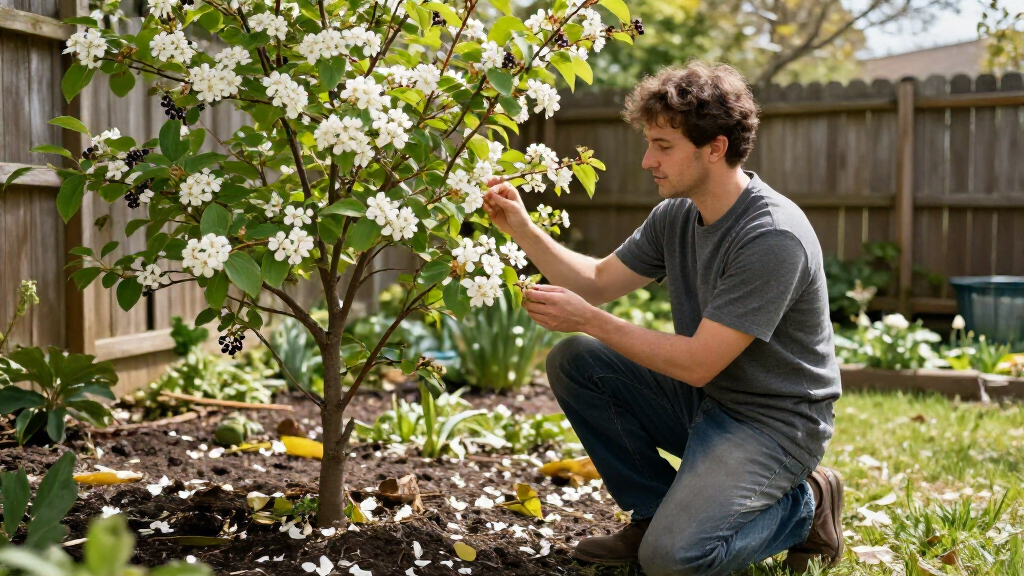
Serviceberry is the common name for trees and shrubs in the Amelanchier genus; the report also gives juneberry and shadbush as names for the plant. Depending on its species and variety, it can grow as a large shrub or small tree, which may suit gardens where a full-sized shade tree would be too large.
The report describes serviceberry as producing spring flowers followed by berries, which people can eat and use in foods such as pies and jams. It says birds also eat the fruit. The tree’s foliage can turn yellow, orange or red in fall, adding seasonal color beyond the flowering period.
For growing conditions, Gardening Know How says most serviceberry species grow in full sun or partial shade and recommends well-draining soil. It cautions that the plant does not do well in waterlogged ground. The report does not identify a single species or cultivar for all gardens, so local growing conditions and the mature size of a chosen variety remain relevant.
A Tree With More Than Spring Flowers
The recommendation speaks to homeowners who want an ornamental tree that offers benefits across more of the year than a brief flowering display. Serviceberry combines flowers, fruit and autumn color, and the report describes its blooms and berries as resources for pollinators and birds. Those qualities may make it appealing to gardeners looking to support local wildlife as well as add seasonal interest.
It is not presented as a like-for-like replacement in every respect. Gardening Know How says serviceberry may not grow as quickly or have the uniform, upright form associated with Bradford pear. The choice is therefore a trade-off: a homeowner may gain fruit and wildlife value while accepting a different size, shape or growth pace.
Popular right now

Roborock Q7 M5+ Robot Vacuum and Mop with Self-Emptying Dock

Sony WH-1000XM4 Wireless Noise Cancelling Headphones, Black

Samsung 65-Inch The Frame Pro Neo QLED 4K TV (2026) Bundle with Modern Brown Bezel, HDMI Cables, and Home Theater Guide
As an affiliate, we earn on qualifying purchases.
Why Gardeners Are Reconsidering Bradford Pear
The Gardening Know How report identifies several drawbacks of Bradford pear: its flowers can have an unpleasant smell, its branches are prone to splitting, and the trees can contribute to the spread of invasive Callery pears. These are the report’s stated reasons for suggesting another ornamental tree; it does not provide data quantifying the scale of those problems.
Serviceberry is offered as an alternative rather than as a claim that every Bradford pear should be removed. The report focuses on people considering a new garden tree and describes serviceberry’s flexibility in size and light conditions. Its advice is general: exact growth and performance depend on the species or variety and the site where it is planted.
““Serviceberry pretty much does it all.””
— Gardening Know How
Choosing the Right Serviceberry
The report does not specify which serviceberry species or cultivar is best for particular regions, nor does it provide mature-height ranges, planting distances or a detailed care plan. It also does not identify the geographic scope of its claims about Bradford pear or Callery pear spread. Readers should not assume every serviceberry will have identical growth, fruiting or fall color; the article notes that traits vary by species and variety.
No comparative trial or quantified wildlife data is included. The report’s recommendations are gardening guidance, not evidence that serviceberry will outperform Bradford pear in every yard or meet every homeowner’s needs.
Check Local Conditions Before Planting
Homeowners considering the swap can use the report’s guidance as a starting point: check the mature size and variety of the serviceberry being offered, confirm it suits local conditions, and choose a site with well-draining soil and full sun or partial shade. The supplied report does not announce a planting program, new research or a scheduled follow-up; no further development is stated.
Key Questions
What tree does Gardening Know How recommend instead of Bradford pear?
It recommends serviceberry, a common name for plants in the Amelanchier genus, as a native ornamental alternative.
What are serviceberry’s main ornamental features?
The report describes spring blossoms, berries and fall foliage, which may turn yellow, orange or red. It says the berries are edible and are also eaten by birds.
Where does serviceberry grow best?
According to Gardening Know How, most species grow in full sun or partial shade. The report recommends well-draining soil and says serviceberry does not appreciate waterlogged ground.
Will serviceberry look and grow like Bradford pear?
Not necessarily. The report says serviceberry may grow more slowly and may not have Bradford pear’s uniform, upright shape. Size also varies by species and variety.
Source: gardeningknowhow.com