
TL;DR

Get garden gear delivered free with Prime
- Fast, free delivery on millions of items
- Prime Video, Amazon Music and more included
- Member-only deals all year
Vinegar is not a one-size-fits-all deck cleaner. Trex approves white vinegar for hard-water deposits on some current composite boards, but says acid can lighten board color; other manufacturers may not approve it. For routine dirt, warm soapy water and a brush suited to the deck material are safer starting points.
White vinegar is not a universally safe deck cleaner, according to a Gardening Know How report that compares manufacturer care guidance for composite and wood decks. Trex approves it for hard-water deposits on some current composite lines, but warns acid can lighten board color; owners of other decks should follow their product’s care instructions rather than assume vinegar is harmless.
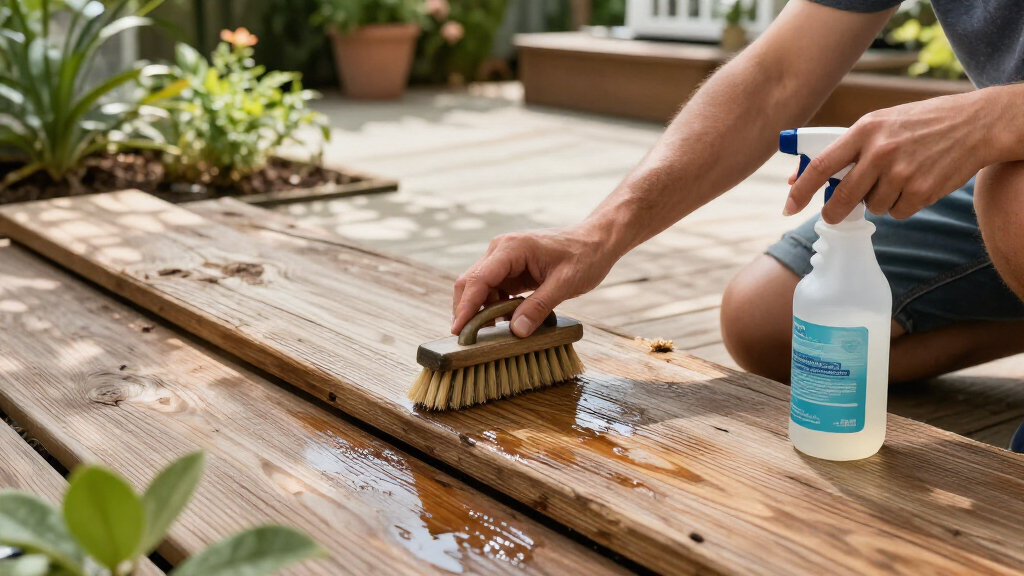
For everyday grime, the report says Trex recommends warm, soapy water and a soft-bristle brush, worked into the board’s embossed grain and rinsed thoroughly. Vinegar has a narrower approved use: Trex lists white vinegar for removing chalky hard-water deposits on some current lines. The company also warns that cleaners containing acid or bleach can lighten its boards, so the report advises testing a small, inconspicuous area first.
TimberTech’s care guide does not list vinegar, according to the report. It instead points owners to its diluted deck cleaner or, for railings, a pH-neutral detergent, and cautions against several other cleaner types on its current capped boards. When a manufacturer has not approved a product, the report says, its effect on that particular surface is uncertain.
Wood decks also require attention to their finish. The report distinguishes bare wood, where oxalic acid brighteners may be used as part of preparation, from boards already covered with paint or stain. For a finished deck, the finish manufacturer’s directions should guide cleaning; repeated use of straight vinegar may fall outside those instructions.
Cleaner Choice Affects Boards and Plants
The practical risk is not limited to the deck surface. Household vinegar contains about 5% acetic acid, which can damage leaf tissue wherever it lands. Rinse water running onto nearby hostas, vegetables or seedlings may brown or burn them, according to the report. A product’s natural label does not remove that risk.
Runoff also matters when a deck slopes toward a pond or storm drain. The report cautions that biodegradable products may still affect fish and other pond life before they break down. Checking where wash water will flow—and selecting a cleaner compatible with the boards—can help prevent avoidable damage to landscaping and nearby water.
Using the wrong cleaner can also create uncertainty about discoloration or finish damage. Manufacturer guidance varies by product, so a cleaning method that is permitted for one composite line may not be suitable for another deck or finish.
Popular right now

Ninja CREAMi Scoop & Swirl 13-in-1 Ice Cream and Soft Serve Maker, NC701

De'Longhi Rivelia Automatic Espresso Machine with Milk Frother

TCL T7 Series 85-Inch 4K 144Hz QLED Smart Google TV
As an affiliate, we earn on qualifying purchases.
Care Guides Differ by Deck Material
The report’s central distinction is between composite boards, bare wood and finished wood. Trex and TimberTech give different guidance for composite surfaces, while wood-cleaning advice depends in part on whether boards are unfinished, stained or painted. A deck’s brand and finish can matter as much as its visible dirt.
For routine upkeep, the report recommends removing dry leaves before washing, then using warm water, dish soap and an appropriate brush. It says Trex calls for soft bristles, while TimberTech recommends medium-to-stiff nylon bristles for its composite decking. Work in sections and rinse before suds dry.
For wood with mildew or gray weathering, the report describes oxygen-based wood cleaner as an alternative to vinegar. It also warns that bleach can harm some finishes and wood fibers and can damage plants it reaches. Pressure washing carries its own limits: the cited instructions differ by brand and product line, and a concentrated stream held too close can damage wood.
“White vinegar is on the approved list for hard-water deposits on some current Trex lines.”
— Trex, as described in the Gardening Know How report
Vinegar’s Effect Depends on the Finish
The supplied report does not give a publication date, identify every deck product covered by the cited guidance, or establish that vinegar is safe for all Trex boards. Trex’s approval is limited to hard-water deposits on some current lines, and its color-lightening warning remains relevant.
TimberTech’s guide, as summarized in the report, does not approve vinegar; the report also does not establish how every unlisted cleaner would affect every TimberTech surface. For painted or stained wood, the result depends on the specific finish and its maker’s instructions. Homeowners should check the care guide for their exact product before applying a cleaner.
Check the Label Before Washing
Before cleaning, identify the deck material and finish, then consult the manufacturer’s current care instructions. For ordinary dirt, begin with warm soapy water and a suitable brush; if using vinegar for an approved hard-water stain, test a small spot and rinse well. Keep wash water away from sensitive plants, ponds and drains where possible.
For recurring upkeep, the report says Trex recommends cleaning in spring and fall to remove pollen and leaf litter that can support mold growth. Clear leaves trapped between boards and watch shaded areas, where green buildup may appear sooner. Any pressure washer or stronger cleaner should be used only within the specific limits stated by the deck manufacturer.
Key Questions
Can I use vinegar on a Trex deck?
Trex approves white vinegar for hard-water deposits on some current lines, according to the report. It is not presented as a general cleaner; Trex warns that acid can lighten board color, so check the care guide and test an inconspicuous spot.
Can I use vinegar on TimberTech decking?
The report says TimberTech’s care guide does not mention vinegar. It directs owners to its diluted deck cleaner or a pH-neutral detergent for railings, so check the instructions for your specific product before using vinegar.
What should I use for ordinary deck dirt?
The report recommends warm water, a little dish soap and a brush suited to the deck. Trex calls for soft bristles; TimberTech recommends medium-to-stiff nylon bristles for its composite boards.
Can vinegar runoff hurt plants?
Yes. The report says household vinegar’s acetic acid can damage leaves on contact. Rinse water may harm nearby broadleaf plants and seedlings, so take care where it flows.
Is pressure washing safe for a deck?
It depends on the material and manufacturer’s limits. The report warns that a close, narrow stream can damage wood and says composite brands set different pressure and spray-distance rules. Follow the instructions for your exact deck.
Source: gardeningknowhow.com