TL;DR

Get garden gear delivered free — and shop member deals
- Fast, free delivery on millions of items
- Access to Prime Big Deal Days deals on October 6–7
- Prime Video, Amazon Music and more included
Homes & Gardens has published five designer-led ideas for styling a fall porch, focusing on seasonal container plantings, color, texture and foliage. The supplied report details advice from three designers, but does not include the final two ideas, so their recommendations cannot be confirmed here.
Homes & Gardens has published five designer-approved ideas for styling a fall porch, with the supplied report describing recommendations to use focused container displays, choose flowers that can be cut for indoor arrangements, and combine plants with varied textures. The advice offers homeowners a seasonal approach to decorating entrances, although the available source material gives details for only the first three ideas.
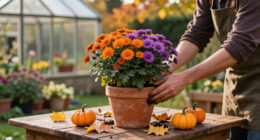
Laura Janney, CEO of The Inspired Garden Masterclass, recommends keeping porch decor restrained and letting a pair of substantial planters create the main display. She cautions that filling steps with accessories can make an entrance feel crowded. For planting, she suggests a central “thriller” such as celosia, rudbeckia or ornamental grass, surrounded by mums and asters, with ornamental cabbage and pansies filling lower or empty spaces. Dried lotus pods and natural-looking terracotta or wicker containers can add seasonal detail.
Erin Williams, a flower and garden educator with Gathered from the Garden, favors plum and peach tones and says she chooses porch plants partly for their potential as cut flowers. Her suggested container begins with a dahlia as its focal bloom, with asters for an airy effect and trailing nasturtiums around the edge. Williams identifies ‘Crème de Cassis’ and ‘Rhubarb & Custard’ dahlias as options, and recommends ‘Gleam Salmon’ nasturtium for its flowers and foliage.
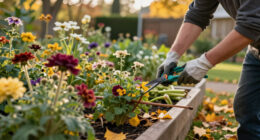
Zara Wirkus of Hoerr Schaudt is introduced in the source as an advocate for texture, particularly as summer plantings start to look overgrown or tired. The excerpt ends partway through this section, however, and does not provide her full recommendation or the report’s remaining two ideas. The article title also points to rich textures and vibrant foliage as themes, but the supplied text does not give the complete list.
Seasonal Displays With Less Clutter
The recommendations give readers practical choices for refreshing an entrance without treating fall decorating as a checklist of accessories. Two carefully composed containers can provide a focal point, while plant choices can bring color and shape through the season. For people who grow or buy cut flowers, Williams’s approach also connects outdoor decorating with indoor arrangements.
The suggestions are design guidance, not a guarantee that particular plants will thrive in every porch or climate. Container size, sunlight, local weather and the plants’ condition all affect results. The report’s emphasis on adaptable combinations lets homeowners make selections suited to their own entrance rather than copying a fixed display.
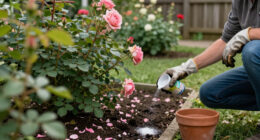
fall porch planters with seasonal flowers
As an affiliate, we earn on qualifying purchases.
As an affiliate, we earn on qualifying purchases.
Three Designers in the Source
The report frames fall porch styling as a chance to combine seasonal flowers, ornamental vegetables, planters and foliage. It presents advice from designers and gardening educators rather than reporting a product launch, industry study or change in official guidance. Its focus is on practical aesthetic ideas for a home entrance.
The source identifies Janney as a landscape architect and designer who won a 2023 Houzz Best in Design award for work in the New York area. Williams is described as a New Jersey-based flower and garden educator. Wirkus is identified as a designer at Hoerr Schaudt, a landscape architecture firm. The excerpt provides no publication date, and its partial ending limits what can be reported about the full set of five suggestions.
“Less is more.”
— Laura Janney, CEO of The Inspired Garden Masterclass
Two Styling Ideas Are Missing
The source excerpt does not contain all five ideas. It ends during the section on combining textures, leaving Wirkus’s complete advice and the fourth and fifth recommendations unavailable. The report’s title mentions rich textures and vibrant foliage, but the excerpt does not explain all the ways those themes are developed.
The supplied material also gives no publication date, regional planting guidance or care details for the suggested flowers. Readers should not treat the listed plants as suitable for every exposure or climate; the report does not specify growing conditions, frost tolerance or container-care instructions.
Check Local Conditions Before Planting
Homeowners using the ideas can choose containers and plants based on the light, available space and seasonal conditions at their entrance. Janney’s suggested structure—one taller focal plant, supporting blooms and lower planting—offers a way to compose a container, while Williams’s examples provide color and cut-flower options. The source does not set out a planting schedule or predict how long displays will last.
For the complete five-part feature and Wirkus’s full texture advice, readers would need to consult the original Homes & Gardens report. The provided source offers no further update or announced next step.
Key Questions
What are the main fall porch ideas described in the report?
The supplied excerpt covers a restrained display with flower-filled containers, planting that can also provide cut flowers for indoor arrangements, and an introduction to using texture. The final two ideas are not included in the excerpt.
Which flowers does Laura Janney suggest?
Janney lists mums, asters, rudbeckia, celosia, marigolds, ornamental grasses, ornamental cabbage and pansies. Her suggested layout places a taller focal plant in the center, with supporting flowers and lower plants around it.
What plants does Erin Williams recommend for cut-flower containers?
Williams suggests a dahlia as the focal flower, asters for an airy element and trailing nasturtiums around the container. She names ‘Crème de Cassis’ and ‘Rhubarb & Custard’ dahlias and ‘Gleam Salmon’ nasturtium as examples.
Does the source provide all five styling ideas?
No. The supplied text stops during Zara Wirkus’s section on texture. It does not include her full advice or the fourth and fifth ideas.
Source: rss
Evergreen bestsellers Picks
bestsellers
As an affiliate, we earn on qualifying purchases.