
TL;DR

Get garden gear delivered free with Prime
- Fast, free delivery on millions of items
- Prime Video, Amazon Music and more included
- Member-only deals all year
Planet Natural recommends sorting used outdoor ornamental potting mix by what grew in each pot and how the mix performed before storing it. University of Illinois Extension says soilless media may sometimes be reused if plants were healthy, but disease, persistent pests, contamination concerns or poor drainage call for a more cautious decision.
Gardeners should sort used potting mix by plant history and condition before storing empty pots, according to an end-of-season report from Planet Natural. The advice is aimed at ordinary outdoor ornamental containers: mix from healthy plants may be worth evaluating for reuse, while material linked to disease, persistent pests, contamination concerns or unexplained decline should stay separate until its next use or disposal is considered.
The report advises recording what grew in each pot and any problems observed before emptying containers into a shared storage bin. A simple label noting the plant, visible pest or disease issues, poor growth or possible contamination can preserve useful history. If the cause of a plant’s decline is unknown, the report says to keep that batch separate rather than blending it with material from healthy plants.
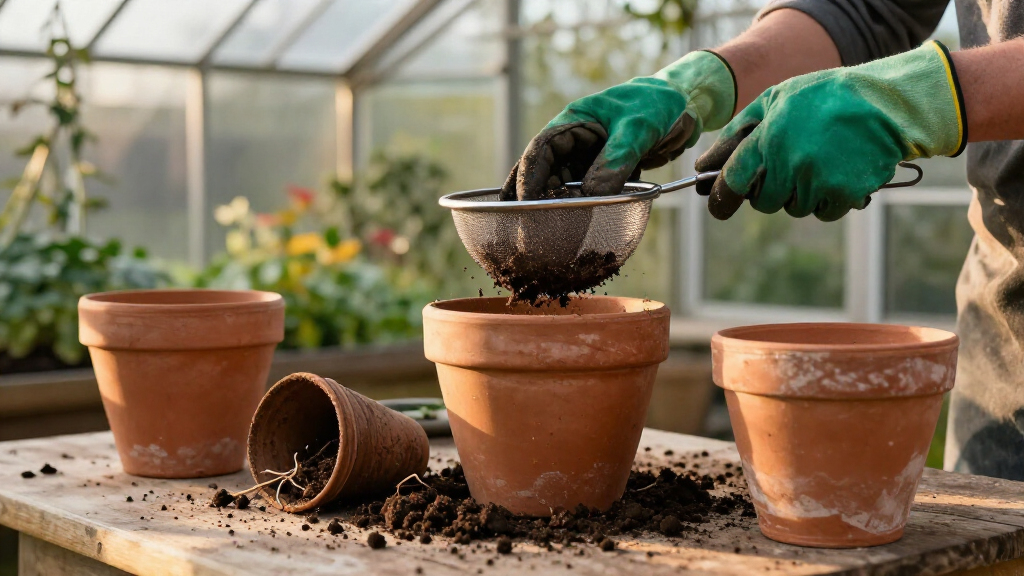
The University of Illinois Extension says soilless growing media can sometimes be reused when plants were healthy and there were no major disease problems. The report says to remove old plants and loose remnants, then examine whether the remaining mix still has useful structure. It should support aeration and drainage, not have broken down into a dense mass or become mostly a tight network of old roots.
For a batch that appears suitable, the report recommends labeling its history and intended use, storing it separately, and replacing lost volume with a suitable fresh mix when planting. It cautions that texture and appearance can help assess physical condition but cannot certify health or safety. It offers no universal amendment recipe, since the appropriate mix depends on the old material, the next plant and the container.
Why Sorting Protects Next Season’s Pots
Keeping batches separate preserves the information needed to make a sensible reuse decision. If material from a pot with unexplained problems is mixed with every other batch, gardeners may lose track of which mix came from which plants. The report frames sorting as a way to avoid making that uncertainty a problem across multiple containers.
Condition matters, too. The University of Illinois Extension notes that repeated use can reduce drainage and aeration as organic ingredients decompose. Reusing mix that has become dense may not serve the next planting well, even if the previous plants appeared healthy. At the same time, automatically discarding every used batch may waste material that could be suitable for another ordinary outdoor container. The decision depends on both plant history and physical condition, not on one sign alone.
For gardeners with a diagnosed disease, recurring pests or a possible chemical concern, the stakes are different from routine reuse. The report recommends avoiding distribution of suspect material while seeking advice specific to the problem. That distinction can help prevent an uncertain batch from being treated as ordinary growing medium without evidence that it is appropriate.
Popular right now

Dyson PencilVac Fluffycones Cordless Hard Floor Vacuum

Ninja Luxe Café Mini Espresso and Drip Coffee Machine, ES301

Dyson 360 Vis Nav Robot Vacuum
As an affiliate, we earn on qualifying purchases.
A Seasonal Check Before Storage
The report focuses on the point when seasonal outdoor plantings are removed and their containers put away. It is not general approval to reuse all potting mix. The guidance is more cautious for seed-starting, valuable indoor plants and recurring pest problems, where fresh growing media may be a more appropriate choice.
Planet Natural points to University of Illinois Extension guidance on reusing soilless media under limited conditions: plants should have been healthy, with no major disease problems, and lost volume should be replaced with suitable fresh mix. The extension’s warning about declining aeration and drainage provides a reason to check structure rather than assume that a healthy plant history makes the material suitable indefinitely.
For suspect material, the report recommends asking a local extension office, waste service or product supplier for advice suited to the identified concern. It also cautions that a home compost pile is not a guaranteed sanitation method; Oregon State says weed seeds and disease organisms may survive ordinary composting. The report does not recommend oven baking or bleach treatments as substitutes for identifying the original problem.
When a Batch’s History Is Unknown
The report does not set a universal threshold for how much breakdown makes potting mix unsuitable, nor does it provide a test that can establish whether a batch is free of disease, pests or contaminants. A handful can offer clues about texture, but it cannot verify safety. The source material also does not identify a single reuse or disposal method for every type of disease, infestation or contamination concern.
That means gardeners may need advice tailored to what happened in a particular container. The report recommends keeping questionable material separate while consulting a local extension office, waste service or product supplier. It does not establish that every batch from a declining plant is unsafe; rather, it advises not to combine it with other material before the cause is understood.
Label Batches Before Putting Pots Away
Before storage, gardeners can remove plant remnants, inspect each batch and label any material they plan to keep with its plant history and intended use. Empty containers should be cleaned and stored separately from plant debris. The report also advises checking drainage holes for roots that could block the pot’s next use.
At the next planting, reassess stored mix rather than relying solely on last season’s decision. For an appropriate batch, add suitable fresh mix to replace lost volume and consider the condition of the complete mixture. For suspected disease, recurring pests or possible contamination, seek problem-specific guidance before reuse or disposal. No single follow-up method is specified for all such cases.
Key Questions
Can used potting mix be reused?
Sometimes. University of Illinois Extension, as cited by Planet Natural, says soilless media may be reused when plants were healthy and there were no major disease problems. The mix should also retain useful structure for drainage and aeration.
What should I check before storing a batch?
Record what grew in the pot and any pest, disease, contamination or unexplained growth concerns. Inspect whether the mix remains open and loose or has broken down into dense material. Appearance alone cannot certify safety.
Should I mix all leftover potting soil together?
The report advises against combining batches before checking their histories. Keep material from plants with unexplained decline or suspected problems separate so it does not become mixed with material from healthy pots.
Will composting make suspect potting mix safe?
Not necessarily. The report cites Oregon State’s guidance that weed seeds and disease organisms may survive ordinary composting. Ask a local extension office or waste service for advice suited to the specific concern.
What if the mix looks healthy but drains poorly?
Poor drainage or dense, collapsed structure can be a reason not to reuse the mix as-is. The report advises assessing the material’s physical condition and replacing lost volume with suitable fresh mix only when reuse is appropriate; it does not give a universal amendment recipe.
Source: planetnatural.com