
TL;DR

Get garden gear delivered free with Prime
- Fast, free delivery on millions of items
- Prime Video, Amazon Music and more included
- Member-only deals all year
Planet Natural’s guidance says shrubs do not automatically need snow removal: leave light powder and ice in place, and gently lift wet snow only when it comes away easily and the area is safe. Do not shake, strike or force frozen branches; keep clear of overhead hazards and contact professionals about dangerous limbs or power lines.
Planet Natural’s guidance on snow-covered shrubs advises gardeners to distinguish loose powder from heavy wet snow and frozen ice before acting: light powder and ice generally should be left alone, while accessible wet snow may be lifted gently if it comes away without force. The advice matters because shaking, striking or bending branches under load can cause additional damage, and work beneath unstable trees, roofs or power lines can put people at risk.
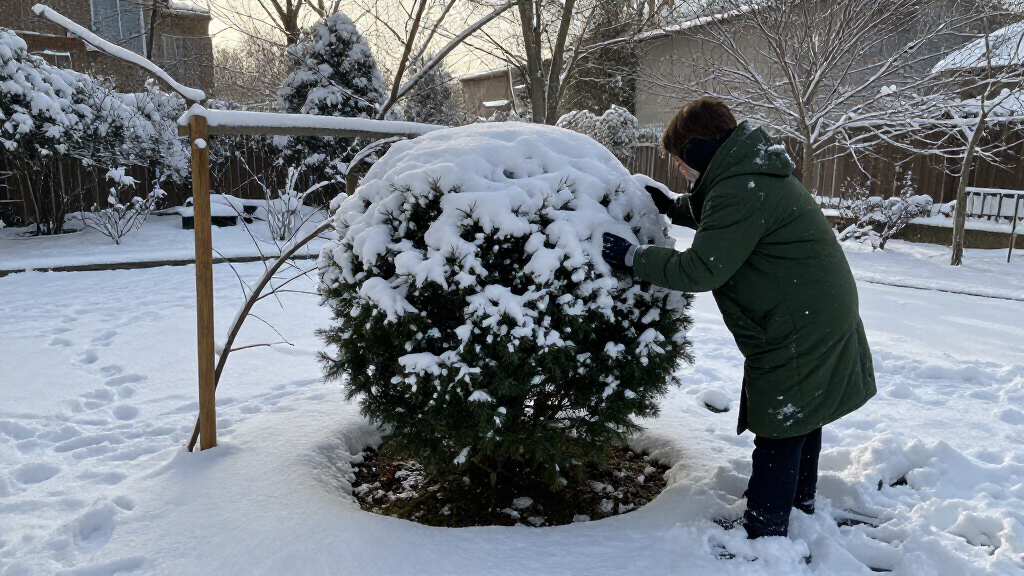
For a small shrub reachable from stable ground in a clear area, the report says a light covering of fluffy snow usually does not require removal when branches are not unusually bent. Snow cover on the ground can insulate roots and low plants, so clearing every branch for appearance may offer little benefit. Gardeners should check conditions rather than assume the snow will stay light: powder can become heavier, and shrubs with weak structures may need closer observation.
When wet snow is visibly weighing down accessible evergreen branches, Planet Natural recommends using a soft broom or gloved hand to lift loose snow upward. The report cautions against downward sweeping, yanking, shaking or striking the plant. Remove only what comes away easily; stop if branches creak, a split appears, footing is insecure or the surroundings become unsafe. The aim is to reduce removable weight, not completely clear or reshape the shrub.
Ice should be left to melt naturally, according to the guidance. Chipping, beating, bending branches or applying hot water or deicer can harm the plant. The report also advises against forcing a bent, frozen shrub upright or tying it tightly while it is still loaded. Once the plant has thawed and the area is safe, inspect for broken stems, torn bark and hanging limbs; dangerous or unstable branches call for professional assessment.
Safer Choices for Snow-Loaded Shrubs
The guidance separates plant damage from personal safety. A homeowner may be able to lift loose snow from a small shrub, but the same task becomes unsafe beneath a loaded tree, near a roof edge or around electrical equipment. A small shrub’s size does not make its surroundings safe.
It also challenges the impulse to clear every snowy branch. Unnecessary handling can add strain, while ice removal by force can break wood beneath the coating. Knowing when to wait can protect both the shrub and the person trying to help it. The advice is practical rather than a guarantee: outcomes depend on the plant, the snow and the specific site.
Popular right now

Vitamix Propel Series 510 Blender, 3 Programs, Slate

Bose QuietComfort Ultra Headphones (2nd Gen), Wireless Noise-Cancelling Over-Ear Headphones, Black

Roborock Q7 M5+ Robot Vacuum and Mop with Self-Emptying Dock
As an affiliate, we earn on qualifying purchases.
Powder, Wet Snow and Ice Differ
The source frames the decision around what is resting on the shrub and how the branches respond, rather than treating all snowfall alike. Loose powder on flexible branches is different from wet snow pulling stems apart, and both differ from ice bonded to foliage. The report cites Iowa State guidance for upward brushing and cautions that improper snow removal can increase breakage.
It also notes two situations where prevention may help. Avoid piling dense shoveled snow or salty slush onto shrub crowns, and do not dig through buried branches with a shovel. For container evergreens, plan a stable, sheltered position before a storm rather than dragging a heavy or frozen pot by its trunk during icy conditions.
Damage and Site Risks Vary
The supplied report does not identify a particular storm, location, affected property or newly measured damage, and it gives no species-by-species assessment. Its recommendations are general guidance, not a diagnosis of an individual shrub. How much snow a plant can bear depends on its structure and condition, while the safety of approaching it depends on overhead trees, roofs, footing and nearby electrical lines.
It is also not possible to know from appearance alone whether a drooping branch is broken. The report says an unbroken shrub may gradually recover after thawing, but it does not give a universal recovery timetable. Visible splits, hanging limbs or unstable branches require assessment rather than an assumption that the plant will recover on its own.
Inspect After Thaw and Clear
Wait until conditions are safe and branches have thawed, then check for splits, torn bark and broken or hanging stems. Photograph damage and mark its location from a safe distance. Contact an arborist about hazardous tree damage or unstable limbs; branches near power lines are for the utility company and qualified professionals. Do not approach a downed wire, and use emergency services if there is immediate danger.
For small, nonhazardous shrub damage, the report advises choosing pruning based on the species and the condition of the plant; it cautions against shearing an entire shrub to hide one damaged section. Before the next storm, gardeners can review where snow is piled and consider suitable protective supports or flexible ties installed ahead of winter. Temporary bindings should not be left in place indefinitely.
Key Questions
Should I brush snow off every shrub?
No. The report says light, fluffy snow on branches that are not unusually bent usually does not need to be removed. Avoid handling a shrub just to make it look tidy, and check again if the snow becomes heavier.
How should I remove heavy, wet snow?
Only if the shrub is safely reachable from stable ground, use a soft broom or gloved hand to lift loose snow upward. Do not shake, yank or strike branches. Stop if the snow is frozen on, a branch creaks or splits, or the area is unsafe.
Can I chip ice off a shrub?
No. The guidance says to let ice melt naturally. Chipping, beating or bending ice-covered branches can break the wood; do not pour hot water or apply deicer to the plant.
When should I call a professional?
Stay away from hanging or unstable limbs, loaded trees, roof-edge hazards and power lines. Contact an arborist about hazardous tree damage and the utility company about branches near power lines. Never approach a downed wire.
Source: planetnatural.com