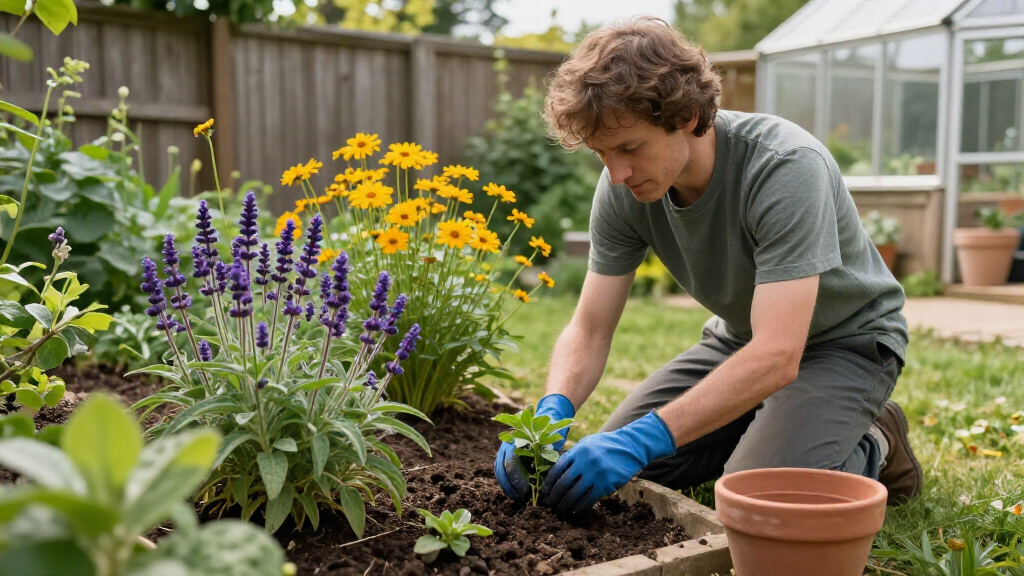
The best perennial plants for gardens depend on your light, climate, patience, and preferred way of planting. I’d choose the 3 Big & Giant Hosta Perennial Mix as the best overall pick for gardeners seeking bold, shade-friendly foliage, while the Russian sage live plants stand out for sunny, drought-tolerant planting and the Perennial Wildflower Seed Mix for filling larger areas with varied blooms. This lineup ranges from seeds and bulbs to bare-root plants and established container plants, so the tradeoff is often lower upfront effort versus greater choice and coverage. Plant hardiness, sunlight, soil, and establishment time matter as much as flower color. Read on for the full breakdown and a guide to choosing plants that suit your garden.

Get garden gear delivered free — and shop member deals
- Fast, free delivery on millions of items
- Access to Prime Big Deal Days deals on October 6–7
- Prime Video, Amazon Music and more included
Complete the kit


Key Takeaways
- Hostas lead for dependable foliage impact in shade: the giant-leaf mix offers a stronger focal point, while the 9-pack and two 6-packs favor broader coverage or varied forms.
- Live Russian sage and seed-grown flowers serve different timelines: established sage plants give a head start, while black-eyed Susan and coneflower seeds trade patience for planting flexibility.
- Bulb collections prioritize seasonal color, not a uniform perennial display: the mixed collections combine different flowering plants, so bloom timing and return performance may vary by bulb type and local conditions.
- Large seed counts do not automatically mean better value: bulk hollyhock and black-eyed Susan seeds can suit expansive sowing, but success depends on germination, spacing, and willingness to thin seedlings.
- Matching the plant to the site matters more than choosing the broadest mix: hostas suit many shady beds, Russian sage needs sun and drainage, and wildflower mixes need a site compatible with their included species.
| 3 Big & Giant Hosta Perennial Mix – Blue-Green and Yellow-Green Large Leaves |  | Best for Deep-Shade Impact | Plant type: Giant hosta mix | Foliage colors: Blue-green and yellow-green | Expected height: 36 inches | VIEW LATEST PRICE | See Our Full Breakdown |
| Black-Eyed Susan Seeds, 5,000 Count |  | Best for Sunny Seed-Sown Color | Plant type: Rudbeckia (Black-Eyed Susan) | Seed count: 5,000 | Seed attributes: Non-GMO, heirloom, open-pollinated | VIEW LATEST PRICE | See Our Full Breakdown |
| 10 Mixed-Color Gladiolus Bulbs, Sword Lily |  | Best for Tall, Mixed-Color Accents | Plant type: Perennial gladiolus (sword lily) | Quantity: 10 bulbs | Colors: Mixed | VIEW LATEST PRICE | See Our Full Breakdown |
| Clovers Garden Russian Sage Live Plants, 2 Plants in 4-Inch Pots |  | Best Ready-to-Plant Perennial | Plant type: Russian sage (Perovskia atriplicifolia) | Quantity: 2 live plants | Plant height at listing: 4–8 inches | VIEW LATEST PRICE | See Our Full Breakdown |
| Premium Spring Flower Bulb Collection – 100 Bulbs (Anemone, Gladiolus, Allium, Ixia) |  | Best for a Multi-Variety Bulb Display | Total bulbs: 100 | Varieties: Anemone Blanda, Gladiolus Mixed, Allium Moly, and Ixia Mixed | Variety breakdown: 30 Anemone Blanda, 20 Gladiolus Mixed, 20 Allium Moly, 30 Ixia Mixed | VIEW LATEST PRICE | See Our Full Breakdown |
| 9-Pack Hosta Bare Root Perennial Plants |  | Best for Filling Shady Beds | Botanical name: Hosta | Pack size: 9 plants | Plant form: Bare-root perennial plants | VIEW LATEST PRICE | See Our Full Breakdown |
| Purple Coneflower Seeds for Planting, 600 Seeds |  | Best for Pollinator-Friendly Sun Gardens | Plant: Purple coneflower (Echinacea purpurea) | Seed count: 600 | Item weight: 4.54 g | VIEW LATEST PRICE | See Our Full Breakdown |
| Mixed Heart-Shaped Hosta Bare Roots, 6-Pack |  | Best Compact Hosta Starter Pack | Plant type: Perennial hosta | Quantity: 6 bare roots | Foliage: Heart-shaped green leaves | VIEW LATEST PRICE | See Our Full Breakdown |
| Hollyhock Seeds 3000+ Bulk Pack, Mixed-Color Perennial Blooms |  | Best for Tall, Large-Scale Displays | Quantity: 3000+ seeds | Plant type: Perennial hollyhock | Maximum height: Up to 8 feet | VIEW LATEST PRICE | See Our Full Breakdown |
| Mixed Hosta Perennials, 6 Bare-Root Plants |  | Best for a Small, Measured Hosta Grouping | Quantity: 6 bare-root starts | Plant type: Perennial hostas | Usage: Outdoor | VIEW LATEST PRICE | See Our Full Breakdown |
| 100 Spring and Summer Flower Bulbs for Planting |  | Best for Season-Long Bulb Color | Bulb varieties and quantities: 30 Anemone blanda, 20 mixed Gladiolus, 20 Allium moly, 30 mixed Ixia | Unit count: 100 bulbs | Expected bloom period: Spring to summer | VIEW LATEST PRICE | See Our Full Breakdown |
| Eden Brothers Perennial Wildflower Seed Mix, 1/4 lb |  | Best for Covering Large Sunny Areas | Seed weight: 1/4 lb | Varieties: 19 perennial species | Coverage: Up to 1,000 square feet | VIEW LATEST PRICE | See Our Full Breakdown |
| Russian Sage Perennial Plant, Perovskia atriplicifolia, Purple Flowers, #1 Container |  | Best for a Fragrant, Structured Focal Plant | Botanical name: Perovskia atriplicifolia | Plant type: Perennial | USDA hardiness zones: 5–8 | VIEW LATEST PRICE | See Our Full Breakdown |
| perennial plants for garden | Plant type |
|---|---|
| 3 Big & Giant Hosta Perennial | Giant hosta mix |
| Black-Eyed Susan Seeds | Rudbeckia (Black-Eyed Susan) |
| 10 Mixed-Color Gladiolus Bulbs | Perennial gladiolus (sword lily) |
| Clovers Garden Russian Sage Li | Russian sage (Perovskia atriplicifolia) |
| Premium Spring Flower Bulb Col | — |
| 9-Pack Hosta Bare Root Perenni | — |
| Purple Coneflower Seeds for Pl | — |
| Mixed Heart-Shaped Hosta Bare | Perennial hosta |
| Hollyhock Seeds 3000+ Bulk Pac | Perennial hollyhock |
| Mixed Hosta Perennials | Perennial hostas |
| 100 Spring and Summer Flower B | — |
| Eden Brothers Perennial Wildfl | Perennial |
| Russian Sage Perennial Plant | Perennial |
More Details on Our Top Picks
3 Big & Giant Hosta Perennial Mix – Blue-Green and Yellow-Green Large Leaves
I’d choose this hosta mix when large foliage is the main garden feature. The plants can spread more than 60 inches wide and reach 36 inches tall, creating a broad leafy presence around trees or along shaded borders. Its blue-green and yellow-green leaves add contrast without relying on a long flower display, while summer-to-fall white blooms bring in butterflies and hummingbirds. Compared with the Black-Eyed Susan Seeds, this is the better fit for full shade and a substantial foliage display; the Susan seeds make more sense for sunny beds and flowers grown from seed. The tradeoff is a narrower site fit: these hostas need full shade, moderate watering, and the listed sandy soil. Their mature spread also calls for plenty of room, even with slug-resistant, low-maintenance leaves.
Pros:- Can grow over 60 inches wide for substantial coverage around trees or in broad borders.
- Blue-green and yellow-green foliage brings color even when the plant is not blooming.
- Slug-resistant leaves support a lower-maintenance planting.
- White summer-to-fall flowers attract butterflies and hummingbirds.
Cons:- Requires full shade, limiting where it can be planted.
- Needs ample room as it matures and spreads.
- Sandy soil is the listed soil type, which may not suit every garden.
Best for: Gardeners with a large, fully shaded area who want broad, colorful foliage and can leave room for mature plants.
Not ideal for: Gardeners with sunny beds, compact borders, or limited space; the plants need full shade and can exceed 60 inches in width.
- Plant type:Giant hosta mix
- Foliage colors:Blue-green and yellow-green
- Expected height:36 inches
- Mature spread:Over 60 inches
- Sunlight:Full shade
- Bloom period:Summer to fall
- Soil type:Sandy soil
- Moisture needs:Moderate watering
- Special features:Deer resistant, fragrant, and slug resistant
Our verdict“Choose this mix for spacious, fully shaded gardens where mature foliage matters more than sunny-season flowers.”
Black-Eyed Susan Seeds, 5,000 Count
This large packet suits gardeners who want to fill sunny beds with summer-to-fall flowers from seed. The 5,000-seed count gives room to sow across borders or try some in containers, and the listed indoor-and-outdoor use leaves more starting options than the outdoor-only hosta mix. Non-GMO, heirloom, open-pollinated seed is a plus for gardeners who value those growing attributes, while the blooms attract bees and butterflies. Compared with the Premium Spring Flower Bulb Collection, this pick focuses on one plant type and full sun rather than a mix of bulb varieties for spring-to-summer color. Its limitations are practical: it needs full sun, moderate watering, and the listed sandy soil, and the high seed count may be more than a small garden needs.
Pros:- Large 5,000-seed count can cover beds, borders, or multiple planting areas.
- Non-GMO, heirloom, open-pollinated seed.
- Summer-to-fall blooms attract bees and butterflies.
- Listed for indoor and outdoor planting.
Cons:- Requires full sun, unlike the shade-tolerant giant hosta mix.
- Sandy soil is the listed soil type, narrowing site compatibility.
- A 5,000-seed packet may be excessive for a small garden.
Best for: Gardeners with sunny beds or borders who want to sow pollinator-friendly flowers across a broad area.
Not ideal for: Shade gardeners or people planting a small container display who do not need a large quantity of seed.
- Plant type:Rudbeckia (Black-Eyed Susan)
- Seed count:5,000
- Seed attributes:Non-GMO, heirloom, open-pollinated
- Bloom period:Summer to fall
- Sunlight:Full sun
- Plant height:24 inches
- Hardiness zone:3–9
- Soil type:Sandy soil
- Watering needs:Moderate
Our verdict“Pick these seeds if you have sunny planting space to fill and want a large sowing of pollinator-friendly seasonal blooms.”
10 Mixed-Color Gladiolus Bulbs, Sword Lily
I’d give these gladiolus bulbs a role in gardens that need vertical color in a flexible planting. The mixed colors and growth up to 48 inches make them a taller accent than the 24-inch Black-Eyed Susans, which can help add variation in a border or container display. The set has 10 bulbs, so it offers a smaller, more focused planting than the 100-bulb Premium Spring Flower Bulb Collection; that larger assortment is better for gardeners seeking several bulb varieties and a broader spring-to-summer sequence. Here, the appeal is straightforward: large blooms, mixed colors, and use in gardens, landscaping, or containers. The main scheduling constraint is planting after the last frost. The supplied details do not specify hardiness zone, sunlight, or soil needs, so buyers will need to check local suitability before planting.
Pros:- Mixed colors add variety within a small bulb planting.
- Plants can reach 48 inches for a taller accent than the listed Black-Eyed Susan.
- Suitable for gardens, landscaping, and containers.
- Large blooms provide a distinct focal point.
Cons:- Planting must wait until after the last frost.
- The set contains only 10 bulbs, less suited to covering a large area than the 100-bulb collection.
- The supplied product details do not state sunlight, soil, or hardiness-zone requirements.
Best for: Gardeners who want a modest number of tall, mixed-color flowering accents for beds, landscaping, or containers.
Not ideal for: Gardeners seeking a detailed growing profile or bulbs they can plant before the last frost.
- Plant type:Perennial gladiolus (sword lily)
- Quantity:10 bulbs
- Colors:Mixed
- Maximum height:48 inches
- Planting depth:1–2 inches
- Planting time:After the last frost
- Suitable uses:Gardens, landscaping, and containers
Our verdict“Choose this 10-bulb set for tall, mixed-color accents when you can plant after the last frost and confirm local growing needs.”
Clovers Garden Russian Sage Live Plants, 2 Plants in 4-Inch Pots
For gardeners who would rather start with living plants than seeds or bulbs, this set offers two potted Russian sages ready for a garden bed or suitable container. The young plants arrive at 4–8 inches tall, while mature growth can reach 4 feet in both height and width. Silvery-green foliage and blue-purple flowers give the planting a different look from the mixed-color Gladiolus bulbs, and the bloom period—from mid-summer until the first freeze—offers a longer stated season than a short, single burst. Pollinators are another draw. The tradeoff is that full sun is required and the set is listed for zones 4 and warmer. Regular watering is also specified, and its eventual spread needs planning. This is ornamental, not edible, so it is not a choice for a culinary garden.
Pros:- Includes two live plants already growing in 4-inch pots.
- Blue-purple flowers bloom from mid-summer until the first freeze.
- Attracts pollinators and provides silvery-green foliage.
- Suitable for zones 4 and warmer.
Cons:- Requires full sun and regular watering.
- Mature plants can grow up to 4 feet wide and tall.
- Not edible, unlike plants chosen for a kitchen garden.
Best for: Gardeners in zone 4 or warmer who want to establish flowering perennials from live plants rather than seeds or bulbs.
Not ideal for: Gardeners with shaded sites, limited planting room, or a need for edible plants; this sage needs full sun, can spread widely, and is ornamental only.
- Plant type:Russian sage (Perovskia atriplicifolia)
- Quantity:2 live plants
- Plant height at listing:4–8 inches
- Pot size:4 inches
- Flower color:Blue-purple
- Bloom period:Mid-summer to first freeze
- Sunlight:Full sun
- Hardiness:Zones 4 and warmer
- Mature growth:Up to 4 feet wide and tall
Our verdict“Choose these potted Russian sages if you have a sunny, spacious site in zone 4 or warmer and want a ready-start perennial.”
Premium Spring Flower Bulb Collection – 100 Bulbs (Anemone, Gladiolus, Allium, Ixia)
This collection earns its place for gardeners who want four bulb varieties in one planting rather than a single-species display. Its 100 bulbs are split among Anemone Blanda, mixed Gladiolus, Allium Moly, and mixed Ixia, with a stated spring-to-summer bloom season. That broader mix distinguishes it from the 10 Mixed-Color Gladiolus Bulbs, which focus on one taller flowering type in a much smaller quantity. The included planting guide and claims of low maintenance make the collection more approachable for beginners, while deer resistance and pollinator attraction add practical garden appeal. It is listed for fall planting, partial shade, loam, and moderate watering, so the site and timing need to match. The stated expected height of 8 inches also makes it a lower-profile option than the separate gladiolus set.
Pros:- Includes 100 bulbs across four varieties.
- Designed for spring-to-summer blooms from a single collection.
- Comes with a planting guide and is described as low maintenance.
- Deer-resistant and attracts pollinators.
Cons:- Requires fall planting, so timing is less flexible than the gladiolus bulbs planted after the last frost.
- Loam soil and partial shade are the listed growing conditions.
- Expected height is listed as 8 inches, limiting its use as a tall focal planting.
Best for: Gardeners who want a large, varied bulb planting for spring-to-summer color and have a suitable fall planting window.
Not ideal for: Gardeners who want tall, clearly specified focal flowers or whose site lacks partial shade and loam soil.
- Total bulbs:100
- Varieties:Anemone Blanda, Gladiolus Mixed, Allium Moly, and Ixia Mixed
- Variety breakdown:30 Anemone Blanda, 20 Gladiolus Mixed, 20 Allium Moly, 30 Ixia Mixed
- Bloom season:Spring to summer
- Hardiness zone:3–8
- Sunlight:Partial shade
- Planting period:Fall
- Expected height:8 inches
- Soil type:Loam
Our verdict“Choose this collection for a varied, low-profile bulb display if your garden suits its fall planting, partial-shade, and loam requirements.”
9-Pack Hosta Bare Root Perennial Plants
For a shaded border that needs broad, leafy coverage, this nine-plant hosta pack offers more planting material than either six-root hosta option in this roundup. Its 20–60-inch leaf spread can fill space over time, while varied green foliage adds texture even when the midsummer flowers have faded. Hostas suit gardeners with full shade or partial shade, and their hardiness across zones 3–8 gives them a wider cold-climate range than the sun-loving Purple Coneflower Seeds for Planting, 600 Seeds. The tradeoff is that this is a foliage-first choice: purple or white bell-shaped blooms last about two weeks, and the plants need shade rather than a sunny bed. I’d choose it over the smaller Mixed Heart-Shaped Hosta Bare Roots, 6-Pack when bed coverage matters more than a compact planting.
Pros:- Nine plants provide more coverage potential than the six-root hosta packs
- Varied rich-green foliage adds texture beyond the flowering period
- Grows in full shade or partial shade
- Hardy in USDA zones 3–8
Cons:- Bell-shaped flowers last only about two weeks
- Requires a shaded or partly shaded site
- Leaf spread of 20–60 inches can outgrow a tightly spaced bed
Best for: Gardeners with a sizable shaded or partly shaded bed who want several foliage-focused perennials in one planting.
Not ideal for: Gardeners planting a sunny border or seeking flowers that provide color for much of the season.
- Botanical name:Hosta
- Pack size:9 plants
- Plant form:Bare-root perennial plants
- USDA hardiness zones:3–8
- Light:Full shade to partial shade
- Leaf spread:20–60 inches
- Flowering period:Mid to late summer
- Flower colors and form:Purple or white, bell-shaped
- Growth rate:Medium
Our verdict“Choose this pack for broad foliage coverage in a roomy shady bed, but skip it if you need a sun-tolerant or long-blooming perennial.”
Purple Coneflower Seeds for Planting, 600 Seeds
This is the strongest fit here for gardeners who want a sun-loving perennial with a long bloom window. Purple coneflowers flower from summer into fall, extending color longer than the brief bloom period of the 9-Pack Hosta Bare Root Perennial Plants. Their bee- and butterfly-attracting blooms also bring more visible pollinator activity than a foliage-led hosta planting. Once established, these plants tolerate drought, heat, and poor soil, which can reduce watering demands in a sunny garden. The catch is the seed-starting work: cold stratification for about 4–6 weeks helps germination, and the plants need six to eight hours of direct sun for best flowering. Compared with the ready-to-plant Mixed Hosta Perennials, 6 Bare-Root Plants, this pack asks for more patience, but suits a sunny site far better.
Pros:- Blooms from summer into fall
- Attracts bees and butterflies
- Tolerates drought, heat, and poor soil once established
- Contains 600 seeds for a larger planting
Cons:- Cold stratification for about 4–6 weeks helps seeds germinate
- Needs 6–8 hours of direct sun for best flowering
- Seed-grown plants require more planning than bare-root starts
Best for: Gardeners with a sunny, well-drained bed who are willing to prepare seeds and want flowers that support bees and butterflies.
Not ideal for: Gardeners seeking an immediate established planting, or those with mostly shaded beds and no suitable place to start seeds.
- Plant:Purple coneflower (Echinacea purpurea)
- Seed count:600
- Item weight:4.54 g
- USDA hardiness zones:3–9
- Sunlight:Full sun; 6–8 hours daily
- Bloom period:Summer to fall
- Soil:Well-drained loam or sandy loam
- Germination:Cold stratification for approximately 4–6 weeks
- Watering:Moderate; drought-tolerant once mature
Our verdict“Pick these seeds for a sunny pollinator garden if you can handle the stratification and wait for plants to establish.”
Mixed Heart-Shaped Hosta Bare Roots, 6-Pack
With six bare roots and heart-shaped green foliage, this pack is a smaller-scale way to add hostas to a shady corner without committing to the nine plants in the 9-Pack Hosta Bare Root Perennial Plants. Its main appeal is straightforward: the plants are described as low-maintenance and shade-tolerant, and their mildly fragrant white or purple flowers add a modest seasonal detail above the leaves. That makes this a practical choice for a modest border or a first hosta planting, rather than a fast way to cover a large bed. The tradeoff is that the listing gives no hardiness zones, mature spread, or bloom timing, so planning placement is less precise than with the nine-pack. It also arrives as bare roots, not established plants, and needs a shaded location to suit its stated growing conditions.
Pros:- Six bare roots suit a smaller planting than the nine-pack
- Shade-tolerant habit fits shady garden areas
- Low-maintenance perennial foliage
- Flowers are described as mildly fragrant
Cons:- Bare roots need time to establish compared with established plants
- Requires a shaded planting location
- Hardiness zone, mature spread, and flowering period are not specified
Best for: New hosta growers or gardeners with a modest shady bed who want a six-root planting and do not need detailed size guidance.
Not ideal for: Buyers needing established plants, a sunny-site perennial, or confirmed hardiness and mature-size information before planting.
- Plant type:Perennial hosta
- Quantity:6 bare roots
- Foliage:Heart-shaped green leaves
- Light requirements:Shade-tolerant
- Flower colors:White or purple
- Flower fragrance:Mildly fragrant
Our verdict“Choose this six-root pack for a modest shaded hosta planting, but favor the nine-pack when coverage or more complete growing details matter.”
Hollyhock Seeds 3000+ Bulk Pack, Mixed-Color Perennial Blooms
If the goal is a tall backdrop rather than a low border, this bulk pack offers more than 3,000 mixed-color seeds and plants that can reach eight feet. Red, yellow, pink, and white flowers create a vertical display from summer into early fall, while the self-seeding habit can help renew a planting in later seasons. That scale sets it apart from the compact, foliage-focused Mixed Heart-Shaped Hosta Bare Roots, 6-Pack, and it can suit gardeners who want to fill a long fence line or large bed. The tradeoff is equally clear: 8-foot plants need space and may need support, while thousands of seeds are excessive for a small garden. Hollyhocks also call for more planning than the Purple Coneflower Seeds for Planting, 600 Seeds, if you have limited room or want a shorter planting.
Pros:- More than 3,000 seeds suit large-scale sowing
- Plants can reach eight feet for vertical garden impact
- Mixed colors include red, yellow, pink, and white
- Self-seeding can renew the planting in later years
Cons:- Seed quantity is excessive for many small gardens
- Tall plants need adequate spacing and may require support
- Seed sowing requires more time before a mature display than bare-root hostas
Best for: Gardeners planting a large sunny-to-partly-shaded area who want a tall, mixed-color display and are comfortable managing self-seeding plants.
Not ideal for: Small-space gardeners or anyone without room to space and support plants that can grow up to eight feet.
- Quantity:3000+ seeds
- Plant type:Perennial hollyhock
- Maximum height:Up to 8 feet
- Bloom season:Summer to early fall
- Colors:Red, yellow, pink, white, and mixed
- Sunlight:Full sun to partial shade
- Sowing depth:1/4 inch
- Growth habit:Self-seeding
Our verdict“Choose this bulk pack for a spacious garden that can accommodate tall, self-seeding flowers, not for a compact bed.”
Mixed Hosta Perennials, 6 Bare-Root Plants
The useful distinction here is its stated growth width of about 18 inches in diameter, which gives gardeners a clearer spacing reference than the Mixed Heart-Shaped Hosta Bare Roots, 6-Pack. Six bare-root starts can form a smaller, more measured grouping than the 9-Pack Hosta Bare Root Perennial Plants, whose reported leaf spread reaches 20–60 inches. It is described as low-maintenance and perennializing, with green foliage for an outdoor planting. Still, the growing details are inconsistent: the listing calls these hostas shade plants in its title but specifies full sun, and it lists fall blooming despite a description of summer-through-fall flowering. I would favor a better-documented shade hosta for a shaded border. This option makes more sense only for buyers who can clarify the light needs and accept the limited specification detail.
Pros:- Includes six bare-root starts
- Stated growth width of about 18 inches in diameter helps with spacing
- Described as low-maintenance and perennializing
- Includes a stated 100% grow guarantee
Cons:- Conflicting shade-plant title and full-sun specification make site choice uncertain
- Bloom timing differs between the description and listed specifications
- Moderate watering is required
Best for: Gardeners seeking six bare-root hostas for a small outdoor grouping who can verify the correct light exposure before planting.
Not ideal for: Shade gardeners who need reliable care guidance, or buyers who require consistent flowering and planting-season details.
- Quantity:6 bare-root starts
- Plant type:Perennial hostas
- Usage:Outdoor
- Foliage color:Green
- Growth width:About 18 inches in diameter
- Listed sunlight exposure:Full sun
- Moisture needs:Moderate watering
- Listed bloom period:Fall
- Guarantee:100% grow guarantee
Our verdict“Consider this six-plant set only if you can confirm its light requirements; the other hosta options provide clearer shade guidance.”
100 Spring and Summer Flower Bulbs for Planting
This collection is a strong fit for gardeners who want several kinds of bulb flowers rather than one repeating display. Its 100 bulbs span four varieties: Anemone blanda, mixed Gladiolus, Allium moly, and mixed Ixia, with a stated spring-to-summer bloom period. Compared with the Eden Brothers Perennial Wildflower Seed Mix, this pick offers named bulb types and a planned seasonal sequence, while the seed mix covers more ground and blooms later, from summer into fall. The bulbs also offer a direct way to add flowers that attract bees, butterflies, and hummingbirds.
The main tradeoff is timing: these bulbs are intended for fall planting, so they do not suit gardeners seeking a ready-to-plant spring purchase. They need full sun and moderate watering, and the mix’s multicolor display may be less controlled than planting a single variety. Instructions are included, but buyers still need to follow them for their planting conditions.
Pros:- Four bulb varieties provide more visual variety than a single-variety planting.
- Expected bloom period runs from spring through summer.
- Flowers can attract bees, butterflies, and hummingbirds.
- Planting instructions are included.
Cons:- Requires fall planting, which limits when gardeners can get started.
- Needs full sun, so it is a poor match for shady beds.
- A mixed-color collection offers less control over the final color scheme.
Best for: Gardeners with a sunny outdoor bed who can plant in fall and want varied bulb flowers across spring and summer.
Not ideal for: Gardeners who need flowers for a shaded site or want to plant immediately outside the fall planting window.
- Bulb varieties and quantities:30 Anemone blanda, 20 mixed Gladiolus, 20 Allium moly, 30 mixed Ixia
- Unit count:100 bulbs
- Expected bloom period:Spring to summer
- Expected planting period:Fall
- Sunlight exposure:Full sun
- USDA hardiness zones:3–10
- Moisture needs:Moderate watering
- Plant type and use:Perennial; outdoor planting
Our verdict“Choose this collection if you can plant in fall and want a varied, pollinator-attracting bulb display from spring into summer.”
Eden Brothers Perennial Wildflower Seed Mix, 1/4 lb
For a gardener filling a broad, sunny area, this seed mix stands apart from the more defined layouts of the 100 Spring and Summer Flower Bulbs for Planting. It combines 19 perennial species, including coneflower, Shasta daisy, and black-eyed Susan, and is listed to cover up to 1,000 square feet. That makes it a better fit for a meadow-style planting than for a tightly planned border. Its summer-to-fall bloom window also complements the bulb collection’s spring-to-summer schedule, though the stated coverage and timing do not promise an instant, uniform display.
The seeds are described as pure and non-GMO and suit USDA Zones 3–10. In exchange for broad coverage and variety, buyers need to follow the planting instructions for best germination; this takes more care than setting out rooted Russian Sage Perovskia atriplicifolia. Full sun is required, so shaded gardens should skip this mix.
Pros:- Includes 19 perennial flower species, including coneflower and Shasta daisy.
- Listed to cover up to 1,000 square feet.
- Summer-to-fall blooms extend the season beyond the bulb collection’s spring-to-summer period.
- Suitable for USDA hardiness zones 3–10.
Cons:- Best suited to full-sun sites.
- Successful germination depends on following the planting instructions.
- Seeds require more establishment patience than a rooted nursery plant.
Best for: Gardeners with a large, sunny space who want a varied perennial wildflower planting and are willing to follow seed-starting directions.
Not ideal for: Gardeners seeking an established plant, a tightly controlled border, or flowers for a shady area.
- Seed weight:1/4 lb
- Varieties:19 perennial species
- Coverage:Up to 1,000 square feet
- USDA hardiness zones:3–10
- Sun exposure:Full sun
- Bloom period:Summer through fall
- Seed type:100% pure, non-GMO
- Plant type:Perennial
Our verdict“Pick this mix for broad sunny spaces where you want diverse summer-to-fall flowers and can give seeds the care they need to establish.”
Russian Sage Perennial Plant, Perovskia atriplicifolia, Purple Flowers, #1 Container
Unlike the seed mix and bulb collection, this is one rooted perennial for gardeners who want a defined vertical accent rather than coverage or a succession of different flowers. Russian sage pairs fragrant foliage and lavender-blue flower spires with silver leaves; the listed 3–4-foot height gives it presence in a sunny planting. It is supplied in a #1 container and arrives rooted, so it offers a more established starting point than Eden Brothers’ 19-species seed mix.
That focused role brings a different compromise: one plant cannot fill a large area like the seed mix or deliver the bulb collection’s range of flower types. Its USDA Zones 5–8 range is narrower than either of those options, and the stated mature width of 2–4 feet calls for room around it. Sandy soil is listed, making this a less flexible choice for gardeners whose beds do not suit that soil type.
Pros:- Arrives as a rooted plant rather than seed or an unplanted bulb.
- Fragrant foliage adds interest beyond the flowers.
- Lavender-blue flower spires contrast with silver leaves.
- Mature height creates a distinct vertical feature.
Cons:- Hardiness is limited to USDA Zones 5–8.
- Mature plants can spread 2–4 feet wide and need adequate space.
- Listed for sandy soil, which may not suit every garden bed.
Best for: Gardeners in USDA Zones 5–8 who have space for a 3–4-foot perennial and want fragrant foliage with a vertical lavender-blue accent.
Not ideal for: Gardeners outside Zones 5–8, those with narrow beds, or buyers who need broad flower coverage from a single purchase.
- Botanical name:Perovskia atriplicifolia
- Plant type:Perennial
- USDA hardiness zones:5–8
- Mature height:3–4 feet
- Mature width:2–4 feet
- Flower color:Lavender-blue
- Flower spike length:12 inches
- Soil type:Sandy soil
- Container size and unit count:#1 container; 1 plant
Our verdict“Choose this rooted Russian sage for a sunny, spacious Zone 5–8 garden that needs one fragrant, silver-leaved focal perennial.”

How We Picked
I ranked these options by how well they address the needs behind a perennial garden purchase: suitability for a clear garden role, planting format, potential coverage, visual contribution, and the work required to establish and maintain them. I gave preference to products with a recognizable use case, such as shade foliage, sunny flowering, or broad-area sowing, rather than treating bulb, seed, bare-root, and container offerings as interchangeable.
The order also reflects tradeoffs a buyer can act on. Established container plants rank well for a quicker start, while seeds and bare roots may suit gardeners who value planting control or larger coverage and accept a longer establishment period. Mixed bulb and wildflower packs can add variety, but their results depend more on site conditions and the particular plants in the mix. I placed each pick according to its likely fit and flexibility, not just the quantity in the package; gardeners should check plant labels for hardiness, mature size, and light requirements before buying.
Factors to Consider When Choosing Best Perennial Plants For Gardens
Choosing perennials is less about assembling a list of attractive plants and more about matching each plant’s needs to a specific spot. I’d make the site and the planting format your first decisions, then weigh timing, maintenance, and how much area you need to cover.
Match Sunlight and Soil to the Plant
Start by tracking how many hours of direct sun each bed receives, including changes caused by trees and buildings through the season. Hostas generally suit shadier areas, while Russian sage performs best with ample sun and well-drained soil. Wet soil can undermine plants that prefer drainage, even if the light is right. A mixed seed or bulb package may contain plants with different needs, so check its growing information rather than assuming every item belongs in one bed. Group plants with similar moisture and light needs to make watering simpler. If the site varies, split the package across suitable locations instead of forcing every plant into the same conditions.
Choose Seeds, Bare Roots, Bulbs, or Container Plants
Planting format changes both the work involved and the time it may take to see a settled display. Seeds offer flexibility and can cover a broad area, but germination and early care add uncertainty. Bare-root hostas are compact to store and plant, though they need time to establish after planting. Bulbs can be straightforward to place, but a mixed collection may not flower all at once or return in the same way across climates. Container plants such as Russian sage offer a more developed starting point, usually with a higher commitment to handling and planting promptly. Pick the format that fits your schedule, not just the package count.
Check Hardiness and Local Growing Conditions
A perennial’s ability to return depends on whether it can tolerate your winter conditions, heat, and seasonal moisture. Product names alone may not tell you the hardiness range, so verify the plant’s botanical identity and guidance from a reliable regional source before ordering. Mixed collections deserve extra attention because different species can have different tolerances. Gardeners in short-season regions may prefer plants suited to local conditions over a broad mix with uncertain performance. Warm, humid areas may also call for attention to drainage and airflow. When details are unclear, choose plants with a clearly stated growing range or ask the seller for specifics.
Plan for Mature Size and Spacing
Small starter plants can become a crowded bed if their eventual width is overlooked. Large hostas need room for their leaves to develop, while tall flowering plants such as hollyhocks need space that avoids shading shorter neighbors. Seed packets with high counts can tempt gardeners to sow too densely, creating extra thinning and competition. Sketch the bed and leave gaps based on mature spacing guidance rather than the size of the plant on arrival. Consider sightlines too: tall blooms suit a back border, while broad foliage can anchor the front or middle of a shade planting. Good spacing can reduce disease pressure and make routine care easier.
Set Expectations for Bloom and Establishment
Seeds, bulbs, bare roots, and established plants rarely produce the same immediate effect. Seed-grown perennials may need a growing season or more before they form a substantial display, while container plants begin further along. Flowering schedules also vary, so a single mixed pack may leave gaps between bloom periods. For longer color, combine plants with different flowering windows and keep foliage plants in the plan for structure after flowers fade. If you need a finished-looking bed soon, prioritize established plants and add seeds or bare roots over time. Patience can broaden your choices, but it is a real part of the purchase decision.
Compare Maintenance and Long-Term Purpose
Think about what you want the planting to do after the first season: provide foliage, attract pollinators, fill a border, or supply recurring cut flowers. Each goal comes with different upkeep, from watering during establishment to deadheading, dividing, or controlling self-seeding. Bulk seed mixes can cover space, but they may need thinning and ongoing attention to keep the planting balanced. Bulb collections can create seasonal color while requiring a plan for foliage to remain until it dies back naturally. Foliage-focused hostas avoid dependence on continuous bloom but may need protection from browsing animals in some gardens. Choose the maintenance pattern you can sustain, not only the first flush of color.
Frequently Asked Questions
Which of these options is the easiest way to add plants to an established garden?
For a quicker visual contribution, the container-grown Russian sage is a more developed starting point than seeds or bare roots. It still needs planting, suitable sun, and well-drained soil, so it is not a fit for every established bed. Bare-root hostas can slot into a shade garden without the broader site preparation a new wildflower area may need, but they require time to settle. Seeds are better when you can prepare and tend a patch rather than fill a precise gap immediately. Match the planting format to how finished the bed needs to look this season.
Should I buy a mixed bulb collection or individual perennial plants?
A mixed bulb collection makes sense when you want varied seasonal color and are comfortable with differences in flowering time and plant needs. Individual plants are easier to place when a bed has a specific job, such as filling a dry sunny border with Russian sage or adding foliage to shade with hostas. Check whether the collection includes plants suited to your climate and whether its bloom schedule fits the rest of the garden. Bulbs also need a suitable planting depth and site, which can vary by type. Choose a mix for variety; choose individual plants for a more predictable layout.
Are bulk perennial seed packs a good choice for a small garden?
They can work in a small garden if you plan to sow only part of the packet and store the remainder according to its instructions. Large counts are more useful for broad patches than for a few tightly spaced planting holes, and excess seedlings may need thinning. Before choosing bulk seeds, check sowing guidance, mature plant size, and whether the species suit your light and soil. A smaller quantity or established plant may be easier when you need a controlled composition. The seed count alone does not tell you how much finished garden coverage you will get.
Can I plant the hostas and Russian sage in the same bed?
They usually suit different parts of a garden because hostas are commonly chosen for shade and Russian sage for sunny, well-drained sites. Planting them together only makes sense if the bed has clearly different light and drainage conditions and you can position each accordingly. A uniformly sunny, dry bed may stress hostas, while a shaded or persistently damp spot can be a poor match for Russian sage. Check each product’s growing requirements and allow for mature size before combining them. If the bed has one consistent exposure, select plants with shared needs instead.
How should I choose between Russian sage seeds or plants and flower seeds?
In this lineup, Russian sage is offered as live plants, while black-eyed Susan, purple coneflower, and hollyhock are seed options. Choose live sage when you want a more established plant and have a sunny, well-drained location; choose flower seeds when you are willing to prepare a sowing area and wait for seedlings to develop. Seed success depends on planting depth, timing, moisture, and local conditions, so follow the packet instructions rather than sowing all varieties alike. A wildflower mix can cover a broader area, but its species mix may be less precise than selecting a single flower. For a small, planned border, specific seed varieties or established plants offer more control.
Conclusion
For most gardeners seeking a clear starting point, I’d pick the 3 Big & Giant Hosta Perennial Mix as best overall for its strong role in shade-focused gardens. The best value for broad sowing is the Eden Brothers Perennial Wildflower Seed Mix when you have room to prepare a patch and accept a less controlled result; the bulk black-eyed Susan and hollyhock seeds also suit gardeners who specifically want those flowers across a larger area. For a more developed purchase, the Russian Sage #1 Container is my best premium-style choice, while the live sage pair offers a practical head start for sunny sites. Beginners who want foliage can start with a hosta bare-root pack in a compatible shady bed, following its planting guidance closely. For specific needs, choose the giant hostas for a shade focal point, Russian sage for a sunny, well-drained border, or the mixed bulbs for varied seasonal color. I’d let the garden’s conditions and your preferred planting effort make the final call.
Fall Picks
fall essentials
As an affiliate, we earn on qualifying purchases.