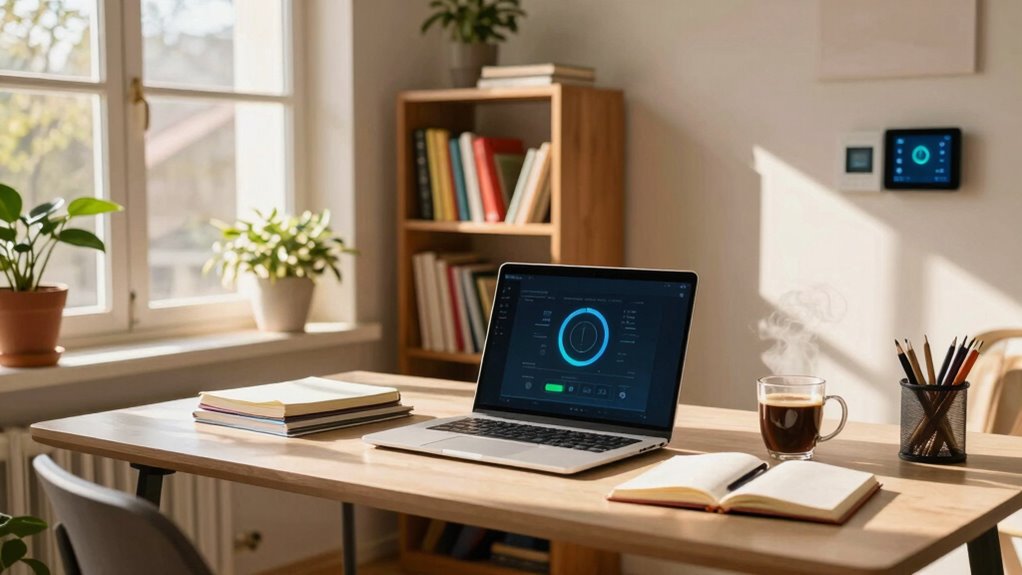

Your home workspace influences your household’s energy patterns by affecting lighting, heating, and device use. Well-designed spaces that maximize natural light and are well-insulated reduce reliance on artificial lighting and climate control, saving energy. Choosing energy-efficient appliances and smart devices helps control consumption. Proper layout encourages eco-friendly habits, like turning off electronics. If you continue exploring, you’ll discover more ways to optimize your workspace for energy savings and a greener home.
Key Takeaways
- Workspace layout influences lighting and device usage, impacting overall energy consumption.
- Proper insulation and sealing reduce heating and cooling energy needs in home workspaces.
- Maximizing natural light decreases reliance on artificial lighting, lowering energy use.
- Energy-efficient equipment and smart devices help minimize power consumption in home offices.
- Eco-friendly practices, like using plants and sustainable materials, enhance energy efficiency and household sustainability.
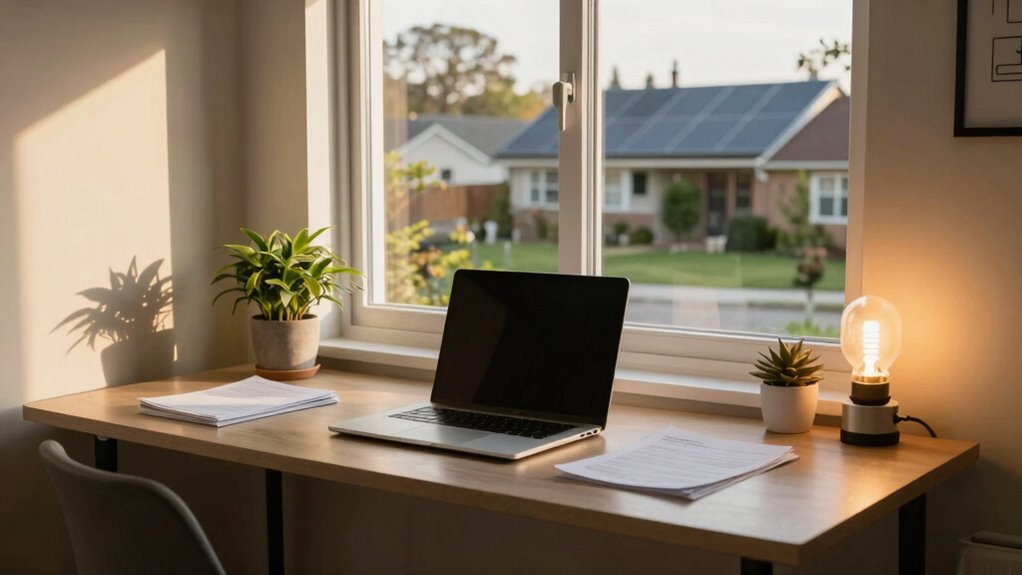
With more people working from home than ever before, understanding how home workspaces impact energy use is essential. When you set up a dedicated workspace, your energy consumption patterns often change significantly. A well-designed workspace can either help you conserve energy or cause it to spike. Your workspace design influences everything from the types of devices you use to how efficiently you manage lighting and heating. For example, choosing energy-efficient equipment and optimizing the layout can reduce unnecessary power draw, helping you save money on your utility bills.
A well-designed home workspace reduces energy use and saves money through efficient lighting, equipment, and layout choices.
The way you arrange your home office can make a big difference in how much energy you consume daily. If your workspace is cluttered or poorly lit, you might end up using more lighting or heating than necessary. Conversely, a thoughtfully arranged workspace that maximizes natural light reduces the need for artificial lighting during the day. Positioning your desk near windows or installing adjustable blinds allows you to take advantage of sunlight, which not only cuts energy use but also creates a more comfortable environment. Proper workspace design also encourages good habits, like turning off electronics when not in use or avoiding leaving devices on standby, further decreasing energy consumption. Additionally, integrating energy-efficient home automation systems can help monitor and control your energy use more effectively. Implementing energy management strategies can further optimize your overall household energy efficiency.
Heating and cooling are major factors in your home workspace’s energy footprint. If your workspace isn’t well-insulated or isn’t isolated from the rest of the house, it can cause your HVAC system to run more frequently, increasing energy use. You can minimize this by sealing gaps, using programmable thermostats, or setting specific temperatures for your workspace. Small adjustments, like using a space heater or fan wisely, can help you maintain comfort without overburdening your energy system. Ensuring your workspace is energy-efficient involves choosing the right appliances, like LED lights, energy-star-rated equipment, and smart power strips that prevent phantom loads. Additionally, understanding the importance of biodiversity and sustainable practices in your home can encourage more eco-friendly choices that support overall environmental health. Incorporating plants into your workspace not only boosts biodiversity but can also improve air quality and reduce the need for artificial cooling. Using energy-efficient materials in your home workspace setup can further contribute to a sustainable environment, leading to long-term reductions in your energy footprint.
As an affiliate, we earn on qualifying purchases.
Frequently Asked Questions
How Do Different Home Workspace Layouts Impact Energy Consumption?
Different home workspace layouts impact energy consumption based on furniture arrangement and storage solutions. A well-organized space with ideal furniture placement reduces clutter and allows efficient use of natural light, cutting down on lighting needs. Incorporating smart storage solutions minimizes unnecessary electronics and appliances, saving energy. Conversely, cluttered or inefficient layouts may increase reliance on artificial lighting and electronics, raising energy consumption. Thoughtful design helps you save energy and create a more sustainable workspace.
What Are the Best Energy-Efficient Devices for Home Workspaces?
You should opt for energy-efficient devices like LED desk lamps, energy-star rated computers, and smart power strips. These devices help you save energy and cut costs. Follow energy saving tips such as device optimization by turning off electronics when not in use and adjusting settings for efficiency. Remember, a little effort goes a long way—it’s all about working smarter, not harder, to keep your home workspace eco-friendly.
How Does Lighting Choice Influence Household Energy Patterns?
Your lighting choice greatly influences your household energy patterns. Using natural lighting during the day reduces reliance on artificial lights, cutting energy use and costs. Incorporate task lighting for specific activities, like reading or computer work, to improve efficiency and minimize wastage. By maximizing natural light and choosing focused task lighting, you create an energy-wise workspace that benefits both your household’s energy consumption and your comfort.
Do Home Workspaces Increase Overall Household Energy Bills Significantly?
Surprisingly, your home workspace might not considerably boost your energy bills, especially if you do a thorough energy cost analysis. While heating or cooling a dedicated workspace can seem costly, proper workspace insulation helps keep energy use efficient. By optimizing insulation and monitoring energy consumption, you can keep costs manageable, making your home office a productive space without substantially impacting your overall household energy expenses.
How Can Remote Work Reduce or Increase Household Energy Use?
Remote work can both reduce and increase household energy use. By practicing energy conservation—like turning off unused devices—you cut down on unnecessary power. At the same time, increased hours spent at home may boost energy consumption, especially for heating, cooling, and electronics. However, remote work can enhance productivity, encouraging smarter energy habits. Overall, mindful energy management helps balance increased usage while maximizing productivity benefits.
Conclusion
As you carve out a workspace at home, remember you’re shaping a new energy landscape. Think of your home as a garden—each new workspace is a seed that influences how energy flows through your household. Just like watering plants, your habits—like turning off unused devices—can nurture efficiency. Small changes add up; your home’s energy pattern is a living thing, growing stronger or weaker based on your daily choices. Your workspace isn’t just a corner—it’s a catalyst for change.