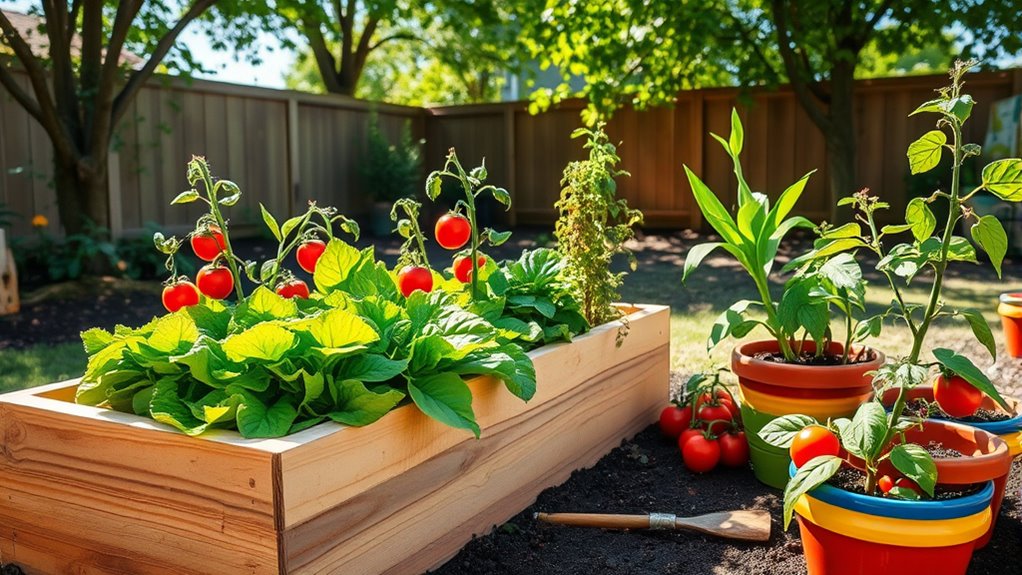

You can start sustainable gardening anywhere by using small containers, balcony bins, or raised beds to grow your own food, even in limited spaces. Focus on healthy soil with compost, plant native species, and practice water-saving methods like drip irrigation. Keep pests at bay naturally with companion planting and homemade solutions. Maintaining a balanced, eco-friendly approach helps your garden thrive and reduces environmental impact. Keep exploring to discover more tips for your sustainable garden journey.
Key Takeaways
- Use composting to turn kitchen scraps and yard waste into nutrient-rich soil for planting anywhere.
- Incorporate native plants and vertical or container gardens to maximize limited space for food production.
- Practice organic pest control methods like companion planting and natural remedies to protect crops sustainably.
- Employ water-saving techniques such as drip irrigation and mulching to conserve resources and improve plant health.
- Focus on soil health and biodiversity to create resilient, productive gardens in any environment.
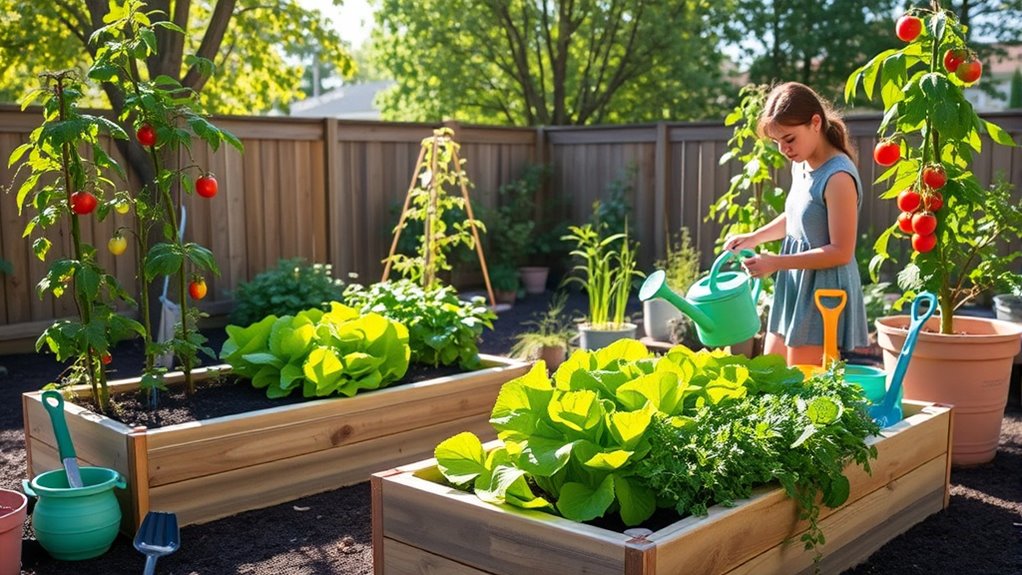
Starting a sustainable garden may seem intimidating at first, but it’s an achievable way to enjoy fresh produce while protecting the environment. One of the foundational steps is understanding composting basics. Composting transforms kitchen scraps and yard waste into nutrient-rich soil, reducing waste and enriching your garden naturally. You don’t need a large backyard; even small containers or balcony bins work well for composting. Simply layer brown materials like dried leaves or paper with green materials such as vegetable scraps and coffee grounds. Keep the compost moist and aerate it regularly to speed up decomposition. As it breaks down, you’ll produce dark, crumbly compost that feeds your plants without chemical fertilizers. This not only boosts your garden’s health but also minimizes your environmental footprint.
When it comes to pest management, organic pest control should be your go-to strategy. Unlike chemical pesticides, organic methods protect beneficial insects, soil health, and your own well-being. Start by encouraging natural predators like ladybugs and lacewings, which feast on common pests such as aphids and mites. You can attract them by planting flowering plants nearby or providing shelter. For immediate pest issues, use homemade solutions like neem oil or insecticidal soap, which target pests without harming the environment. Regularly inspect your plants, and remove pests manually when possible. Companion planting is another effective organic pest control method; planting herbs like basil or marigolds alongside vegetables can deter pests naturally. These techniques create a balanced ecosystem that keeps pests in check without resorting to harmful chemicals.
Sustainable gardening also involves selecting the right plants for your space and climate. Native plants are typically more resilient and require fewer resources, making them ideal for beginners. Use containers, raised beds, or even vertical gardens to maximize small spaces. Focus on soil health by incorporating compost and organic amendments, which improve soil structure and fertility. Water conservation is essential, so employ drip irrigation or soaker hoses to deliver water directly to plant roots, reducing waste. Mulching around plants helps retain moisture and suppress weeds, which can compete with your crops for nutrients and water. Over time, you’ll learn to observe your garden closely, understanding when and how to adapt your practices to maintain a thriving, environmentally friendly garden.

Fayoo Wooden Seed Storage Organizer Box with 40 Seed Vials & 20 Envelopes, Rustic Seed Saving Kit for Vegetable, Flower Seeds, Decorative Garden Seed Storage Container, Gardening Gifts for Women
- Premium Wooden Construction: Durable wood with floral engraving
- Four-Compartment Design: Keeps seeds organized and prevents clutter
- Secure Foam Insert: Holds 40 seed vials securely in place
As an affiliate, we earn on qualifying purchases.
As an affiliate, we earn on qualifying purchases.
Frequently Asked Questions
What Are the Best Plants for Small Urban Gardens?
When choosing plants for small urban gardens, focus on those suited for container gardening and vertical planting. You can grow herbs like basil and mint in pots or lettuce and radishes in small containers. Vertical planting allows you to maximize space by stacking or hanging plants such as strawberries or cherry tomatoes. These options are easy to maintain, maximize limited space, and bring fresh produce right to your urban doorstep.
How Do I Start Composting at Home?
Jumping into composting is like hitting two birds with one stone. First, set up your compost bin in a dry, shady spot with a mix of green and brown materials. Don’t buy into composting myths that it’s complicated; it’s simple! Regularly turn the pile, keep it moist, and avoid meat or dairy. Soon, you’ll create rich soil, nourishing your garden and reducing waste in style.
What Are Eco-Friendly Pest Control Methods?
You can control pests eco-friendly by encouraging beneficial insects like ladybugs and lacewings, which naturally keep pests in check. Use natural repellents such as neem oil or garlic spray to deter unwanted bugs without harming your plants. Avoid chemical pesticides, and instead, create a balanced garden environment that attracts helpful insects, promotes plant health, and reduces pest problems naturally. This approach keeps your garden sustainable and safe for all.
How Can I Conserve Water in My Garden?
Conserving water in your garden is like saving pennies for a rainy day. You can start by collecting rainwater through rainwater harvesting systems, which reduces reliance on tap water. Additionally, using drip irrigation targets water directly to plants’ roots, minimizing waste. These simple steps help you save water, support sustainable gardening, and guarantee your plants thrive even in dry conditions.
What Seasonal Crops Are Easiest for Beginners?
You’ll find that seasonal crops like lettuce, radishes, and beans are easiest for beginners. To boost success, try companion planting—pairing plants that support each other—and perform soil testing to guarantee your soil’s nutrients are balanced. These practices help your crops thrive, making gardening less stressful and more rewarding. Start with simple, hardy plants, and gradually experiment with more complex varieties as you gain confidence.
Conclusion
Now that you’re ready to embrace sustainable gardening, remember that every seed you plant is a promise to the planet and yourself. Like a small drop creates an ocean, your efforts can grow into a thriving, eco-friendly oasis. So go ahead—dig in with confidence, nurture your space, and watch how your simple act of gardening can ripple outward, transforming not just your backyard but the world around you. The power to make a difference is in your hands.