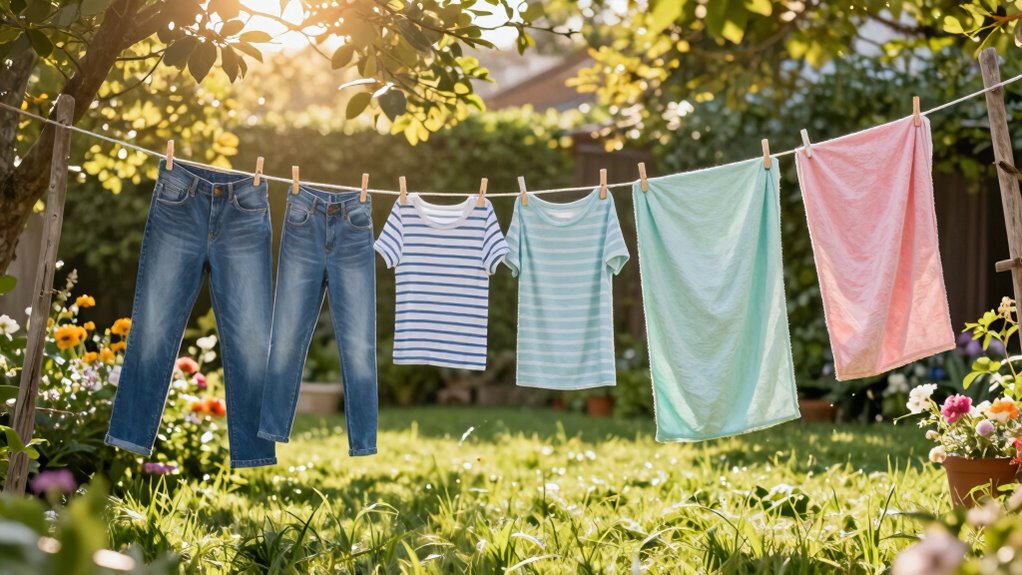

Air drying clothes supports low-energy living by eliminating the need for electric or gas dryers, which consume significant energy and raise utility bills. By hanging clothes indoors or outdoors, you reduce your household’s carbon footprint and conserve resources. Proper ventilation during indoor drying helps control humidity and avoid mold. Embracing this eco-friendly method not only saves energy but also promotes sustainable habits—if you explore further, you’ll discover more ways to make your laundry routine even greener.
Key Takeaways
- Air drying eliminates the need for energy-consuming electric or gas dryers, reducing household energy use.
- It lowers utility bills by decreasing electricity or gas consumption associated with drying clothes.
- Outdoor or indoor air drying minimizes reliance on fossil fuel-based energy sources.
- Using natural sunlight and ventilation supports renewable, low-energy laundry practices.
- Air drying promotes sustainable living by reducing carbon footprint and conserving resources.
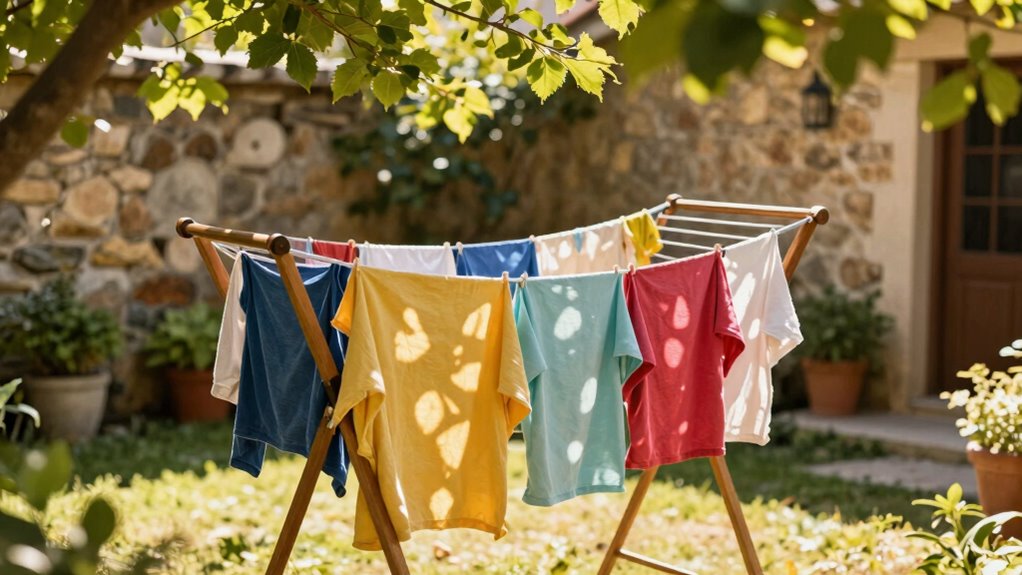
Air drying clothes is a simple yet effective way to reduce your household energy consumption and live more sustainably. When you choose to hang your laundry instead of using a dryer, you cut down on electricity or gas use, which directly lowers your carbon footprint. Not only does this save money, but it also lessens the demand for energy production, which often relies on fossil fuels. By incorporating air drying into your routine, you take a small but meaningful step toward a low-energy lifestyle.
One benefit of air drying clothes indoors is its impact on indoor humidity. As your clothes dry, they release moisture into the air, which can temporarily increase indoor humidity levels. While this is usually manageable, especially in well-ventilated spaces, it’s something to keep an eye on if you live in a naturally humid environment. Proper ventilation helps prevent excess moisture buildup, which can lead to mold or mildew issues. Using exhaust fans or opening windows during and after drying can help maintain a healthy indoor environment. If you prefer drying clothes outside, solar drying becomes an excellent option. Solar drying harnesses natural sunlight and warm outdoor air to dry your laundry efficiently. It’s a free, renewable method that requires no energy, making it highly sustainable. Plus, solar drying can be gentler on fabrics, helping your clothes last longer compared to high-heat tumble drying. Additionally, choosing energy-efficient drying methods can further reduce your environmental impact. Incorporating renewable energy sources like solar power into your home can further enhance your sustainable laundry practices. Utilizing clothes drying racks instead of mechanical dryers can also be an economical and space-efficient way to air dry clothes indoors. To maximize sustainability, consider the environmental benefits of air drying and how it contributes to a healthier planet. Moreover, selecting energy-efficient appliances can further amplify your efforts to reduce energy consumption.
As an affiliate, we earn on qualifying purchases.
Frequently Asked Questions
How Long Does Air Drying Typically Take Compared to Machine Drying?
Air drying clothes usually takes several hours, often 4 to 24 hours, depending on humidity, fabric type, and airflow. It’s slower than machine drying, but it’s more energy-efficient because you avoid using electricity or gas. While drying speed is reduced, you gain energy efficiency and reduce your carbon footprint. If you plan ahead and optimize airflow, you can make air drying more practical, especially for delicate fabrics or when conserving energy.
What Are the Best Weather Conditions for Air Drying Clothes Outdoors?
You should choose days with low humidity levels and moderate wind speed for outdoor air drying. Low humidity helps moisture evaporate faster, while some wind accelerates the process by moving moist air away from the clothes. Avoid very humid or still days, as these conditions slow drying. Sunny, breezy weather is ideal, making your clothes dry quicker and saving energy compared to machine drying.
Can Air Drying Prevent Fabric Damage Better Than Tumble Drying?
Air drying can prevent fabric damage better than tumble drying because it’s gentler, preserving fabric softness and reducing wear and tear. You avoid the harsh heat and tumbling action that can weaken fibers and cause pilling. Plus, air drying is more energy efficient, saving electricity and lowering your environmental impact. Ultimately, you get clothes that stay softer longer and last through more washes, making it a smart, eco-friendly choice.
How Does Air Drying Affect the Longevity of Clothing?
Air drying dramatically extends your clothes’ lifespan, almost like giving them a fountain of youth. It minimizes fabric softening, keeping your garments feeling crisp and comfortable, and prevents color fading that tumble drying can cause. By avoiding the high heat, your clothes stay vibrant and intact longer. Plus, air drying reduces wear and tear, ensuring your favorite pieces look new after countless wears, saving you money and frustration.
Are There Specific Clothing Materials Best Suited for Air Drying?
You’ll find that natural fibers like cotton, linen, and wool dry best with air drying, maintaining their shape and softness. Synthetic fabrics like polyester and nylon tend to dry faster, but they may wrinkle more and sometimes degrade quicker when air-dried. To preserve your clothes and save energy, opt for natural fibers whenever possible, and hang your garments properly to guarantee even drying and minimize wrinkles.
Conclusion
Here’s a concise, ironic conclusion for your article:
So, next time you hang your clothes to dry, remember you’re saving energy—while basking in the warm glow of the sun, ironically doing less to heat your home. Who knew that simply letting the breeze do the work could be the most eco-friendly choice, all without flicking a switch? Embrace the art of air drying, and watch your energy bills—and carbon footprint—drastically shrink, one sun-dried sock at a time.