
Load balancing helps your two-EV home avoid headaches by preventing overloads during simultaneous charging, ensuring your electrical system stays safe and reliable. It dynamically adjusts energy flow based on household demand and renewable generation, so your EVs charge efficiently without causing disruptions. Using smart systems, you can prioritize renewable energy use and store excess power for later. If you want to discover how these techniques work together, keep exploring these innovative solutions.
Get ready for Prime Big Deal Days — try Prime free
Exclusive member deals on October 6–7, plus fast free delivery. Cancel anytime.
As an affiliate, we earn on qualifying purchases.
Key Takeaways
- Prevents electrical overloads by managing simultaneous EV charging, ensuring safety and system reliability.
- Balances renewable energy use and storage to avoid overloading circuits during peak generation.
- Automates power distribution, reducing manual scheduling and minimizing charging frustrations.
- Optimizes energy flow from renewables and batteries, maintaining consistent EV charging without stressing the system.
- Integrates home automation for real-time monitoring and control, simplifying two-EV home energy management.
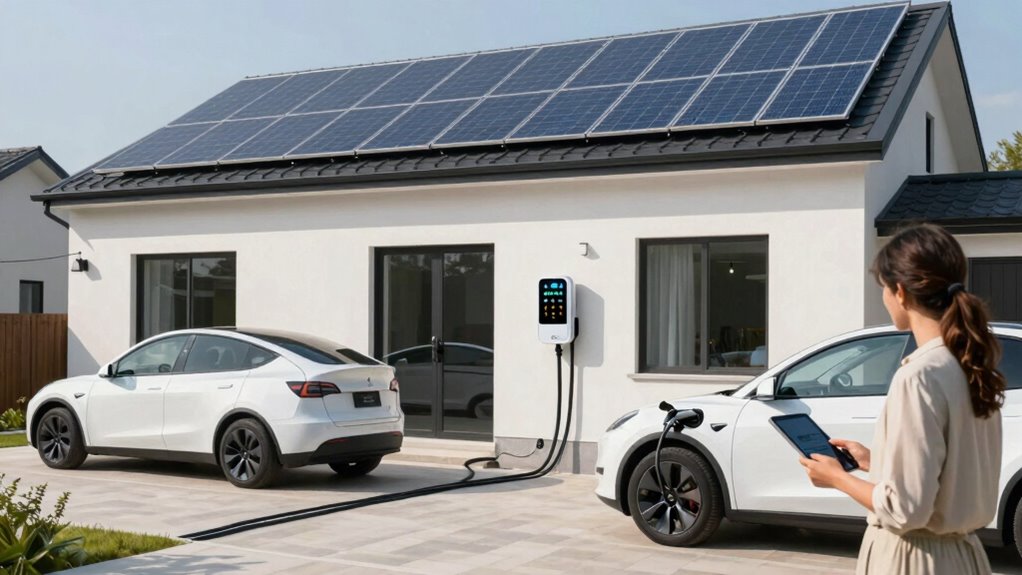
If your home has two electric vehicles (EVs), managing your energy load becomes crucial to avoid overloading your system and guarantee efficient charging. Load balancing plays a critical role here, especially as you integrate renewable energy sources like solar panels or wind turbines. These sources can supply clean energy directly to your EVs, reducing reliance on the grid and lowering your carbon footprint. But without proper load management, the simultaneous charging of two EVs can strain your system, causing circuit overloads or uneven charging times, leading to frustration and potential hardware issues.
Proper load management ensures efficient, safe charging of two EVs while protecting your home’s electrical system and reducing reliance on the grid.
Effective load balancing ensures that your home’s energy distribution adjusts dynamically based on your energy consumption and supply. When you incorporate renewable integration, your system can draw excess solar or wind power during peak generation times, storing this energy in batteries or directing it straight to your EVs. This not only maximizes the use of renewable energy but also prevents overloads by controlling how much power each EV receives at any given moment. Energy storage becomes a crucial part of this process, as batteries can buffer the variability of renewable sources. When solar output dips or demand spikes, stored energy can fill the gap, maintaining consistent charging without taxing your electrical system.
By smartly managing how power is allocated, load balancing helps you avoid headaches like tripped breakers, uneven charging, or the need to manually switch charging schedules. Instead, your system can prioritize charging based on demand, battery capacity, and renewable energy availability. For example, during sunny days, your system might allocate more power to EV charging, while on cloudy days or at night, it can reduce charging rates or draw from stored energy. This flexibility ensures both EVs are charged efficiently without overloading your home’s electrical circuit. Incorporating smart load management further enhances this process by optimizing energy flow and reducing manual intervention. Additionally, implementing advanced energy monitoring**** tools can help you better understand your consumption patterns and improve overall system efficiency.
Furthermore, integrating load balancing with home automation systems can optimize energy use by coordinating other household appliances, leading to even greater efficiency. Moreover, load balancing systems can be integrated with smart home technology, giving you real-time control and monitoring. You can set preferences, receive alerts, and optimize your energy flow on the fly. This integration simplifies managing two EVs, especially when coupled with renewable energy sources, making your home more resilient and less dependent on the grid. To maximize benefits, understanding energy consumption patterns allows homeowners to fine-tune their systems and prevent unnecessary strain on the electrical infrastructure. The result is a seamless, headache-free charging experience that leverages renewable integration and energy storage, all while protecting your electrical infrastructure.
smart load balancer for electric vehicles
As an affiliate, we earn on qualifying purchases.
As an affiliate, we earn on qualifying purchases.
Frequently Asked Questions
How Does Load Balancing Impact Overall Energy Efficiency?
Load balancing boosts your overall energy efficiency by optimizing solar integration and energy storage. It distributes power demand evenly across your system, preventing overloads and reducing energy waste. By intelligently managing when your EV charges and how your batteries store energy, you maximize solar use and minimize reliance on the grid. This streamlined approach helps you save money, extend equipment lifespan, and make the most of renewable resources.
Can Load Balancing Prevent Power Outages During Peak Times?
Yes, load balancing can prevent power outages during peak times. Picture a busy street, where traffic is smoothly directed, preventing jams. Your home’s battery backup and renewable integration work similarly, distributing energy efficiently and avoiding overloads. This proactive management guarantees your energy supply remains steady, even when demand spikes. By balancing loads, you stay powered, protected from outages, and ready to handle the busiest, most demanding moments effortlessly.
What Are the Cost Implications of Installing Load Balancing Systems?
Installing load balancing systems involves upfront installation expenses, but it can lead to significant cost savings over time by optimizing energy use and preventing costly power outages. While the initial investment might seem high, you save on energy bills and reduce the risk of electrical damage. Overall, the long-term benefits outweigh the installation expenses, making load balancing a smart financial choice for two-EV homes seeking efficiency and reliability.
How Does Load Balancing Adapt to Future EV Charging Needs?
Load balancing adapts to future EV charging needs by integrating with a smart grid, which dynamically manages electricity flow based on demand. As EVs become more common, this system automatically adjusts power distribution, preventing overloads and ensuring efficient use of renewable energy sources. This future-proof approach helps your home stay ready for increased EV charging, reducing headaches and supporting sustainable energy growth.
Are There Any Safety Concerns With Load Balancing in Residential Settings?
You should know that load balancing in residential settings is generally safe when proper safety protocols are followed. It’s designed to prevent electrical hazards, like overloads or short circuits, by evenly distributing power. Coincidentally, these safety measures protect your home and guarantee reliable EV charging. Always work with qualified professionals who adhere to electrical safety standards, so you can charge your EV confidently without worrying about potential hazards.
Conclusion
By embracing load balancing, you’ll dodge the chaos of power overloads and endless outages. Imagine never worrying about tripped breakers or waking up to a dead car—your home and EVs work in perfect harmony, like a symphony of energy. It’s not just a smart choice; it’s the secret to living stress-free in a two-EV world. With load balancing, you’re not just saving energy—you’re reclaiming your peace of mind and future-proofing your home.
Fall yard work Picks
leaf blowers
As an affiliate, we earn on qualifying purchases.