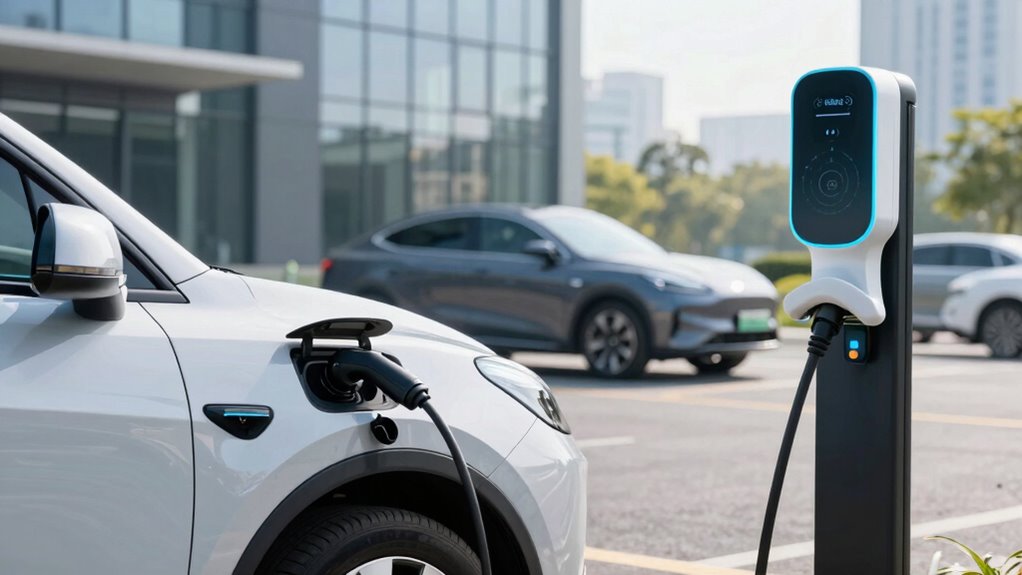

Proper charger placement impacts your daily routine, safety, and your EV’s battery health more than many new owners realize. Being able to easily access your charger near your garage or driveway makes ideal top-up times quick and seamless, encouraging regular use that preserves battery life. Poor placement can lead to safety hazards, longer charging times, and increased costs. To maximize your EV experience and avoid hidden issues, knowing the key considerations behind perfect charger positioning is essential.
Key Takeaways
- Proper placement ensures easy access, encouraging regular charging habits that protect battery health and improve daily convenience.
- Strategic positioning enhances safety by reducing risks of water, debris, or electrical hazards and facilitating maintenance.
- Correct location optimizes charging efficiency, preventing unnecessary strain on electrical systems and extending battery lifespan.
- Placement impacts installation costs, as optimal sites minimize wiring complexity and avoid costly upgrades.
- Thoughtful charger positioning supports long-term system safety, compliance, and overall EV performance.
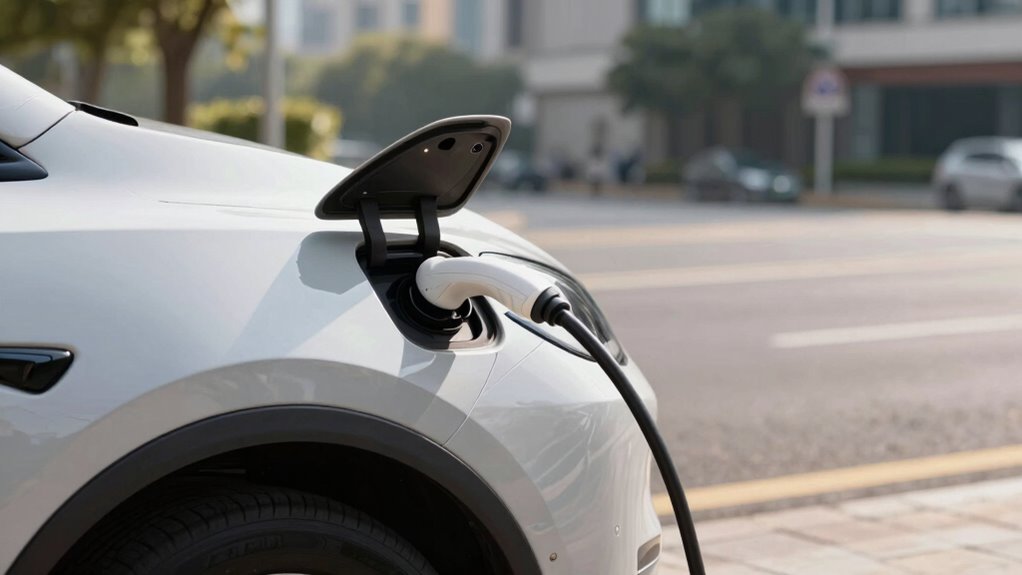
When it comes to electric vehicles (EVs), the placement of the charger plays a crucial role in both convenience and safety. Many new owners overlook this detail, but where your charger is located can markedly impact your daily driving experience. Proper placement influences not only how easily you access the charger but also how efficiently your battery remains charged. It’s worth contemplating because poor placement can lead to decreased battery efficiency over time, as inconsistent charging or unnecessary strain on the system can accelerate battery wear.
Proper charger placement enhances convenience, safety, and battery longevity for a better EV experience.
You might think that installing a charger is straightforward, but installation challenges can arise depending on where you choose to position it. If the charger is placed too far from power sources or in an inconvenient spot, it can complicate the charging process. For example, mounting the charger in a hard-to-reach location may discourage regular use, leading to longer charging times and reduced overall battery efficiency. Conversely, a thoughtfully placed charger near your garage or driveway makes the process quick and seamless, encouraging consistent charging habits that help maintain the health of your battery.
Safety is another critical factor linked to charger placement. If you position the charger where water, debris, or other hazards are present, it increases the risk of damage or electrical issues. Proper placement ensures adequate ventilation and prevents overheating during use, which protects both your vehicle and your home’s electrical system. Additionally, considering the accessibility for maintenance or emergency situations is wise. You want to be able to quickly disconnect or troubleshoot the charger if needed, so placing it where it’s accessible but protected from potential damage is ideal. The electrical infrastructure of your property can also influence your options, as existing wiring may need upgrades or rerouting for optimal placement. Planning for future electrical upgrades can save you time and money later on.
Furthermore, the location of your charger impacts overall installation challenges. If your electrical wiring needs significant upgrades or rerouting, it can add cost and complexity to the process. Choosing a spot that minimizes these hurdles not only saves time but also reduces expenses. It’s important to evaluate your existing electrical infrastructure and plan accordingly, ensuring that the placement supports both safety standards and electrical system resilience. Being aware of installation considerations beforehand can help prevent potential issues that could compromise your system’s safety or performance. Additionally, thoughtful planning can help prevent electrical hazards and ensure compliance with local codes and standards.
In the end, charger placement is more than a matter of convenience; it’s a strategic decision that influences your EV’s performance, safety, and longevity. Taking the time to reflect on the best location for your charger can make a notable difference in how efficiently your battery operates and how smoothly your daily charging routine becomes. Don’t underestimate the importance of this seemingly simple choice—it’s a key step toward maximizing your EV experience.
As an affiliate, we earn on qualifying purchases.
Frequently Asked Questions
How Does Charger Placement Affect Vehicle Safety During Charging?
Charger placement directly impacts your vehicle’s safety during charging by ensuring proper accessibility and preventing accidents. When you position the charging station for easy access, you reduce the risk of tripping or damage. Additionally, thoughtful placement considers aesthetic integration, so the charger doesn’t create hazards or clutter. Properly placed chargers promote safer, more convenient charging, giving you peace of mind while protecting both your vehicle and surroundings.
Can Improper Charger Placement Lead to Increased Wear on the EV?
Ironically, poor charger placement can lead to increased wear on your EV, even if you think aesthetics and installation costs are your main concerns. If you position the charger awkwardly, it strains cables and connectors, causing faster deterioration. Plus, bad placement might make frequent use harder, accelerating wear. So, while you focus on charger aesthetics and saving on installation costs, remember that improper placement can actually cost you more in repairs over time.
What Are the Best Practices for Charging in Tight or Limited Spaces?
When charging in tight spaces, prioritize accessibility to power outlets and keep the charging station aesthetically pleasing. You should choose a spot that allows easy access to the outlet without blocking pathways. Use extension cords if needed, but make sure they’re high-quality and rated for your EV. Keep the station organized, avoiding clutter, so you can plug in quickly and safely without damaging the cord or outlet.
Does Charger Placement Impact the Vehicle’s Overall Electrical System?
Charger placement acts like the heartbeat of your EV setup, influencing your vehicle’s electrical rhythm. Proper placement guarantees ideal charging speed, preventing overloads or electrical hiccups. If you choose a spot too far or poorly ventilated, installation costs rise as electricians work harder to connect and protect your system. So, think of placement as tuning your electrical symphony—carefully positioned to keep your EV humming smoothly without costly surprises.
How Does Charger Location Influence Convenience for Daily Charging Routines?
Charger location directly affects your daily charging convenience by enhancing charging accessibility and parking flexibility. When you position chargers near your usual parking spot, it’s easier to plug in without hassle, saving you time. Good placement also allows more flexibility in choosing parking spots, especially in tight or crowded areas. This convenience encourages regular charging, making your EV experience smoother and more efficient every day.
Conclusion
Just like a well-placed lighthouse guides ships safely to shore, your charger placement can make charging your EV smoother and more convenient. Don’t underestimate its importance—thinking ahead now can save you time and frustration later. Proper placement is the key to seamless daily drives and long-term satisfaction. So, take a moment to plan where your charger should go, and you’ll enjoy the journey just as much as the destination.