
Heat pump dryers differ from traditional dryers because they recycle heat through a refrigeration cycle, making them much more energy-efficient and eco-friendly. Unlike traditional models that vent moist air outside and waste a lot of heat, heat pump dryers use a closed-loop system that condenses moisture internally. This means they use less power, reduce your energy bills, and are gentler on your clothes. To find out how these features benefit you, keep exploring the details.
Key Takeaways
- Heat pump dryers recycle heat via a refrigeration cycle, unlike traditional dryers that vent moist air outside.
- They operate at lower temperatures, making them gentler on clothes and reducing heat damage.
- Heat pump models do not require external venting, allowing flexible installation in various spaces.
- They consume less energy, resulting in cost savings and lower environmental impact over time.
- Their closed-loop system enhances efficiency and sustainability compared to conventional vented dryers.
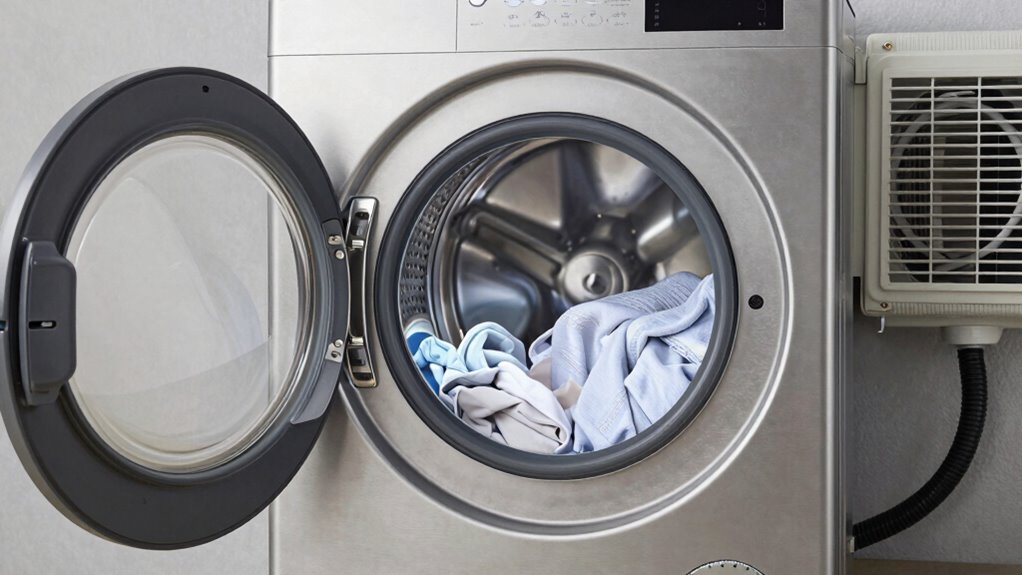
When choosing a dryer, understanding the key differences between heat pump dryers and traditional models can help you make a smarter decision. Heat pump dryers operate quite differently from standard models, mainly because they recycle heat to dry your clothes more efficiently. Instead of using a heating element that heats the air and then expels it, heat pump dryers use a refrigeration cycle to extract moisture from your laundry. This process allows them to operate at much lower temperatures, which not only saves energy but also reduces your household’s overall environmental impact.
Heat pump dryers recycle heat and operate at lower temperatures for energy savings and eco-friendly laundry.
Traditional dryers rely on high heat and vent air outside to remove moisture. This method consumes a significant amount of energy, leading to higher utility bills and a larger carbon footprint. In contrast, heat pump dryers are designed to use less energy by recycling heat within the system. The lower temperatures mean they use less power to dry clothes, making them more energy efficient over time. If you’re concerned about reducing your environmental impact, a heat pump dryer offers a more eco-friendly option because it consumes fewer resources and produces less greenhouse gas emissions compared to traditional models.
Another key difference is in their design and operation. Traditional dryers typically have a straightforward setup, where hot air is blown into the drum, and moist air is expelled outside through a vent. This process requires a steady supply of electricity to generate heat and often results in heat wastage. Heat pump dryers, on the other hand, feature a closed-loop system that condenses moisture and reuses the heat, meaning they don’t need to vent outside. This not only makes them more energy efficient but also allows for more flexible installation options, especially in spaces where venting isn’t feasible. Additionally, advances in eco-friendly technology continue to improve their performance and sustainability. Incorporating renewable energy sources can further enhance their environmental benefits.
In terms of environmental impact, heat pump dryers stand out because they use less energy and produce fewer emissions. Their ability to operate at lower temperatures means they’re gentler on clothes too, helping your garments last longer. Over time, the energy savings add up, making them a sustainable choice for eco-conscious households. While heat pump dryers tend to have a higher upfront cost, the long-term savings on energy bills and their reduced environmental footprint make them a smarter investment. By choosing a heat pump dryer, you’re not just drying clothes—you’re making a conscious decision to be kinder to the planet and to your wallet. Additionally, advancements in biodiversity and conservation highlight the importance of adopting eco-friendly appliances that reduce overall environmental impact.

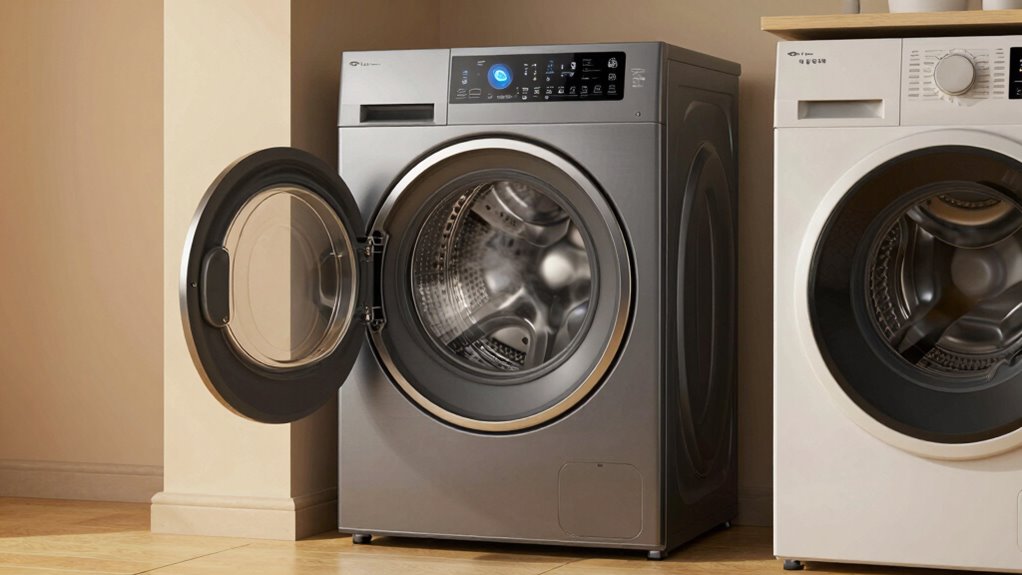
LG DLHC1455W 24 in. W 4.2 Cu. Ft. Ventless Stackable Compact Smart Electric Dryer in White with Dual Inverter HeatPump Technology
- Smart Heat Pump Technology: Efficient, low-energy ventless drying
- Compact Size: Fits small laundry spaces or closets
- Large Capacity: 4.2 cu ft for a compact dryer
As an affiliate, we earn on qualifying purchases.
As an affiliate, we earn on qualifying purchases.
Frequently Asked Questions
How Long Do Heat Pump Dryers Typically Last?
Heat pump dryers typically last around 10 to 15 years, depending on usage and maintenance. Their energy efficiency means you save on electricity bills over time, making them a cost-effective choice. Proper upkeep, like cleaning filters and vents, can extend their lifespan. You’ll appreciate their durability and the long-term cost savings, as these dryers are designed to perform efficiently for many years, offering reliable service and energy-efficient drying.
Are Heat Pump Dryers Suitable for All Fabric Types?
Heat pump dryers are suitable for most fabric types because they offer excellent fabric compatibility while maintaining drying efficiency. You can safely dry delicate fabrics like wool or silk without risking damage, thanks to their gentle, low-temperature process. For heavier fabrics like towels or jeans, they still perform well, though drying times might be slightly longer. Overall, heat pump dryers balance gentle care with effective drying, making them versatile for various fabric types.
Do Heat Pump Dryers Require Special Maintenance?
Yes, heat pump dryers do require some special maintenance to keep them running efficiently. You should regularly clean the filters, check the vents, and guarantee the condenser is free of dust. This maintenance supports their energy efficiency and prolongs lifespan. When comparing costs, you’ll find that, although they might cost more initially, their lower energy consumption offers significant savings over time. Proper upkeep maximizes these benefits.
Can Heat Pump Dryers Be Used in Colder Climates?
Like a sturdy oak standing tall through winter storms, heat pump dryers adapt well to colder climates. They’re designed with climate adaptability in mind, maintaining efficiency even when temperatures dip. This resilience makes them a smart choice, as they maximize energy efficiency in chilly conditions. So, you can confidently rely on your heat pump dryer, knowing it’ll perform consistently, no matter the season, helping you save energy and keep your laundry routine smooth.
What Is the Noise Level Comparison Between Both Types?
Heat pump dryers are generally quieter than traditional dryers, making them a great choice if noise levels matter to you. Their energy efficiency means they use less power, which often correlates with smoother, quieter operation. When comparing noise levels, heat pump models typically produce less sound, providing a more peaceful laundry experience. If you prefer a quieter appliance with better energy efficiency, heat pump dryers are the smarter, quieter option.
Conclusion
So, as you consider your options, it’s almost poetic how the heat pump dryer’s quiet efficiency aligns with the rising demand for eco-friendly solutions. Coincidentally, what starts as a simple upgrade to save energy often leads to a quieter, more sustainable lifestyle. Choosing a heat pump dryer isn’t just about technology; it’s about embracing a subtle shift that blends convenience with conscience, proving that sometimes, the smallest changes can make the most meaningful impact.