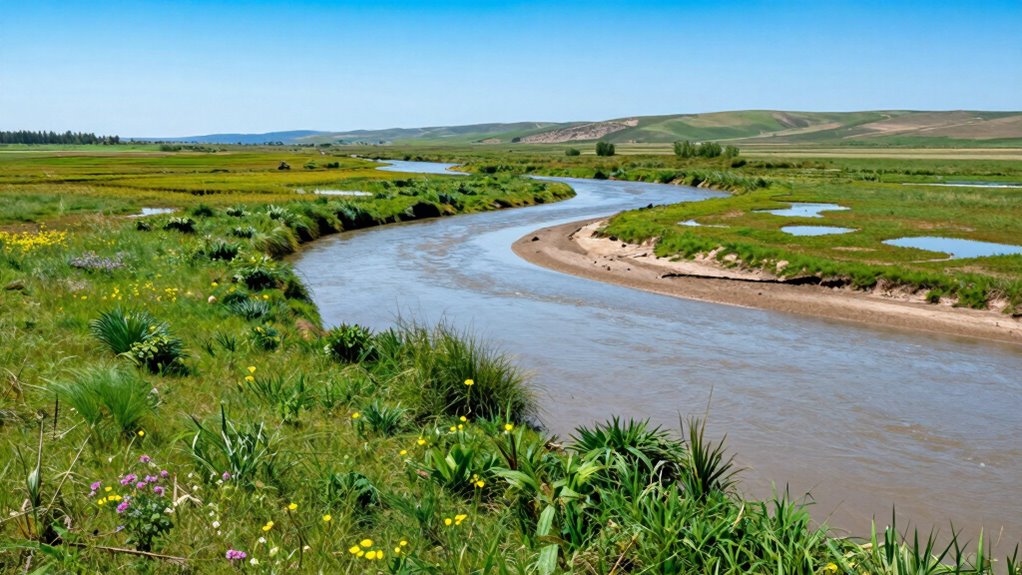

Healthy rivers need floodplains because they help maintain ecological balance and support biodiversity. Floodplains allow natural overflow, which filters pollutants, replenishes groundwater, and reduces flooding risks. They also provide vital habitats for plants and animals, making the ecosystem more resilient. Urban development often harms these areas, but protecting floodplains guarantees healthier water and better flood management. Keep exploring to discover more ways floodplains benefit both nature and communities.
Key Takeaways
- Floodplains support biodiversity by providing essential habitats for diverse plant and animal species.
- They naturally absorb excess water, reducing the risk and severity of floods in riverine areas.
- Floodplains filter pollutants and sediments, improving overall water quality.
- Maintaining floodplains helps replenish groundwater levels vital for ecosystems and agriculture.
- They enhance ecological resilience and sustain the natural balance of healthy river systems.

Have you ever wondered why healthy rivers and floodplains are indispensable for our environment? It’s because these natural systems play a critical role in maintaining ecological balance, supporting biodiversity, and providing resources that benefit both nature and communities. When rivers flow freely through their floodplains, they help filter pollutants, replenish groundwater, and reduce the risk of floods. Yet, modern urban development often encroaches on these floodplains, leading to disruption of their natural functions. As cities expand, concrete barriers and drainage systems are built to control flooding, but these measures can cause more harm than good. They restrict the natural overflow of rivers, which is fundamental for dispersing excess water and maintaining healthy ecosystems.
Pollution control is another key reason why healthy rivers need floodplains. Floodplains act as natural filters, trapping sediments and absorbing pollutants before they reach the main river channel. When floodplains are preserved and restored, they profoundly improve water quality and protect aquatic life. However, urban development often leads to pollution runoff from streets, factories, and residential areas that overwhelms these natural filtration systems. Without healthy floodplains, pollutants flow directly into rivers, worsening water quality and threatening both wildlife and human health. Restoring floodplain areas helps manage pollution naturally, reducing the need for expensive treatment facilities and supporting sustainable water management practices. Additionally, preserving these areas supports the natural pollution filtration process that enhances overall water health.
Having floodplains intact also benefits urban communities by reducing the impact of floods and minimizing property damage. When floodplains are developed or paved over, cities become more vulnerable to flooding during heavy rains or storm surges. This can cause costly damages and endanger lives. Conversely, preserving and restoring floodplain areas allows excess water to spread out and soak into the ground, easing the pressure on urban infrastructure. This natural flood mitigation is both cost-effective and environmentally friendly, helping cities adapt to climate change and unpredictable weather patterns.
In addition, healthy floodplains foster biodiversity by providing habitats for a wide range of plants, animals, and insects. These natural habitats support ecological resilience and help maintain the health of the entire river system. When we prioritize conservation and sustainable urban planning, we guarantee that floodplains continue to serve their essential functions. Balancing urban development with pollution control measures and floodplain preservation is not only good for the environment but also indispensable for the well-being of communities. By understanding and respecting the importance of healthy rivers and their floodplains, you can contribute to a more sustainable future where nature and urban life coexist harmoniously.

Chemical Guys Headlight Restoration & Ceramic Kit, Complete DIY Kit for Removing Yellowing & Oxidation, Includes Restoration Compound, HydroCharge With Microfiber & Applicator
Headlight Restoration Kit (GAP401) Restores cloudy, yellowed headlights and plastic lenses by removing oxidation, haze, and discoloration for…
As an affiliate, we earn on qualifying purchases.
As an affiliate, we earn on qualifying purchases.
Frequently Asked Questions
How Do Floodplains Naturally Regulate River Flow?
Floodplains naturally regulate river flow by absorbing excess water during heavy rains, reducing flood risks. They influence river dynamics by slowing down water movement, which allows sediment transport to occur gently, preventing erosion downstream. As the river spreads across the floodplain, it deposits sediments, enriching the soil and maintaining a balanced ecosystem. This process helps keep the river’s flow steady and prevents destructive floods, supporting healthy river systems.
What Are the Key Species That Depend on Floodplain Habitats?
You’ll find that floodplain habitats support key habitat species like amphibians, fish, and waterbirds, which rely on the rich floodplain biodiversity. These species depend on the seasonal floods and diverse plant life to breed, find food, and shelter. Protecting floodplain habitats guarantees these key species thrive, maintaining ecological balance and supporting overall river health. Your efforts to preserve floodplains directly benefit this essential biodiversity.
How Do Human Activities Impact Floodplain Health?
Urban expansion and pollution runoff threaten floodplain health by disrupting natural processes. For example, when cities grow closer to rivers, increased runoff carries pollutants that degrade water quality and harm habitats. These activities reduce floodplain biodiversity and impair their ability to absorb floods, leading to more severe flooding downstream. You can help by supporting sustainable development and pollution control measures that protect floodplain ecosystems and keep rivers healthy.
Can Floodplains Help Mitigate Climate Change Effects?
Yes, floodplains can substantially help mitigate climate change effects by enhancing floodplain resilience and serving as crucial climate adaptation tools. When you protect and restore floodplains, you improve their ability to absorb floodwaters and store carbon, reducing risks from extreme weather events. By investing in floodplain health, you support natural processes that buffer communities from climate impacts, making ecosystems and human settlements more resilient and adaptable to a changing climate.
What Are Examples of Successful Floodplain Restoration Projects?
You can look at successful floodplain restoration projects like the Sacramento River in California or the Danube in Europe. These projects boost floodplain biodiversity and use effective restoration techniques such as wetland creation, riparian planting, and levee setbacks. By restoring natural floodplain functions, these efforts improve habitat health, reduce erosion, and enhance flood resilience, demonstrating how strategic interventions can revive river ecosystems and benefit communities alike.

Purewell 3-Stage 0.01μm Ultra-Filtration Gravity Water Filter System, NSF/ANSI 42&372 Certification, 304 Stainless Steel Countertop System with 2 Filters and Stand, Reduce 99% Chlorine, 2.25G, PW-OB
3-Stage Filtration – The Purewell gravity water filter system adopts a composite filter technology, can reduce most contaminants….
As an affiliate, we earn on qualifying purchases.
As an affiliate, we earn on qualifying purchases.
Conclusion
By protecting floodplains, you help keep rivers healthy, like a lifeblood flowing freely through a vibrant body. When floodplains are preserved, they act as nature’s safety valves, absorbing excess water and reducing floods, while nourishing ecosystems. Think of floodplains as the kidneys of a river, filtering and balancing its flow. By nurturing these crucial areas, you guarantee rivers remain strong and resilient, supporting life as naturally as a heart keeps a body alive.

Reframing the Urban Challenge in Africa: Knowledge Co-production from the South (Routledge Studies in Cities and Development)
As an affiliate, we earn on qualifying purchases.
As an affiliate, we earn on qualifying purchases.
wetlands and floodplain conservation tools
As an affiliate, we earn on qualifying purchases.
As an affiliate, we earn on qualifying purchases.