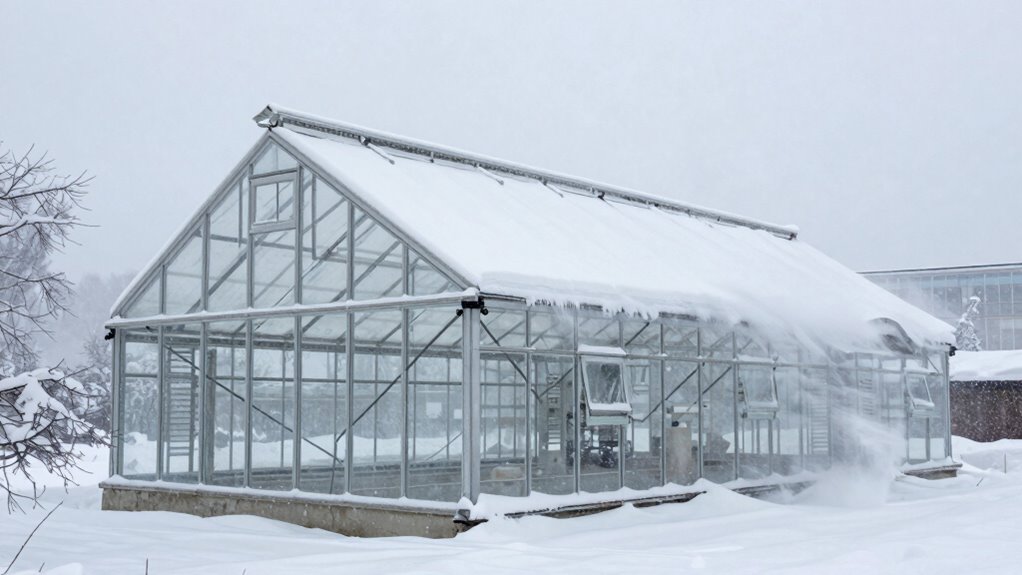

To prevent your greenhouse from collapsing under snow and wind, guarantee it’s built with a strong, weather-resistant design that meets your local load requirements. Regularly clear snow from the roof and inspect for damage after storms. Incorporate proper heating and ventilation systems to reduce snow buildup and manage internal pressures. Reinforce structural supports and monitor conditions throughout winter. By following these strategies, your greenhouse can withstand harsh winter weather—discover more tips to keep it safe.
Key Takeaways
- Design with structural strength to withstand local snow and wind loads, including reinforced supports and durable materials.
- Incorporate effective heating and ventilation systems to prevent snow accumulation and reduce internal stress.
- Regularly clear snow from the roof safely and inspect for damage after storms to prevent weight-related collapse.
- Reinforce wind-exposed areas and ensure fastening systems are secure to handle lateral pressure.
- Continuously monitor weather conditions and perform maintenance to address early signs of structural stress or damage.
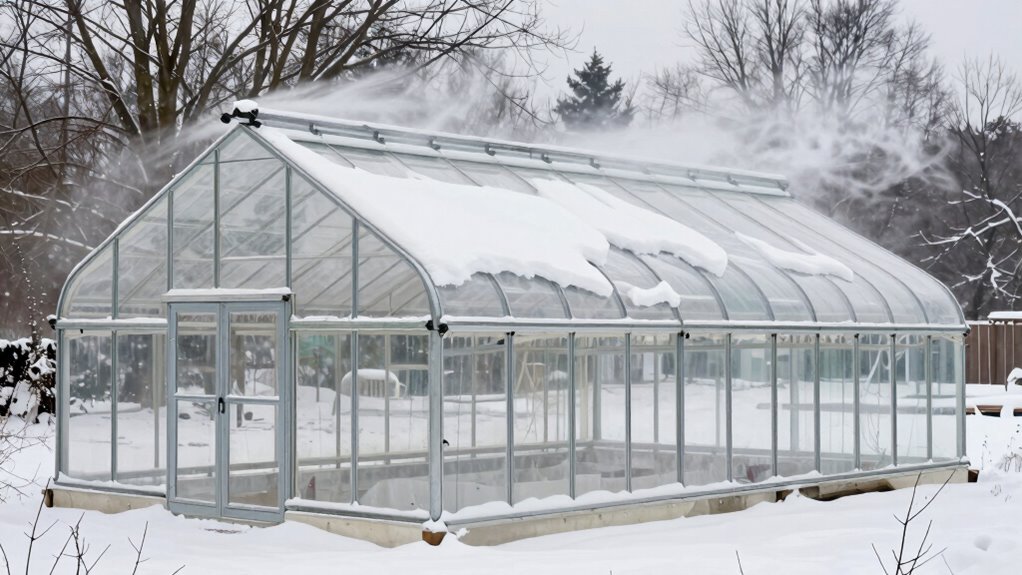
When snow and wind hit, your greenhouse faces significant structural stress that can lead to collapse if not properly managed. Heavy snow accumulation puts extra weight on the roof, while strong winds can exert lateral pressure, both threatening the integrity of your structure. To prevent disaster, you need to guarantee your greenhouse is built to withstand these forces, starting with a robust design that accounts for local snow and wind loads. Proper ventilation design is essential here; a well-ventilated greenhouse reduces internal humidity and temperature fluctuations, which can weaken materials over time. Good ventilation also prevents snow buildup on the roof by allowing warm air to circulate, melting snow before it becomes too heavy. When designing or maintaining your greenhouse, consider airflow pathways that promote even heat distribution and minimize cold spots where snow might settle. Additionally, incorporating thermal behavior considerations into your design helps manage temperature extremes and reduces stress on structural components during winter weather. Heating systems play a critical role in this process. An effective heating setup keeps the interior temperature stable, reducing the likelihood of snow melting and refreezing, which can cause ice dams or additional weight. Additionally, consistent heat discourages the formation of ice patches that might add unpredictable stress to the structure. When selecting heating systems, opt for those that integrate seamlessly with your ventilation design, ensuring that warm air circulates efficiently without creating drafts or pressure imbalances that could compromise the structure. A balanced approach to heating and ventilation helps maintain the structural integrity of your greenhouse during winter storms. Regular maintenance is also key. Clear snow from the roof promptly using safe methods, avoiding excessive weight buildup. Check for any signs of stress or damage after storms, paying close attention to joints, supports, and fasteners. Reinforce areas susceptible to wind pressure, especially if your greenhouse is in a particularly exposed location. Make sure your heating systems are functioning correctly and your ventilation is unobstructed, as these systems work together to prevent temperature extremes and moisture buildup that could weaken the structure from within. Properly managing snow and wind load isn’t just about the initial construction—ongoing vigilance and adjustments are essential to guarantee your greenhouse remains standing through the toughest conditions.

6×7 FT Outdoor Greenhouse, Heavy-Duty Polycarbonate Greenhouse Kit with Reinforced Aluminum Frame, Adjustable Roof Vent & Quick-Connect System for All Seasons & Winter Use
All-Weather Strength & Durability: Built to withstand 50mph winds and 18psf (40kg/sqm) snow load. Reinforced rust-proof aluminum frame…
As an affiliate, we earn on qualifying purchases.
As an affiliate, we earn on qualifying purchases.
Frequently Asked Questions
How Can I Tell if My Greenhouse Is Structurally Sound Against Snow and Wind?
You can tell if your greenhouse is structurally sound by checking its foundation stability and ventilation integrity. Confirm the foundation is solid, level, and free of cracks, supporting the structure against snow and wind. Also, verify that vents and openings are secure and functioning properly, preventing pressure buildup. Regularly inspect joints, braces, and supports for signs of wear or damage, and reinforce any weak points to maintain overall stability.
What Materials Are Best for Withstanding Heavy Snow and Strong Winds?
Ever wondered what materials can withstand heavy snow and strong winds? Opt for galvanized steel or heavy-duty aluminum frames, as their material durability offers excellent strength and corrosion resistance. Use polycarbonate panels for high wind resistance design, since they’re lightweight yet sturdy. Reinforced tempered glass also provides durability. These choices make certain your greenhouse stays resilient, preventing collapse even under extreme weather conditions. Wouldn’t you want your greenhouse to stand strong year-round?
How Often Should I Inspect My Greenhouse for Structural Damage?
You should inspect your greenhouse regularly, ideally after severe weather events like storms or heavy snowfall. Conduct routine maintenance and seasonal inspections at least once every three to six months to catch any structural damage early. Check for cracks, loose fittings, or bent frames, especially on the roof and joints. Staying proactive helps guarantee your greenhouse remains safe and sturdy against snow load and wind load stresses.
Are There Specific Design Features That Improve Wind and Snow Load Resistance?
You should look for storm-resistant framing and an aerodynamic design to enhance wind and snow load resistance. These features help your greenhouse withstand harsh weather by reducing wind pressure and snow accumulation. Opt for sturdy materials and a streamlined shape that directs wind around rather than against the structure. Regular inspections ensure these features remain effective, keeping your greenhouse safe during storms and heavy snowfall.
What Are Emergency Measures if My Greenhouse Starts to Collapse?
When your greenhouse starts to collapse, it’s vital to act fast—this is no time to beat around the bush. Implement emergency precautions like quickly removing heavy snow or wind debris, and secure loose panels. Your rapid response can prevent total disaster. Keep a toolkit and emergency contacts handy, stay calm, and prioritize safety. Remember, quick action can turn the tide before things get out of hand.

Bykswil 16PCS Fitting 16MM 4 Types Stable Support Heavy Duty Greenhouse Frame Building Connector Black Suitable for Grape Trellis Sunscreen Shed Gardening
High Quality: Made of plastic material, the fitting is able to withstand impact, not easy to crack or…
As an affiliate, we earn on qualifying purchases.
As an affiliate, we earn on qualifying purchases.
Conclusion
By understanding snow and wind loads, you can build a greenhouse that withstands nature’s fierce moods. Think of your greenhouse as a ship steering stormy seas—you wouldn’t sail without a sturdy hull. Regular inspections, proper design, and maintenance are your anchors against disaster. Don’t wait for a storm to teach you a lesson; instead, prepare now to keep your greenhouse standing tall like a beacon of growth and resilience in any weather.

DAOTAILI 4-Inch Grow Tent Inline Duct Fan, Automatic Temperature & Humidity Sensing Control, Ventilation System for Grow Tents, Greenhouses
[Smart Temp & Humidity Control:] Customize temperature and humidity settings (1-99% RH, 50-140°F). The fan automatically turns on…
As an affiliate, we earn on qualifying purchases.
As an affiliate, we earn on qualifying purchases.

Okiyakusama Roof Snow Shovels Portable Snow Sweeper Snow Cleaning Tool Snow Removal Tool Snow Rakes for Farm Greenhouse Garden, Type C
【Sturdy PP Material】Made from heavy-duty polypropylene, this scraper head is lightweight but tough, won’t warp over time, and…
As an affiliate, we earn on qualifying purchases.
As an affiliate, we earn on qualifying purchases.