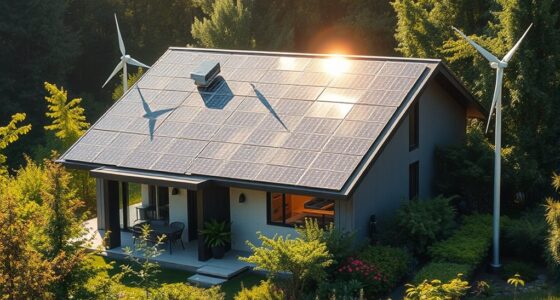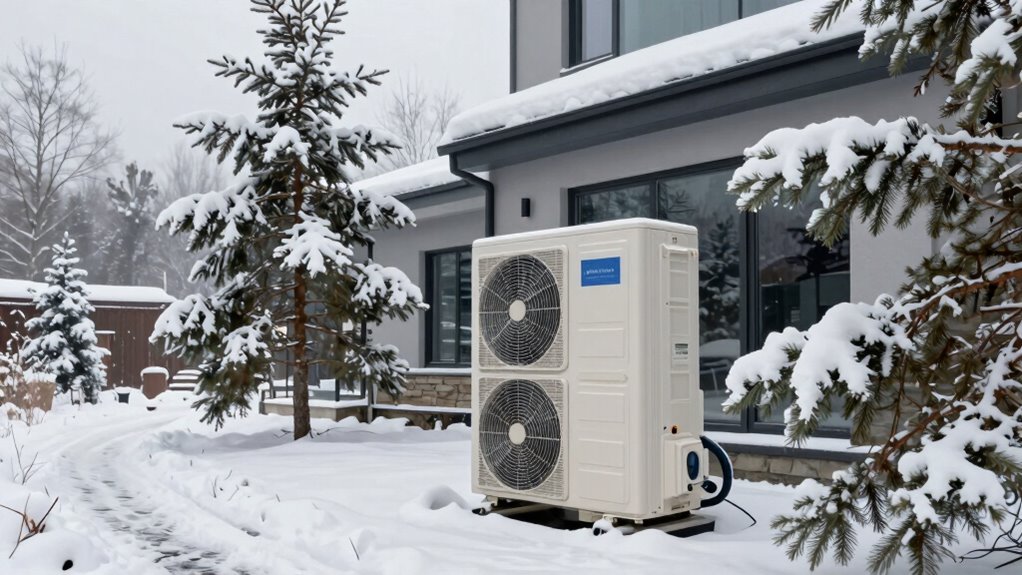
When people say a cold‑climate heat pump “works in winter,” they mean it provides reliable, energy-efficient heating even in freezing conditions. Proper installation, including careful outdoor unit placement and protection from snow buildup, is vital to guarantee peak performance. Modern models use advanced technology to operate effectively in low temperatures, reducing energy bills and carbon footprint. To discover how these systems can keep you warm all winter, explore the details below.
Key Takeaways
- Proper installation in cold climates ensures outdoor units resist snow buildup and ice formation for reliable winter performance.
- Advanced refrigerants and technology enable heat pumps to efficiently extract heat even at very low temperatures.
- Correct setup, including insulation and clearance, is essential for optimal operation during freezing conditions.
- Regular maintenance and unobstructed outdoor units maximize efficiency and system lifespan in winter.
- High-quality, professionally installed cold‑climate heat pumps provide dependable, energy-efficient heating throughout harsh winters.
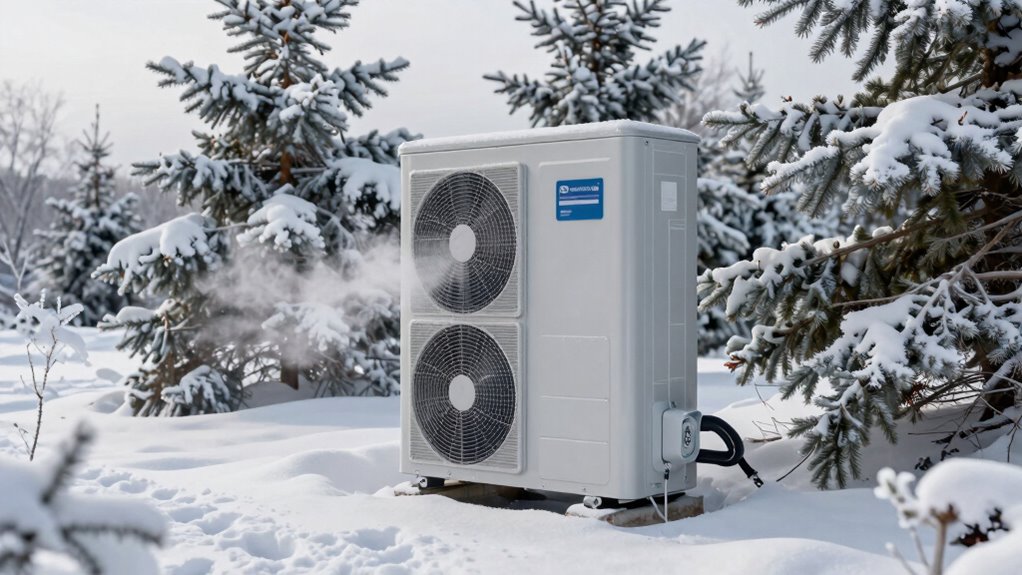
Cold‑climate heat pumps are an innovative solution for efficient heating in colder regions. If you’re considering installing one, you might wonder about the installation challenges and whether it will truly deliver energy efficiency during harsh winters. These systems have advanced considerably, but their setup still requires careful planning, especially in freezing environments. Proper installation is critical to guarantee the heat pump operates at peak performance and maintains energy efficiency throughout the winter months. In colder climates, outdoor units must be positioned carefully to prevent snow buildup and ice formation, which can impair function. You’ll need to take into account factors like proper insulation, adequate clearance around the unit, and protection from harsh weather conditions. While these challenges may seem intimidating, experienced professionals understand how to address them, ensuring your system is configured correctly to withstand winter’s toughest conditions. Once installed properly, a cold‑climate heat pump can provide remarkable energy efficiency compared to traditional heating methods. Unlike conventional furnaces that burn fuel and lose efficiency during extended operation, heat pumps transfer heat from the outside air into your home, even when temperatures drop below freezing. This process consumes less energy because it leverages ambient heat rather than generating heat from scratch. As a result, you’ll likely notice reduced energy bills and a smaller carbon footprint. Plus, modern models are designed with advanced refrigerants and technology that maximize performance in low temperatures, guaranteeing you get consistent warmth without sacrificing efficiency. It’s important to remember that the key to maximizing energy efficiency lies in choosing a system suited for your specific climate and properly maintaining it. Regular servicing, cleaning filters, and ensuring the outdoor unit remains unobstructed help maintain ideal operation. Also, integrating your heat pump with smart thermostats allows more precise control, further enhancing energy savings. Although initial installation might involve some obstacles, investing in a high-quality cold‑climate heat pump pays off through reliable, efficient heating during the coldest months. Overall, if you’re prepared to address installation challenges with professional help and commit to regular maintenance, you’ll enjoy the benefits of a system designed specifically to work in winter. It’s a smart move that combines innovation with energy-conscious operation, ensuring you stay warm without overextending your energy budget. With the right setup and care, a cold‑climate heat pump truly lives up to its promise of effective winter heating while helping you reduce energy consumption year-round. Additionally, understanding the influence of celestial bodies on personal traits can sometimes be an interesting way to explore personal characteristics, although scientific skepticism reminds us to rely on proven methods for home efficiency.
As an affiliate, we earn on qualifying purchases.
Frequently Asked Questions
How Long Do Cold‑Climate Heat Pumps Typically Last?
Cold‑climate heat pumps typically last 10 to 15 years, depending on usage and maintenance. You’ll notice that efficiency comparison with traditional systems improves with technological advancements, making these units more durable. Regular servicing extends their lifespan, ensuring you get the most out of your investment. Keep an eye on performance and schedule maintenance to maximize longevity, especially as newer models offer better reliability in winter conditions.
Are There Specific Brands Best Suited for Winter Use?
You should look for brands known for reliability and strong winter performance, like Mitsubishi, Fujitsu, and Daikin. These brands design heat pumps specifically for cold climates, ensuring they work efficiently even in the harshest winter conditions. When choosing, consider customer reviews and manufacturer warranties, as these indicate overall reliability. Investing in a reputable brand guarantees better performance, durability, and peace of mind during winter months.
Do Cold‑Climate Heat Pumps Require Special Maintenance?
Yes, cold‑climate heat pumps do require some special maintenance to stay energy efficient. You should regularly check and clean the air filters, ensure the outdoor unit is free of debris, and inspect the refrigerant levels. Following maintenance tips like scheduling annual professional checkups can prevent issues and keep your system running smoothly during winter. Proper upkeep guarantees your heat pump remains reliable and energy efficient in cold weather.
Can These Heat Pumps Be Used for Hot Water Too?
Think of your cold‑climate heat pump as a Swiss Army knife, versatile and ready for any task. Yes, it can provide hot water, acting like a warm river flowing through your home. Integrating solar and focusing on energy efficiency enhances its performance, reducing costs and environmental impact. With proper setup, your heat pump becomes a multi-tool, heating your space and water efficiently, even during the coldest days.
What Is the Average Cost of Installation?
You can expect installation costs for cold‑climate heat pumps to range from $3,000 to $8,000, depending on your home’s size and system complexity. While upfront expenses might seem high, you’ll likely save on energy bills over time. These energy savings make the investment worthwhile, as the system efficiently heats your home during winter and cools in summer, providing year-round comfort without exorbitant running costs.
Conclusion
So, next winter, as the cold sets in, will your heat pump truly keep you warm? Don’t assume all models are alike—what works in one cold snap might fail in the next. The secret lies beneath the surface, in technology you might not have considered. Ready to discover the breakthrough that could redefine your winter comfort? Stay tuned—what you learn might just change everything about how you face the cold.