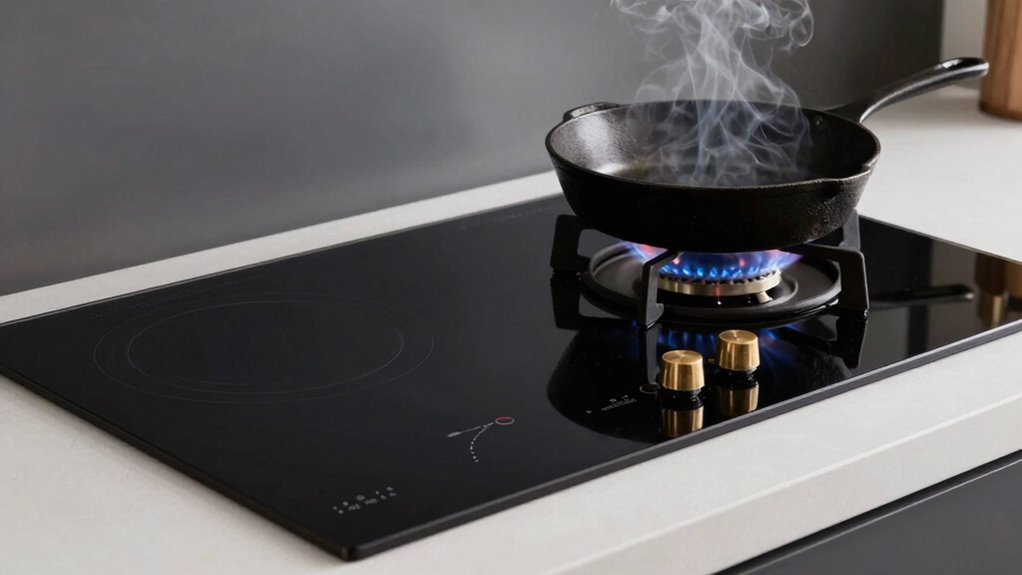

If you’re concerned about indoor air quality, induction cooktops are a better choice because they avoid the pollutants produced by gas stoves, like nitrogen dioxide and carbon monoxide. Gas stoves burn fuel, releasing fumes that can linger without proper ventilation, impacting your health. Induction heats food quickly and safely, without combustion pollutants. To find out how this affects your home environment and discover ways to improve air quality, keep exploring further.

Get garden gear delivered free — and shop member deals
- Fast, free delivery on millions of items
- Access to Prime Big Deal Days deals on October 6–7
- Prime Video, Amazon Music and more included
Key Takeaways
- Gas stoves emit nitrogen dioxide, carbon monoxide, and particulate matter, negatively impacting indoor air quality.
- Induction cooktops produce no combustion gases, eliminating indoor air pollution from cooking.
- Proper ventilation is crucial to mitigate indoor pollutants from gas stoves and enhance air quality.
- Induction reduces health risks linked to indoor pollution compared to gas stoves.
- Ongoing indoor air quality concerns with gas stoves make induction a cleaner alternative.

Are you trying to decide between induction and gas stovetops? If so, understanding how each affects your indoor air quality is essential. While both options serve the same purpose—cooking your meals—they differ markedly in how they impact your home’s environment and safety. Induction cooktops are often praised for their energy efficiency, converting nearly all their electrical energy into heat directly in the pan, which means less wasted heat and faster cooking times. This not only saves you money on energy bills but also reduces the risk of overheating your kitchen, making induction a safer choice in many respects. Gas stoves, on the other hand, rely on combustion, which produces combustion byproducts like nitrogen dioxide, carbon monoxide, and particulate matter. These pollutants can linger in your indoor air, especially if your kitchen isn’t well-ventilated, posing health risks over time.
Induction stoves are safer and more energy-efficient, producing fewer indoor air pollutants than gas stoves.
When considering energy efficiency, induction cooktops clearly come out ahead. They heat up quickly and respond immediately to temperature adjustments, reducing energy waste. Gas stoves tend to be less efficient because much of the heat escapes into the air around the burners, requiring more energy to maintain a consistent cooking temperature. But beyond energy efficiency, safety considerations are equally important. Gas stoves involve open flames, which can lead to accidental fires or gas leaks. These hazards aren’t just theoretical; they have real implications for your household safety. Induction cooktops eliminate open flames, reducing fire risks substantially. Plus, since induction surfaces only heat the pan directly and not the surrounding area, the cooktop stays relatively cool, decreasing the chance of burns or accidental fires caused by contact with hot surfaces.
Indoor air quality is another vital factor. Gas stoves emit combustion byproducts that can deteriorate air quality over time. If your kitchen isn’t equipped with a high-quality range hood or ventilation system, these pollutants can accumulate, potentially causing respiratory issues or aggravating allergies. Induction cooktops don’t produce combustion gases, so they don’t compromise your indoor air quality in this way. However, it’s still essential to use proper ventilation when cooking, regardless of which type you choose, because other pollutants like grease particles and cooking fumes can also impact indoor air. Additionally, choosing an adequate ventilation system can significantly mitigate these concerns and improve overall air quality.
Ultimately, your choice depends on what matters most to you—whether it’s maximizing energy efficiency and safety or prioritizing indoor air quality. Induction offers a cleaner, safer, and more energy-efficient cooking experience, but it requires compatible cookware and an electrical outlet. Gas stoves, while traditional and often preferred for their control and visual appeal, come with ongoing concerns about pollution and safety. Weighing these factors carefully will help you select the best option for your home and health.
induction cooktop with safety features
As an affiliate, we earn on qualifying purchases.
As an affiliate, we earn on qualifying purchases.
Frequently Asked Questions
How Does Indoor Air Quality Differ Between Induction and Gas Stoves?
You’ll notice that induction stoves produce fewer airborne particles and odors compared to gas stoves. Gas stoves release combustion byproducts, increasing airborne particles and causing odor dispersion, which can affect indoor air quality. Induction stoves heat cookware directly, resulting in cleaner air with minimal particles or smells. So, if air quality matters to you, induction offers a healthier, odor-free cooking environment.
Are There Health Risks Linked to Gas Stove Emissions?
You might think gas stoves are safe, but they pose real health hazards through emission concerns. The fumes release nitrogen dioxide and carbon monoxide, which can cause respiratory issues and other health risks. Ironically, while gas cooking seems traditional and convenient, these emissions quietly threaten your indoor air quality, making you wonder if the convenience is worth the hidden dangers lurking in your own kitchen.
Can Induction Stoves Help Reduce Indoor Air Pollution?
Yes, induction stoves can help reduce indoor air pollution, making your cooking more eco-friendly. Unlike gas stoves, they produce no emissions or combustion byproducts, improving indoor air quality. To maximize safety, indoor air monitoring can track pollutants and guarantee healthier living conditions. By choosing induction, you promote eco-friendly cooking while maintaining a safer environment, especially if you’re concerned about air quality.
What Safety Measures Improve Indoor Air Quality With Gas Stoves?
Think of your kitchen as a battleground for clean air. To improve indoor air quality with gas stoves, you should implement effective ventilation strategies like range hoods and exhaust fans, which act as air purifiers. Additionally, emission controls such as regular maintenance and choosing models with low-emission technology help cut down harmful pollutants. These safety measures ensure your cooking space stays safe, fresh, and healthy for everyone.
Do Ventilation Systems Impact Indoor Air Quality More for Gas or Induction?
Ventilation systems considerably impact indoor air quality more for gas stoves because proper ventilation enhances emission control, reducing harmful pollutants. You should make certain your ventilation effectiveness is high, with range hoods that vent outdoors and good airflow. This helps remove combustion byproducts like NO2 and carbon monoxide, which are more prevalent with gas. For induction stoves, ventilation impact is less critical since they produce minimal emissions, making indoor air safer naturally.
Conclusion
As you stand in your kitchen, imagine the soft glow of induction cooking, its sleek surface glowing quietly, keeping the air around you fresh and inviting. Contrast that with the flickering flame of gas, sending tendrils of fumes into your space. Choosing induction isn’t just about efficiency—it’s about breathing easier, feeling more at home. Make a switch that welcomes cleaner air and a healthier environment, turning your cooking space into a sanctuary you’ll love.
Halloween Picks
halloween
As an affiliate, we earn on qualifying purchases.