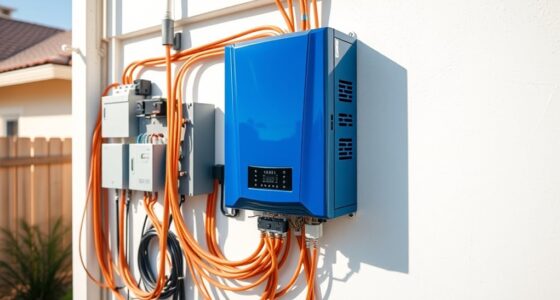
Proper inverter sizing impacts your system’s true performance. If your inverter is too small, it struggles to handle peak loads, causing shutdowns or inefficiencies. Too large, and it wastes energy and money. Matching the inverter to your battery capacity and load demands ensures your system works reliably and efficiently. Often, the hidden issue is inaccurate sizing, which lets systems appear to operate but underperform. Keep exploring to uncover how to optimize your setup.

Get garden gear delivered free — and shop member deals
- Fast, free delivery on millions of items
- Access to Prime Big Deal Days deals on October 6–7
- Prime Video, Amazon Music and more included
Key Takeaways
- Improper inverter sizing can cause systems to operate but not reach optimal performance levels.
- Oversized inverters waste energy and reduce overall efficiency, leading to underperformance despite correct operation.
- Undersized inverters may meet basic needs but struggle during peak loads, limiting system effectiveness.
- Mismatched inverter capacity and battery size can result in hidden inefficiencies and reduced runtime.
- High inverter efficiency is crucial; poor efficiency can cause energy losses that compromise system performance.

Are you unsure how to determine the right inverter size for your system? If so, you’re not alone. Choosing the correct inverter is vital because it directly impacts how well your system performs. One of the most overlooked factors in this process is understanding your battery capacity and how inverter efficiency affects overall performance. When your inverter isn’t properly sized, it can cause your system to underperform, even if everything else seems in order.
First, you need to look at your battery capacity. This is the total energy your batteries can store, usually measured in amp-hours or watt-hours. Knowing your battery capacity helps you estimate the maximum load your system can handle without overtaxing the batteries. If your inverter is too small, it won’t be able to draw enough power from the batteries to meet your needs, causing your system to run inefficiently or even shut down. Conversely, if the inverter is too large, it might be more expensive and less efficient for your actual power demands. Striking the right balance ensures you’re not wasting money on an oversized inverter or risking performance issues with one that’s too small.
Inverter efficiency plays a pivotal role here. It indicates how well your inverter converts DC power from your batteries into AC power used by your appliances. A highly efficient inverter minimizes energy loss during this conversion process. When the inverter efficiency is high, less energy is wasted as heat, which means you get more usable power out of your battery capacity. If you choose an inverter that’s too large or too small without considering efficiency, you could be unintentionally increasing energy loss, reducing your system’s overall runtime and increasing your energy costs. Additionally, selecting an inverter with appropriate power ratings ensures better load management and longevity of your system components.
Furthermore, proper sizing based on your battery capacity and inverter efficiency helps prevent issues like overheating or excessive wear on your equipment. An undersized inverter struggles to handle peak loads, leading to potential shutdowns, while an oversized inverter might operate inefficiently, wasting energy and increasing operational costs. By understanding your battery capacity and selecting an inverter with high efficiency that matches your power needs, you ensure your system runs smoothly, reliably, and cost-effectively.
In essence, the key to effective inverter sizing lies in aligning your battery capacity with an inverter that’s appropriately rated for your load demands and offers high efficiency. This alignment allows your system to perform at its best without unnecessary energy losses or equipment strain. Taking the time to assess these factors means your system will ‘work’ as intended, providing reliable power without the underperformance often caused by poorly sized inverters.
As an affiliate, we earn on qualifying purchases.
Frequently Asked Questions
How Does Inverter Sizing Affect Overall System Efficiency?
You can improve your system efficiency by ensuring proper inverter sizing, as it minimizes power loss and enhances system stability. An undersized inverter strains to handle your load, leading to increased power loss and potential fluctuations. Conversely, an oversized inverter wastes energy and adds unnecessary costs. Correct sizing balances performance and efficiency, reducing power loss and maintaining consistent system stability, so your system runs smoothly and effectively.
What Are Common Mistakes in Selecting Inverter Sizes?
Choosing the right inverter size can be tricky, especially if you overlook load profiling and power factor. A common mistake is selecting an inverter that’s too large, wasting energy, or too small, causing overloads. You might also ignore how your system’s load varies, leading to inefficient performance. Always match inverter capacity to actual load patterns and consider power factor to optimize efficiency and prevent underperformance.
How Can Improper Inverter Sizing Lead to System Failures?
If you choose an improperly sized inverter, you risk power fluctuations, which can cause your system to operate inefficiently or shut down unexpectedly. It also leads to thermal stress on components, accelerating wear and potentially causing failures. These issues compromise your system’s reliability and lifespan, making proper sizing vital to guarantee stable operation, minimize damage, and avoid costly repairs or replacements down the line.
Is Oversized Inverter Always Better Than Undersized?
Oversized inverters might seem better, but they can cause issues with battery capacity and load management. When your inverter is too large, it may draw unnecessary power or operate inefficiently, risking shorter battery life. Conversely, an undersized inverter struggles to handle peak loads, leading to system failures. The key is matching inverter size to your actual needs, balancing capacity and performance for reliable, efficient operation.
What Tools or Methods Are Best for Accurate Inverter Sizing?
You should use load estimation tools to accurately determine your power needs, ensuring the inverter isn’t oversized or undersized. Methods like detailed load analysis or software simulations help you understand peak and continuous loads. Also, consider battery compatibility to match inverter capacity with your energy storage. By combining precise load estimation with battery assessment, you optimize performance, efficiency, and system longevity, avoiding common pitfalls of improper inverter sizing.
Conclusion
Think of your inverter as the heartbeat of your system, quietly pulsing behind the scenes. When it’s the right size, it keeps everything flowing smoothly, like a steady tide shaping the shore. But if it’s too small, the current stalls, and energy struggles to reach its destination. Proper sizing isn’t just a technical detail; it’s the unseen force that guarantees your system breathes, moves, and performs at its best—like a well-tuned engine powering your day.
Fall Picks
fall essentials
As an affiliate, we earn on qualifying purchases.