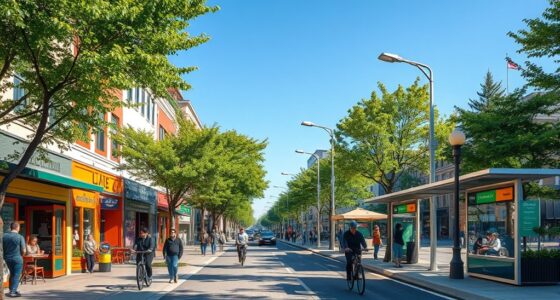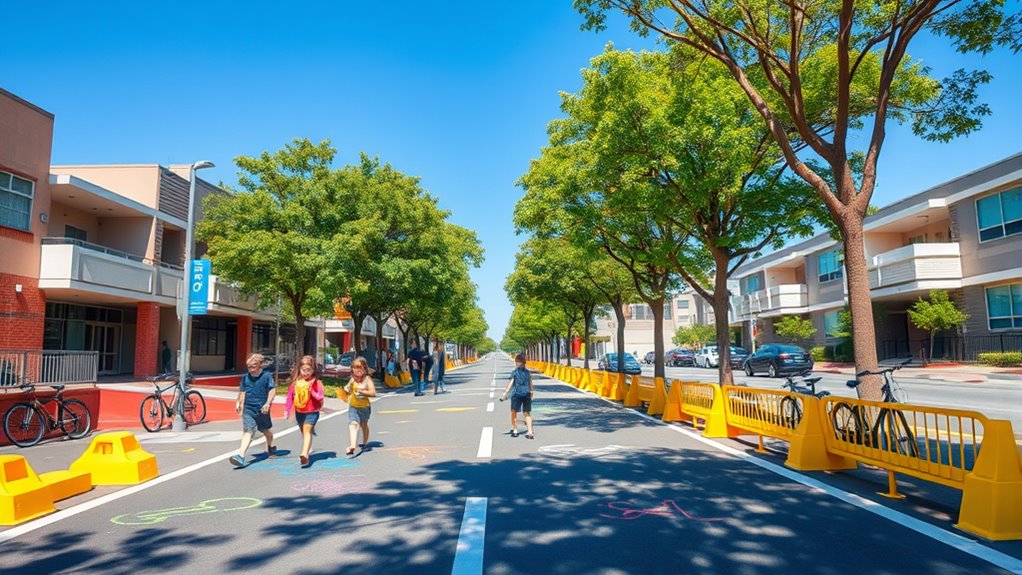

School Streets help you create safer, healthier routes for children by limiting vehicle access around schools and reducing traffic congestion. This encourages walking and biking, making the neighborhood safer and cleaner. Community involvement is key; your participation supports positive change and guarantees the area meets everyone’s needs. Improved infrastructure and safer crossings boost confidence for kids and parents alike. Want to discover how to get involved and transform your neighborhood? Keep exploring to learn more.

Get garden gear delivered free with Prime
- Fast, free delivery on millions of items
- Prime Video, Amazon Music and more included
- Member-only deals all year
Key Takeaways
- School Streets improve safety by reducing vehicle access during peak times, creating safer routes for children walking and cycling.
- Community involvement ensures infrastructure changes support active transportation and enhance neighborhood safety.
- Closing streets around schools decreases traffic congestion and air pollution, promoting healthier environments.
- Safer crossings and signage on School Streets encourage more walking and biking as safe route options.
- Active participation in decision-making fosters community ownership and sustainable, long-lasting Safe Routes initiatives.

Have you ever wondered how closing streets around schools could improve safety and the environment? When you transform streets into designated school zones, you’re directly impacting local traffic and fostering community engagement. By limiting vehicle access during busy times, you reduce the number of cars rushing past, which makes it safer for children walking or biking to school. Fewer cars mean less congestion, less air pollution, and a healthier environment for everyone nearby. This approach encourages families to choose active transportation options, like walking or cycling, which benefits children’s health and reduces harmful emissions.
Transforming streets into school zones improves safety, reduces pollution, and encourages active, healthy transportation for children.
As a community member, you play a essential role in making school streets successful. Your involvement can take many forms—attending meetings, voicing support, or volunteering during implementation. When residents actively engage, they help build a sense of ownership and shared responsibility. This buy-in is fundamental because it guarantees that the changes aren’t just temporary fixes but become a lasting part of the neighborhood’s identity. When community members come together, they can address concerns, adjust plans as needed, and promote the benefits of safer routes to all families. Community engagement also encourages local businesses and organizations to support the initiative, further strengthening the neighborhood’s cohesion.
Implementing school streets isn’t just about traffic management; it’s about creating a community space that prioritizes safety and well-being. When streets are closed to through traffic during school hours, it transforms the area into a more welcoming environment. Kids can cross streets more confidently, and parents feel reassured about their children’s safety. This also reduces the likelihood of accidents involving pedestrians and cyclists, especially in high-traffic areas. Plus, with fewer cars parked on the streets, the neighborhood looks cleaner and more inviting. Additionally, integrating vertical storage solutions and other organizational strategies can help keep these community spaces tidy and accessible.
Your participation in local traffic discussions can influence decision-making and help tailor solutions suited to your community’s needs. It’s an opportunity to advocate for safer crossings, better signage, and infrastructure improvements that support walking and biking. The more you get involved, the more your voice can help shape the future of your neighborhood’s transportation landscape. Ultimately, closing streets around schools isn’t just about traffic control; it’s about fostering a connected, engaged community that values safety, health, and sustainability. By supporting these initiatives, you contribute to creating a safer, more vibrant environment for children, families, and neighbors alike.
As an affiliate, we earn on qualifying purchases.
Frequently Asked Questions
How Are School Streets Funded and Maintained?
You’re likely wondering how school streets are funded and maintained. Funding sources often include local government budgets, grants, or community fundraising efforts. Maintenance responsibilities typically fall on local authorities or school districts, who ensure the infrastructure stays in good condition. You can help by staying informed about these sources and responsibilities, and by supporting initiatives that secure ongoing funding and proper upkeep for safe, well-maintained school streets.
What Safety Measures Are Implemented During School Events?
You’ll notice safety measures like increased community engagement, emergency protocols, and traffic control during school events. These steps help protect students and visitors, ensuring everyone stays safe. Coordinating with local authorities and involving parents fosters a secure environment. You’ll see designated crossing points, barriers, and clear signage, all part of a well-planned effort. It’s no coincidence that these precautions make school events safer and more enjoyable for everyone involved.
Can Parents Access School Streets in Emergencies?
In emergencies, parents can access school streets if they have the necessary parental permissions and follow designated routes. Emergency access is prioritized, so authorities coordinate with parents to guarantee quick entry without disrupting regular safety measures. Always carry proper identification and permissions, and communicate with school staff beforehand. This way, you can safely reach your child during urgent situations while respecting the ongoing safety protocols.
How Do School Streets Impact Local Traffic Congestion?
Imagine a busy morning where traffic jams are common outside your child’s school. School streets improve traffic flow by restricting vehicle access during peak times, which reduces congestion and makes the area safer for pedestrians and cyclists. By limiting car traffic, these streets effectively ease local congestion, allowing for quicker, smoother travel for everyone and creating a calmer, safer environment around the school.
Are School Streets Suitable for Students With Disabilities?
School streets can be suitable for students with disabilities when they incorporate accessible pathways and follow inclusive design principles. You should guarantee that curb cuts, ramps, and smooth surfaces are available, making navigation easier for everyone. By prioritizing accessibility, you create a welcoming environment that supports all students, allowing them to move safely and comfortably. This approach promotes equity and encourages participation for students with diverse needs.
Conclusion
By embracing School Streets and safe routes, you’re creating a safer, cleaner environment for kids to walk and cycle. Think about how much happier and healthier students can be when they’re not stuck in traffic or exposed to pollution. Isn’t it worth making this change for their future? Every small step toward safer streets shows you care. So, why not take action today and make your school neighborhood a better place for everyone?
Fall Picks
fall essentials
As an affiliate, we earn on qualifying purchases.