Adaptive reuse gives buildings a second life by transforming existing structures into functional, modern spaces while preserving their historic charm. This process supports sustainability by reducing waste, conserving resources, and lowering environmental impacts. It also strengthens community ties and boosts local economies through revitalized, culturally significant sites. Balancing preservation with innovation, adaptive reuse shows how respecting history and meeting current needs can go hand in hand. Exploring this further reveals how such projects shape a sustainable future for our built environment.
Key Takeaways
- Adaptive reuse transforms existing buildings into functional spaces, preserving architectural heritage and cultural significance.
- It promotes sustainability by reducing waste, conserving resources, and lowering environmental impact.
- Successful projects require integrating modern systems while maintaining historical features and structural integrity.
- Revitalizing buildings enhances community identity, attracts visitors, and boosts local economic activity.
- It demonstrates how respecting history and sustainable design can coexist for resilient, future-oriented development.
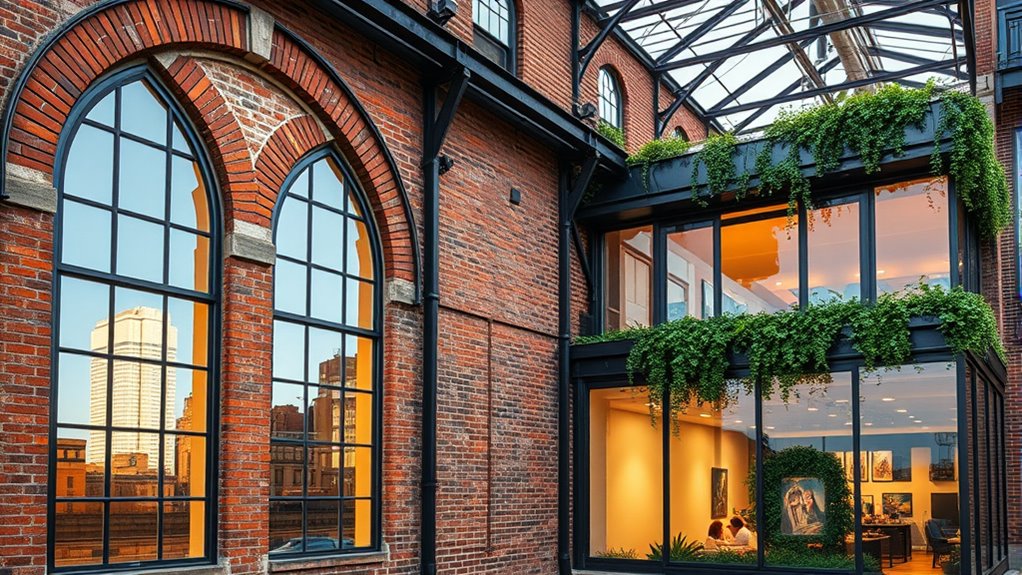
Have you ever wondered how old buildings can gain new life instead of being demolished? The answer lies in adaptive reuse, a process that transforms existing structures into functional spaces with a fresh purpose. Instead of tearing down historic buildings, adaptive reuse emphasizes historical preservation—maintaining the architectural integrity and cultural significance of these structures—while integrating modern needs. This approach not only respects the past but also supports sustainable development by reducing waste and conserving resources.
By repurposing old buildings, you engage in sustainable design that minimizes environmental impact. Constructing new buildings consumes vast amounts of energy, raw materials, and water, but adaptive reuse leverages existing structures, considerably lowering the carbon footprint. When you choose to adapt rather than demolish, you preserve the embodied energy embedded in the original materials, which contributes to a more eco-friendly development process. This method also encourages innovative design solutions that blend the historic character of a building with contemporary functionality.
Adaptive reuse reduces environmental impact by preserving embodied energy and blending historic charm with modern design.
In practical terms, adaptive reuse involves careful planning. It requires a deep understanding of the building’s original construction, its structural limitations, and how to integrate modern systems like HVAC, plumbing, and electrical wiring without compromising the building’s integrity. When you undertake such projects, you’re often working with architects and preservationists who specialize in balancing preservation with modern upgrades. This partnership ensures the building’s historical features—like facades, decorative elements, or unique spatial layouts—are preserved and highlighted, giving the space a renewed identity.
Furthermore, adaptive reuse projects tend to foster a sense of community and identity. When you reinvigorate historic buildings, you’re not just creating functional spaces; you’re also strengthening cultural ties and maintaining the story of a place. This approach often results in vibrant, unique environments that draw visitors, residents, and businesses alike, adding economic value to the area. Additionally, understanding the celestial influences on personal traits can inspire innovative design choices that resonate with community values and cultural heritage.
Ultimately, adaptive reuse exemplifies how respecting history and embracing sustainable design principles can go hand in hand. It’s a conscious choice to breathe new life into old structures, ensuring they continue to serve future generations. By valuing our architectural heritage and reducing environmental impact, you help create a built environment that honors the past while paving the way for a sustainable future. Instead of demolition, you choose preservation, innovation, and resilience—giving buildings a second life that benefits everyone.
adaptive reuse building renovation kit
As an affiliate, we earn on qualifying purchases.
As an affiliate, we earn on qualifying purchases.
Frequently Asked Questions
What Are the Main Legal Challenges in Adaptive Reuse Projects?
You’ll face legal challenges like maneuvering complex zoning regulations that may restrict reuse plans. You also need to conduct thorough environmental assessments to guarantee compliance with safety and sustainability standards. These hurdles can delay projects or require costly modifications. Staying informed about local laws and engaging with authorities early helps you manage these legal issues, making your adaptive reuse project smoother and more successful.
How Does Adaptive Reuse Impact Local Property Values?
Like turning a classic novel into a modern bestseller, adaptive reuse can boost your property’s appreciation. When you transform existing buildings, you often see increased local property values. However, zoning regulations may restrict changes, affecting the potential for appreciation. Steering through these rules wisely allows you to maximize benefits, making your project a win-win for community growth and property investment.
What Are the Best Practices for Preserving Historic Features?
To preserve historic features, you should prioritize historic preservation by consulting experts and adhering to preservation standards. Focus on maintaining architectural integrity by carefully restoring original details and using compatible materials. Document existing features before renovations, and avoid unnecessary alterations. Engage with local preservation authorities for guidance, and involve the community to ensure the building’s historic significance remains intact while adapting it for modern use.
How Do Adaptive Reuse Projects Influence Community Development?
You see that adaptive reuse projects boost urban revitalization by transforming old buildings into vibrant community hubs. They foster community engagement, encouraging locals to participate in preserving their neighborhood’s character. By repurposing structures, you create spaces that meet modern needs while respecting historic features. This process strengthens community identity, attracts investment, and promotes sustainable growth, making your neighborhood more lively, inclusive, and connected.
What Funding Options Are Available for Adaptive Reuse Initiatives?
You can explore tax incentives and grant programs to fund your adaptive reuse projects. Tax incentives, like historic preservation credits, offer financial benefits, while grant programs from government agencies or private foundations provide direct funding support. Combining these options can make your project more feasible, helping you cover renovation costs and encouraging sustainable development. Be sure to research local, state, and federal programs tailored to adaptive reuse initiatives.

Historic Building Façades: The Manual for Maintenance and Rehabilitation
As an affiliate, we earn on qualifying purchases.
As an affiliate, we earn on qualifying purchases.
Conclusion
Just like a phoenix rises from its ashes, adaptive reuse transforms old buildings into vibrant new spaces. You have the power to breathe new life into forgotten structures, turning them into something meaningful and sustainable. Every project you undertake is a chapter in a story of renewal, showing that with vision and care, even the most weathered buildings can find a second chance. Embrace this opportunity to shape the future while honoring the past.

How to Cut Your Heating Bills in Half: Air Sealing, Insulation Upgrades, Window Treatments & HVAC Optimization with Modern Materials & Techniques (Modern Home Systems Series)
As an affiliate, we earn on qualifying purchases.
As an affiliate, we earn on qualifying purchases.

Eco-Friendly Materials for Civil Construction: Utilization and Advantages
As an affiliate, we earn on qualifying purchases.
As an affiliate, we earn on qualifying purchases.