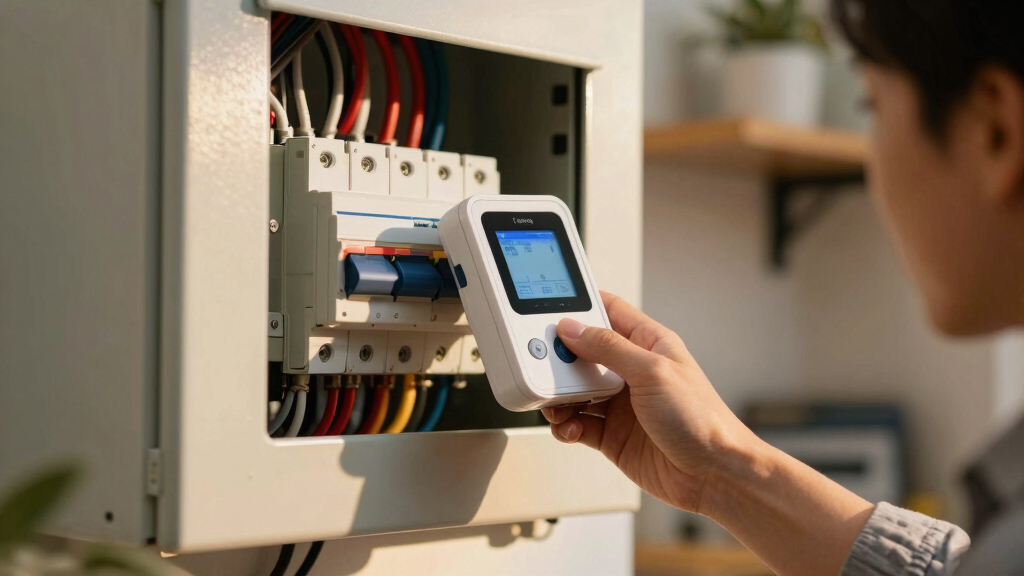

If you’re searching for the best smart breaker monitor for home energy tracking, you want a device that offers accurate measurements, reliable connectivity, and easy integration with your smart home setup. The Aeotec Home Energy Meter 8 stands out as the overall top pick for its extensive Z-Wave range and detailed data. For those prioritizing affordability, the Refoss Smart Home Energy Monitor offers solid performance with open API support. Meanwhile, the Emporia Vue 3 provides a great balance of real-time tracking and automation features. Every option involves tradeoffs between complexity, price, and data depth. Continue reading to see the full breakdown and find the best fit for your home energy needs.
Complete the kit


Key Takeaways
- Top picks excel in connectivity options—Z-Wave, Wi-Fi, or open API—affecting compatibility and setup complexity.
- Most devices offer real-time data, but the level of detail and integration with home automation varies significantly.
- Higher-end models tend to include more sensors and advanced analytics, but at a steeper price point.
- Easy-to-install monitors often trade off some customization and data granularity for beginner-friendly setup.
- Open API support is a common feature in the best DIY options, giving more control but requiring technical know-how.
| Aeotec Home Energy Meter 8 – Smart Electricity Monitor with Z-Wave Long Range |  | Best Overall for Reliability and Range | Current Rating: 200 A | Lower Temperature Rating: 5 °F | Maximum Supply Voltage: 150 volts | VIEW LATEST PRICE | See Our Full Breakdown |
| Emporia Vue 3 Home Energy Monitor – Smart Home Automation Module and Real-Time Electricity Usage Monitor |  | Best for Beginners and Easy Installation | Part Number: EMV3A-2P-8 | Item Weight: 3.36 pounds | Product Dimensions: 10 x 5 x 5 inches | VIEW LATEST PRICE | See Our Full Breakdown |
| Smart Home Energy Monitor with 16 50A Circuit Sensors, Real-Time Power & Cost Tracking, Compatible with Home Assistant |  | Best for Tech-Savvy and Custom Integration | Sensor Count: 16 | Sensor Current Rating: 50A | Supported Voltages: 120VAC, 240VAC, 415Y/240VAC | VIEW LATEST PRICE | See Our Full Breakdown |
| Refoss Smart Home Energy Monitor with 16 60A Circuit Sensors |  | Best for High-Precision and Long-Term Data | Number of Sensors: 16 | Sensor Current Rating: 60A | Supported Systems: Single-phase, Split-phase, 3-phase 4-wire Wye | VIEW LATEST PRICE | See Our Full Breakdown |
| Emporia Energy Monitor with 16 Sensors and 4 Smart Plugs Bundle |  | Best for Whole-House Monitoring + Automation | Sensors: 16 | Smart Plugs: 4 | Compatibility: iOS, Android, Alexa | VIEW LATEST PRICE | See Our Full Breakdown |
| Meross Smart Home Energy Monitor, Real-Time Power & Cost Tracking |  | Best Overall for Detailed Circuit-Level Monitoring | Certification: ETL, UL 61010 | Compatible Systems: Single-phase 2-wire, Single-split phase 3-wire, 3-phase 4-wire Wye | Max Main Circuits: 200A | VIEW LATEST PRICE | See Our Full Breakdown |
| WiFi Home Energy Monitor with 3 80A CT Clamps |  | Best for Multi-Circuit Monitoring and App Alerts | Panel-Level Monitoring: Yes | Number of CT Clamps: 3 | Max Current per Clamp: 80A | VIEW LATEST PRICE | See Our Full Breakdown |
| Refoss Smart Home Energy Monitor with Open API, Home Assistant, No Cloud |  | Best for Privacy-Conscious Solar Homes and Automation | Model: EM16P | Weight: 4.24 pounds | Dimensions: 4.5 x 3.5 x 1.1 inches | VIEW LATEST PRICE | See Our Full Breakdown |
| SIEMENS Inhab Smart Home Energy Monitor with Circuit Level Sensors |  | Best for Detailed Circuit Monitoring and Energy Management | Circuit Sensors: 16-50Amp | Main Sensors: 2 x 200Amp | Compatibility: USA and Canada | VIEW LATEST PRICE | See Our Full Breakdown |
More Details on Our Top Picks
Aeotec Home Energy Meter 8 – Smart Electricity Monitor with Z-Wave Long Range
This model stands out for its ability to provide high-accuracy, real-time energy monitoring for homes with solar setups, especially benefiting users already invested in Z-Wave ecosystems. Compared to the Emporia Vue 3, it offers a longer wireless sensing range—up to 984 feet—making it ideal for larger properties or installations where signal reach is a concern. However, it requires a compatible Z-Wave hub, which may complicate setup for some users. Its security features, including AES-128 encryption, provide peace of mind for privacy-focused households. This pick makes the most sense for homeowners seeking dependable, long-range monitoring that integrates seamlessly with existing Z-Wave-based smart homes.
Pros:- Supports real-time energy monitoring and surplus power measurement
- Long-range Z-Wave technology extends wireless communication up to 1 mile
- High security with S2 and AES-128 encryption for data privacy
Cons:- Requires a compatible Z-Wave hub, adding initial complexity
- Installation can be complex for non-technical users
- Limited to 2 phases, not suitable for three-phase systems
Best for: Homeowners with large properties or existing Z-Wave systems seeking reliable, long-range energy data
Not ideal for: Users without Z-Wave hubs or those preferring Wi-Fi-based solutions, due to its dependency on Z-Wave infrastructure
- Current Rating:200 A
- Lower Temperature Rating:5 °F
- Maximum Supply Voltage:150 volts
- Measurement Accuracy:+/- 0.5%
- Measuring Range:80V – 150V, 0A – 200A
- Sensing Distance:984 feet
Our verdict“Best suited for tech-savvy homeowners with Z-Wave setups who need extensive wireless range and security.”
Emporia Vue 3 Home Energy Monitor – Smart Home Automation Module and Real-Time Electricity Usage Monitor
This pick excels for users new to energy monitoring, thanks to its straightforward circuit panel installation and reliable app integration. It supports solar and net metering, making it suitable for households looking to reduce utility bills through automation. Compared with the more advanced Refoss model, the Vue 3 offers a user-friendly setup and is UL-listed for safety, but it requires a 2.4 GHz Wi-Fi connection, which can be limiting in some homes. Its primary drawback is limited data retention when the app isn’t active, which might be inconvenient for long-term analysis. This device makes the most sense for homeowners who want a safe, easy-to-install, and effective energy monitor without needing extensive technical expertise.
Pros:- UL Listed for safety and reliability
- Supports solar and net metering for energy savings
- Real-time monitoring with easy app control
Cons:- Requires 2.4 GHz Wi-Fi, limiting connectivity options
- Additional sensors needed for 3-phase systems
- Limited data retention when app is inactive
Best for: Homeowners seeking simple, reliable energy tracking with minimal technical setup
Not ideal for: Power users who want advanced local control or need to monitor three-phase systems without additional sensors
- Part Number:EMV3A-2P-8
- Item Weight:3.36 pounds
- Product Dimensions:10 x 5 x 5 inches
- Certification:CE, UL
- Style:whole home monitor with 8 circuit sensors
- Material:Gen 3
Our verdict“Ideal for homeowners who prioritize ease of use and safety over advanced customization.”
Smart Home Energy Monitor with 16 50A Circuit Sensors, Real-Time Power & Cost Tracking, Compatible with Home Assistant
This energy monitor offers robust real-time data for multiple circuits, appealing to households with technical skills or those using smart home platforms like Home Assistant. Its support for MQTT LAN connectivity allows operation without internet, unlike Wi-Fi-only systems, providing greater control and privacy. It supports various electrical configurations, making it flexible for different homes, but its setup can be complex for non-technical users, especially with MQTT and Home Assistant integration. Compared to the Refoss monitor, it provides detailed circuit-level insights but lacks support for Delta phase configurations. This model suits energy-conscious households that want local control and detailed analytics but are comfortable with technical setup.
Pros:- Supports real-time energy monitoring for multiple circuits
- Runs independently of cloud, with MQTT LAN support
- Flexible electrical configuration support
Cons:- Requires technical setup with MQTT and Home Assistant
- Limited to single-phase or three-phase, no Delta support
- Installation may be complex for novices
Best for: Tech-savvy homeowners or renters with experience in MQTT and home automation seeking detailed circuit data
Not ideal for: Less technical users or those needing plug-and-play solutions, due to setup complexity
- Sensor Count:16
- Sensor Current Rating:50A
- Supported Voltages:120VAC, 240VAC, 415Y/240VAC
- Connectivity:WiFi (2.4GHz), MQTT (LAN only)
- Installation:Circuit panel clamp-on sensors
- Warranty:1 year
Our verdict“Best for technically skilled users who want detailed, local energy data without reliance on cloud services.”
Refoss Smart Home Energy Monitor with 16 60A Circuit Sensors
This monitor excels for households seeking detailed, long-term energy analytics, especially with its support for multiple electrical systems and local control features. It provides highly precise circuit monitoring for up to 18 circuits, surpassing the simpler Vue 3’s capabilities, making it ideal for energy-savvy households aiming to identify inefficiencies. Compared with the Emporia bundle, it emphasizes local data privacy and long-term storage, with support for solar energy management. Its setup involves technical knowledge, particularly for integrating with home automation systems, and it is limited to specific electrical configurations. This device is perfect for users who value detailed, long-term insights and local control over their energy data.
Pros:- High-precision circuit monitoring for detailed energy insights
- Supports solar energy optimization and long-term data storage
- Local control and data privacy without cloud reliance
Cons:- Requires technical setup and expert-level integration
- Limited to specific electrical systems (single-phase, split-phase, 3-phase Wye)
- Installation complexity may deter casual users
Best for: Households wanting detailed, long-term energy analytics with local control and high precision
Not ideal for: Users seeking plug-and-play solutions or those with non-standard electrical systems outside supported configurations
- Number of Sensors:16
- Sensor Current Rating:60A
- Supported Systems:Single-phase, Split-phase, 3-phase 4-wire Wye
- Data Storage Duration:5 years
- Connectivity:Wi-Fi, MQTT, WebSocket
- Warranty:2 years
Our verdict“Best suited for users prioritizing detailed, long-term analytics with local data control and high accuracy.”
Emporia Energy Monitor with 16 Sensors and 4 Smart Plugs Bundle
This bundle offers a comprehensive approach to home energy management, combining detailed monitoring with remote control via smart plugs. It supports solar net metering, making it suitable for energy-conscious households aiming to optimize usage and cut costs. Compared to dedicated panel monitors like the Refoss or Vue 3, this bundle simplifies whole-home tracking with added automation features. However, the setup involves multiple devices and app configurations, which could be complex for beginners. The inclusion of smart plugs adds convenience but also increases the overall system complexity. This option makes the most sense for families seeking an integrated, easy-to-use solution for energy awareness and automation.
Pros:- Provides detailed real-time energy monitoring for entire home
- Includes smart plugs for remote control and automation
- Supports solar net metering for energy cost savings
Cons:- Requires multiple device and app setup
- May be complex for users unfamiliar with energy systems
- Potentially higher cost due to bundle components
Best for: Families or homeowners who want complete home energy oversight with smart automation features
Not ideal for: Users who prefer minimal setup or are uncomfortable managing multiple devices and apps
- Sensors:16
- Smart Plugs:4
- Compatibility:iOS, Android, Alexa
- Supports Solar Net Metering:Yes
Our verdict“Ideal for households seeking integrated energy monitoring and automation with broad device support.”
Meross Smart Home Energy Monitor, Real-Time Power & Cost Tracking
The Meross Energy Monitor stands out for its high accuracy in real-time power, voltage, and current measurements, making it ideal for homeowners who want detailed insights. Unlike the SIEMENS Inhab that requires installation within panels, Meross offers a clamp-on design that’s easier to install, especially for those without electrical expertise. Its support for local data storage and integration with smart home systems like Home Assistant provides privacy and automation flexibility. However, the setup process can be complex, and some users report connectivity issues, which may be frustrating for non-technical users. Compared with the Refoss EM16P, it supports circuit-level monitoring but offers less seamless automation for solar-focused applications.
Pros:- Supports circuit-level monitoring for detailed insights
- Integrates with Home Assistant and supports local data storage
- Accurate real-time power, voltage, and current tracking
- Designed for easy clamp-on installation
Cons:- Setup may require technical knowledge
- Connectivity issues reported by some users
- Limited to US electrical systems
Best for: Homeowners seeking precise, circuit-level energy data with smart home integration and privacy controls.
Not ideal for: Users without technical skills or those in regions outside the US, due to setup complexity and system compatibility.
- Certification:ETL, UL 61010
- Compatible Systems:Single-phase 2-wire, Single-split phase 3-wire, 3-phase 4-wire Wye
- Max Main Circuits:200A
- Branch Circuits:16 circuits up to 60A
- Data Storage:Up to 5 years
- Connectivity:WiFi, Open API, Web Control
Our verdict“This pick is best for tech-savvy homeowners who want detailed, privacy-focused energy monitoring with smart home compatibility.”
WiFi Home Energy Monitor with 3 80A CT Clamps
The WiFi Home Energy Monitor excels at tracking multiple circuits simultaneously, making it suitable for users who want quick, accessible insights via the Smart Life or Tuya app. Its three 80A clamps allow for monitoring distinct zones or appliances, providing a broader view than single-circuit options like the Refoss EM16P. Real-time data, combined with alerts for high temperature and remote control capabilities, adds to its convenience. However, installation is more involved, requiring electrical wiring that may necessitate professional help. Unlike the Meross, it lacks circuit-level detail at the individual device level and is limited to circuits with 100-240V input. Temperature alerts are fixed at 50°C, which might not suit all needs.
Pros:- Monitors up to three circuits simultaneously
- Supports real-time data and historical energy tracking
- App alerts for high temperature and remote control
- Relatively compact design
Cons:- Installation requires electrical wiring, potentially needing an electrician
- Limited to AC 100–240V circuits
- Temperature alert threshold is fixed at 50°C
Best for: Homeowners wanting to manage multiple circuits and receive real-time alerts with easy app control.
Not ideal for: Less experienced DIYers or those with low-voltage circuits, due to installation complexity and fixed alert thresholds.
- Panel-Level Monitoring:Yes
- Number of CT Clamps:3
- Max Current per Clamp:80A
- Input Voltage:AC 100–240V
- App Compatibility:Smart Life, Tuya
- Temperature Sensor:External, supports alerts above 50°C
Our verdict“This device fits those who want broad circuit coverage with app-based alerts and control, despite installation complexity.”
Refoss Smart Home Energy Monitor with Open API, Home Assistant, No Cloud
The Refoss EM16P offers a compelling solution for solar homeowners who prioritize privacy and automation, thanks to its local data storage and integration with Home Assistant and OpenClaw AI. It delivers ±1% accuracy on voltage, current, and power, providing precise insights into energy use and generation. Its clamp-on design simplifies installation, and supporting circuit sensors up to 60A makes it suitable for most residential setups. Unlike cloud-based monitors like the WiFi Clamp, it keeps data local, reducing security concerns. The tradeoff is that it requires some technical knowledge to set up properly, and lacks built-in cloud connectivity, which could complicate remote access for less tech-savvy users.
Pros:- Local data access ensures privacy and control
- Supports seamless integration with Home Assistant and OpenClaw
- High accuracy with ±1% precision
- Supports solar energy maximization and automation
Cons:- Setup may be complex for non-technical users
- Limited to circuit sensors up to 60A
- No built-in cloud connectivity, needing network configuration
Best for: Solar homeowners and automation enthusiasts seeking privacy-focused, local control energy monitoring.
Not ideal for: Users seeking plug-and-play solutions or those uncomfortable with network configuration and technical setup.
- Model:EM16P
- Weight:4.24 pounds
- Dimensions:4.5 x 3.5 x 1.1 inches
- Maximum Current:200A (main), 60A (branch sensors)
- Connectivity:Open API, MQTT, Web UI
- Accuracy:±1% (200A), ±2% (low current)
Our verdict“Ideal for solar-focused households wanting detailed, private energy data and automation capabilities, despite setup challenges.”
SIEMENS Inhab Smart Home Energy Monitor with Circuit Level Sensors
The SIEMENS Inhab provides direct circuit-level measurement, making it suitable for users who want deep insights into their home’s energy consumption. Its 16-50Amp sensors enable detailed monitoring at each circuit, comparable to the Meross but with the advantage of installation within the electrical panel for more permanent integration. It offers features like peak demand tracking and net metering, appealing to those managing energy costs actively. The main drawbacks involve installation complexity, requiring electrical expertise, and its limited availability outside the US and Canada. Unlike the Refoss EM16P, it doesn’t emphasize privacy or local data storage but provides more advanced energy management features.
Pros:- Provides real-time energy data at the circuit level
- Supports advanced features like peak demand and net metering
- Installation in existing panels is straightforward for qualified electricians
- Suitable for detailed energy management
Cons:- Requires electrical expertise for installation
- Limited to US and Canadian markets
- No price info available, potentially expensive
Best for: Homeowners with existing electrical panels who want detailed, circuit-level data and advanced energy management features.
Not ideal for: DIYers without electrical skills or those outside North America due to regional compatibility constraints.
- Circuit Sensors:16-50Amp
- Main Sensors:2 x 200Amp
- Compatibility:USA and Canada
- Included Components:Energy monitor, wire harness, CTs, WiFi antenna, wire nuts
- Item Weight:4.8 pounds
- Product Dimensions:1.1 x 5.71 x 2.76 inches
Our verdict“Perfect for homeowners seeking detailed circuit data and advanced management features, with the caveat of professional installation.”
How We Picked
The products in this roundup were evaluated based on multiple criteria relevant to home energy monitoring: accuracy of measurements, ease of installation, connectivity options (Wi-Fi, Z-Wave, open API), integration with smart home platforms, build quality, and overall value. We prioritized devices that offer comprehensive circuit-level data and real-time feedback, as these features directly impact energy awareness and savings. The ranking reflects a balance between performance, user experience, and price, aiming to help different types of buyers—from tech-savvy DIYers to those seeking straightforward solutions—find the best smart breaker monitor for their needs.Factors to Consider When Choosing Best Smart Breaker Monitor For Home Energy Tracking
Choosing the right smart breaker monitor involves evaluating several key factors that influence both functionality and compatibility. Beyond just features, you should consider how the device integrates with your existing smart home system, the level of detail in energy data, and the ease of installation. Understanding these aspects can help you avoid common pitfalls like buying a system that’s incompatible or overly complex for your skill level. Here are the main factors to weigh before making a decision:Connectivity Options
The method by which a monitor connects to your home network determines ease of setup and compatibility. Wi-Fi-based monitors are generally easier to install and use with mobile apps, while Z-Wave or Zigbee models may require a hub but offer more reliable mesh networking. Open API options provide maximum flexibility for custom integrations but often need technical skills. Choose based on your existing smart home ecosystem and your comfort with network configurations.
Data Granularity and Accuracy
The value of a monitor hinges on the detail and precision of its readings. Circuit-level sensors provide the most comprehensive insights into individual appliances and circuits, helping identify specific energy hogs. Some models might offer only whole-home metrics, which are less actionable but easier to set up. Consider your goals—whether broad energy awareness or detailed analysis—and select a device that matches that need.
Ease of Installation and Use
Installation complexity varies widely. Some monitors are plug-and-play, while others require wiring or circuit breaker access, which may need professional help. User interface and app design also influence how quickly you can start benefiting from the data. If you lack electrical experience, prioritize models with straightforward setup and clear instructions to avoid frustration.
Compatibility and Integration
Ensure your chosen monitor works seamlessly with your smart home platform—be it SmartThings, Home Assistant, or others. Compatibility extends beyond just communication protocols; consider whether the device supports automation routines, alerts, and detailed data exports. Mismatched systems can limit the monitor’s usefulness, so verify integration capabilities before purchase.
Price and Value
Prices can range from budget-friendly to premium models with extensive features. Higher-cost options often provide more sensors, better data analytics, and enhanced connectivity, but may not be necessary for all homes. Weigh the features you need against your budget, and look for devices that offer the best balance of performance and affordability for your specific situation.
Frequently Asked Questions
Can I install a smart breaker monitor myself or do I need a professional?
Many smart breaker monitors are designed for DIY installation, especially those that connect via existing circuit breakers or plug into outlets. However, if the device requires wiring into the main electrical panel or involves working with high-voltage circuits, hiring a licensed electrician is strongly recommended for safety and compliance. Carefully read the installation instructions and assess your comfort level with electrical work before attempting installation yourself.
Will a smart breaker monitor work with my existing smart home system?
Most monitors are compatible with common smart home platforms such as SmartThings, Home Assistant, or Alexa, but compatibility varies. Check the product specifications to confirm supported integrations. Devices with open APIs or Zigbee/Z-Wave support tend to be more flexible. Ensuring compatibility beforehand helps you avoid the hassle of returning incompatible hardware or facing limited automation options.
How accurate are these monitors compared to utility-grade meters?
Most home energy monitors deliver reasonably accurate readings for general awareness, but they may not match the precision of professional utility-grade meters used by utility companies. Factors like sensor calibration, installation quality, and circuit complexity can influence accuracy. For most homeowners, these devices provide sufficient data to identify energy patterns and reduce consumption, but they should not be relied upon for strict billing or official reporting.
What features should I prioritize if I want to track individual appliances?
To monitor specific appliances, look for devices with circuit-level sensors that can be assigned to particular circuits. These sensors provide detailed data on individual loads, helping you identify energy hogs. Compatibility with automation platforms and real-time data display also enhance usability. Keep in mind that installation complexity increases with the number of circuits you want to monitor—consider professional help if needed.
Are there privacy concerns with home energy monitors?
Some smart monitors collect detailed energy usage data that could potentially be accessed remotely if not properly secured. Devices with open APIs or local data storage options offer more control and reduce reliance on cloud services. Always review the manufacturer’s privacy policies and ensure your network is secure. For privacy-minded users, choosing monitors with local control and no mandatory cloud connectivity is advisable.
Conclusion
For most homeowners seeking a reliable, feature-rich experience, the Aeotec Home Energy Meter 8 offers the best combination of advanced connectivity and detailed data—making it ideal as the best overall choice. Budget-conscious buyers or DIY enthusiasts will appreciate the Refoss Smart Home Energy Monitor for its affordability and open API support, serving as the best value. Those new to home energy tracking or wanting a straightforward setup should consider models with plug-and-play installation and user-friendly apps, like the Meross Smart Home Energy Monitor, making it the best for beginners. For users with specific automation needs or extensive system integration, premium options like the SIEMENS Inhab provide the most comprehensive data, suitable for best premium setups. Ultimately, your choice depends on your technical comfort, budget, and specific monitoring goals.