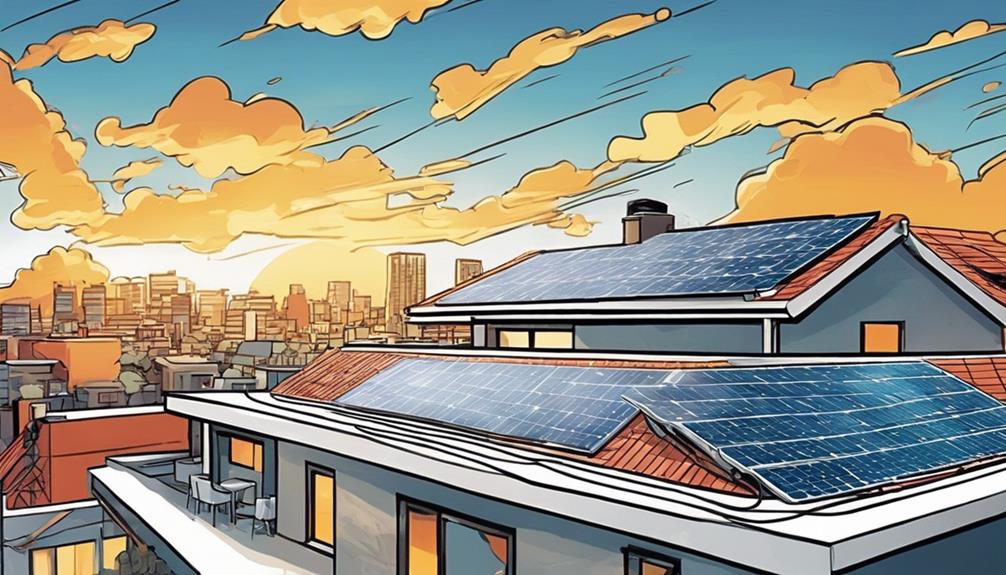

For anyone exploring solar energy, choosing the right combination of panels and micro inverters can significantly impact system performance and reliability. Micro inverters offer advantages like optimized energy production from each panel and easier system expansion, but they vary in power, features, and durability. The Solar Grid Tie Micro Inverter WVC-1200W stands out as the best overall choice for its balance of power and reliability. Meanwhile, the Yunseity 2000W Solar Micro Inverter delivers high wattage and WiFi control, making it ideal for tech-savvy users. On the other hand, some models lean towards affordability but may sacrifice advanced features or robustness. Keep reading for a detailed breakdown of these options, their strengths, and tradeoffs.
Key Takeaways
- The top-tier inverters combine high wattage capacity with IP66 waterproofing for durability in diverse environments.
- Models with integrated monitoring, like LCD displays or WiFi, simplify system management and troubleshooting.
- Power ratings vary widely; choosing the right wattage depends on your panel size and energy needs.
- Micro inverters with multiple protections and certifications tend to last longer but often come at a higher price.
- There’s a clear tradeoff between cost and features—more advanced units generally offer better performance and usability.


More Details on Our Top Picks
Solar Grid Tie Micro Inverter WVC-1200W 1200W 110V Waterproof Inverter with LCD Display
This 1200W waterproof micro inverter stands out for its high efficiency, thanks to maximum power point tracking, which can boost power output by over 25% compared to less advanced models. Its IP65 waterproof rating and multiple safety protections make it a reliable choice for outdoor environments like schools and power stations. Compared to the 1200W MPPT Grid Tie Pure Sine Wave inverter, this model offers similar power but emphasizes safety with comprehensive protections and a rugged waterproof design. The main tradeoff is its need for professional installation and its restriction to 110V systems, which limits flexibility for some setups. This pick makes the most sense for those prioritizing outdoor durability and safety in high-power applications.
Pros:- High efficiency with over 25% power increase
- LCD display for real-time system monitoring
- IP65 waterproof design for outdoor use
- Multiple safety protections
Cons:- Requires professional installation
- Limited to 110V systems
- No information on warranty or long-term support
Best for: Systems requiring robust outdoor performance in 110V environments, especially where safety and monitoring are critical
Not ideal for: Home users with 220V systems or DIY installers without professional electrical support
- Power:1200W
- Voltage:110V
- Waterproof Rating:IP65
- Display:LCD
- Protection Features:Over-temperature, under-voltage, over-voltage, short circuit, overload
Our verdict“Ideal for outdoor, high-power applications where durability and safety are priorities, but needs professional setup.”
Solar Grid Tie Micro Inverter, 600W, Waterproof, LCD Display, Suitable for Homes and Power Stations
This 600W inverter offers a balanced mix of efficiency and flexibility, with maximum power point tracking and comprehensive protections. Its stackable design supports single-phase or three-phase systems, making it adaptable for a variety of system sizes, unlike the 800W Solar Grid Tie Micro Inverter which is more streamlined but less flexible. The tradeoff here is that its more complex setup might intimidate DIY users and its durability over long-term use remains less documented. This model suits those wanting adaptable installation options for both home and small-scale commercial projects.
Pros:- Supports stackable configurations for various system sizes
- Maximum power point tracking for efficiency
- Comprehensive safety protections
- Flexible installation options
Cons:- Setup may require technical expertise
- Limited info on long-term durability
- Potential complexity for small-scale or simple systems
Best for: Installers or homeowners seeking flexible, scalable solutions for residential or small commercial solar setups
Not ideal for: DIYers without technical background or those prioritizing simple plug-and-play options
- Power:600W
- Waterproof:Yes
- Display:LCD
- Protection Features:Over-temperature, under-voltage, over-voltage, short-circuit, overload
- Installation:Stackable for single-phase or three-phase
Our verdict“Best suited for those needing adaptable, scalable solar inverter solutions in residential or commercial environments.”
1200W MPPT Grid Tie Pure Sine Wave Solar Micro Inverter with LCD Display, IP65 Waterproof
This 1200W inverter combines MPPT technology and a durable aluminum alloy build, making it highly efficient and resistant to corrosion. Its LCD display offers detailed system monitoring, similar to the 1200W Grid Tie Micro Inverter with LCD, but with a focus on durability and safety through electrical isolation. This model is ideal for those integrating both solar and wind power in home setups, where long-term reliability is a priority. The main limitation is its installation complexity, often requiring professional help, which is a step up from more straightforward plug-and-play options. It is perfect for users who want high efficiency and safety in demanding environments.
Pros:- High efficiency via MPPT technology
- Corrosion-resistant aluminum alloy construction
- LCD for real-time monitoring
- Electrical isolation enhances safety
Cons:- Complex installation requiring professional help
- Limited to 1200W capacity
- Higher initial setup cost
Best for: Homeowners or small businesses integrating solar and wind power with a focus on durability and safety
Not ideal for: DIYers seeking easy, no-fuss installation or those with limited technical support
- Power:1200W
- Waterproof Rating:IP65
- Display:LCD
- Technology:MPPT, DSP full digital SPWM
- Material:Aluminum alloy
Our verdict“Designed for users prioritizing durability and safety in high-efficiency solar/wind hybrid systems, with a need for professional installation.”
800W Solar Grid Tie Micro Inverter with Automatic Identification and Remote Monitoring
This 800W micro inverter emphasizes user convenience, with automatic identification of modules and remote monitoring via mobile app, making it an attractive choice for those who want easy setup and real-time insights. Compared with the 1200W MPPT Grid Tie Pure Sine Wave, it offers less power but simplifies installation and operation, especially for non-technical users. Its main drawback is the limited technical specifications and potential compatibility issues, which could affect long-term reliability or integration with non-US systems. This is a good fit for homeowners seeking straightforward monitoring and control without extensive technical setup.
Pros:- Easy installation behind solar modules
- Supports remote monitoring via app
- Maximizes output with MPPT technology
- Automatic module identification simplifies setup
Cons:- Limited safety certifications info
- No detailed durability or warranty info
- Potential compatibility issues with some systems
Best for: Homeowners prioritizing simple installation, remote monitoring, and control over maximum power capacity
Not ideal for: Installers or advanced users seeking high power or detailed technical specifications
- Power Mode:Reverse, load priority
- Maximum Input Power:800W
- Voltage:120V/230V
- Control:Automatic identification, remote monitoring
Our verdict“Perfect for homeowners wanting hassle-free setup and remote control, but less suited for high-demand or professional installations.”
1200W Grid Tie Micro Inverter, 110V Solar Panel Smart Inverter with LCD Display and Six Protections
This 1200W inverter combines high-precision MPPT with a comprehensive safety suite, including six protections, making it highly suitable for residential or commercial applications where safety cannot be compromised. Its LCD display enables real-time monitoring, similar to the 1200W MPPT Grid Tie Pure Sine Wave inverter, but with added safety features. It supports 30V or 36V solar panels, catering to typical residential systems. The main limitation is its specific input voltage range, which might restrict compatibility. This inverter is best for users who need reliable safety features combined with efficient power conversion.
Pros:- High-precision MPPT for increased efficiency
- LCD display for monitoring
- Six safety protections for peace of mind
- Supports common residential panel voltages
Cons:- Limited to 30V or 36V panels
- No mounting hardware included
- Requires professional installation for optimal safety
Best for: Safety-conscious homeowners or small business owners with 30V/36V panels
Not ideal for: Systems with higher voltage panels or users seeking broader compatibility without detailed safety features
- Wattage:1200W
- Input Voltage:54V DC (supports 30V/36V panels)
- Output Power:1200W
- Waveform:Pure Sine Wave
- Frequency:60 Hz
- Item Dimensions:8.27″L x 14.72″W x 1.57″H
Our verdict“Ideal for safety-minded users needing high efficiency and detailed protection in residential solar systems.”
Yunseity 2000W Solar Micro Inverter, WiFi Control, MPPT, IP66 Waterproof, Aluminum Alloy, US Plug 120V
This inverter stands out for its impressive efficiency and versatile remote monitoring capabilities, making it ideal for outdoor installations where durability and smart control matter. Compared with the Y&H 1200W inverter, the Yunseity offers a higher power capacity and IP66 waterproof rating, ensuring better outdoor resilience. Its MPPT technology maximizes energy harvest, while WiFi control simplifies system management. However, the installation process can be complex for DIY users, and it’s limited to single-phase setups without included mounting hardware. This pick makes the most sense for homeowners with larger roof areas or outdoor systems needing remote oversight.
Pros:- High efficiency MPPT technology maximizes energy yield
- Remote WiFi and app control streamline system management
- Durable aluminum alloy construction with IP66 waterproof rating for outdoor use
Cons:- Installation may require technical expertise
- Limited to single-phase systems, reducing flexibility for multi-phase setups
Best for: Homeowners installing outdoor solar arrays who want maximum efficiency and remote management
Not ideal for: DIY enthusiasts with limited technical skills or those needing multi-phase support without additional hardware
- Maximum Input Power:2000W
- Working Voltage Range:18-60V
- MPPT Voltage Range:22V-48V
- Efficiency:95%
- Waterproof Rating:IP66
- Material:Aluminum Alloy
Our verdict“This inverter suits those seeking a durable, high-efficiency outdoor solution with smart monitoring, willing to handle a more involved installation.”
Y&H 500W Grid Tie Micro Inverter Auto AC110V/220V Output, DC26-46V PV Input, MPPT Pure Sine Wave, Suitable for 36V Solar Panel
This compact inverter offers reliable performance for small-scale residential setups, especially for those who need straightforward grid tie functionality. Compared to the larger Yunseity, the Y&H 500W model is more suitable for limited roof space or supplemental solar arrays, but it can’t handle larger power loads or battery integration. Its pure sine wave output ensures compatibility with sensitive electronics, and MPPT tracking boosts efficiency. The main tradeoff is its limited capacity, making it less suitable for households with higher energy demands. It’s ideal for users seeking an easy, plug-and-play solution for small, grid-connected systems.
Pros:- Supports both 110V and 220V grid voltages for versatility
- Pure sine wave output ensures safe operation of electronics
- Compact size simplifies installation
Cons:- Limited to 500W, restricting system expansion
- No support for batteries or hybrid setups
Best for: Homeowners with small solar arrays or supplemental systems needing simple grid tie operation
Not ideal for: Larger households or those planning to expand their system capacity, due to its 500W limit
Our verdict“This inverter is best for small-scale grid-tied solar setups where simplicity and reliability are priorities, not capacity.”
Solar Micro Grid Tie Inverter WVC-1200W MPPT Pure Sine Wave DC to AC Solar & Wind Power Inverter with LCD Display
This 1200W inverter combines high efficiency with comprehensive safety features and a clear LCD display, making it well-suited for outdoor solar and wind systems. Unlike the Yunseity, it emphasizes safety protections like over-temperature, over-voltage, and short circuit, plus a rugged IP65 waterproof design. The LCD display provides real-time data, which can be an advantage over models without monitoring. Its installation can be complex, requiring some technical knowledge, and it’s limited to 1200W capacity. This model makes the most sense for users who want detailed system insights combined with reliable outdoor operation.
Pros:- High efficiency with MPPT technology increases power output
- Durable aluminum alloy construction resists corrosion
- LCD display offers real-time system monitoring
Cons:- Installation complexity may deter novices
- Limited to 1200W power capacity
Best for: Experienced DIYers or professionals installing outdoor hybrid solar/wind systems with monitoring needs
Not ideal for: Beginners or those needing higher power capacity or plug-and-play systems
Our verdict“Ideal for users who prioritize system monitoring and durability in outdoor environments, willing to handle more complex setup.”
1.8KW Plugged Solar System with 5 Crystalline Solar Panels and Micro Grid Tie Inverter
This complete solar package simplifies installation with a plug-in design, making it accessible for users who want quick installation without extensive wiring. Compared to standalone inverters, it includes five high-quality crystalline panels, mounting hardware, and a power monitor, providing a turnkey solution. Its 1.8KW capacity suits small households or supplemental solar solutions. However, it’s limited to a specific capacity and depends on full sun for best results, which might limit expansion. This system offers convenience but at the expense of flexibility for larger or more customized setups.
Pros:- Simple wall plug-in setup reduces installation complexity
- Includes comprehensive hardware and monitoring tools
- High-efficiency monocrystalline panels with long warranty
Cons:- Limited to 1.8KW, not suitable for high energy demands
- Requires direct sunlight for optimal performance
Best for: Homeowners seeking an easy, ready-made solar solution for small energy needs
Not ideal for: Large households or those looking to scale their system in the future
Our verdict“This system is perfect for users wanting a straightforward, small-scale solar setup with minimal fuss.”
800W Solar Power Inverter with LCD Display, MPPT DC 22-50V Input, AC 120V/230V Output for Solar Panel
This inverter offers a balanced mix of efficiency and simplicity, with MPPT technology that extracts maximum power from panels within its voltage range. Compared to the Yunseity or the 1200W models, the 800W unit is more compact and easier to install, making it suitable for small to medium systems. Its aluminum build ensures durability, and the LCD display provides essential real-time data. Its main limitation is the specific input voltage window, which may restrict panel configurations. It’s a solid choice for standard, grid-tied applications where space and ease of setup are priorities.
Pros:- Efficient MPPT technology maximizes energy extraction
- Durable aluminum construction ensures longevity
- LCD screen provides easy system monitoring
Cons:- Limited to input voltages between 22-50V
- No support for hybrid or battery-involved systems
Best for: Users with small to medium solar arrays needing straightforward grid-tie conversion
Not ideal for: Large-scale or expandable systems, due to capacity and voltage constraints
Our verdict“Suitable for small to medium grid-tied solar setups where simplicity and efficiency are valued over capacity.”
Y&H 600W Solar Grid Tie Micro Inverter with MPPT and Data Monitoring
This 600W micro inverter stands out for its durability and ease of monitoring, making it a strong choice for small residential setups. Its IP65 waterproof rating ensures reliable outdoor performance, while the digital LCD display provides real-time data on power output. Compared with larger options like the Y&H 1200W model, this unit is more suitable for smaller arrays but requires multiple units for bigger systems, which can complicate wiring and increase costs. Its single outlet design limits its capacity, so it’s best for modest installations. The main tradeoff is that it only handles 300W per MC4 branch, so scaling up involves additional units. Still, its combination of safety, monitoring, and straightforward installation makes it a top pick for those with small to medium setups.
Pros:- Waterproof IP65 design ensures durability outdoors
- Real-time power monitoring with digital display
- Supports stackable connections for flexible system expansion
Cons:- Limited to 300W per MC4 branch, requiring multiple units for larger arrays
- Proper installation needed to maximize safety and performance
Best for: Homeowners with modest solar arrays seeking reliable outdoor micro inverters with monitoring features
Not ideal for: Large commercial projects or systems exceeding 600W per unit, due to limited power capacity and stacking complexity
- Power Source:Solar Powered
- Wattage:300 watts
- Number of Outlets:1
- Input Voltage:50 Volts
- Output Power:600 Watts
- Display Type:Digital/LCD
- Electrical Waveform:Pure Sine Wave
- Item Dimensions:11.14″L x 7.87″W x 1.64″H
- Item Weight:1.56 Kilograms
Our verdict“This inverter is best suited for small-scale residential systems where durability and monitoring are priorities.”
Y&H 1200W Solar Grid Tie Micro Inverter with AC Data Monitoring Display Screen Waterproof IP65 MPPT DC28-50V PV Input AC80-160V Output for 36V Solar Panel
This 1200W inverter offers a significant step up in capacity, ideal for larger residential arrays or small commercial projects. Its IP65 waterproof certification ensures outdoor durability, while the support for stackable units allows expansion to meet higher energy demands. Its wide input voltage range (DC 28-50V) and AC output of 80-160V accommodate various panel configurations, but it’s limited to 36V panels, which might restrict choices for some users. Compared with the 600W model, this unit handles more power but requires careful wiring and maintenance, especially since it needs occasional cleaning to stay optimal. The low fire risk due to low DC voltage adds safety, but system complexity can grow as you scale.
Pros:- IP65 waterproof rating suitable for outdoor environments
- Supports stackable connection for scalable power
- Wide input voltage range for flexible panel pairing
- Low fire risk due to low DC voltage
Cons:- Limited to 36V solar panels, restricting some system configurations
- Requires regular cleaning to maintain performance
Best for: Homeowners or small business operators with larger solar arrays needing expandable, outdoor-ready micro inverters
Not ideal for: Systems using panels with voltages outside the 28-50V range or those preferring plug-and-play simplicity without expansion plans
- Power:1200W
- Waterproof Rating:IP65
- DC Input Voltage:28-50V
- AC Output Voltage:80-160V
- Supported Panel Voltage:Vmp 30-39V, Voc 36-50V
- Supports:Single-phase or three-phase connection
- Protection Features:Over/under voltage, over/under frequency, islanding protection
Our verdict“This inverter is well-suited for larger, expandable solar installations where outdoor durability and safety are priorities.”
Y&H 1000W Grid Tie Inverter Power Limiter DC 25-60V Solar Input AC 110V/240V Auto Switch
This 1000W inverter excels in efficiency and system monitoring, making it a compelling choice for grid-tied setups. Its up to 99% efficiency with MPPT technology maximizes energy harvest, especially critical in variable sunlight conditions. The LCD display provides clear insights into system parameters, aiding troubleshooting and performance tracking. While it cannot power loads directly—unlike some standalone inverters—its stackable design allows scaling up to 4000W, a big advantage for growing systems. Compared with the 600W models, it’s less suited for small, simple setups but offers better performance for larger, grid-dependent installations. The main tradeoff is that it doesn’t support off-grid use, and wiring must be handled with care to prevent issues.
Pros:- Efficiency up to 99% maximizes energy output
- Stackable for larger power capacity
- Comprehensive LCD for detailed system monitoring
Cons:- Limited to grid-tie applications, cannot power loads directly
- Requires careful wiring and connection precautions
- No off-grid functionality
Best for: Homeowners or small business owners seeking high-efficiency grid-tie inverters capable of scaling with system growth
Not ideal for: Off-grid applications or users wanting to power AC loads directly without grid connection
- Input Voltage:25-60V DC
- Power:1000W
- Efficiency:up to 99%
- Peak Conversion Rate:80%
- Output Voltage:AC 110V/240V
- Stackable:Yes, up to 4000W
- Display:LCD
Our verdict“This inverter is ideal for those needing highly efficient grid-connected systems that can expand over time.”

How We Picked
These products were selected based on their technical specifications, build quality, user safety features, and overall value. Priority was given to models with proven waterproof ratings, high efficiency, and ease of installation. We also considered the presence of monitoring features like LCD displays or WiFi, which enhance user experience. Compatibility with a variety of panel sizes and voltages was examined to ensure versatility. The ranking reflects a balance between performance, durability, usability, and price, helping buyers find options suited to different needs and budgets.Factors to Consider When Choosing Solar Panels With Micro Inverters
When selecting solar panels with micro inverters, understanding key factors can prevent costly mistakes and ensure a system that meets your expectations. The right choice depends on your energy goals, environment, and budget. Let’s explore some essential considerations to guide your decision-making beyond just specifications.Power Capacity and Compatibility
Matching the inverter’s wattage with your solar panel array is fundamental. Oversized inverters can handle more panels but may be unnecessary for small setups, while underpowered inverters limit energy production. Always verify the inverter’s voltage and current ratings align with your panels’ specifications to prevent system inefficiencies or damage. Consider future expansion—selecting a slightly higher capacity can save costs if you plan to add panels later.
Waterproofing and Durability
Micro inverters are often installed outdoors, so a high waterproof and weather resistance rating (such as IP65 or IP66) is vital. Cheaper models with lower ratings may fail prematurely when exposed to rain, snow, or dust. Durable enclosures and corrosion-resistant materials extend lifespan, reducing long-term maintenance costs. Evaluate your local climate to choose a model that can withstand environmental stresses.
Monitoring and User Interface
Many micro inverters come with monitoring features like LCD screens, WiFi, or app integration, which greatly simplify system management. These tools help detect issues early and optimize performance. However, more advanced monitoring often adds to the cost. Decide how much visibility you want—if you prefer hands-on control or plan to manage multiple systems, investing in a unit with comprehensive monitoring can be worthwhile.
Installation and Compatibility
Ease of installation varies among models—some come with plug-and-play connectors, while others require more complex wiring. Compatibility with your existing panels and voltage ranges is also critical. Misaligned voltage or incompatible connectors can lead to installation delays or system inefficiencies. Reading user reviews about installation difficulty can help avoid surprises during setup.
Price and Long-Term Value
While cheaper micro inverters might be tempting, they often compromise on longevity or features. Investing in higher-quality units with better warranties and robust protections can pay off over time through improved reliability and energy output. Balance your initial budget against potential maintenance costs and system performance to find the best long-term value.
Frequently Asked Questions
How do micro inverters improve solar panel efficiency?
Micro inverters maximize efficiency by converting DC to AC power at each individual panel rather than a single central inverter. This means shading, dirt, or damage affecting one panel won’t reduce the entire system’s output. As a result, systems with micro inverters typically produce more energy over time, especially in partially shaded or complex roof layouts.
Are micro inverters more expensive than string inverters?
In general, micro inverters tend to have a higher upfront cost per watt compared to traditional string inverters because of their distributed nature and additional components. However, their modular design can reduce installation complexity and improve system performance, potentially leading to higher long-term savings. Consider your specific setup and shading conditions when evaluating cost versus benefits.
Can I expand my solar system later with micro inverters?
Yes, micro inverters are well-suited for system expansion because they operate independently. You can add more panels with their own micro inverters without reconfiguring the whole system. This flexibility makes them a good choice if you anticipate future growth in your energy needs, though it’s important to ensure your existing inverter ratings can handle additional capacity.
What maintenance do micro inverters require?
Micro inverters generally require minimal maintenance, mainly periodic inspections to ensure they are clean and free of debris. Monitoring features can alert you to issues early, reducing downtime. Unlike central inverters, individual units can be replaced without affecting the whole system, which simplifies repairs and reduces maintenance costs over time.
Is it worth paying more for a micro inverter with WiFi monitoring?
Investing in a micro inverter with WiFi or LCD display offers real-time data and easier troubleshooting, which can be especially beneficial for larger or complex systems. While it increases initial costs, the ability to monitor performance remotely can help detect problems early and optimize energy production, often saving money over the system’s lifespan. For those who value ease of management, the added expense can be justified.