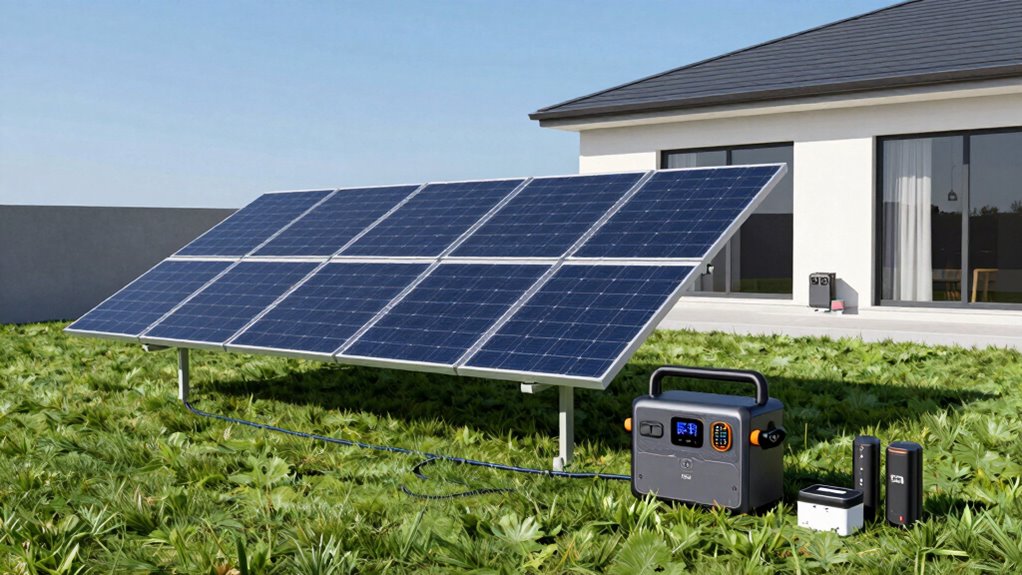

For homeowners seeking reliable, scalable backup power, an expandable solar generator system for home offers a flexible solution. The best models balance high capacity, expandability, and ease of use, but they vary significantly in price, size, and features. The EF ECOFLOW DELTA2 stands out as the overall top pick thanks to its smart battery expansion and solid performance. Meanwhile, options like the OUPES Guardian 6000 provide massive capacity for larger homes, but at a higher cost and complexity. Many systems require tradeoffs between capacity, portability, and cost. Keep reading for a detailed breakdown of the best options to find the right fit for your home backup needs.
Complete the kit

Key Takeaways
- The most effective systems prioritize modular expandability without sacrificing core capacity or performance.
- High-capacity models tend to be larger and more expensive, making portability a secondary concern for some buyers.
- Battery chemistry, such as LiFePO4, significantly impacts longevity and safety, especially for long-term home use.
- Ease of expansion and integration with existing solar setups varies, with some systems offering plug-and-play upgrades.
- Price often correlates with capacity and features, but the best value balances initial cost with long-term reliability and expandability.


| expandable solar generator system for home | Battery Type | Capacity |
|---|---|---|
| EF ECOFLOW Portable Power Stat | — | — |
| OUPES Guardian 6000 Solar Gene | LiFePO4 | 4608Wh |
| ABOK Ark3600 Portable Power St | LiFePO4 | — |
| Anker SOLIX F3000 Portable Pow | — | 3,072Wh |
| PECRON F5000LFP Power Station | — | 5120Wh |
| BLAVOR Portable Power Station | LiFePO4 | — |
| EF ECOFLOW Power Station 12288 | LiFePO4 | — |
| EF ECOFLOW Portable Power Stat | LiFePO4 | — |
| Jackery Solar Generator 5000 P | — | — |
| Jackery Solar Generator 300 | LiFePO4 | 292Wh |
| Jackery HomePower 3600 Plus Po | LiFePO4 | 3584Wh |
| OSCAL PowerMax 6000 Solar Gene | LiFePO4 | 3600Wh |
More Details on Our Top Picks
EF ECOFLOW Portable Power Station DELTA2 with Smart Extra Battery, Expandable to 2048Wh, Solar Generator for Home Backup and Camping
This model stands out for its balanced combination of power, expandability, and portability. Compared with the PECRON F5000LFP, the DELTA2 offers a smaller footprint and easier mobility, making it suitable for both home backup and outdoor excursions. Its 1800W AC output supports most household appliances, while the expandable capacity to 2048Wh ensures flexibility. The fast X-Stream charging technology minimizes recharging time, a major advantage over less advanced models like the Anker SOLIX F3000, which has a lower capacity and less robust expandability. However, the need to purchase extra batteries separately and its bulkier weight limit portability for some users.
Pros:- Expandable capacity up to 2048Wh with extra batteries
- Powerful 1800W AC output supports most household devices
- Fast charging technology reduces recharge times
- Supports solar input for eco-friendly recharging
Cons:- Requires separate purchase of extra batteries
- Heavy and bulky for portable use
Best for: Homeowners seeking a reliable, expandable backup power system that can also serve during outdoor activities.
Not ideal for: Those who prioritize ultra-lightweight portability or have limited space for additional batteries.
- Wattage:1800 watts
- Fuel Type:Solar Energy
- Power Source:Solar Powered
- Output Wattage:1800 Watts
- Additional Features:7x Faster AC charging, Expandable capacity
- Engine Type:4 Stroke
Our verdict“A versatile choice for users needing reliable home backup with the flexibility for outdoor power needs.”
OUPES Guardian 6000 Solar Generator Kit: 4608Wh Power Station with 6000W Output and Dual Voltage
The OUPES Guardian 6000 offers a high-capacity 4608Wh battery and a substantial 6000W continuous output, making it ideal for powering multiple large appliances during outages or off-grid living. Its dual voltage support (120V/240V) matches household needs and simplifies integration, unlike the smaller capacity Anker SOLIX F3000. Expandability up to 41,472Wh allows for significant scalability, surpassing many portable options. The system’s seamless home integration is a plus, but the initial investment is steep, and setup requires space and planning for solar panels and additional batteries. It’s best suited for users who need robust, long-term backup power rather than portability.
Pros:- High-capacity 4608Wh battery
- Supports dual voltage for versatile appliance compatibility
- Expandable system for larger capacity
- Seamless home integration without professional installation
Cons:- Expensive initial cost
- Requires space for solar panels and setup
Best for: Homeowners with significant power demands seeking a scalable, off-grid capable system.
Not ideal for: Individuals looking for a lightweight, portable solution for outdoor adventures or small backup needs.
- Capacity:4608Wh
- Maximum Output:6000W (7200W Boost)
- Voltage:120V/240V dual voltage
- Solar Panels:2 x 240W
- Battery Type:LiFePO4
- Expandability:Up to 41,472Wh
Our verdict“An excellent choice for users needing a large, expandable system for home and off-grid backup, with less emphasis on portability.”
ABOK Ark3600 Portable Power Station with 400W Solar Panel, 3840Wh LiFePO4 Battery, Expandable to 11520Wh, 3H Fast Charge, 15 Outlets, UPS 10ms, 3600W Solar Generator for Home Backup, Camping, RV
The ABOK Ark3600 excels in combining high capacity and rapid expandability, making it suitable for outdoor adventures and emergency backup. Its 3840Wh LiFePO₄ battery supports over 4000 cycles, promising durability over many years, a step above the lower lifespan of the Anker SOLIX F3000. The ability to expand to 11520Wh allows for significant power reserves, ideal for extended outages. With 15 outlets, including multiple AC and USB ports, it supports various devices simultaneously. Fast charge in just three hours and Bluetooth remote monitoring enhance user convenience. On the downside, its weight and complex setup may challenge portability and ease of use for some.
Pros:- Long-lasting LiFePO₄ batteries with over 4000 cycles
- Expandable to 11520Wh for extended power needs
- Fast 3-hour recharge time
- Multiple output ports support various devices
Cons:- Heavy weight impacts portability
- Setup complexity requires attention to compatibility
Best for: Outdoor enthusiasts and emergency prepper households needing a durable, expandable power source.
Not ideal for: Users prioritizing lightweight, compact solutions for regular travel or small-scale backup.
- Battery Capacity:3840Wh
- Expandable Capacity:11520Wh
- Battery Type:LiFePO4
- Rated Output:3600W
- Charging Time:3 hours
- Number of Outlets:15
Our verdict“A durable, high-capacity power station tailored for outdoor use and long-term emergency backup.”
Anker SOLIX F3000 Portable Power Station with 400W Solar Panel
The Anker SOLIX F3000 offers a respectable 3,072Wh capacity with support for high wattage appliances, making it suitable for both emergency backup and outdoor use. Compared to larger systems like the PECRON F5000LFP, it’s more compact but still supports expansion up to 24kWh, providing flexibility for future power needs. Its 400W solar panel enables quick recharging, though its bulk and weight can be a barrier for portable use. The setup is more complex than smaller units, and its expandability requires careful planning. It’s a good fit for those wanting a balance of capacity, expandability, and portability for home and outdoor backup.
Pros:- Supports expansion up to 24kWh
- Fast solar recharging with 400W panel
- Good capacity for emergencies and outdoor activities
- Supports multiple device types
Cons:- Relatively heavy and bulky
- Complex setup for expansion and solar integration
Best for: Preppers and small to medium households seeking a scalable, reliable power source without excessive weight.
Not ideal for: Users needing ultra-lightweight or minimalistic portable power solutions.
- Capacity:3,072Wh
- Solar Panel Power:400W
- Recharging Power:6,000W
- Output Voltage:120/240V
- Expandable Capacity:Up to 24kWh
- Pass-Through Charging:Yes
Our verdict“A versatile portable power station balancing capacity, expandability, and outdoor usability.”
PECRON F5000LFP Power Station 5120Wh Solar Generator with 7200W AC Output
The PECRON F5000LFP stands out for its massive 5120Wh capacity and 7200W continuous AC output, making it well-suited for powering high-demand appliances during long outages or RV living. Its expandability up to 35.8kWh ensures future growth, surpassing most portable units. Its quiet operation at only 30dB is a significant advantage for home use. Although its size and weight are considerable, requiring assistance to move, it offers extensive output options and multiple charging methods, including solar, AC, and generator input. This system is best for users who require dependable, high-capacity power and are less concerned about portability.
Pros:- Massive 5120Wh capacity
- Supports expansion to 35.8kWh
- Multiple charging options including solar
- Quiet operation and extensive output ports
Cons:- Heavy and large, difficult to move alone
- Additional batteries and solar panels are sold separately
Best for: Home and RV owners needing a large, expandable, high-power backup system.
Not ideal for: Those seeking lightweight, portable solutions or minimal setup complexity.
- Capacity:5120Wh
- AC Output:7200W
- Solar Input:6400W
- Dual Voltage:120V/240V
- Expandable Capacity:Up to 35.8kWh
- Number of Outputs:12
Our verdict“A powerhouse designed for users with significant power needs and space for setup, prioritizing capacity over portability.”
BLAVOR Portable Power Station 1600W (Peak 3200W), Built-in Solar Panel, 1024Wh LiFePO4 Battery, 100W USB-C Fast Charge, Solar Generator for Home Backup, Camping, Power Outages & RV
This model shines for its integrated foldable solar panel and compact design, making it ideal for those who want a portable, all-in-one power solution for both home backup and outdoor adventures. Unlike larger systems like the Jackery 5000 Plus, the BLAVOR offers a smaller footprint with a 1024Wh capacity, which suits smaller homes or emergency kits but limits runtime for larger appliances. Its LiFePO4 battery ensures over a decade of reliable use, yet the relatively modest capacity means it can’t support heavy-duty or prolonged power needs. The built-in solar panel simplifies setup, but charging times are slower compared to systems that support higher wattage inputs. Overall, this is perfect for users seeking a dependable backup with minimal setup, but less ideal for those needing continuous power for large appliances.
Pros:- Integrated solar panel for easy outdoor charging
- Long-lasting LiFePO4 battery with over 10-year lifespan
- Lightweight and portable, suitable for outdoor use
Cons:- Limited capacity may not support large or multiple appliances simultaneously
- Slower recharge times with the built-in solar panel compared to systems with higher wattage inputs
Best for: Homeowners looking for a compact, reliable backup system that doubles as outdoor power for camping or RV trips
Not ideal for: Households needing to run multiple large appliances during outages or extended power needs
- Battery Capacity:1024Wh
- Peak Power:3200W
- Inverter Power:1600W
- Battery Type:LiFePO4
- Solar Panel Power:40W
- Charging Methods:Solar, AC, Car
Our verdict“This pick is best for users wanting an all-in-one portable backup for small appliances and outdoor activities.”
EF ECOFLOW Power Station 12288Wh Delta Pro Ultra X with AC cable, 12000W Solar Generator for Home Battery Backup, Expandable to 180kWh, Outdoor & Camping Power Supply
This system stands out for its enormous capacity and scalability, making it suitable for whole-home backup and long-term energy needs, outperforming smaller options like the Jackery 5000 Plus. Its 12288Wh battery and 12000W inverter make it capable of powering nearly every household appliance, including heavy-duty items like water heaters and HVAC units. Compared to the EF DELTA Pro, the Ultra X adds advanced safety features, longer lifespan, and greater flexibility with expandability up to 180kWh—ideal for users seeking a future-proof solution. However, its large size and high cost make it less appealing for users with limited space or budget constraints. It’s best suited for large households or those wanting a serious, scalable backup system that can grow over time.
Pros:- Enormous capacity suitable for whole-home backup
- Expandable up to 180kWh for future growth
- Fast response times during grid outages
Cons:- High cost and size limit portability
- Requires significant setup and space for installation
Best for: Large households or small businesses needing a scalable, high-capacity backup system
Not ideal for: Individuals with limited space or those seeking a portable, lightweight system
- Battery Capacity:12288Wh
- Inverter Power:12000W
- Expandable Capacity:Up to 180kWh
- Battery Type:LiFePO4
- Recharge Time:Approximately 2 hours
- Safety Features:Dual BMS, 100+ safety checks
Our verdict“This is the top choice for users requiring a scalable, high-capacity energy backup for entire homes or commercial use.”
EF ECOFLOW Portable Power Station 3600Wh DELTA Pro, 120V AC Outlets x 5, 3600W, Fast Charge, Solar Generator for Home, Camping, RV, Emergencies
The 3600Wh DELTA Pro balances substantial capacity with portability, making it suitable for backup power and outdoor activities. Its 3600W continuous output supports multiple appliances, but it falls short of the larger 12288Wh systems like the Ultra X for extended or large-scale power needs. It offers fast recharge times through wall, solar, or car input, and can be expanded with additional batteries. Unlike the Jackery 5000 Plus, this model provides better power for demanding appliances, yet its weight and bulk make it less ideal for frequent portability. It’s a solid choice for users wanting a reliable, high-capacity system with flexible charging options, but not for those needing the absolute maximum capacity or ultra-lightweight portability.
Pros:- Large 3600Wh capacity for home backup
- Supports fast charging via multiple methods
- Expandable capacity with additional batteries
Cons:- Relatively heavy and bulky for daily portability
- Higher price compared to smaller portable systems
Best for: Homeowners seeking a high-capacity, versatile backup with quick recharge and expandability
Not ideal for: Users needing ultra-lightweight or very portable systems for frequent outdoor use
- Battery Capacity:3600Wh
- Maximum Output:3600W
- Recharge Time:Under 3 hours
- Battery Type:LiFePO4
- Expandability:Up to additional batteries
- App Control:Yes
Our verdict“This generator is well-suited for users who need reliable, expandable power for home backup or outdoor use without sacrificing capacity.”
Jackery Solar Generator 5000 Plus with 2x 200W Solar Panels, 5040Wh LiFePO4 Portable Power Station, 10-Year Lifespan, 7200W AC Output, Whole Home Backup for Emergency
The Jackery 5000 Plus offers a substantial 5040Wh capacity and 7200W peak power, making it suitable for powering essential home systems during outages. Its ability to support both 120V and 240V loads and the option to expand with additional solar panels provides flexibility over smaller units like the BLAVOR. The 10-year battery lifespan and smart transfer switch make it a resilient choice for long-term backup, though it is heavier and more expensive, which could deter users seeking portability. Compared to the EF DELTA Pro, the Jackery excels in supporting more demanding appliances and longer backup durations, but requires more space and investment.
Pros:- High capacity suitable for extended outages
- Supports both 120V and 240V appliances
- Expandable with solar panels for longer autonomy
Cons:- Heavy and less portable for outdoor use
- Higher price point may be prohibitive for some
Best for: Homeowners needing reliable, long-lasting backup power for critical appliances during outages
Not ideal for: People with limited space or budget constraints who need a lightweight, portable option
- Battery Capacity:5040Wh
- Peak Power:7200W
- Lifespan:10 years
- Support for 240V:Yes
- Expandability:Up to 60kWh with extra panels
- Charging Time:Approximately 2 hours
Our verdict“This system is ideal for those who prioritize long-term, high-capacity home backup over portability or initial cost.”
Jackery Solar Generator 300, 292Wh Power Station with 40W Solar Panel
This lightweight and versatile power station stands out for those who prioritize ease of transport without sacrificing essential features. Weighing only 7.5 lbs, it’s significantly lighter than larger units like the Jackery HomePower 3600 Plus, making it ideal for camping, hiking, or emergency kits. Its compact size and integrated handle make it easy to carry, but this comes with limited capacity compared to larger options. The 300W pure sine wave AC outlet and multiple USB ports support a range of devices, yet it’s best suited for small electronics rather than heavy appliances or whole-home backup. The LiFePO4 chemistry promises over 4,000 charge cycles, ensuring durability over many years, but its relatively small 292Wh capacity means frequent recharging for longer trips. Paired with the included 40W solar panel, it recharges quickly outdoors, but the small panel limits charging speed if sunlight is inconsistent. Compared to the larger Jackery HomePower 3600 Plus, this unit is less suitable for high-power needs but excels in portability and simplicity.
Pros:- Extremely lightweight at only 7.5 lbs, easy to carry on hikes or travel
- Supports multiple device types with 2 AC outlets and USB ports
- Long-lasting LiFePO4 battery with over 4,000 charge cycles
Cons:- Limited capacity at 292Wh, restricting use for larger appliances
- Slow solar recharge with the small 40W panel in cloudy conditions
Best for: Individuals seeking a lightweight, portable power solution for camping, outdoor adventures, or emergency backup of small electronics.
Not ideal for: Homeowners needing to run large appliances or backup entire house circuits, as its limited capacity and power output are insufficient.
- Capacity:292Wh
- Power Output:300W continuous
- Weight:7.5 lbs
- Charging Time:Approx. 7.5 hours with 40W panel
- Ports:2 AC, 1 USB-C PD, 2 USB-A, 1 car port
- Battery Type:LiFePO4
Our verdict“This pick makes the most sense for users needing portable, lightweight power for small devices during outdoor activities or short-term emergencies.”
Jackery HomePower 3600 Plus Portable Power Station with 2 Solar Panels
Compared with the smaller Jackery Explorer 300, the HomePower 3600 Plus offers a substantial increase in capacity and power output, making it well-suited for whole-house backup needs. Its 3584Wh capacity supports longer outages and larger appliances, while the ability to expand up to 21kWh provides a scalable solution for growing energy needs. The unit’s 3600W continuous output handles most household essentials, and its lightweight, wheeled design simplifies transportation within the home. However, the solar panels are shipped separately, adding to initial setup costs and complexity. While the unit’s portability is impressive for its size, it’s heavier than smaller portable units like the Jackery Explorer 300, and multiple units are required for maximum expansion, which can increase overall expense. Its high capacity and expandability make it an attractive choice for those planning a flexible, scalable home energy system but less ideal for users needing a compact or budget-friendly option.
Pros:- High capacity of 3584Wh supporting multiple appliances during outages
- Expandable up to 21kWh for future energy needs
- Lightweight and equipped with wheels for easy mobility
Cons:- Solar panels are shipped separately, increasing initial setup complexity
- Requires multiple units for maximum expansion, raising total costs
Best for: Homeowners looking for a scalable, high-capacity backup power system that can grow with their energy needs.
Not ideal for: Individuals needing a small, plug-and-play backup solution or with limited space for multiple units, due to its size and the need for additional panels for full solar charging.
- Capacity:3584Wh
- Power Output:3600W continuous
- Expandable Capacity:Up to 21kWh
- Weight:Lightweight with wheels
- Charging Time:AC in 2.5 hours
- Battery Type:LiFePO4
Our verdict“This system fits well for those seeking a scalable, large-capacity backup power solution for a whole house or significant energy needs.”
OSCAL PowerMax 6000 Solar Generator with 3x400W Solar Panels
The OSCAL PowerMax 6000 distinguishes itself by offering a robust 6000W peak power, making it capable of supporting larger appliances or multiple devices simultaneously. Its 3600Wh capacity is comparable to the Jackery HomePower 3600 Plus, but the real advantage lies in its high power output and fast charging capabilities, with AC recharge in under two hours. The integrated safety features and automatic switchover during outages ensure dependable performance in emergencies. However, its weight and bulk—along with the need to set up the three included 400W solar panels—make it less portable for outdoor use. The higher price point and the requirement for panel setup could deter budget-conscious buyers or those seeking a plug-and-play system. This option excels where high power and fast response are critical, but it’s less suitable for those prioritizing lightweight or simple installation.
Pros:- High peak power of 6000W supports heavy appliances
- Fast recharge time with AC input in under 2 hours
- Automatic switchover ensures continuous power during outages
Cons:- Relatively heavy and bulky, limiting portability
- Requires setup and connection of three solar panels for optimal solar charging
Best for: Emergency preparedness and backup power for larger appliances or multiple devices in a residential setting.
Not ideal for: Users needing a lightweight, easy-to-setup system for occasional outdoor use, as its bulk and setup complexity are significant.
- Capacity:3600Wh
- Peak Power:6000W (9000W peak)
- Charging Time:Under 2 hours with AC
- Number of Solar Panels:3×400W
- Battery Type:LiFePO4
- Additional Features:APP control, automatic switchover
Our verdict“This generator is best suited for users who require reliable, high-power backup in a home or emergency scenario, and don’t mind setup complexity.”

How We Picked
Evaluation focused on key factors like total power capacity, expandability options, build quality, and user safety features. We prioritized systems that allow straightforward expansion with additional batteries or modules, ensuring scalability for different home sizes. Performance under real-world conditions, such as charging speed, inverter efficiency, and solar compatibility, also influenced rankings. Systems offering reliable, long-lasting batteries like LiFePO4 were rated higher, as they promise durability for years of continuous use. Finally, ease of setup and maintenance was a critical consideration, helping to identify options suitable for homeowners without technical expertise. The ranking reflects a balance between capacity, expandability, quality, and value, ensuring choices fit a range of needs and budgets.Factors to Consider When Choosing Expandable Solar Generator System For Home
When selecting an expandable solar generator system for home use, several factors deserve attention beyond initial capacity. Understanding these can help avoid costly mistakes and ensure you choose a system that grows with your needs. From battery chemistry to solar compatibility and ease of expansion, each aspect influences long-term satisfaction and reliability.Capacity and Expandability
Start by assessing your current power needs and future expansion plans. Look for systems that offer a solid base capacity with options to add more batteries or modules later. The ability to expand without replacing the entire system is key to maximizing value and accommodating growing energy demands. Consider how much power you need for essential appliances and how much you might want to add in the future.
Battery Chemistry and Longevity
Battery chemistry impacts the lifespan and safety of your system. LiFePO4 batteries, for example, are more durable and safer over long periods compared to traditional lithium-ion types, making them ideal for continuous home backup. Investing in systems with high-quality batteries ensures fewer replacements and lower maintenance costs over time. Be cautious of cheaper systems with inferior batteries that may degrade quickly.
Solar Compatibility and Portability
Check whether the system supports standard solar panels and the maximum input wattage. A flexible setup allows you to use existing panels or upgrade them later. Portability may be less important for permanent home installations but remains relevant if you plan to move or use the system for outdoor activities. Larger capacity units tend to be bulkier, so consider your space and mobility needs carefully.
Ease of Expansion and Integration
Some systems feature modular design that simplifies adding batteries or solar panels, while others may require complex wiring or proprietary components. Ensuring compatibility and straightforward expansion can save time and money later. It’s also worth checking if the system integrates with your existing solar setup or home energy management systems for seamless operation.
Price and Long-Term Value
Price varies widely based on capacity, features, and brand reputation. While a higher initial investment might seem steep, investing in a system with durable batteries and easy expandability can prove more economical over the long run. Avoid systems that seem cheap upfront but require frequent replacements or lack reliable support. Consider your budget against the potential need for future expansion and long-term reliability.
Frequently Asked Questions
Can I add more batteries to any solar generator system later?
Not all systems support easy expansion with additional batteries. Some are designed with modular ports or plug-and-play features, making upgrades straightforward. Others might require complex wiring or proprietary components, which can increase costs and installation difficulty. Always verify whether the system you choose explicitly offers expandability options compatible with your future needs.
How does battery chemistry affect the lifespan of a solar generator system?
Battery chemistry plays a crucial role in durability and safety. LiFePO4 batteries, for example, typically last longer—often over 10,000 cycles—and are safer due to lower risk of thermal runaway. This makes them well-suited for continuous, long-term home backup use. Cheaper lithium-ion batteries may degrade faster, leading to more frequent replacements and higher costs over time. Prioritizing higher-quality chemistries can improve your system’s long-term value.
Is it better to buy a larger capacity system now or expand later?
Choosing a larger capacity system initially can simplify your backup plan and reduce the need for future upgrades, but it usually comes with a higher upfront cost. Expanding later allows you to start small and grow as your needs evolve, which can be more budget-friendly. However, some systems are limited in how much they can expand, so understanding their maximum capacity before purchasing is essential to avoid costly replacements or incompatible upgrades later.
What should I look for in solar panels to use with my generator system?
Opt for panels that are compatible with your generator’s input specifications, including voltage and wattage limits. Standardized panels, such as 100W or 200W modules, tend to be versatile and easier to upgrade or replace. Consider panel efficiency, durability, and whether they come with weatherproofing features. Higher-quality panels can improve your system’s overall charging speed and reliability, especially during long-term outdoor use.
Are there safety considerations I should be aware of with expandable solar generators?
Safety should be a priority—look for systems with built-in protections such as overload, short circuit, and thermal shutdown features. Proper battery chemistry, like LiFePO4, also reduces risks associated with thermal runaway. Additionally, ensure your setup complies with local electrical codes and that you follow manufacturer guidelines during installation. Proper maintenance and monitoring are essential to prevent issues and prolong the system’s lifespan.
Conclusion
For general home backup needs, the EF ECOFLOW DELTA2 offers a balanced combination of expandability, performance, and ease of use, making it our best overall choice. Homeowners seeking maximum capacity and scalability might prefer the OUPES Guardian 6000 despite its higher cost. For those new to backup systems or with smaller energy demands, the Jackery Solar Generator 300 provides a straightforward, budget-friendly entry point. High-capacity, long-term users will find the EF ECOFLOW Delta Pro or PECRON F5000LFP better suited to their needs. Ultimately, selecting the right system depends on your current demands, future plans, and budget constraints—use this guide to match your priorities to the best options available.