If you’re looking for the 15 best backup heating systems for cabins, I recommend exploring a mix of portable propane heaters like the Mr. Heater Blue Flame, outdoor radiant options, efficient ventless fireplaces such as Duluth Forge, and versatile electric or dual-fuel units like the Pleasant Hearth. For cold-weather emergencies, solar-powered pet heaters and compact industrial heaters are also great choices. Keep in mind safety features and fuel sources—if you’re curious about more options and details, there’s plenty to discover further on.
Key Takeaways
- Portable propane and radiant heaters provide quick, reliable warmth for cabins during power outages or emergencies.
- Ventless indoor heaters like dual-fuel fireplaces offer safe, efficient heating without venting.
- Wall-mounted and cabinet heaters are ideal for small cabins, offering adjustable heat and safety features.
- Battery backup systems ensure continuous power supply and heating in off-grid or cold conditions.
- Outdoor and emergency heaters are suitable for decks, tents, or outdoor cabins, providing versatile backup heating options.
9,000 BTU Portable Buddy Radiant Heater
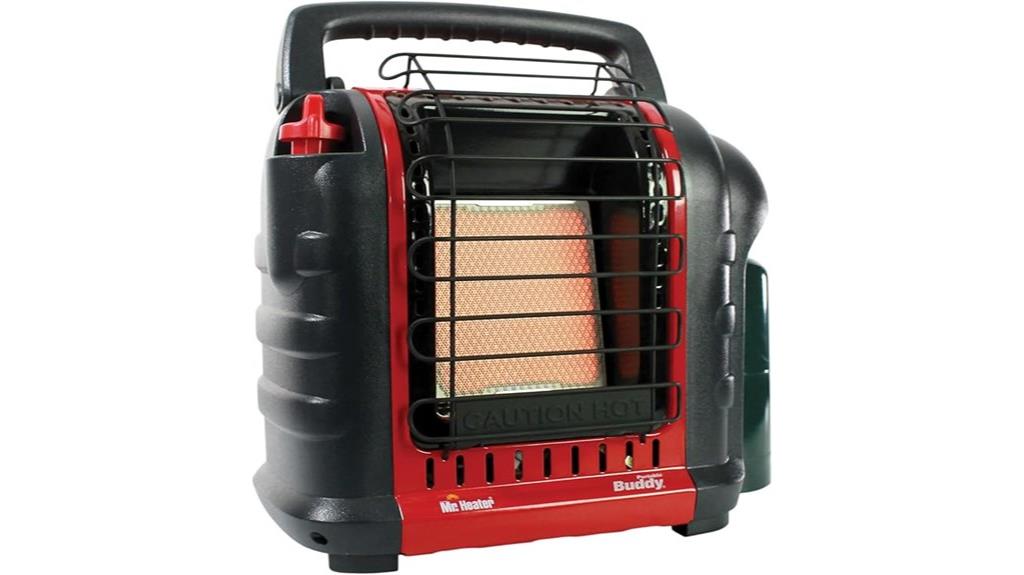
Are you searching for a portable heater that can dependably warm your cabin or outdoor area during power outages or cold snaps? The 9,000 BTU Portable Buddy Radiant Heater is a perfect choice. It emits 4,000 or 9,000 BTU/hr of radiant heat, warming up to 225 square feet. Compact and lightweight at just over 8 pounds, it’s easy to move around. Safety features like oxygen depletion sensors, thermal shut-down, and tip-over switches ensure peace of mind. Connect it to a 1-lb propane bottle or 20-lb tank, and enjoy up to three hours of warmth on high. It’s ideal for decks, garages, or indoor spaces needing quick, reliable heating.
Best For: outdoor enthusiasts, campers, and homeowners seeking portable, reliable heating for indoor and outdoor spaces during cold weather or power outages.
Pros:
- Compact and lightweight design for easy portability and storage.
- Safety features like oxygen depletion sensor, thermal shut-down, and tip-over switch for secure operation.
- Capable of heating up to 225 sq ft with adjustable heat settings for versatile use.
Cons:
- Runtime is limited to about 3 hours on a 1-lb propane cylinder at high setting.
- Requires accessories for tank connection, which may add to the overall cost.
- Not suitable for continuous long-term heating without refilling or additional tanks.
Vevor Diesel Air Heater with Remote and LCD Switch

The Vevor Diesel Air Heater with Remote and LCD Switch stands out as an ideal backup heating solution for those who need reliable warmth in vehicles or outdoor cabins, especially in cold climates. It’s a compact, 8KW diesel-powered system compatible with cars, RVs, trucks, and boats. With quick heating within 10 minutes, low fuel consumption, and a remote control that works up to 30 meters away, it offers convenience and efficiency. Its LCD display makes adjustments simple, and the heater’s robust design ensures reliable operation even at high altitudes, up to 5500 meters. This makes it a versatile, cost-effective choice for keeping you warm when it counts.
Best For: outdoor enthusiasts, vehicle owners, and travelers in cold climates seeking quick, reliable, and efficient heating solutions.
Pros:
- Fast heating within 10 minutes ensures quick comfort.
- Low fuel consumption makes it cost-effective for prolonged use.
- Remote control and LCD display provide easy operation from up to 30 meters away.
Cons:
- Requires a compatible diesel power source for operation.
- Installation may require some technical knowledge or professional assistance.
- Slightly heavy at 18.8 pounds, which may affect portability for some users.
VEVOR 8KW Diesel Heater All-in-One with Bluetooth App Control

Looking for a portable, hassle-free heating solution that can be controlled remotely? The VEVOR 8KW Diesel Heater All-in-One fits the bill perfectly. It heats up to 269 sq ft quickly, within 10 minutes, thanks to its efficient sandblasting aluminum heat exchanger. You can control it via Bluetooth app from up to 98 feet, or use the remote control within 32 feet, making it super convenient. It automatically compensates for altitude up to 18,045 feet, ensuring reliable performance. With low fuel consumption and built-in safety features, this all-in-one heater is ideal for outdoor adventures, RVs, boats, or cabins needing a dependable, remote-controlled heat source.
Best For: outdoor enthusiasts, RV owners, boaters, and cabin dwellers seeking a portable, remote-controlled heating solution with quick and efficient performance.
Pros:
- Rapid heating within 10 minutes, covering up to 269 sq ft efficiently
- Multiple control options including Bluetooth app, remote control, and LCD display for convenience
- Automatic altitude compensation up to 18,045 ft ensures consistent performance in high elevations
Cons:
- Limited fuel capacity of 5 L may require frequent refueling during extended use
- Dependence on electronic controls may pose issues if Bluetooth or remote functions fail
- Not suitable for indoor use without proper ventilation due to diesel combustion fumes
12V/24V 8KW Portable Diesel Air Heater with LCD & Remote for Vehicles
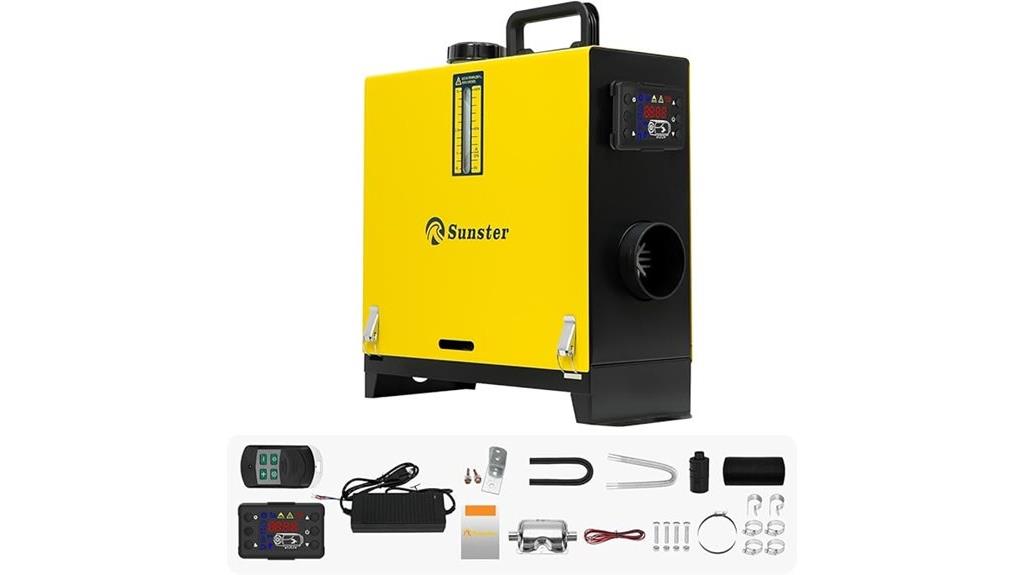
This 12V/24V 8KW portable diesel air heater stands out as an ideal backup heating solution for vehicle owners and outdoor enthusiasts who need reliable warmth on the go. Made of durable aluminum alloy, it guarantees fast heat dissipation and long-lasting use. The unit features an LCD monitor and remote control for simple operation, while its high efficiency (over 90%) delivers rapid, continuous heat with minimal fuel consumption. Suitable for vans, RVs, boats, and outdoor spaces, it automatically switches between vehicle and household power. With safety protections and quiet operation, it keeps you warm and comfortable in any environment, making it a versatile and dependable heating option.
Best For: outdoor enthusiasts, vehicle owners, and RV travelers seeking reliable, portable heating solutions in various environments.
Pros:
- High heating efficiency over 90% for rapid and consistent warmth
- Dual power options (12/24V DC and 110-240V AC) for versatile use
- Durable construction with aluminum alloy and advanced safety protections
Cons:
- Professional installation recommended for optimal performance and safety
- May produce noise up to 75dB, which could be noticeable during quiet operation
- Requires external exhaust for safe venting, adding complexity to setup
Mr. Heater F299730 30,000 BTU Blue Flame Propane Heater

If you need a reliable indoor heater that can keep your cabin warm during cold months, the Mr. Heater F299730 30,000 BTU Blue Flame Propane Heater is an excellent choice. It heats up to 1,000 sq. ft. with steady convection warmth using blue flame technology. The heater features a thermostat for precise control, electronic ignition, and safety certifications like CSA. It’s easy to install on a wall or on the floor with included hardware. With a portable design at just under 27 pounds, it’s versatile for various spaces, making it ideal as a primary or backup heat source in cold cabins.
Best For: homeowners or cabin owners seeking a reliable, efficient indoor propane heater to warm spaces up to 1,000 sq. ft. during cold months.
Pros:
- Provides steady convection heat with blue flame technology for even warming.
- Features an adjustable thermostat and electronic ignition for convenience and safety.
- Portable design with wall-mounting or floor placement options, making it versatile for various spaces.
Cons:
- Not suitable for use above 4,500 feet altitude due to safety shut-offs.
- Limited to indoor use only; not recommended for bathrooms, bedrooms, or RVs.
- Requires propane supply and may need additional accessories like a blower fan for enhanced heat distribution.
Mr. Heater MH18CH Radiant Cabinet LP Heater,Black
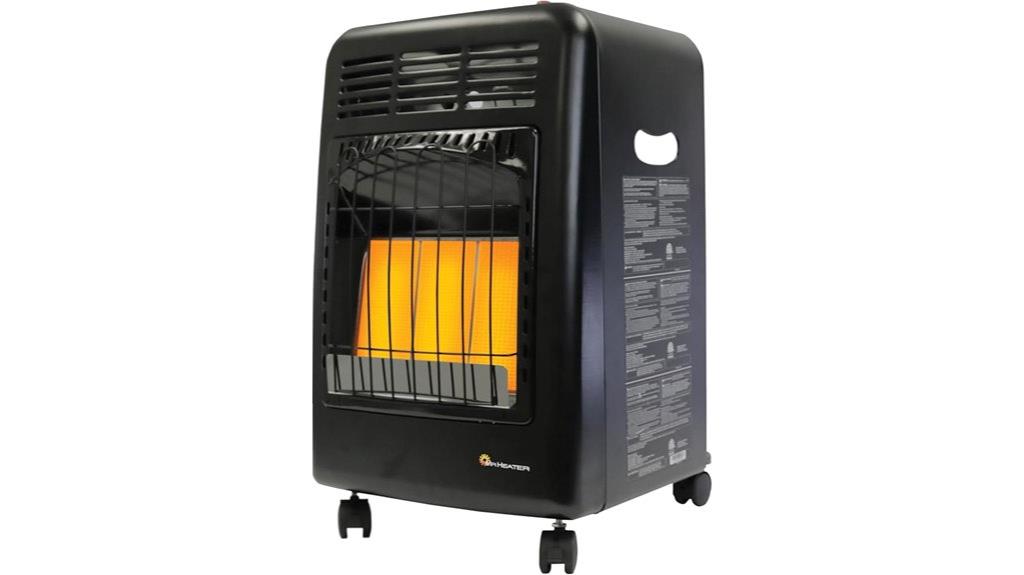
For anyone seeking a reliable backup heating system for outdoor cabins, the Mr. Heater MH18CH Radiant Cabinet LP Heater is an excellent choice. It heats up to 450 square feet with radiant warmth similar to sunlight, making it perfect for outdoor use. Its steel construction and portability, thanks to built-in wheels, make it easy to move around. No electricity is needed, and safety features like a tip-over switch and low oxygen shutoff ensure safe operation. With three heat settings and a runtime of up to 72 hours on a 20-pound propane tank, it offers reliable, consistent warmth when you need it most.
Best For: outdoor enthusiasts, cabin owners, and anyone needing reliable, portable heating for outdoor spaces without electricity.
Pros:
- Heats up to 450 sq ft with radiant warmth similar to sunlight
- No electricity required, ideal for outdoor and emergency use
- Equipped with safety features like tip-over switch and low oxygen shutoff
Cons:
- Requires a 20-pound propane tank, hose, and regulator for operation
- Designed exclusively for outdoor use, limiting indoor applications
- Heavier and larger compared to portable electric heaters
Dyna-Glo 30,000 BTU Liquid Propane Wall Heater
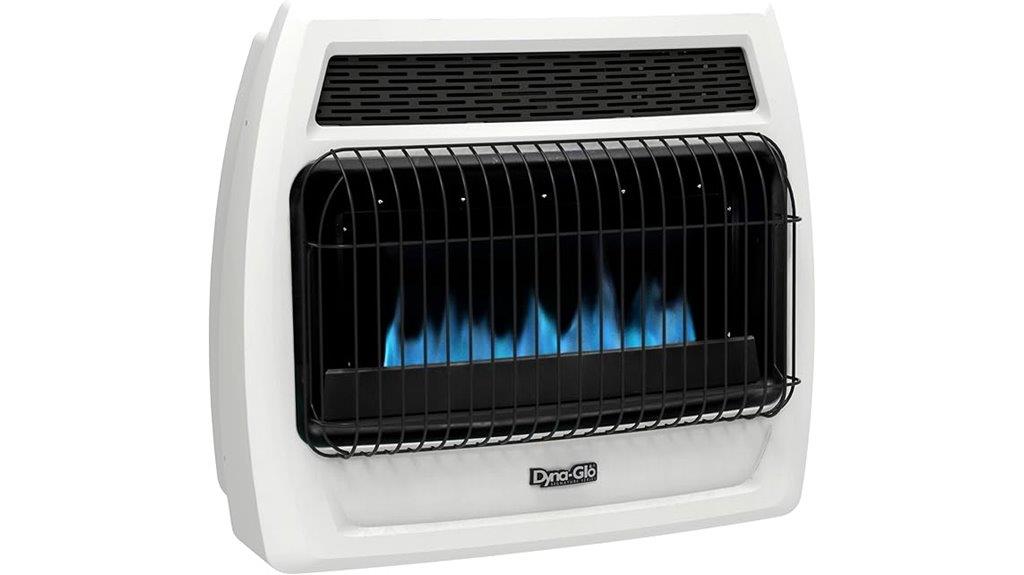
Looking for a reliable backup heating option that doesn’t rely on electricity? The Dyna-Glo 30,000 BTU Liquid Propane Wall Heater is a great choice. It offers adjustable heat output, capable of warming spaces up to 1,000 square feet, making it perfect for cabins. Its blue flame technology convects heat efficiently, similar to central systems, and a thermostat maintains your desired temperature automatically. Since it runs solely on liquid propane, it’s dependable during power outages. Plus, it’s vent-free and designed for safety, providing consistent warmth without electricity. This heater is a solid, efficient backup solution when staying warm matters most.
Best For: those seeking a reliable, electricity-free heating solution to warm up spaces up to 1,000 square feet, such as cabins or emergency shelters.
Pros:
- No electricity required, ensuring operation during power outages
- Adjustable heat output for customized comfort
- Safe vent-free design with blue flame technology for efficient heating
Cons:
- Only runs on liquid propane, requiring tank installation and refilling
- Cannot be converted to natural gas
- Limited to heating areas up to 1,000 square feet, not suitable for larger spaces
Dyna-Glo RA18LPDG 18,000 BTU Cabinet Heater, Black

The Dyna-Glo RA18LPDG 18,000 BTU cabinet heater stands out as an excellent backup heating option for cabins that need reliable, portable warmth. Its infrared radiant heat can warm up to 450-600 square feet, making it versatile for indoor or outdoor use. With adjustable heat output from 6,000 to 18,000 BTUs, I can customize the warmth easily. Its safety features, including an oxygen depletion sensor, tip-over protection, and a front safety grill, give me peace of mind. Plus, the portable design with side handles and locking casters makes it simple to move where I need it most. It’s a dependable, compact solution for chilly cabin nights.
Best For: those seeking a portable, reliable heating solution for cabins, workshops, patios, or outdoor spaces needing adjustable infrared warmth.
Pros:
- Adjustable heat output from 6,000 to 18,000 BTUs allows for customized comfort.
- Features safety sensors like oxygen depletion and tip-over protection for peace of mind.
- Portable with side handles and locking casters for easy mobility and floor mounting.
Cons:
- Operates on propane, so a 20 lb. tank (not included) is required for use.
- Dimensions and weight may limit portability in tight spaces or for frequent transport.
- Limited to indoor/outdoor use within specified square footage, not suitable for larger areas.
ProCom ML300TBA-B Ventless Propane Space Heater with Thermostat

When power outages strike, the ProCom ML300TBA-B Ventless Propane Space Heater becomes an essential backup for cabins, providing reliable heat without relying on electricity. It heats up to 1,400 square feet with 28,000 BTU of blue flame radiant heat, circulating warmth efficiently. Its thermostat controls allow easy adjustments, and the push-button ignition simplifies startup. No outside duct or chimney is needed, making installation flexible. Safety features like an oxygen depletion sensor and certifications ensure secure operation. Compact and modern, it’s perfect for indoor use in homes or cabins, offering dependable warmth during emergencies and power outages.
Best For: Homeowners, cabin dwellers, and those in emergency preparedness seeking a reliable, ventless heating solution during power outages without the need for electricity.
Pros:
- Provides up to 28,000 BTU of heat efficiently for spaces up to 1,400 sq. ft.
- No electrical connection required, ideal for power outages and emergencies.
- Equipped with safety features like oxygen depletion sensor and certified by ANSI and PFS standards.
Cons:
- Requires liquid propane fuel, which may need regular refilling and storage considerations.
- Wall mounting or placement on the floor may require additional installation effort.
- Heats only through radiant blue flame, which may not evenly distribute heat in very large or open spaces.
Coghlan’s Camp Heat Portable Canned Heating Source
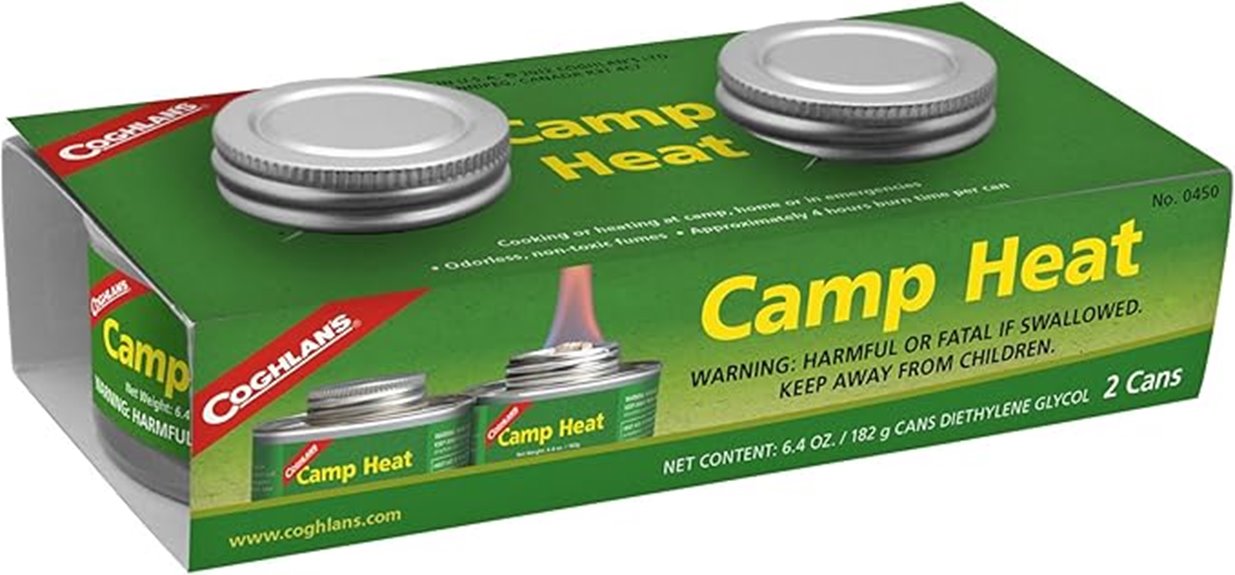
If you need a portable heating option for outdoor emergencies or camping trips, Coghlan’s Camp Heat is an excellent choice due to its compact design and reliable burn time. This portable can heats for about four hours per can, making it perfect for cooking, warming tents, or emergency use. It uses odorless, non-toxic diethylene glycol fuel that burns cleanly, so it’s safe for indoor and outdoor situations. The lightweight cans are easy to carry, and with two included, you get ample fuel for extended trips. It’s a versatile, space-saving backup heat source that’s reliable when you need warmth most in outdoor or emergency settings.
Best For: outdoor enthusiasts, campers, and emergency preppers seeking a reliable, portable heat source for cooking, warming tents, or emergency situations.
Pros:
- Compact and lightweight, easy to carry for camping and travel
- Odorless, non-toxic diethylene glycol fuel burns cleanly and safely
- Provides approximately 4 hours of continuous heat per can, offering extended use
Cons:
- Limited burn time per can, requiring multiple cans for longer durations
- Not suitable for indoor use without proper ventilation due to open flame risk
- Can be less effective in extremely cold conditions or high winds
Pleasant Hearth VFS2-PH20DT 20,000 BTU 23.5 in. Compact Gas vent free stove
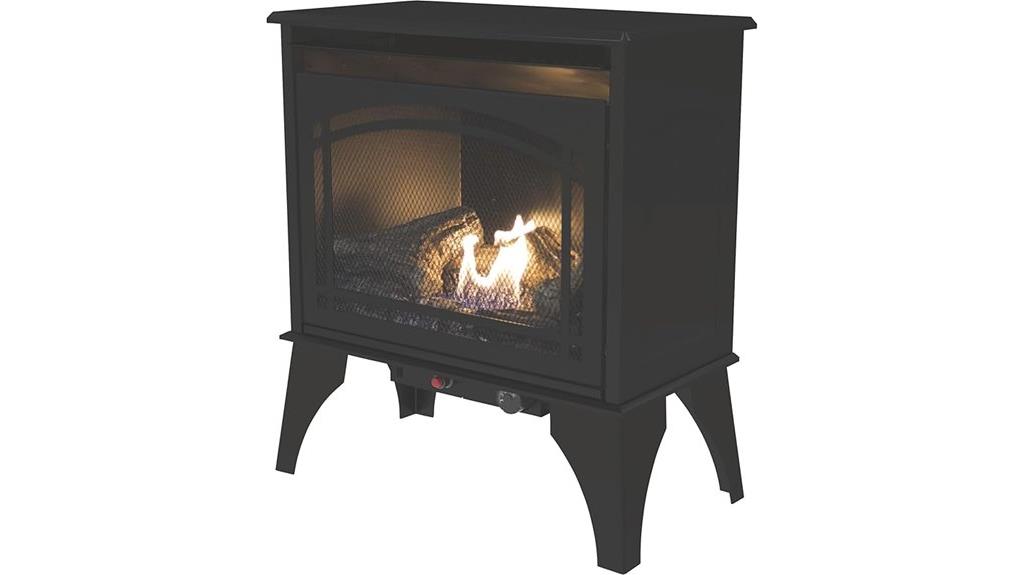
Looking for a reliable backup heating option that fits seamlessly into your cabin’s space? The Pleasant Hearth VFS2-PH20DT is a compact, vent-free gas stove measuring just 23.5 inches, yet it delivers up to 20,000 BTUs to warm up to 700 sq ft. It supports both natural gas and propane, with a thermostat for automatic temperature control. The dual burners create a full, inviting flame, and safety shut-offs ensure secure operation. Its freestanding design requires minimal clearance, making installation straightforward. With a 2-year warranty and strong customer ratings, this stove offers an efficient, hassle-free heating solution for cabin emergencies.
Best For: Cabin owners or emergency preparedness enthusiasts seeking a compact, reliable vent-free heating solution that can efficiently warm spaces up to 700 sq ft.
Pros:
- Compact size of just 23.5 inches fits easily into small spaces
- Supports both natural gas and propane for flexible fuel options
- Automatic thermostat and safety shut-offs enhance convenience and safety
Cons:
- Requires proper installation and adherence to local regulations for vent-free systems
- No remote control functionality; manual operation needed
- Optional blower (sold separately) may be necessary for optimal heat distribution
SOK 24V 150Ah LiFePO4 Battery with Built-in Heater and Bluetooth

The SOK 24V 150Ah LiFePO4 Battery with built-in heater and Bluetooth stands out as an ideal backup power solution for cabins in cold environments. Its built-in heater supports charging down to -4℉ (-20℃), automatically activating to protect the battery’s health. With advanced BMS protections and Bluetooth monitoring, I can easily track voltage, current, and temperature remotely via the ABC-BMS app. Weighing only 70 pounds, it offers a durable, maintenance-free design with thousands of charge cycles. Its compatibility with CAN communication and seamless integration makes it a reliable, clean power source for off-grid cabins, marine, or backup systems.
Best For: off-grid cabin owners, marine enthusiasts, and backup power users in cold environments seeking a reliable, maintenance-free lithium battery with remote monitoring and cold-weather charging capabilities.
Pros:
- Supports charging down to -4℉ (-20℃) with built-in heater, ideal for cold climates
- Advanced BMS with multiple protections ensures long-lasting, safe operation
- Bluetooth monitoring via ABC-BMS app provides real-time data and easy management
Cons:
- Heaviest weight at 70 pounds may require additional handling equipment
- Higher upfront cost compared to traditional lead-acid batteries
- Limited availability or longer lead times due to specialized features
Solar Panel Coop Heater for Cold Weather Pet House Heating System
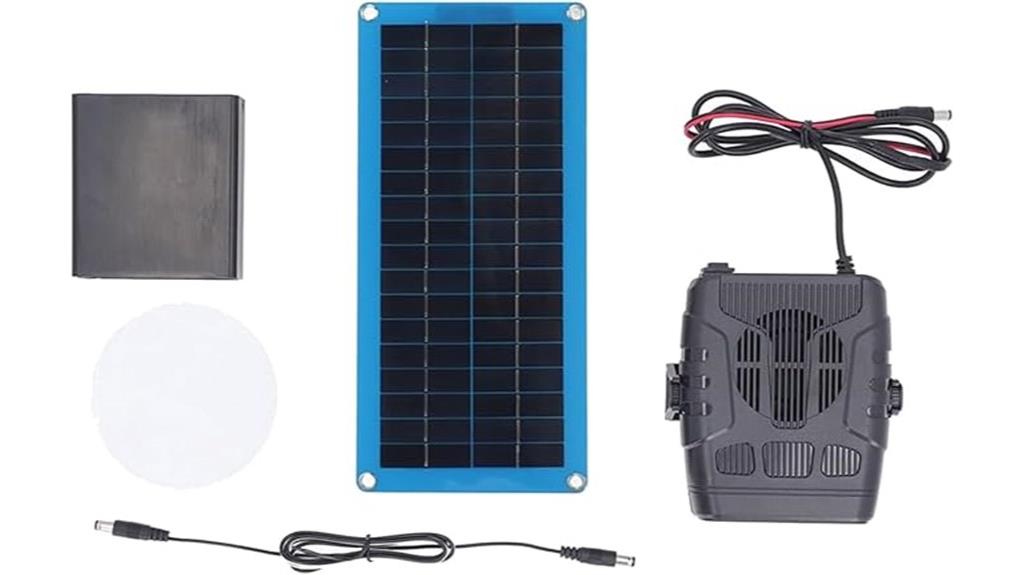
The Solar Panel Coop Heater stands out as an ideal heating solution for pet owners who want an eco-friendly and portable way to keep animals warm during cold weather. Its energy-efficient design uses a compact 30W solar panel, making it perfect for outdoor use. Whether you’re camping, skiing, or just outside with your pets, this heater provides reliable warmth for pet houses and chicken coops. It’s lightweight, weighing only 700g, and includes a battery compartment for added convenience. With a operating range from -10°C to 70°C, it’s built to withstand harsh conditions, ensuring your pets stay cozy no matter the season.
Best For: pet owners and outdoor enthusiasts seeking an eco-friendly, portable heating solution for pet houses, chicken coops, and outdoor shelters during cold weather.
Pros:
- Energy-efficient 30W solar panel reduces electricity costs and supports sustainable living.
- Lightweight and portable design (700g) makes it easy to carry for outdoor activities like camping and skiing.
- Durable construction with a wide operating temperature range (-10°C to 70°C) ensures reliable performance in harsh conditions.
Cons:
- Battery compartment requires 3 batteries (not included), adding to the initial setup cost.
- Limited heating capacity suitable for small to medium-sized pet shelters but may not suffice for larger spaces.
- Dependence on sunlight for optimal operation may reduce effectiveness on cloudy days or in low-light conditions.
Duluth Forge Dual Fuel Ventless Fireplace Logs Set
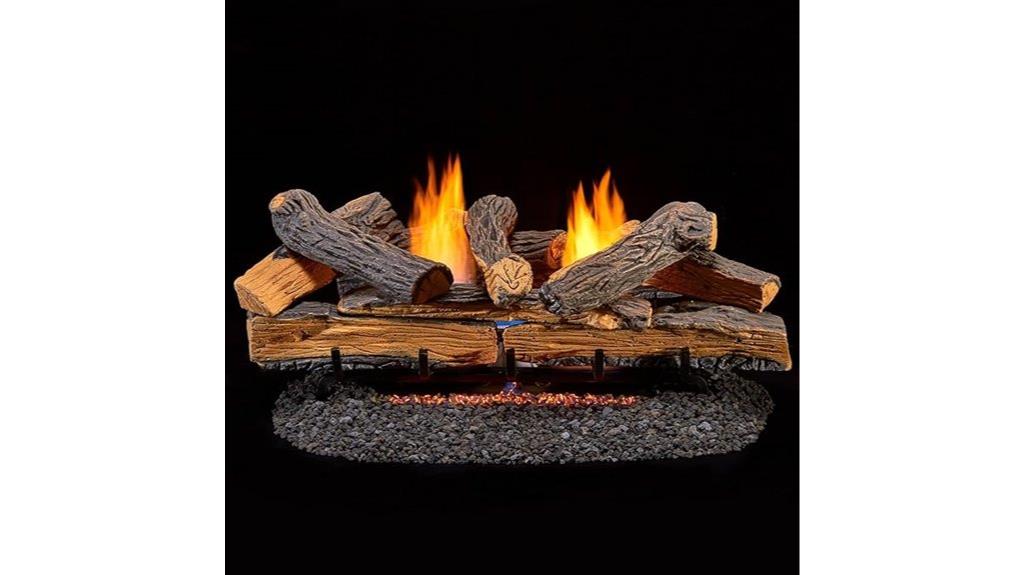
If you need a reliable backup heating option for your cabin that combines realism with safety, the Duluth Forge Dual Fuel Ventless Fireplace Logs Set is an excellent choice. It offers 33,000 BTU of heat, effectively warming up to 1,300 sq ft without needing a chimney or venting. The set includes nine hand-painted ceramic logs with lifelike bark and splits, plus an ember bed for added realism. Controlled remotely, it features safety shut-offs like an oxygen depletion sensor and battery-assisted ignition. With 99.9% efficiency and easy installation, this ventless fireplace delivers safe, consistent warmth while enhancing your cabin’s aesthetic.
Best For: those seeking a realistic, safe, and efficient ventless heating solution for cabins or living spaces without the need for chimney or venting.
Pros:
- High efficiency of 99.9% providing cost-effective heating up to 1,300 sq ft
- Realistic appearance with hand-painted ceramic logs and ember bed for authentic ambiance
- Safety features including oxygen depletion sensor and battery-assisted ignition for peace of mind
Cons:
- Customer rating of 3.8 out of 5 stars indicating mixed reviews on performance or durability
- Requires remote control batteries and occasional maintenance for optimal operation
- Limited to indoor use and suitable firebox size specifications, restricting installation options
Caframo Limited Cabinet Heater-2 Settings, Black

For those needing a reliable, compact heat source to maintain equipment operation in cold environments, the Caframo Limited Cabinet Heater-2 is an excellent choice. This heater is certified for industrial and commercial use, making it perfect for garages, equipment cabinets, and cold weather spaces covering 100-150 square feet. It features two heat settings (500 watts) and a preset thermostat for easy control. Its compact design, wall-mount capability, and continuous operation ensure trouble-free performance, reducing downtime and maintenance costs. With its black finish and straightforward setup, it’s a practical, efficient solution for keeping your essential equipment warm when it counts.
Best For: those needing a reliable, compact heating solution to maintain equipment operation in cold environments such as garages, equipment cabinets, and cold weather spaces covering 100-150 square feet.
Pros:
- Easy to install with wall-mount capability for flexible placement
- Continuous operation ensures reliable heating and reduces downtime
- Compact design and preset thermostat for straightforward control
Cons:
- Limited to a single heat setting of 500 watts, lacking adjustable heat levels
- Only suitable for indoor use and small spaces, not for large areas
- Customer ratings are moderate, with a 3.4 out of 5 stars based on reviews
Factors to Consider When Choosing a Backup Heating System for Cabins
When selecting a backup heating system for your cabin, I consider several key factors. Compatibility with my power sources, the heating capacity needed, and safety certifications are top priorities. Additionally, I evaluate installation complexity and fuel efficiency to make sure the system is reliable and cost-effective.
Power Source Compatibility
Choosing a backup heating system for your cabin starts with ensuring it’s compatible with your existing power sources. You need to confirm if the system works with your current voltage, like 12V DC, 24V DC, or 110V AC, to avoid installation issues. It’s also important to see if it can operate on alternative power sources like solar panels or generators, especially during outages. Check whether the heater includes built-in batteries or depends on external power supplies, and verify their capacity and compatibility. For versatility, consider dual power options, such as switching between vehicle electrical systems and household outlets. Ensuring that the system’s voltage and frequency match your electrical infrastructure guarantees safe, reliable operation when you need it most.
Heating Capacity Needs
Evaluating the heating capacity your cabin needs is essential to ensuring reliable warmth during cold months. I start by measuring the total square footage to determine the appropriate BTU range, usually 30-60 BTUs per square foot. Insulation quality and window efficiency significantly affect this calculation; well-insulated cabins need less power. I also consider the climate and extreme outdoor temperatures, ensuring the system can handle cold spells without struggling. Additionally, I account for the number of occupants and heat-generating appliances, which contribute to the indoor heat load. Lastly, I think about how long I might need backup heat during power outages or prolonged cold snaps. Properly evaluating these factors guarantees I select a system capable of maintaining a cozy, consistent temperature when it matters most.
Safety and Certification
Have you checked if your cabin’s backup heating system meets essential safety certifications like CSA, UL, or ANSI? These certifications guarantee the heater complies with strict safety standards, reducing fire and hazard risks. Look for built-in safety features such as oxygen depletion sensors, tip-over switches, thermal shut-down, and automatic shut-off mechanisms—these protect you during operation. Confirm that the heater is approved for indoor or outdoor use, with clear labels indicating suitability. If your cabin is at a high altitude, verify that the system has passed safety testing for such conditions. Additionally, confirm construction uses self-extinguishing materials and includes safety mechanisms to minimize fire hazards. Prioritizing certified, feature-rich systems helps keep you safe while maintaining warmth during cold emergencies.
Installation Complexity
When selecting a backup heating system for your cabin, it’s important to contemplate how easy or complex the installation process will be. Some systems, like simple plug-in heaters or ventless options, are straightforward and don’t require much modification—making setup quick and hassle-free. On the other hand, systems that need venting, gas lines, or electrical wiring can be more complex, often requiring permits, professional installation, and adherence to local codes. The available space also matters; compact units are generally easier to install than larger, integrated systems. Considering these factors upfront helps you avoid surprises and ensures your cabin’s heating system is reliable and safe without unnecessary complication.
Fuel Efficiency Levels
Choosing a backup heating system also means paying attention to fuel efficiency, since it directly affects operating costs and how long the heat can last during outages. Higher fuel efficiency means you’ll use less fuel to produce the same amount of heat, saving money and extending runtime when power is out. Fuel consumption rates, measured in gallons or liters per hour, determine how long your system can operate before needing a refill. Combustion technology, like radiant or blue flame systems, influences how effectively fuel is converted into heat, impacting overall efficiency. Additionally, a well-insulated cabin reduces fuel needs. Some systems offer automatic altitude compensation and low oxygen safety features, optimizing fuel use at different elevations and preventing wasteful over-venting. These factors help you choose a system that’s cost-effective and reliable.
Portability and Size
Considering the often limited space in cabins, portability and size are crucial factors when selecting a backup heating system. Lightweight models, typically weighing between 8 and 30 pounds, are easy to transport and reposition as needed. Compact units, around 7.7 inches deep and 15 inches high, fit comfortably in tight spaces without cluttering the room. Features like handles or wheels increase mobility, making deployment quick and effortless during power outages or emergencies. Smaller units designed for indoor or outdoor use can be stored easily when not in use, conserving valuable cabin space. Overall, the size and weight of a heater directly affect how easily you can set it up, move it around, and store it, ensuring you stay warm without sacrificing space or convenience.
Environmental Impact
Environmental impact is a key factor to keep in mind because the type of backup heating system you select affects both the planet and your cabin’s sustainability. Renewable energy sources like solar panels or wind turbines for backup heating markedly reduce carbon emissions and dependence on fossil fuels. Electric resistance heaters powered by clean energy have a lower environmental footprint compared to traditional fossil fuel systems. Choosing energy-efficient options minimizes greenhouse gases and overall ecological harm. Incorporating heat recovery systems can boost energy use and reduce waste, further decreasing your system’s impact. Environmentally conscious backup heating prioritizes low emissions, sustainable fuel sources, and minimal chemical pollutants to protect air and soil quality. Making eco-friendly choices helps ensure your cabin remains sustainable while keeping you warm when it counts.
Cost and Budget
When selecting a backup heating system for your cabin, it is essential to evaluate both the upfront costs and the long-term expenses to stay within your budget. Start by considering the initial purchase price and how it fits into your overall finances. Don’t forget to factor in ongoing costs like fuel, electricity, or maintenance, which can considerably impact the total cost of ownership. Compare different options for their energy efficiency and heat output to determine which provides the best value for the price. Also, consider if the initial investment aligns with your long-term plans and potential savings on energy bills. Finally, account for any extra costs for installation, safety features, or accessories necessary for safe and effective operation.
Frequently Asked Questions
How Long Can a Backup Heater Operate on a Single Fuel Supply?
A backup heater can run anywhere from a few hours to several days on a single fuel supply, depending on the heater type and fuel quantity. For example, a small propane heater might last 8-12 hours, while a larger heating system with ample fuel could operate for days. I always recommend having extra fuel on hand to guarantee continuous warmth during emergencies or power outages.
What Safety Features Are Essential for Cabin Backup Heaters?
Safety features are the backbone of reliable cabin backup heaters, like the steady heartbeat in a cozy home. I always look for automatic shut-off switches to prevent overheating, carbon monoxide detectors to avoid silent dangers, and secure vents to prevent fire hazards. These features guarantee I stay safe and warm, especially when the power’s out. Trust me, prioritizing safety makes all the difference in keeping your cabin a refuge, not a risk.
Are There Eco-Friendly Backup Heating Options for Remote Cabins?
I prefer eco-friendly backup heating options like solar-powered or biomass heaters for remote cabins. Solar panels can provide sustainable warmth, especially with battery storage for cloudy days. Biomass stoves, which burn wood or pellets, are renewable and carbon-neutral. These options not only keep me warm but also reduce my environmental impact. I recommend considering your cabin’s size and energy access to choose the best eco-friendly solution.
How Do Power Outages Affect Electrically Powered Backup Heaters?
Power outages can feel like a sudden winter storm, leaving you in the cold. Electrically powered backup heaters stop working when the power’s out, so I always keep a backup plan—like a wood stove or propane heater. It’s essential to have these alternatives ready, because relying solely on electricity leaves you vulnerable. Think of it as having an escape route—you’re prepared no matter what surprises come your way.
What Maintenance Is Required for Portable Diesel and Propane Heaters?
I regularly check and clean my portable diesel and propane heaters to keep them running smoothly. I inspect filters, vents, and fuel lines for dirt or clogs, and replace filters as needed. I also make certain the fuel tanks are full and free of contaminants. Additionally, I test safety features like carbon monoxide detectors and keep the heaters stored in a dry, secure place when not in use to prevent corrosion.
Conclusion
Choosing the right backup heating system is essential for staying warm and safe in your cabin. Whether you opt for portable heaters, diesel options, or fuel-efficient fireplaces, I’ve found that being prepared makes all the difference. Remember, it’s better to have it and not need it than to need it and not have it—so invest wisely and stay cozy no matter what. After all, a warm cabin means peace of mind.