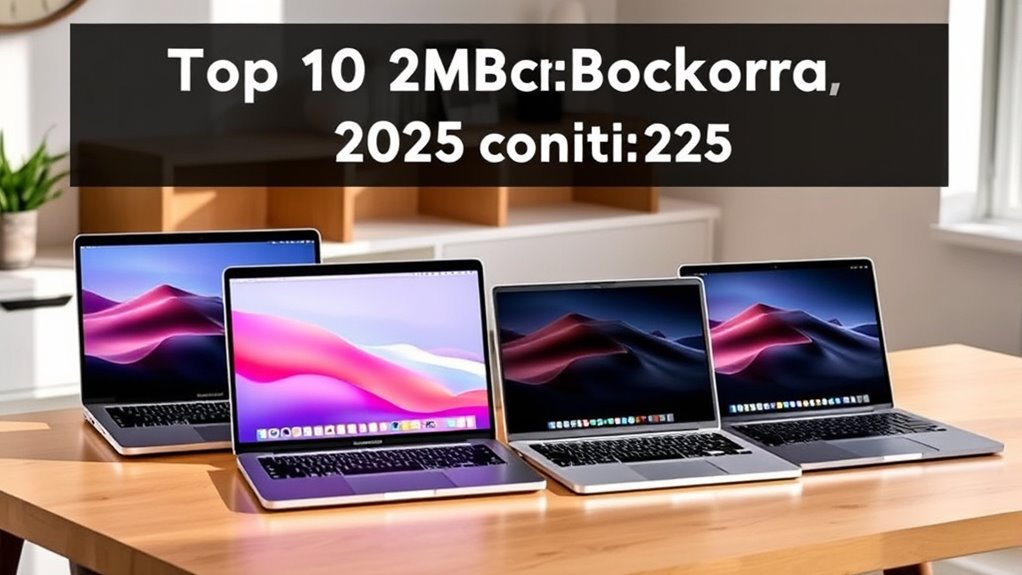

Among these 2TB MacBook Pro laptops, I’d put the 16-inch M5 Pro with 48GB of memory first for its strong balance of current-generation performance, workspace, and capacity. The 14-inch M5 Pro is a more manageable choice for mobile work, while the 16-inch M5 Max with 128GB suits demanding graphics and memory-heavy projects. The main tradeoffs are portability versus screen space, Pro versus Max chip capability, and the newer models’ specifications versus the lower cost and condition uncertainty of renewed machines. Older M1 and M2 models can still offer capable Apple silicon, while the Intel options bring greater age and software-support concerns. Read on for how each configuration fits different workloads and what to check before choosing.

Get garden gear delivered free with Prime
- Fast, free delivery on millions of items
- Prime Video, Amazon Music and more included
- Member-only deals all year
Complete the kit


Key Takeaways
- The 16-inch M5 Pro with 48GB of memory is the strongest all-around fit here: it combines a large display and generous memory without stepping up to the 128GB M5 Max configuration.
- The 14-inch M5 Pro with 24GB is the most portable current-generation option; its smaller display and lower memory ceiling make it a better match for mobile, moderate workloads than expansive creative projects.
- The 16-inch M5 Max with 128GB is the specialist pick for workloads that can use its substantial GPU and memory resources, but most buyers should compare their actual software needs before choosing it over an M5 Pro.
- The renewed M1 Max and M2 Max models offer Apple silicon with high memory configurations, but their age, battery condition, and renewal details matter more than the 2TB capacity alone.
- The Intel choices are particularly distinct: the 2019 16-inch model has 32GB of memory, while the 2020 13-inch model has 16GB; buyers should weigh compatibility needs against older hardware and a shorter runway for future software support.


| 2tb macbook pro laptop | Display | Storage | Memory | Processor |
|---|---|---|---|---|
| Apple MacBook Pro 16-inch with | 16.2-inch Liquid Retina XDR | 2TB SSD | 64GB | Apple M1 Max |
| Apple 2019 16-inch MacBook Pro | 16 inches | 2TB | 32GB RAM | 2.3GHz Intel Core i9 |
| Apple 2026 MacBook Pro Laptop | 16.2-inch Liquid Retina XDR | 2TB SSD | 36GB unified memory | Apple M5 Max, 18-core CPU |
| Apple 16-inch MacBook Pro with | 16.2-inch Liquid Retina XDR | 2TB SSD | 48GB | Apple M5 Pro, 18-core CPU |
| Apple 2021 MacBook Pro 14-inch | 14-inch Retina LED, 2560 × 1600 pixels | 2TB SSD | 64GB | — |
| Apple 16-inch MacBook Pro with | 16.2-inch Liquid Retina XDR | 2TB SSD | — | — |
| Apple MacBook Pro 16.2-inch | 16.2-inch Liquid Retina XDR, up to 120Hz | 2TB SSD | 32GB unified memory | Apple M2 Max, 12-core CPU |
| Apple MacBook Pro 13-inch | 13 inches | 2TB SSD | 16GB RAM | 2.3GHz Intel Core i7 |
| Apple MacBook Pro | 14 inches, Liquid Retina XDR | 2TB SSD | 64GB | — |
| Apple MacBook Pro 14.2-inch wi | 14.2-inch Liquid Retina XDR | 2TB SSD | 24GB unified memory | — |
More Details on Our Top Picks
Apple MacBook Pro 16-inch with M1 Max Chip (2021, Space Grey, Renewed)
The 16-inch M1 Max pairs a 64GB memory pool with a 2TB SSD, a useful combination for creative professionals who keep large projects and demanding apps open at once. Its Liquid Retina XDR display and HDMI, SDXC, and Thunderbolt 4 ports make it easier to work with external gear than on a more portable setup. Compared with the newer 16-inch M5 Pro, this renewed model has twice the listed memory but an older chip generation, so it suits workflows that benefit more from capacity than the latest processing features. The tradeoff is its renewed condition: warranty coverage may be limited, and the 16-inch chassis is less convenient to carry. I’d choose it for established pro workflows that need lots of memory, and skip it if newer-generation performance or purchase certainty matters more.
Pros:- 64GB of memory supports large projects and heavy multitasking
- 2TB SSD provides substantial built-in project storage
- 16.2-inch Liquid Retina XDR display offers ample workspace
- Thunderbolt 4, HDMI, SDXC, and MagSafe 3 support varied peripherals
Cons:- M1 Max is an older chip generation than the M5 models in this roundup
- Renewed status may mean limited warranty coverage
- 16-inch size is less portable than the 14-inch options
Best for: Video editors, 3D artists, and developers who need 64GB of memory and a large screen for sustained desk-based work.
Not ideal for: Frequent travelers or buyers who want a current-generation chip and clear manufacturer warranty coverage.
- Processor:Apple M1 Max
- Display:16.2-inch Liquid Retina XDR
- Memory:64GB
- Storage:2TB SSD
- Color:Space Grey
- Connectivity:Thunderbolt 4, HDMI, SDXC, MagSafe 3, 3.5mm headphone jack
- Battery life:All-day
- Condition:Renewed
Our verdict“Choose this renewed M1 Max when 64GB of memory and a large display matter more than a newer chip or lighter carry.”
Apple 2019 16-inch MacBook Pro with 2.3GHz Intel Core i9, 32GB RAM, and 2TB Storage, Space Gray (Renewed)
This 2019 Intel Core i9 MacBook Pro is the specialist choice for buyers tied to Intel-era software or workflows. Its 32GB RAM and 2TB storage provide room for sizable working files, while the 16-inch display gives more space than the 14-inch M1 Max models in this roundup. The newer 16-inch M5 Pro is a stronger fit for buyers seeking a current-generation platform, but this Intel model may make sense when compatibility with an existing Intel setup is the priority. Its age brings meaningful tradeoffs: it has less memory than the 64GB M1 Max options, and the listing describes a battery above 80% of original capacity rather than a new one. The renewed inspection and cleaning provide condition details, though accessories may be non-original and packaging generic.
Pros:- 2.3GHz Intel Core i9 suits Intel-dependent software
- 32GB RAM supports substantial multitasking
- 2TB storage accommodates large local files
- Professionally inspected, tested, and cleaned renewed unit
Cons:- Older Intel platform than the M1 Max and M5 options in this roundup
- Less memory than the 64GB M1 Max models
- Battery exceeds 80% of original capacity, not a new-battery guarantee
Best for: Mac users who rely on Intel-specific applications or need a renewed 16-inch MacBook Pro for an established Intel workflow.
Not ideal for: Buyers starting a long-term professional setup or seeking the newer chips, higher listed memory, and current connectivity of the M5 models.
- Model:Apple MacBook Pro (2019)
- Display:16 inches
- Processor:2.3GHz Intel Core i9
- Memory:32GB RAM
- Storage:2TB
- Color:Space Gray
- Battery capacity:Exceeds 80% of original capacity
- Condition:Renewed, pre-owned
Our verdict“Pick this renewed 2019 model when Intel compatibility is the deciding factor and you accept an older platform and battery.”
Apple 2026 MacBook Pro Laptop with M5 Max Chip, 16.2-inch Liquid Retina XDR Display, 36GB RAM, 2TB SSD, Space Black
The M5 Max makes this 16-inch MacBook Pro the forward-looking pick for demanding creative and technical work, with an 18-core CPU and 32-core GPU listed alongside a 2TB SSD. Its Thunderbolt 5 ports, Wi-Fi 7, and Liquid Retina XDR screen give it a newer connectivity package than the renewed M1 Max models. Memory is the point to weigh carefully: at 36GB, it has less than the 48GB listed for the 16-inch M5 Pro and less than the 64GB M1 Max picks, despite its higher-tier Max chip. That makes it a better fit when newer GPU capability and connectivity matter more than maximum memory capacity. The 4.73-pound weight and limited launch detail in the supplied specifications also make this a less settled choice for buyers who favor lighter hardware or well-established configuration information.
Pros:- M5 Max pairs an 18-core CPU with a 32-core GPU
- 2TB SSD provides substantial local storage
- Three Thunderbolt 5 ports plus HDMI and SDXC support varied setups
- Wi-Fi 7 and Bluetooth 6 provide newer wireless standards
Cons:- 36GB memory is below the 48GB M5 Pro configuration and 64GB M1 Max options
- Listed weight of 4.73 pounds makes it a substantial carry
- Supplied product data notes limited detailed specifications at launch
Best for: Creative and technical professionals who want a newer Max chip, modern ports, and a large high-resolution display for GPU-heavy work.
Not ideal for: Buyers whose workloads need more than 36GB of memory or who prioritize a lighter laptop.
- Processor:Apple M5 Max, 18-core CPU
- Graphics:32-core GPU
- Display:16.2-inch Liquid Retina XDR
- Memory:36GB unified memory
- Storage:2TB SSD
- Ports:Three Thunderbolt 5, MagSafe 3, SDXC, HDMI, headphone jack
- Wireless:Wi-Fi 7, Bluetooth 6
- Weight:4.73 pounds
Our verdict“Choose this M5 Max for newer GPU capability and Thunderbolt 5, provided 36GB of memory fits your workload.”
Apple 16-inch MacBook Pro with M5 Pro, 18-core CPU, 20-core GPU, 48GB Memory, 2TB SSD, Space Black
This 16-inch M5 Pro is the balanced choice in a roundup where several models trade memory capacity against chip generation. Its 48GB of memory sits above the 36GB in the M5 Max configuration, while the M5 Pro chip and 20-core GPU are aimed at demanding creative and AI work. That makes it a strong fit for professionals who want a current-generation machine with room for sizable projects, without choosing specifically for the Max model’s higher GPU tier. The Liquid Retina XDR display reaches up to 1600 nits peak brightness according to the listing, which can help with bright HDR material. The supplied data does not include weight or port details, so buyers comparing travel practicality or peripheral setups have less information here. It remains a large 16-inch laptop, and its 2TB SSD may be limiting for extensive local media libraries.
Pros:- 48GB memory exceeds the listed 36GB in the M5 Max configuration
- M5 Pro with 18-core CPU and 20-core GPU targets demanding workloads
- 2TB SSD offers broad capacity for active projects
- Liquid Retina XDR display lists up to 1600 nits peak brightness
Cons:- 20-core GPU is below the 32-core GPU listed for the M5 Max model
- 16-inch size is less convenient for frequent travel
- Supplied specifications omit weight and port details
Best for: Creative professionals who want a current 16-inch MacBook Pro with 48GB memory for demanding work and substantial local storage.
Not ideal for: Buyers whose work specifically needs the 32-core GPU in the M5 Max, or those seeking a compact laptop.
- Processor:Apple M5 Pro, 18-core CPU
- Graphics:20-core GPU
- Memory:48GB
- Storage:2TB SSD
- Display:16.2-inch Liquid Retina XDR
- Peak brightness:1600 nits
- Sustained brightness:Up to 1000 nits
- Contrast ratio:1,000,000:1
- Power adapter:140W USB-C
Our verdict“Choose this M5 Pro as the balanced 16-inch option if 48GB memory matters more than the M5 Max model’s larger GPU.”
Apple 2021 MacBook Pro 14-inch with M1 Max, 64GB RAM, 2TB SSD (Renewed)
This renewed 14-inch M1 Max stands out for fitting 64GB of memory and a 2TB SSD into a smaller display format than the 16-inch M1 Max. For developers or creators who need substantial memory but want a more compact footprint, that distinction may matter more than moving to a newer chip. The 16-inch M5 Pro offers a newer platform and a larger screen, while this model keeps the older M1 Max and doubles its listed memory from that M5 Pro configuration. Its return coverage is stated as replacement or refund within 90 days, and the battery is rated above 80% of new capacity; those details offer some recourse, but this remains renewed hardware with possible non-original accessories. The listed 6.9-pound weight is unexpectedly high for a 14-inch model, so I’d verify fit and carrying needs before choosing it.
Pros:- 64GB memory supports demanding multitasking
- 2TB SSD provides room for local project files
- M1 Max includes a 10-core CPU and 24-core GPU
- Listing states replacement or refund coverage within 90 days
Cons:- Renewed condition may include compatible non-original accessories
- Battery is specified as exceeding 80% of new capacity rather than matching new capacity
- Listed weight of 6.9 pounds is heavy for a 14-inch model
Best for: Developers and creative professionals who want 64GB memory in a 14-inch form factor and can accept renewed hardware.
Not ideal for: Frequent commuters who need low carry weight, or buyers who prefer a newer chip and manufacturer-certified condition.
- Model:Apple MacBook Pro (2021)
- Chip:Apple M1 Max, 10-core CPU, 24-core GPU
- Display:14-inch Retina LED, 2560 × 1600 pixels
- Memory:64GB
- Storage:2TB SSD
- Color:Silver
- Weight:6.9 pounds
- Battery:Exceeds 80% capacity relative to new
- Return coverage:Replacement or refund within 90 days of receipt
Our verdict“Choose this renewed 14-inch M1 Max if 64GB memory in a smaller display format outranks newer hardware and lighter carry weight.”
Apple 16-inch MacBook Pro with M5 Max, 18-core CPU, 40-core GPU, 128GB Memory, 2TB SSD, Space Black
This 16-inch configuration earns its place for buyers whose work can use both a powerful GPU and a large memory pool. The 18-core M5 Max CPU, 40-core GPU, and 128GB unified memory give demanding creative and on-device AI workloads considerable room to run, while the 2TB SSD keeps substantial project files close at hand. Compared with the M5 Pro 14.2-inch model in this group, it puts more emphasis on graphics capacity and memory than on a smaller, lighter setup. The tradeoff is that this much hardware is difficult to justify for general office work, browsing, or occasional photo editing. Its 16.2-inch Liquid Retina XDR display also favors a roomy workspace over portability. I’d choose it when large workloads are routine, and skip it when the workload is modest.
Pros:- M5 Max pairs an 18-core CPU with a 40-core GPU for demanding compute and graphics work
- 128GB unified memory supports large, memory-intensive projects
- 2TB SSD provides substantial local storage for active files
- 16.2-inch Liquid Retina XDR display offers a large workspace
Cons:- The high-end configuration is excessive for common everyday tasks
- The 16-inch size is less convenient for frequent travel than the 14.2-inch M5 Pro model
- Some Apple Intelligence features are in beta and may vary by region or language
Best for: Video editors, 3D artists, and AI developers who regularly work with large projects and can use 128GB of unified memory.
Not ideal for: Students and everyday users who mainly browse, write, and stream; the high-end GPU and memory configuration add capability they may rarely use.
- Chip:Apple M5 Max
- CPU:18-core
- GPU:40-core
- Unified memory:128GB
- Storage:2TB SSD
- Display:16.2-inch Liquid Retina XDR
- Color:Space Black
- Power adapter:140W USB-C
Our verdict“Choose this 16-inch M5 Max when your creative or AI workload can use its unusually large memory and graphics capacity.”
Apple MacBook Pro 16.2-inch (2023), M2 Max, 32GB RAM, 2TB SSD, QWERTY English, Space Gray (Renewed)
This renewed 2023 MacBook Pro makes the most sense for buyers who want a large-screen machine with a dedicated graphics emphasis and a broad set of connections. Its M2 Max, 38-core GPU, and 32GB unified memory suit demanding creative work, while the 2TB SSD provides room for sizable local libraries. Compared with the newer 16-inch M5 Max pick, it has less memory and an older chip, so it offers less headroom for the largest projects. In return, its HDMI, SDXC, Thunderbolt 4, and MagSafe 3 ports can reduce reliance on adapters. The 120Hz Liquid Retina XDR display is another strength for a spacious desktop replacement. The central compromise is condition: this is renewed hardware, and buyers should be comfortable with a pre-owned device.
Pros:- M2 Max with a 38-core GPU supports graphics-heavy creative tasks
- 32GB unified memory and a 2TB SSD suit substantial working projects
- 16.2-inch Liquid Retina XDR display supports refresh rates up to 120Hz
- Thunderbolt 4, HDMI, SDXC, MagSafe 3, and headphone connections
Cons:- Renewed condition may not suit buyers who want a new device
- 32GB memory is substantially less than the 128GB in the M5 Max model
- M2 Max is an older generation than the M5 Pro and M5 Max options in this roundup
Best for: Creative professionals who want a 16-inch display, strong graphics capability, 2TB storage, and direct connections for cameras or external displays.
Not ideal for: Buyers who require new hardware or maximum memory headroom; the 32GB renewed M2 Max trails the 128GB M5 Max configuration.
- Model year:2023
- Processor:Apple M2 Max, 12-core CPU
- Graphics:38-core GPU
- Memory:32GB unified memory
- Storage:2TB SSD
- Display:16.2-inch Liquid Retina XDR, up to 120Hz
- Condition:Renewed
- Ports:3 Thunderbolt 4, HDMI, SDXC, MagSafe 3, headphone jack
Our verdict“Pick this renewed M2 Max if a large display and built-in ports matter more than having the newest chip or the most memory.”
Apple MacBook Pro 13-inch (2020), Intel Core i7, 16GB RAM, 2TB SSD, Space Gray (Renewed)
This 13-inch renewed MacBook Pro has a narrower use case than the Apple silicon choices here: it is most relevant to buyers who need an Intel Mac for a specific older application or workflow. The 2.3GHz Intel Core i7, 16GB RAM, and 2TB SSD provide local storage in a compact form, but the hardware is from 2020 and lacks the newer M-series chips found in the 14.2-inch M5 Pro and 16-inch M5 Max models. That makes those newer options a better fit for demanding current creative work and on-device AI. The listing describes a battery above 80% of original capacity and a 90-day replacement or refund window, but it is not Apple certified; accessories may be non-original. I would choose it only when Intel compatibility or the 13-inch format outweighs the performance and display advantages of newer models.
Pros:- 2TB SSD offers substantial local storage in a 13-inch laptop
- Intel Core i7 may suit workflows that depend on Intel Mac compatibility
- 16GB RAM is specified for everyday and moderate workloads
- Listing states battery capacity exceeds 80% of original and includes a 90-day replacement or refund window
Cons:- 2020 Intel hardware is older than the Apple silicon models in this roundup
- Renewed device is not Apple certified
- Accessories may be non-original and the laptop may arrive in generic packaging
Best for: People who need a compact, renewed Intel MacBook Pro for legacy Mac software or an Intel-specific workflow and want 2TB of storage.
Not ideal for: Buyers starting a demanding creative or AI workflow; the newer M5 Pro and M5 Max models offer more current chip platforms and larger displays.
- Model year:2020
- Display:13 inches
- Processor:2.3GHz Intel Core i7
- Memory:16GB RAM
- Storage:2TB SSD
- Keyboard layout:QWERTY English
- Condition:Renewed
- Color:Space Gray
Our verdict“Consider this renewed 13-inch model only if Intel compatibility or its compact size matters more than newer Apple silicon performance.”
Apple MacBook Pro (2021, 14-inch, M1 Max, 64GB RAM, 2TB SSD, QWERTY English, Space Gray, Renewed
This renewed 14-inch MacBook Pro stands apart from the 16-inch options by packing M1 Max graphics and 64GB of memory into a smaller display class. That combination gives buyers substantial capacity for graphics-heavy work without choosing the 16-inch M2 Max or M5 Max models. It also doubles the memory of the 14.2-inch M5 Pro pick, though it uses an older chip generation and is renewed. The 2TB SSD and 120Hz Liquid Retina XDR display make it a capable setup for carrying active projects between locations. The tradeoff is the used-device condition: the listing says battery capacity exceeds 80% of new, which leaves more variation than a new machine, and accessories may not be original. Its stated 6.9-pound weight is also worth checking against a buyer’s portability expectations.
Pros:- M1 Max paired with 64GB memory supports demanding creative work
- 2TB SSD accommodates substantial local project files
- 14-inch Liquid Retina XDR display with 120Hz refresh rate
- Listed battery capacity exceeds 80% of new
Cons:- Renewed condition means battery capacity and device history may vary
- Accessories may not be original and the product is not Apple certified
- At a listed 6.9 pounds, it may not feel especially light for a 14-inch laptop
Best for: Mobile video editors and graphics professionals who want 64GB memory and M1 Max capability in a 14-inch renewed MacBook Pro.
Not ideal for: Buyers who prioritize a new device, a lighter carry, or a newer chip; the listing is renewed and states a 6.9-pound weight.
- Model year:2021
- Display:14 inches, Liquid Retina XDR
- Chip:Apple M1 Max
- Memory:64GB
- Storage:2TB SSD
- Refresh rate:120Hz
- Battery capacity condition:Exceeds 80% relative to new
- Condition:Renewed
Our verdict“Choose this renewed 14-inch M1 Max when 64GB memory in a smaller display class matters more than new condition or a newer chip.”
Apple MacBook Pro 14.2-inch with M5 Pro, 15-core CPU, 16-core GPU, 24GB Memory, and 2TB SSD (Space Black)
This 14.2-inch M5 Pro is the more balanced new-generation choice for buyers who want a capable work machine without the 16-inch M5 Max’s graphics and memory emphasis. Its 15-core CPU, 16-core GPU, and 24GB unified memory target demanding workloads in a more portable 3.52-pound body, while the 2TB SSD matches the storage capacity across this roundup. Compared with the renewed 14-inch M1 Max, it offers a newer chip platform and avoids renewed-device condition, though that older model lists 64GB of memory. The Thunderbolt 5 ports, Wi-Fi 7, SDXC, HDMI, and MagSafe 3 make it easier to connect current peripherals directly. Buyers should weigh the 24GB memory ceiling against heavier creative workloads; this is not the pick for those who need the 128GB capacity of the M5 Max.
Pros:- M5 Pro combines a 15-core CPU and 16-core GPU for demanding work
- 2TB SSD provides substantial built-in storage
- 3.52-pound weight and 14.2-inch display favor a more portable setup
- Thunderbolt 5, Wi-Fi 7, HDMI, SDXC, and MagSafe 3 support varied connections
Cons:- 24GB unified memory is far below the 128GB in the 16-inch M5 Max configuration
- 16-core GPU is less suited to graphics-heavy workloads than the M5 Max’s 40-core GPU
- Warranty details require contacting customer service
Best for: Traveling professionals who want a new-generation 14-inch MacBook Pro with 2TB storage, modern ports, and strong everyday creative capability.
Not ideal for: Users whose large video, 3D, or AI workloads need more than 24GB of memory or the graphics capacity of the 16-inch M5 Max.
- Chip:Apple M5 Pro
- CPU:15-core
- GPU:16-core
- Memory:24GB unified memory
- Storage:2TB SSD
- Display:14.2-inch Liquid Retina XDR
- Weight:3.52 pounds
- Wireless:Wi-Fi 7, Bluetooth 6
Our verdict“Pick this 14.2-inch M5 Pro for portable, current-generation performance with 2TB storage when 24GB memory fits your workload.”

How We Picked
I compared these configurations on the factors that change the ownership decision: chip generation and tier, memory, screen size, portability, and whether the machine is listed as renewed. Because every listing provides 2TB of storage, capacity does not separate the options; the useful question is what performance, screen, and condition tradeoffs come with that space. I gave current M5 models the edge for buyers seeking newer hardware, then distinguished Pro from Max by the likely workload rather than treating the higher tier as automatically better.
The ranking also accounts for fit. A 14-inch system may be easier to carry, while a 16-inch display gives more room for timelines, code, and side-by-side work. Renewed M1 and M2 models can make sense when their older chip generations meet the buyer’s needs, but the listing alone cannot settle battery health or refurbishment quality. I placed older Intel models lower because their age makes long-term performance and software support a more serious tradeoff, even with 2TB installed.
| 2tb macbook pro laptop | Color | Condition |
|---|---|---|
| Apple MacBook Pro 16-inch with | Space Grey | Renewed |
| Apple 2019 16-inch MacBook Pro | Space Gray | Renewed, pre-owned |
| Apple 2026 MacBook Pro Laptop | — | — |
| Apple 16-inch MacBook Pro with | — | — |
| Apple 2021 MacBook Pro 14-inch | Silver | — |
| Apple 16-inch MacBook Pro with | Space Black | — |
| Apple MacBook Pro 16.2-inch | — | Renewed |
| Apple MacBook Pro 13-inch | Space Gray | Renewed |
| Apple MacBook Pro | — | Renewed |
| Apple MacBook Pro 14.2-inch wi | — | — |
Factors to Consider When Choosing 2tb Macbook Pro Laptops
Two terabytes answers the storage question, but it does not tell you whether a MacBook Pro suits your daily workload or how much risk a renewed listing carries. I’d choose by matching chip, memory, size, and condition to the work the laptop must handle over its useful life.
Choose the chip tier for your actual workload
Pro and Max chips serve different needs, so I would start with the applications you expect to run rather than the tier name. Video effects, 3D work, and GPU-heavy tasks may benefit from a Max configuration, while development, photo work, office tasks, and many creative workflows can fit a Pro model. A Max chip can add capability, but it may bring more performance than a light or moderate workload can use. Look up the memory and GPU demands of your specific software, including the largest projects you handle. If your workload is mainly CPU-bound, more GPU cores may not improve the parts of your work that take the most time. That check can keep a high-spec purchase aligned with a real need.
Treat memory as a separate decision from storage
A 2TB SSD gives room for files and applications, but it does not replace working memory when many demanding tasks are open. Large video projects, virtual machines, complex software builds, and high-resolution creative files can benefit from more memory. Buyers who mainly browse, write, and manage ordinary projects may not gain much from an unusually large memory configuration. Since memory is integrated into Apple silicon MacBook Pros and cannot be upgraded later, I’d plan around the heaviest workload likely during the laptop’s life. Check whether that workload actually uses memory heavily before paying for a much larger configuration. Storage and memory solve different bottlenecks, so compare both independently.
Decide whether 14 or 16 inches fits your routine
The 14-inch model is easier to fit into a travel setup, while a 16-inch display offers more working area without an external monitor. A larger screen can help with editing timelines, code windows, and side-by-side documents, but the larger laptop takes more room in a bag and on a small desk. Think about how often you carry the machine and whether it will spend most of its time connected to a monitor. Buyers who move between locations daily may value the 14-inch form more than the extra screen area. People who work long sessions from one desk may prefer the 16-inch workspace. Neither size changes the 2TB capacity, so choose based on ergonomics and mobility.
Check renewed condition and seller terms
A renewed listing can describe a capable older Mac, but the product name does not tell you its battery condition, cosmetic grade, repair history, or included accessories. Before choosing one, read the seller’s stated inspection process and return terms, and confirm what warranty applies. Battery capacity matters especially on a portable computer because a worn battery can reduce time away from a charger. Ask whether the keyboard layout matches your needs, since some listings specify a particular layout and others may not. Compare the age of the model with the length of time you expect to keep it. A strong chip and 2TB drive do not erase uncertainty about the device’s condition.
Weigh Intel compatibility against age
The Intel models in this group may appeal to buyers who depend on a specific older workflow or software setup, but they are several generations behind the current M5 choices. Verify that the applications and peripherals you rely on still support the version of macOS available to that model. Also check whether the workload benefits from Intel compatibility enough to accept older hardware and a potentially shorter support horizon. Do not assume that a 2TB drive makes an older laptop future-proof; storage capacity does not extend operating-system support. If you have no Intel-specific requirement, compare an older Apple silicon model before committing to an Intel option. The right choice depends on documented compatibility needs, not just the processor label.
Plan how 2TB will be used
Two terabytes can be useful when a laptop needs to keep large projects, media libraries, or offline files close at hand. It can also be more capacity than needed if most files live on a reliable external drive or network storage. Estimate how much space your current projects occupy and how quickly that library grows, leaving room for applications and temporary working files. Remember that a full internal drive can complicate updates and project handoffs, so avoid planning to use every available gigabyte. If you routinely travel with active projects, internal capacity may reduce dependence on external drives. If your archive is mostly cold storage, an external backup plan can matter more than buying the biggest internal drive.
Frequently Asked Questions
Is an M5 Pro enough, or should I choose an M5 Max?
I’d choose M5 Max when your regular work can use its stronger GPU resources, such as demanding 3D scenes, graphics-heavy effects, or intensive video workflows. For many development, photo, and general creative tasks, an M5 Pro can offer a more balanced fit. The 16-inch M5 Pro here has 48GB of memory, while the 16-inch M5 Max configuration has 128GB, so memory needs are another point of comparison. Check your software’s requirements and the size of your actual projects before deciding. A higher tier is useful when it removes a real bottleneck, not simply because it is the highest tier listed.
Should I buy a renewed M1 Max or a newer M5 Pro?
The renewed M1 Max may suit someone who needs its listed 64GB of memory and can accept older hardware, while the M5 Pro is the clearer choice for buyers prioritizing a current generation. A newer model may offer a longer practical support horizon, but the older Max tier can still be relevant to workloads that need substantial memory or GPU capability. Compare the exact applications you use, rather than assuming that a newer Pro always wins every task. For a renewed unit, battery condition, seller warranty, and return policy should influence the decision. If those details are vague, the newer configuration is the more straightforward purchase.
Do I need 2TB of internal storage if I already use external drives?
Not necessarily: external drives can hold archives and backups, while internal storage keeps active projects available without carrying extra hardware. I’d estimate the size of current work files, software, and offline media, then leave room for future growth and system updates. Frequent travelers and people working with large media files may appreciate having active projects on the laptop. Buyers who work at a desk and already maintain dependable external storage may not use the full internal capacity. Keep a separate backup regardless of drive size, since one internal SSD is not a backup strategy.
Is a 14-inch 2TB MacBook Pro practical for video editing?
Yes, a 14-inch MacBook Pro can be practical for editing, especially when portability matters and the project fits the machine’s chip and memory configuration. Its smaller display gives less room for a timeline and preview than the 16-inch models in this group. You can pair it with an external monitor at a desk, but that reduces the appeal of a compact setup while traveling. Check the resolution, effects, and footage format of your typical projects before choosing the 24GB M5 Pro configuration. For long sessions with complex timelines, the 16-inch screen and a higher-memory option may be a more comfortable fit.
What should I verify before buying a renewed Intel MacBook Pro?
Confirm the exact model year and processor, the seller’s battery condition standard, the return window, and what warranty is included. Check that your required apps, operating-system version, and peripherals remain compatible with that Intel model. Review the keyboard layout and included power adapter details, since listings can differ. The 2019 16-inch option has 32GB of memory, while the 2020 13-inch option has 16GB, so match that difference to your workload. If you do not need Intel-specific support, compare a renewed Apple silicon model before deciding.
Conclusion
For most buyers seeking a current, capable 2TB machine, I’d choose the 16-inch M5 Pro with 48GB as the best overall balance. The 14-inch M5 Pro is the better fit for beginners and mobile users who want a current model in a smaller package, while the 16-inch M5 Max with 128GB is my premium pick for memory-heavy and GPU-intensive work. Buyers focused on value should compare renewed M1 Max and M2 Max options, checking battery condition and seller terms before choosing. I’d reserve the Intel models for buyers with a specific compatibility reason, and pick the 16-inch renewed Intel configuration over the 13-inch one when screen area and its listed 32GB of memory matter more than portability. Match the chip and memory to your workload, then choose the size and condition you can live with.