

To practice sustainable travel as a family, focus on eco-friendly accommodations, like eco hotels with certifications, and support local businesses by shopping and dining locally. Respect local customs and natural resources by staying on trails and avoiding wildlife disturbance. Choose low-impact activities such as hiking or kayaking instead of motorized options. Teach your kids about conservation efforts and the importance of protecting the environment. Keep exploring—there’s plenty more to discover to make your trips greener and more meaningful.
Key Takeaways
- Choose eco-friendly accommodations with green certifications to reduce environmental impact during family stays.
- Practice responsible tourism by respecting local customs, wildlife, and natural resources.
- Engage in low-impact activities like hiking, biking, or kayaking to promote conservation.
- Support local businesses by dining locally, buying crafts, and using public transportation.
- Educate children about sustainability and conservation to foster environmentally responsible travel habits.
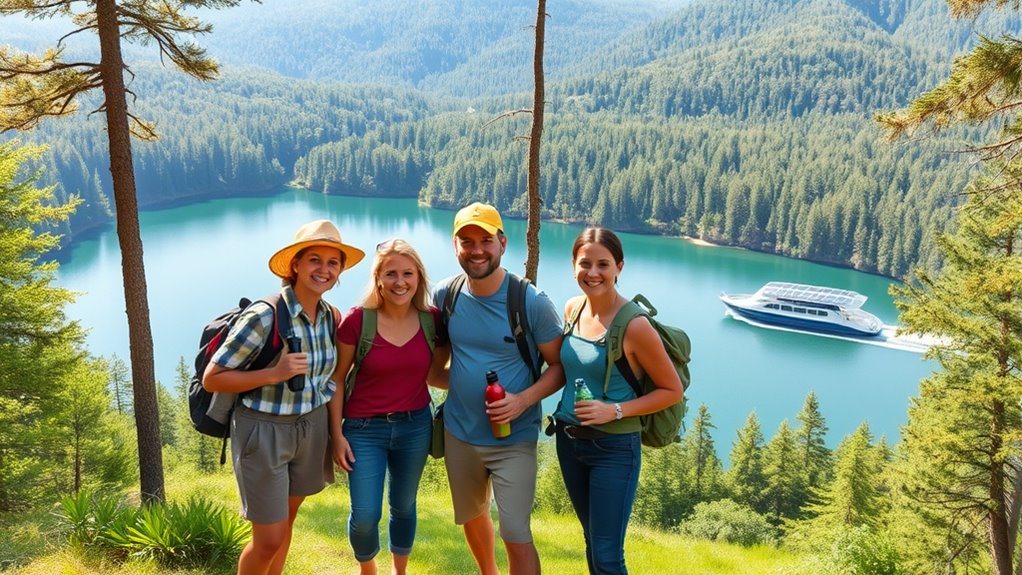
Traveling sustainably means making choices that minimize your environmental impact while exploring new places. As a family, you have the opportunity to set an example by opting for eco friendly accommodations and practicing responsible tourism. These choices not only help protect the environment but also enrich your travel experience, allowing you to connect more deeply with the destinations you visit. When selecting eco friendly accommodations, look for places that prioritize sustainability through energy efficiency, water conservation, and waste reduction. Many eco hotels and lodges are certified by organizations like Green Key or LEED, indicating they meet strict environmental standards. Staying in such accommodations reduces your carbon footprint and supports businesses committed to sustainable practices. These places often feature eco-friendly amenities, such as solar panels, composting systems, and locally sourced food, which make your stay more eco-conscious without sacrificing comfort.
Practicing responsible tourism practices is equally important. This means being mindful of how your actions impact the local community and environment. Respect local customs, traditions, and natural resources. For example, avoid littering, stick to designated trails when exploring nature, and refrain from disturbing wildlife. You can also support local economies by purchasing handmade crafts, eating at locally owned restaurants, and using locally operated transportation options. These actions help ensure that your trip benefits the community rather than just the tourism industry. Being respectful and considerate fosters positive relationships with residents and encourages sustainable development in the area.
Another way to practice responsible tourism is to educate your family about the importance of conservation. Teach your children about the fragile ecosystems and cultural heritage of the places you visit. Encourage them to ask questions and learn about local conservation efforts. This not only makes your trip more meaningful but also instills values of sustainability in the next generation. When you travel with awareness, you’re more likely to choose activities that are low-impact and environmentally friendly, such as kayaking instead of motorized boat tours or hiking instead of taking a short flight. Additionally, leveraging AI security technologies can help monitor and reduce environmental impacts, ensuring your travel remains sustainable and safe.
Frequently Asked Questions
How Can Families Reduce Plastic Waste During Trips?
To reduce plastic waste during trips, you should bring reusable containers for snacks and drinks, avoiding single-use plastics. Follow recycling tips by sorting waste properly and disposing of recyclables in designated bins. Encourage your family to carry reusable water bottles and utensils, which cut down on plastic waste and are eco-friendly. These small changes make a big difference, helping you enjoy your trip while protecting the environment.
What Are Eco-Friendly Travel Gear Options for Kids?
You can choose eco-friendly travel gear for your kids by selecting backpacks made from recycled or sustainable materials. Look for eco-friendly backpacks that are lightweight and durable. Pack biodegradable toys made from natural, non-toxic materials, which break down safely without harming the environment. These options help reduce your family’s ecological footprint and teach your children the importance of sustainability while enjoying your adventures together.
How to Choose Sustainable Accommodations Suitable for Families?
When choosing sustainable accommodations for your family, look for eco certification programs that guarantee environmentally friendly practices. Prioritize places that actively engage with the local community, supporting local economies and preserving culture. Consider family-friendly amenities and safety measures. Research reviews and ask questions to verify their commitment to sustainability. Selecting accommodations with these qualities helps reduce your environmental impact while providing an authentic, enriching experience for your family.
Are There Eco-Friendly Transportation Alternatives for Family Travel?
Imagine your journey as a gentle ripple across a tranquil pond—you can choose eco-friendly transportation options to keep the water clear. Electric vehicles glide silently, reducing emissions, while public transit offers a communal, low-impact way to explore. Both alternatives help protect the environment for your family’s future adventures. Embracing these options transforms travel into a mindful act, where every mile contributes to a healthier planet for generations to come.
How Can Children Be Involved in Sustainable Travel Practices?
You can involve children in sustainable travel by encouraging child-led activities, like choosing eco-friendly souvenirs or planning nature walks. Teach them about eco-conscious packing by involving them in packing reusable items, such as bottles and utensils. Explain the importance of reducing waste and respecting local environments. This not only makes travel more meaningful but also instills eco-friendly habits, empowering children to become responsible travelers who care for the planet.
Conclusion
By choosing eco-friendly options and respecting local cultures, you can make your family’s adventures truly sustainable. Imagine your children exploring pristine beaches or vibrant markets, knowing they helped protect these places for future generations. Like planting seeds that grow into thriving ecosystems, your mindful travel choices foster a healthier planet. When you travel sustainably, you create memories that not only last a lifetime but also nurture the Earth’s beauty, ensuring it remains vibrant for your family and theirs.