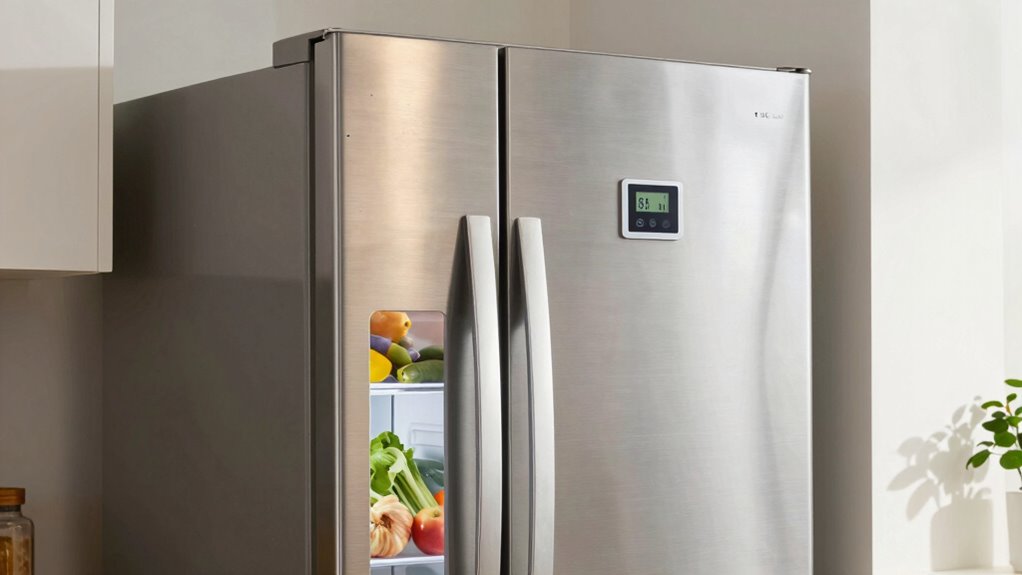

To spot your refrigerator’s energy hogs, check if it runs constantly, makes unusual noises, or struggles to maintain the right temperature. Look for dirty condenser coils, damaged door seals, and signs of excessive compressor activity—these waste energy. Also, avoid leaving doors open and overcrowding. Proper placement away from heat sources and regular maintenance can boost efficiency. Keep exploring these tips to find out how to maximize your fridge’s performance and save energy.
Key Takeaways
- Unusual noises or constant running indicate compressor strain and potential energy hogs.
- Temperature fluctuations or inconsistent cooling point to inefficient operation.
- Damaged or loose door seals allow warm air, increasing energy consumption.
- Excessive door openings or poor placement near heat sources raise appliance workload.
- Dirty condenser coils cause the compressor to work harder, wasting energy.
Have you ever wondered how much energy your refrigerator consumes and how you can make it more efficient? Understanding your fridge’s energy use is the first step toward saving money and reducing your environmental impact. Many people overlook their appliance’s efficiency until it starts running excessively or the energy bills spike. Luckily, small changes and regular appliance maintenance can markedly improve your refrigerator’s performance and cut down on unnecessary energy consumption.
Understanding your fridge’s energy use is key to saving money and protecting the environment.
To spot the real energy hogs, start by paying attention to how your fridge operates. If it runs constantly or makes unusual noises, it might be a sign that it’s working harder than it needs to. An inefficient refrigerator often struggles to maintain the right temperature, which means it has to run more often to compensate. Check the temperature settings—ideally, your fridge should be between 37°F and 40°F, and the freezer should be at 0°F. Keeping these temperatures steady helps your appliance run efficiently without overexerting itself.
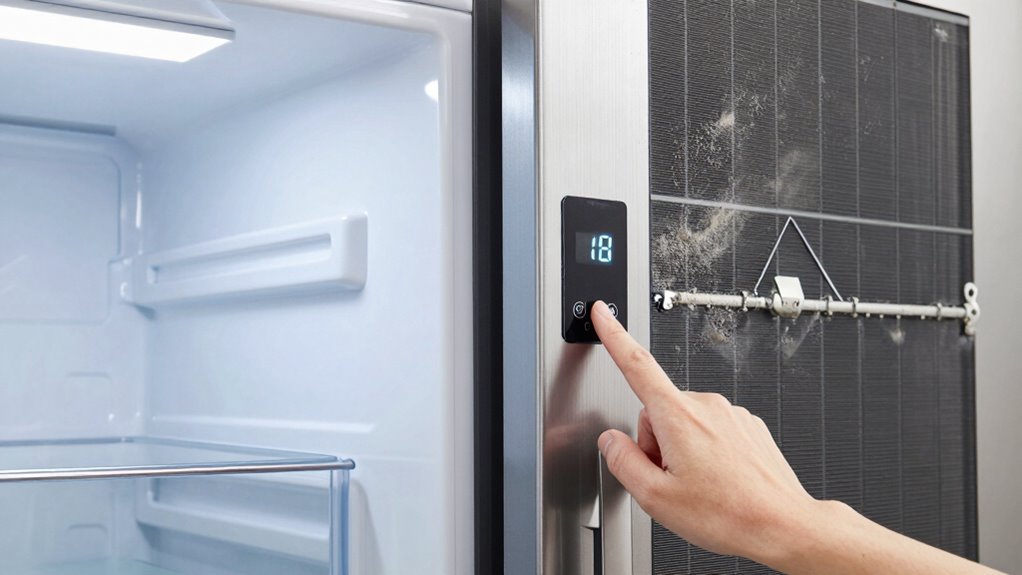
Next, focus on appliance maintenance. Regularly cleaning the condenser coils—located either at the back or underneath—is essential. Dust, pet hair, and dirt can insulate the coils, forcing the compressor to work overtime. Turn off the fridge, unplug it, and gently vacuum or brush away debris from the coils at least once a year. Additionally, ensure door seals are tight and free of cracks. Leaking seals allow warm air to enter, making the compressor work harder to keep everything cool. Wipe the seals with a damp cloth and replace them if they’re damaged.
Another energy saving tip involves optimizing how you use your refrigerator. Avoid leaving the door open for extended periods, as this lets out cold air and causes the compressor to run longer. Keep the refrigerator well-stocked, but avoid overcrowding, which can block air circulation and reduce efficiency. Also, try to minimize how often you open the door—plan ahead so you only open it when necessary. If your fridge has an automatic ice maker, consider whether it’s essential, as it can also increase energy use.
Finally, think about the placement of your refrigerator. Keep it away from heat sources like ovens, direct sunlight, or radiators. Cooler ambient temperatures help your fridge operate less intensively, conserving energy. Proper appliance placement can significantly reduce energy consumption and improve efficiency. By implementing these simple energy saving tips and maintaining your appliance properly, you’ll not only extend the lifespan of your refrigerator but also reduce your energy bills. Small, consistent efforts make a noticeable difference, helping you spot and eliminate the real energy hogs in your home.
Frequently Asked Questions
How Often Should I Defrost My Refrigerator for Optimal Efficiency?
You should defrost your refrigerator whenever you notice about a quarter-inch of frost buildup. Typically, this means every 3 to 6 months, but it can vary based on your environment and usage. Regular defrosting helps maintain ideal efficiency by preventing excess frost from insulating the coils, which makes the compressor work harder. Keep an eye on frost buildup and defrost as needed to guarantee your refrigerator runs smoothly and saves energy.
Do Older Refrigerator Models Consume More Energy Than Newer Ones?
Older refrigerator models generally consume more energy than newer ones because they lack advanced insulation and energy-efficient compressors. You’ll notice a lower efficiency comparison, which means higher energy consumption, leading to increased electricity bills. Upgrading to a modern, ENERGY STAR-rated fridge can markedly reduce your energy use. To save money and energy, consider replacing your old unit with a newer model designed with better efficiency features.
What Interior Features Increase a Refrigerator’s Energy Consumption?
Interior shelving and door insulation can substantially boost a refrigerator’s energy consumption. If your shelves are made of thick, non-energy-efficient materials or are cluttered, your fridge works harder to maintain coolness. Poor door insulation allows cold air to escape, forcing the compressor to run longer. You should opt for adjustable, lightweight shelves and guarantee door seals are tight to minimize energy use and keep your fridge running efficiently.
How Does Refrigerator Placement Affect Its Energy Efficiency?
Placing your refrigerator in a spot with good ventilation helps it run efficiently, reducing energy use. Avoid areas with poor airflow or tight enclosures, which can cause ventilation issues and make it work harder. Also, keep it away from heat sources like ovens or direct sunlight, as higher ambient temperatures force it to consume more energy. Proper placement keeps your fridge cool and cuts down on unnecessary power consumption.
Are Smart Refrigerators More Energy-Efficient Than Traditional Models?
Smart refrigerators can be more energy-efficient than traditional models because their smart features enable better temperature control and usage monitoring. These features help you optimize energy savings by adjusting settings based on your habits and alerting you to inefficient patterns. While they might cost more upfront, over time, the energy savings can offset the initial investment, making smart refrigerators a smarter choice for reducing energy consumption.
Conclusion
Think of your refrigerator as the heartbeat of your kitchen, quietly sustaining your daily needs. When it guzzles energy, it’s like a shadow lurking behind the scenes, draining your resources without notice. By recognizing the true energy hogs, you’re shining a light on this silent guardian, making it run smoothly and efficiently. Keep it well-maintained, and your fridge will be the steady pulse that keeps your household thriving, not wasting.