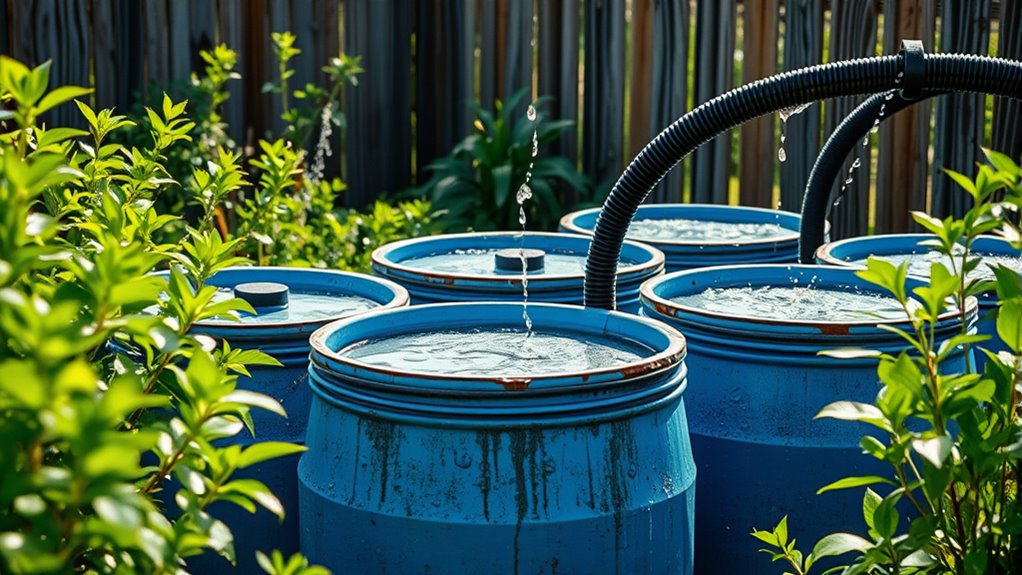

Rain barrels and home water harvesting let you capture rainwater from your roof, reducing reliance on municipal supplies and lowering your utility bills. These systems help manage stormwater, decrease pollution, and protect local waterways while offering an emergency water source during droughts. They’re simple to set up and maintain, making your property more sustainable and resilient. Keep exploring to discover how to effectively install and optimize your rain harvesting system.
Key Takeaways
- Rain barrels capture rooftop rainwater, reducing dependence on municipal water and lowering utility bills.
- Proper setup includes connecting to downspouts with screens and spigots for easy access.
- Regular maintenance ensures optimal performance and prevents debris buildup or mosquito breeding.
- Water harvesting supports drought resilience and enhances stormwater management in communities.
- Using rain barrels promotes sustainable water practices and protects local waterways from pollution and erosion.
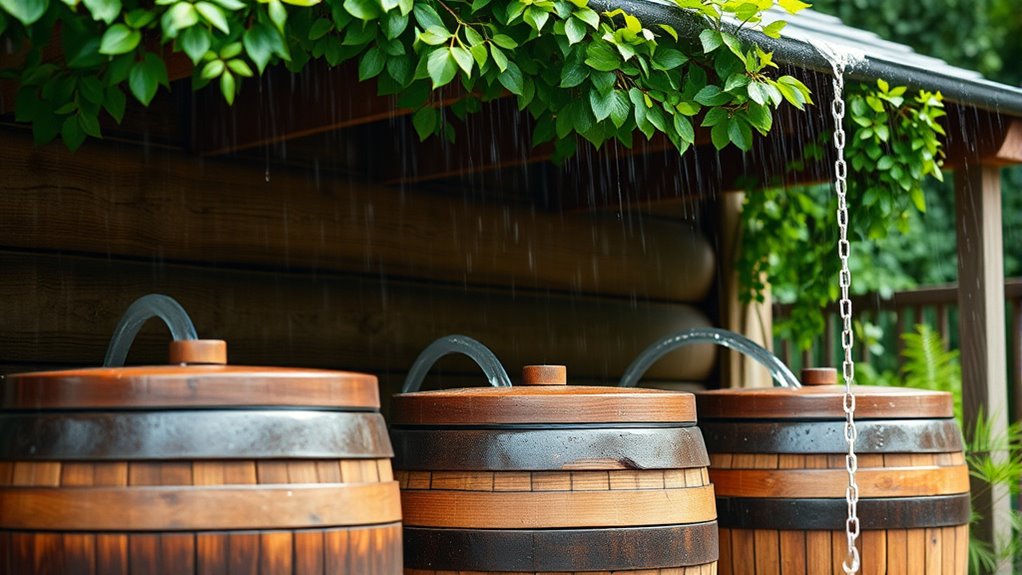
Rain barrels and home water harvesting offer simple yet effective ways to reduce your reliance on municipal water and save money. By collecting rainwater from rooftops, you can manage stormwater more efficiently and contribute to better stormwater management in your community. This not only minimizes runoff that can overwhelm local drainage systems but also reduces the risk of flooding and erosion. When you install a rain barrel, you’re capturing natural rainfall before it hits the ground, making it available for various uses around your home. This approach helps ease the burden on city water supplies, especially during peak demand periods, and supports drought resilience by providing a supplementary water source during dry spells.
Using rain barrels encourages you to think differently about water use. Instead of letting rainwater run off your property and potentially cause issues downstream, you’re storing it for later use. This stored water can be used to water your garden, fill your lawn, or clean outdoor surfaces, all without increasing your utility bill. During droughts or periods of water restrictions, having a rainwater reserve becomes particularly valuable. It ensures you can maintain your landscaping and outdoor chores without relying solely on municipal supplies, which might be limited or more expensive during such times. Over time, this reduces your environmental footprint and promotes a more sustainable lifestyle.
Storing rainwater for later use reduces utility bills and promotes sustainability during droughts.
Home water harvesting systems are flexible and easy to set up, making them accessible for most homeowners. You can start with a single rain barrel or install a series of them linked together to increase capacity. These systems typically include a spigot for easy access and a screen to keep debris and insects out. Some advanced setups even incorporate filtration systems for potable use, although most rainwater collected for outdoor purposes doesn’t require that level of treatment. The key is to position your rain barrel under a downspout, ensuring it catches the maximum amount of rainfall possible. Regular maintenance, like cleaning the barrel and checking the spigot, keeps your system functioning efficiently. Additionally, integrating holistic approaches to water management can enhance the effectiveness of your rainwater harvesting efforts.
Adopting rain barrels and home water harvesting isn’t just about saving money; it’s about becoming more resilient to climate variability. As droughts become more frequent and intense, your ability to collect and store rainwater becomes a crucial part of your household’s water management. Plus, by reducing stormwater runoff, you’re also protecting local waterways from pollution and erosion. Overall, these simple measures support your community’s stormwater management efforts and strengthen your drought resilience, making your home more sustainable and prepared for changing climate conditions.
Frequently Asked Questions
Can Rain Barrels Be Used for Drinking Water?
You shouldn’t use rain barrel water for drinking without proper filtration. Rainwater’s water quality can vary, and it may contain contaminants like bacteria, debris, or chemicals. To make it safe, you need effective filtration systems that remove impurities. Even then, it’s best to test the water regularly. Without proper treatment, drinking rain barrel water can pose health risks, so consider alternative safe drinking sources instead.
How Often Should I Clean My Rain Barrel?
You should clean your rain barrel at least twice a year, ideally in spring and fall, to keep it in good shape. Follow a regular maintenance schedule and use effective cleaning methods like draining the barrel, scrubbing the interior with a brush, and rinsing thoroughly to remove debris, algae, and sediment. This helps make sure your water stays clean and the system functions properly.
Are There Legal Restrictions on Installing Rain Barrels?
You’re right to ask—rules can be tricky. In most areas, local regulations and water rights do influence rain barrel installation, but often, small setups are permitted without issue. However, it’s smart to verify with your city or county’s rules first, because policies vary. Think of it as covering your bases; staying informed keeps you out of hot water and ensures your rain harvesting is above board.
What Is the Best Placement for a Rain Barrel?
You should place your rain barrel in an area with ideal positioning for water collection and accessibility. Consider placement considerations like proximity to downspouts, level ground, and sunlight exposure to prevent algae growth. Position it on a stable, sturdy surface, ideally close to your roof drain, to maximize efficiency. Keep it away from walkways and foundations to avoid accidents and water damage. Proper placement ensures easy maintenance and efficient water collection.
How Much Water Can a Typical Rain Barrel Store?
A typical rain barrel has a rainwater capacity of about 50 to 80 gallons, giving you a solid storage volume for collecting rainwater. Depending on your needs, you might choose a larger barrel for more storage or combine several to increase capacity. Keep in mind that proper placement guarantees efficient collection and prevents overflow, helping you maximize your storage volume and make the most of the rainwater you gather.
Conclusion
Now that you know how rain barrels can conserve water, imagine the impact if every home embraced this simple practice. While your neighbors might see it as just a container, you’ll see a tool that saves money and supports the environment. It’s easy to overlook small steps, but together, these efforts create a powerful change. So, don’t wait—start harvesting rain today and turn a basic container into a symbol of sustainability.