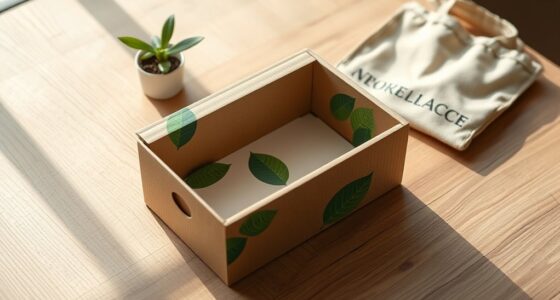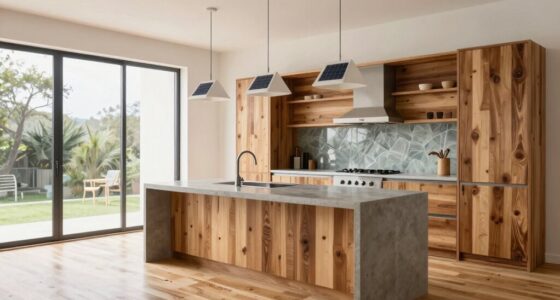

To embrace sustainable interior design, focus on eco-friendly materials, upcycled decor, and biophilic elements that connect you with nature. Incorporate reclaimed wood, recycled textiles, and natural fibers for a stylish, eco-conscious look. Maximize natural light and ventilation to boost wellness and reduce energy use. Small choices like repurposing old items or adding indoor plants make a big difference. Keep exploring to discover how these trends can transform your space into a greener haven.

Get garden gear delivered free with Prime
- Fast, free delivery on millions of items
- Prime Video, Amazon Music and more included
- Member-only deals all year
Key Takeaways
- Incorporate upcycled and reclaimed materials to add character while reducing waste and environmental impact.
- Embrace biophilic design by integrating plants, natural light, and organic textures for healthier, nature-connected spaces.
- Choose furniture and decor crafted from sustainable, recycled, or natural materials to promote circular economy principles.
- Maximize natural light and ventilation to lower energy consumption and enhance indoor air quality.
- Opt for eco-friendly textiles like organic cotton, hemp, or jute, and use natural finishes to create sustainable, inviting interiors.

As more people recognize the importance of environmental responsibility, sustainable interior design has become a leading trend in creating healthier and eco-friendly living spaces. You’re likely looking for ways to make your home both stylish and sustainable, and there are plenty of impactful changes you can make. One of the most effective choices is incorporating upcycled materials into your decor. Instead of buying new, mass-produced furniture or accessories, you can repurpose items with history and character. Think reclaimed wood for tables, vintage fixtures, or glass jars turned into storage. Upcycled materials reduce waste and lessen your carbon footprint, all while adding unique, personalized touches to your home.
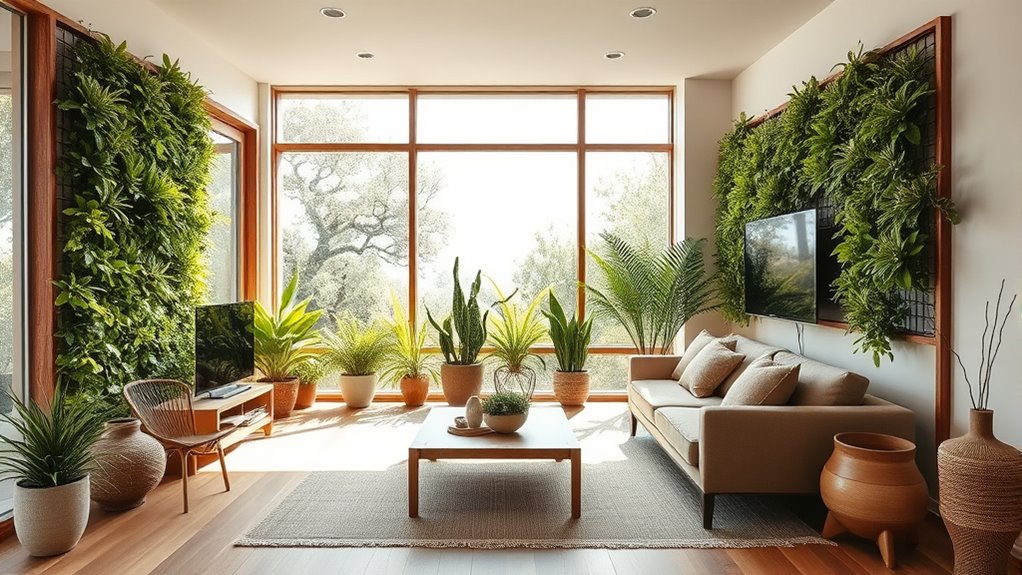
Alongside upcycling, biophilic design plays a crucial role in creating a healthier environment. This approach emphasizes connecting indoor spaces with nature, which can boost your well-being and improve air quality. You can bring biophilic elements into your home through the strategic placement of houseplants, natural light, and organic textures. Large windows, skylights, and light-colored walls help maximize daylight, making your space feel open and inviting. Adding greenery through potted plants or living walls not only enhances aesthetic appeal but also purifies the air, reduces stress, and increases your overall comfort. Incorporating natural ventilation can further improve indoor air quality and reduce reliance on artificial climate control.
Biophilic design connects your home with nature, boosting well-being and air quality through plants, natural light, and organic textures.
Incorporating these trends doesn’t mean you need a complete overhaul. Small, intentional choices can make a big difference. For example, choose furniture made from recycled or sustainably sourced materials. Opt for natural fibers like hemp, jute, or organic cotton for your textiles, which are better for the environment and healthier for your skin. When selecting decor, look for pieces crafted from upcycled or reclaimed materials to give new life to old items. You might find an old door turned into a coffee table or vintage suitcases used as storage. These choices not only add character but also support a circular economy.
To truly embrace biophilic design, consider adding a variety of plants suited to your environment. Place them near windows, hang them from ceilings, or create a dedicated green corner. Use natural materials like wood, stone, or bamboo in furniture and accents to reinforce the connection with nature. Incorporate natural light wherever possible—skylights, sheer curtains, or reflective surfaces help bounce sunlight around your space, reducing the need for artificial lighting and creating a warm, inviting atmosphere.
Ultimately, sustainable interior design isn’t just a trend; it’s a lifestyle shift. By choosing upcycled materials and integrating biophilic principles, you’re making your home a healthier, more environmentally friendly sanctuary. These small but impactful changes will not only benefit the planet but also enhance your daily living experience, making your space truly your own.
As an affiliate, we earn on qualifying purchases.
Frequently Asked Questions
How Can I Identify Genuinely Sustainable Interior Design Products?
To identify genuinely sustainable interior design products, start by checking for eco labels that verify environmental standards. Look for material transparency—products should clearly disclose their ingredients and sourcing. You can also research brands’ sustainability practices online, focusing on their certifications and commitments. By paying attention to eco labels and ensuring material transparency, you’ll confidently choose products that genuinely support eco-friendly and sustainable interior design.
What Budget Considerations Are Involved in Eco-Friendly Renovations?
When planning eco-friendly renovations, you should focus on cost analysis and budget planning to stay on track. You might find sustainable materials cost more upfront, but they save money long-term through durability and energy efficiency. Consider prioritizing essential upgrades first and exploring budget-friendly eco options. By evaluating costs carefully, you ensure your renovation remains affordable while supporting environmentally conscious choices. This approach helps you balance sustainability with financial practicality.
Are There Specific Certifications to Look for in Sustainable Materials?
Think of eco labels as a trusted map guiding you through the forest of sustainable materials. When choosing eco-friendly options, look for certifications like FSC for wood, GreenGuard for indoor air quality, and LEED standards for overall building sustainability. These certification standards act as your compass, ensuring your materials meet rigorous environmental and health benchmarks, so your space remains both beautiful and responsible.
How Can I Incorporate Sustainable Design Without Sacrificing Style?
You can incorporate sustainable design without sacrificing style by upcycling furniture, giving old pieces a fresh, trendy look. Maximize natural lighting to brighten your space naturally, reducing the need for energy-consuming lights. Choose eco-friendly materials with sleek, modern designs that blend sustainability with aesthetics. Mixing these elements ensures your space is stylish and environmentally conscious, proving that sustainability and style can go hand in hand effortlessly.
What Are the Long-Term Maintenance Costs of Eco-Friendly Interiors?
Think of eco-friendly interiors as investments in a sturdy tree—long-lasting and worth the effort. Your long-term maintenance costs mainly hinge on energy efficiency and material durability. By choosing durable, sustainable materials and energy-efficient systems, you reduce expenses over time. While initial costs may be higher, the savings on energy bills and fewer repairs make eco-friendly interiors a smart, cost-effective choice in the long run.
Conclusion
Embracing these sustainable interior design trends is like planting seeds for a greener future. As you infuse your space with eco-friendly choices, you become a beacon of change, turning your home into a sanctuary that nurtures both your soul and the planet. Let each conscious decision ripple outward, inspiring others to follow suit. Together, you’re crafting a beautiful tapestry of sustainability—where style and purpose intertwine, creating a healthier, more vibrant world for generations to come.
Columbus Day / Indigenous Peoples' Day Picks
long weekend sales
As an affiliate, we earn on qualifying purchases.