To choose low-carbon concrete, you can replace traditional cement with supplementary materials like fly ash, slag, or bio-based components that reduce emissions. You might also consider recycled aggregates or innovative formulations like geopolymers for even lower impact. Keep in mind, these options may affect setting times, early strength, or cost. Balancing environmental benefits with performance and economics is key, and exploring further will reveal how to optimize your project choices.
Key Takeaways
- Incorporating supplementary cementitious materials like fly ash and slag reduces emissions but may affect setting times and early strength.
- Using recycled and industrial byproducts promotes sustainability but may influence concrete performance and durability.
- Emerging low-carbon options include geopolymer and cementless concretes that significantly cut emissions, though they might come with higher costs.
- Balancing environmental benefits with economic and logistical considerations is essential to select suitable low-carbon concrete solutions.
- Performance trade-offs require adjusting construction practices, such as curing time, to accommodate newer, sustainable concrete mixes.
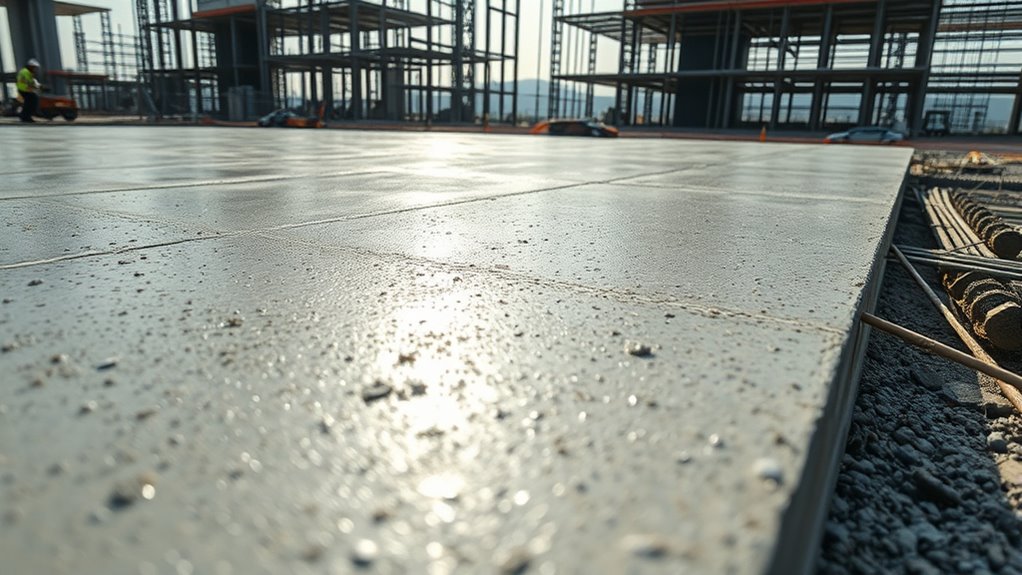
Low-carbon concrete is transforming the construction industry by offering a sustainable alternative to traditional cement. As you explore this innovative material, you’ll notice that its success hinges on effective carbon reduction strategies and a focus on material sustainability. These strategies aim to considerably lower greenhouse gas emissions associated with concrete production, making it a more environmentally friendly choice. Instead of relying solely on traditional Portland cement, which is energy-intensive and emits a large amount of CO₂ during manufacturing, low-carbon options incorporate alternative materials like supplementary cementitious materials (SCMs), such as fly ash or slag, to replace a portion of the cement. This substitution reduces the carbon footprint of the concrete while maintaining or even enhancing its durability.
Low-carbon concrete reduces emissions by replacing traditional cement with sustainable supplementary materials.
Utilizing self-watering plant pots can also contribute to sustainable gardening practices by reducing water waste and conserving resources. Material sustainability is at the core of low-carbon concrete‘s appeal. By integrating recycled aggregates, industrial byproducts, or bio-based components, you contribute to a circular economy that minimizes waste and conserves natural resources. These choices not only decrease the environmental impact but can also improve certain performance characteristics, such as resistance to cracking or chemical attack. However, it is crucial to understand that each material substitution involves trade-offs. For example, while SCMs reduce carbon emissions, they may influence setting times or early strength development, which could require adjustments in construction schedules or mix designs.
Adopting low-carbon concrete involves balancing these trade-offs carefully. You need to evaluate the specific project requirements, considering factors like structural load, environmental conditions, and longevity. Some low-carbon mixes might have slightly lower early strength but excel in long-term durability, making them suitable for certain applications. Others might require additional curing time or modified construction practices. The key is to choose an option that aligns with your sustainability goals without compromising safety and performance.
Furthermore, advancements in material science continue to expand the options available, enabling you to tailor mixes for different climates and structural needs. Innovations like geopolymer concretes or cementless formulations can drastically cut emissions but may come with higher costs or limited availability. As you incorporate these materials into your projects, weigh the benefits of lower emissions against the economic and logistical considerations. Ultimately, embracing low-carbon concrete is about making informed decisions that prioritize both environmental responsibility and project success. By understanding the nuances of carbon reduction strategies and material sustainability, you can play a critical role in shaping a more sustainable future for construction.

Sika – Sikacryl – Gray – Ready-Mix Concrete Patch – for Repairing spalls and Cracks in Concrete and Masonry – Textured – 1 qt (Pack of 1)
FOR EASY REPAIRS — It's the ideal concrete patch repair mix, neatly fixing cracks and spalls so your…
As an affiliate, we earn on qualifying purchases.
As an affiliate, we earn on qualifying purchases.
Frequently Asked Questions
What Are the Long-Term Durability Differences in Low-Carbon Concrete?
You’ll notice that low-carbon concrete often undergoes durability testing to guarantee it meets long-term performance standards. While some formulations may have slightly reduced material longevity compared to traditional concrete, advances in materials improve durability over time. Proper mix design and curing help enhance its resilience, so you can expect comparable long-term durability when tested, though ongoing research continues to optimize these options for better performance in the future.
How Does Low-Carbon Concrete Impact Construction Costs Initially and Over Time?
Construction costs come with a mix of moments and money. Low-carbon concrete may initially cost more due to sustainable sourcing and specialized materials, but it can reduce long-term expenses by lowering embodied energy and maintenance needs. Over time, savings from durability and efficiency offset higher upfront investments. You’ll find that smart sourcing and sustainable strategies profoundly shape your savings, making eco-friendly choices both economical and environmentally essential.
Are There Regional Availability Issues for Low-Carbon Concrete Materials?
Regional supply can limit your access to low-carbon concrete materials, especially in remote or less-developed areas. Material accessibility varies depending on local infrastructure and demand, which might cause delays or higher costs. You should research regional availability beforehand, as some areas have better access to sustainable options than others. Understanding these supply constraints helps you plan projects more effectively and explore alternative sustainable materials if needed.
What Are the Best Practices for Recycling or Reusing Low-Carbon Concrete?
Think of low-carbon concrete recycling like giving old bricks a new life. You should follow best practices such as employing efficient recycling strategies and reuse techniques like crushing and screening. For example, some projects reuse concrete debris as aggregate, reducing waste and carbon footprint. Always guarantee proper separation, cleaning, and testing to maintain quality. These steps help you maximize sustainability while safely repurposing materials for future builds.
How Does Low-Carbon Concrete Perform in Extreme Weather Conditions?
You’ll find that low-carbon concrete generally offers good weather resilience and climate adaptability, making it suitable for extreme weather conditions. Its formulation often includes additives that enhance durability against freeze-thaw cycles, high temperatures, and moisture. However, performance can vary based on specific mixes and local conditions. To guarantee the best results, you should work with suppliers to tailor the concrete’s properties for your climate, maximizing its resilience and longevity.

S95 Fly Ash Concrete Mineral Powder, Mortar Fly Ash
Fly ash is a kind of pozzolanic mixture material formed by high temperature combustion of pulverized coal. It…
As an affiliate, we earn on qualifying purchases.
As an affiliate, we earn on qualifying purchases.
Conclusion
While low-carbon concrete offers promising environmental benefits, some might worry about its durability. However, advances in materials science show these alternatives can match traditional concrete’s strength and longevity. By choosing low-carbon options, you help reduce emissions without sacrificing quality. So, don’t let concerns hold you back—embracing eco-friendly concrete is a smart step toward a more sustainable future, and with ongoing innovations, you can trust it’ll stand the test of time just as well.

Basic Geopolymer Formulations: An Introduction into Basic ‘Recipes’, Raw Materials, and Manufacturing Processes of Environmentally Friendly High-Performance Cements
As an affiliate, we earn on qualifying purchases.
As an affiliate, we earn on qualifying purchases.

New Concrete Mix Design for Recycled Concrete Aggregates
As an affiliate, we earn on qualifying purchases.
As an affiliate, we earn on qualifying purchases.