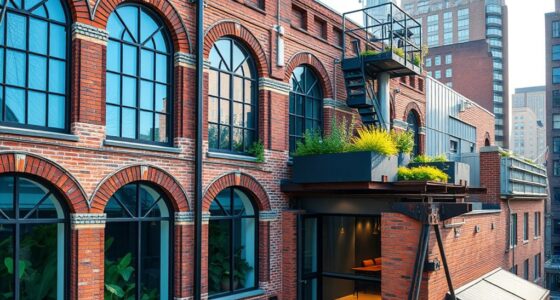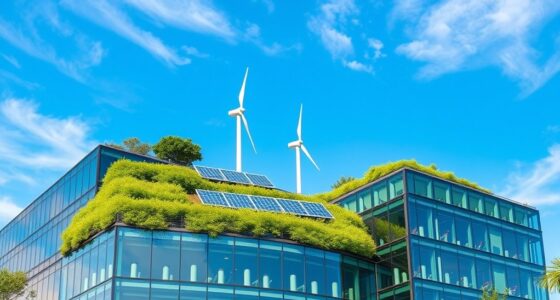
Green roofs come in two main types: extensive, which uses lightweight plants like sedums popular for insulation and stormwater retention, and intensive, which supports shrubs, small trees, and recreation areas. They consist of multiple layers, including a root barrier, waterproof membrane, drainage, filter fabric, and growing medium. Benefits include reduced energy costs, urban cooling, pollution filtering, and habitat creation. To understand more about how these layered systems boost city sustainability and beauty, keep exploring the details.
Key Takeaways
- Green roofs are categorized into extensive (lightweight, low-maintenance) and intensive (supporting shrubs and recreational spaces) types.
- They consist of multiple layers: root barrier, waterproof membrane, drainage, filter fabric, and growing medium with vegetation.
- They improve insulation, reduce energy costs, absorb rainwater, and support biodiversity in urban environments.
- Green roofs help mitigate urban heat, decrease greenhouse gases, and protect building structures, enhancing city sustainability.
- Proper layer design and plant selection are essential for functionality, environmental benefits, and minimizing allergy risks.
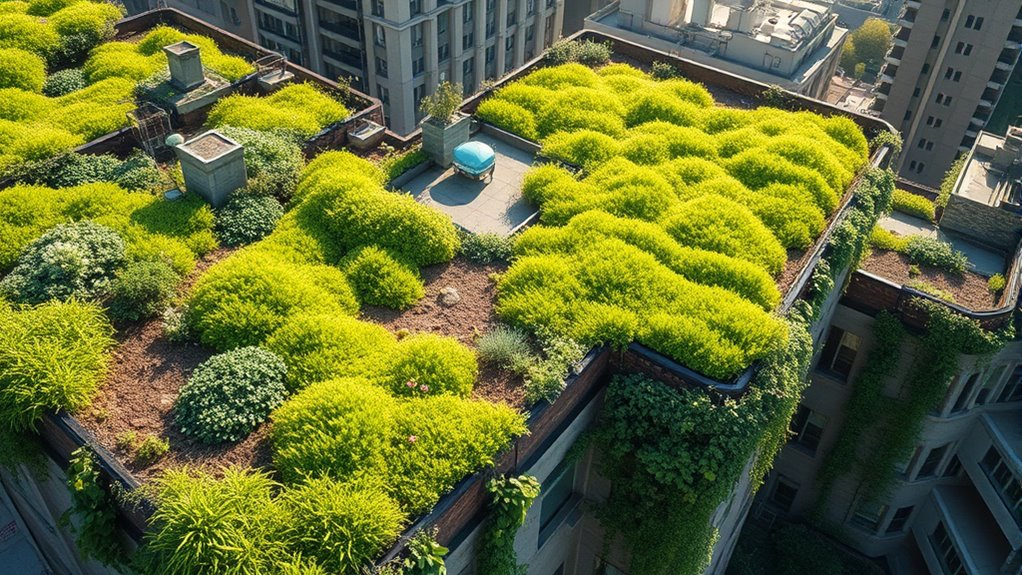
Have you ever wondered how cities can become greener and more sustainable? One way is through the installation of green roofs, which not only beautify urban landscapes but also contribute markedly to environmental health. Green roofs are layered systems that support plant life on building rooftops, offering various ecological and economic advantages. To maximize their benefits, it’s essential to understand the different types and layers involved, as well as the ways they help improve urban insulation and stormwater management.
Green roofs typically fall into two categories: extensive and intensive. Extensive green roofs are lightweight, featuring low-maintenance plants like sedums, grasses, or mosses. They require minimal structural support and are generally designed for insulation and stormwater retention. Intensive green roofs, on the other hand, support a broader variety of plants, including shrubs and small trees, and often include walking paths or recreational spaces. These are heavier and demand more complex structural reinforcement but provide greater biodiversity and aesthetic appeal. Regardless of type, the layered design of green roofs plays a vital role in their functionality.
At the core of every green roof are several layers. The root barrier prevents plant roots from penetrating the roof’s waterproof membrane, which protects the building. Above that, a drainage layer ensures excess water flows away efficiently, preventing waterlogging. Next, a filter fabric keeps soil and plant debris out of the drainage system, maintaining proper water flow. The growing medium, a specially designed soil mixture, supports plant roots and supplies nutrients. Finally, the vegetation layer provides the visible greenery and habitat for wildlife. Together, these layers work harmoniously to create a sustainable ecosystem atop urban buildings. Additionally, understanding seed allergy risks is important for those considering plant choices in green roofs, especially in urban environments.
One of the key benefits of green roofs is their ability to enhance urban insulation. By adding a layer of soil and plants, green roofs insulate buildings from extreme temperatures, reducing the need for air conditioning in summer and heating in winter. This not only cuts energy costs but also lowers greenhouse gas emissions. Additionally, green roofs excel at stormwater management. They absorb rainwater, reducing runoff that can overwhelm city drainage systems and cause flooding. This absorption filters pollutants and decreases the burden on stormwater infrastructure, making cities more resilient to heavy rainfall events.
In essence, green roofs serve as multifunctional solutions that improve city life. They insulate buildings, manage stormwater, boost biodiversity, and create inviting green spaces in concrete jungles. As cities aim for sustainability, investing in green roof technology becomes an increasingly effective step toward healthier, more resilient urban environments.

Liquid Rubber Color Roof Sealant- Elastomeric Waterproof Coating for Flat, Low-Slope & Metal Roofs, Flexible UV-Stable Membrane, Hunter Green, 1 Gallon
WATERPROOF ELASTOMERIC ROOF SEALANT: Liquid Rubber Color Roof Sealant is a liquid rubber waterproof coating designed for flat…
As an affiliate, we earn on qualifying purchases.
As an affiliate, we earn on qualifying purchases.
Frequently Asked Questions
What Maintenance Do Green Roofs Require Over Time?
You need to regularly perform green roof inspections to catch issues early and monitor plant health. Keep an eye on drainage systems, watering needs, and any signs of pests or disease. Trim overgrown plants and replace dead or struggling vegetation. Seasonal maintenance, like cleaning gutters and checking for leaks, helps guarantee your green roof stays healthy and vibrant. Consistent upkeep maintains its benefits and extends its lifespan effectively.
How Much Do Green Roofs Typically Cost to Install?
Green roofs typically cost between $10 to $30 per square foot for installation, but this varies based on several cost factors like roof size, type of green roof, and structural modifications needed. You should consider installation expenses, which include waterproofing, soil, plants, and labor. Keep in mind that while initial costs might be higher, green roofs can save money long-term through energy efficiency and reduced maintenance costs.
Are Green Roofs Suitable for All Climate Zones?
Think of green roofs as chameleons—they adapt to their surroundings. While they suit many climate zones, their effectiveness depends on climate adaptation and building compatibility. You’ll find they thrive in temperate and humid areas but may need extra care in extreme cold or arid zones. By choosing the right type of green roof for your climate, you guarantee a sustainable, beautiful addition that benefits both your building and the environment.
What Are the Insurance Implications of Installing a Green Roof?
Installing a green roof can impact your insurance coverage and liability considerations. You might face higher premiums due to the added risk of leaks or structural issues, but some insurers offer discounts if you demonstrate proper maintenance. It’s essential to consult your insurer beforehand, verify your policy covers potential damages or claims, and understand any specific requirements to mitigate liability concerns. Proper planning helps protect your investment and reduce insurance-related surprises.
How Long Do Green Roofs Usually Last Before Needing Replacement?
You might worry about how often you’ll need to replace your green roof, but with proper maintenance, its lifespan typically spans 30 to 50 years. The replacement timeline depends on factors like materials used and environmental conditions. While some components may need upgrades sooner, most green roofs are designed to last decades, providing long-term benefits and durability. Regular inspections help guarantee your green roof remains in excellent condition for years to come.

10 in. x 20 in. Sedum Groundcover Mat, Non-toxic Hardy Stonecrop for Landscaping, Live Succulents, Pet Friendly Plants for Cats & Dogs, Drought Resilient, Easy Care
LIVE SEDUM TILE: 10" by 20" live plant mat featuring a combination of sedum succulent plants with earthy…
As an affiliate, we earn on qualifying purchases.
As an affiliate, we earn on qualifying purchases.
Conclusion
Green roofs are like living blankets for your building, offering a lush refuge that benefits both you and the environment. By choosing the right type and layers, you can transform your rooftop into a vibrant oasis that reduces energy costs, improves air quality, and boosts your property’s value. Embrace the green revolution and let your roof breathe new life—because when you nurture nature above, it returns the favor below. Your building’s future just got a whole lot greener.

10x12ft Canopy Replacement Top for Lowe's Allen Roth Gazebo #GF-12S004B-1, Two Tiered Waterproof Gazebo Cover Roof with 8 Drainage Holes for BBQ Outdoor, Green
Specially Designed: This 10x12ft canopy replacement top is specifically engineered to fit 2012-2016 Lowe's Allen + Roth 12ft…
As an affiliate, we earn on qualifying purchases.
As an affiliate, we earn on qualifying purchases.

Dicor RP-RRK-30 RV Roof Renew Kit – EPDM Rubber Roof Coating System
USE: This RV roof care kit helps make your rubber roof look new again
As an affiliate, we earn on qualifying purchases.
As an affiliate, we earn on qualifying purchases.