For professionals inspecting buildings, a reliable thermal imaging camera is essential to detect heat leaks, moisture intrusion, and electrical issues. The Flir E5 Pro stands out as the best overall choice, offering a balanced mix of resolution, usability, and connectivity. The H128 Handheld Thermal Camera excels in battery life and durability for demanding inspections, while the FOXWELL RT280 PRO provides high-resolution imaging for detailed analysis. Buyers often face tradeoffs between resolution, size, price, and feature set. Continue reading for a comprehensive breakdown of the top options and how to pick the right one for your needs.
Complete the kit


Key Takeaways
- The highest resolution cameras, like the FOXWELL RT280 PRO, deliver the most detailed images but come at a higher cost.
- Connectivity features such as WiFi and app integration enhance workflow but may introduce complexity and increase price.
- Durability and battery life are critical for on-site inspections, favoring rugged models like the H128.
- Entry-level models can handle basic inspections but often lack advanced features needed for professional-grade work.
- Balancing resolution, usability, and budget is key; no single model excels in all areas.
| HP96 Thermal Imaging Camera, 3.5″ Touch Screen, Intelligent Scene Detection | 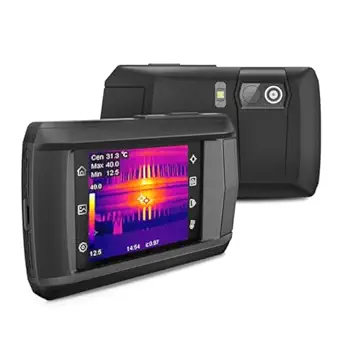 | Best Overall for Advanced Building Inspections | Display: 3.5-inch touchscreen | Infrared Resolution: 96×96 | Visible Light Camera Resolution: 640×480 | VIEW ON AMAZON | See Our Full Breakdown |
| GT14S Thermal Imaging Camera with Edge Enhancement and Thermometer Mode |  | Best Compact Choice for All-Day Building Inspections | Weight: 15.2 ounces | Field of view: 50° | Temperature range: -4°F to 1022°F | VIEW ON AMAZON | See Our Full Breakdown |
| FOXWELL RT280 Thermal Imaging Camera, 320×240 LCD, 240×180 TISR |  | Best for Detailed Diagnostics with High Resolution | Resolution: 320×240 LCD, 240×180 effective | Temperature Range: –4°F to 1022°F | Frame Rate: 25Hz | VIEW ON AMAZON | See Our Full Breakdown |
| MILESEEY TR10 Thermal Imaging Camera, 192×192 IR Resolution, 25Hz |  | Best Budget-Friendly for Basic Building Checks | IR Resolution: 192×192 | Refresh Rate: 25Hz | Temperature Range: -4°F to 1022°F | VIEW ON AMAZON | See Our Full Breakdown |
| TOPDON TC004 Mini Thermal Imaging Camera, 240 x 240 Resolution |  | Best for Portable, High-Resolution Inspections | Resolution: 240 x 240 | Field of View: 40° x 30° | Temperature Range: -4°F to 842°F | VIEW ON AMAZON | See Our Full Breakdown |
| Flir C5 Compact Thermal Imaging Camera, WiFi, 160×120 MSX |  | Best Overall for Versatile Building Inspections | Temperature Range: -20°C to 400°C | Thermal Resolution: 160×120 | Visual Resolution: 5 MP | VIEW ON AMAZON | See Our Full Breakdown |
| H128 Handheld Thermal Camera, 240 x 240 TISR Resolution, 24h Battery Life, Infrared Camera with Temperature Alarm, -4℉ to 842℉ Temp Range, IP65 Protection |  | Best for Extended, Tough Environment Inspections | Resolution: 240 x 240 TISR | Battery Life: 24 hours | Temperature Range: -4℉ to 842℉ | VIEW ON AMAZON | See Our Full Breakdown |
| TOPDON TC005 3.5″ Dual-Lens Thermal Imaging Camera |  | Best for Versatile, Professional-Grade Inspections | Display: 3.5-inch | Temperature Range: -4°F to 1022°F | Resolution: 512 x 384 TISR | VIEW ON AMAZON | See Our Full Breakdown |
| FOXWELL RT280 PRO Thermal Imaging Camera, Dual-Lens, 512 x 384 TISR, Black |  | Best for Detailed, Multi-Mode Inspections | Resolution: 512 x 384 TISR | Sensor Type: Infrared | Temperature Range: –4°F to 1022°F | VIEW ON AMAZON | See Our Full Breakdown |
| Flir TG165-X Thermal Imaging Camera with Bullseye Laser, Spot IR |  | Best for Rugged, Spot Inspection Tasks | Pixel Count: 4,800 pixels | Temperature Range: -25°C to 300°C | Frame Rate: 9Hz | VIEW ON AMAZON | See Our Full Breakdown |
| Flir i34 Thermal Camera with App-Enabled Features and ACE OS |  | Best Overall for Versatile Building Diagnostics | Resolution: 240×320 pixels | NETD: 40 mK | Thermal Resolution: 40 mK | VIEW ON AMAZON | See Our Full Breakdown |
| HF96V Thermal Camera with Visual Camera & Laser Pointer, Scene Detection, 240×240 Super Resolution, 25Hz, 50° FOV, -4°F to 1022°F, IP54 |  | Best for Durable, Multi-Mode Inspections in Challenging Environments | Resolution: 96×96 IR, 640×480 visible | Super Resolution: 240×240 | Frame Rate: 25Hz | VIEW ON AMAZON | See Our Full Breakdown |
| FLIR E5 Pro Thermal Imaging Camera, WiFi, 160×120 MSX, Ignite Cloud |  | Best for Entry-Level Professionals with Cloud Connectivity | Thermal Resolution: 160×120 pixels | Temperature Range: -20°C to 400°C | Frame Rate: 9Hz | VIEW ON AMAZON | See Our Full Breakdown |
| professional thermal imaging camera for building inspection | Temperature range | Frame Rate | Resolution |
|---|---|---|---|
| HP96 Thermal Imaging Camera | — | 25Hz | — |
| GT14S Thermal Imaging Camera w | -4°F to 1022°F | — | — |
| FOXWELL RT280 Thermal Imaging | –4°F to 1022°F | 25Hz | 320×240 LCD, 240×180 effective |
| MILESEEY TR10 Thermal Imaging | -4°F to 1022°F | — | — |
| TOPDON TC004 Mini Thermal Imag | -4°F to 842°F | — | 240 x 240 |
| Flir C5 Compact Thermal Imagin | -20°C to 400°C | — | — |
| H128 Handheld Thermal Camera | -4℉ to 842℉ | 25 Hz | 240 x 240 TISR |
| TOPDON TC005 3.5" Dual-Lens Th | -4°F to 1022°F | — | 512 x 384 TISR |
| FOXWELL RT280 PRO Thermal Imag | –4°F to 1022°F | 25Hz | 512 x 384 TISR |
| Flir TG165-X Thermal Imaging C | -25°C to 300°C | 9Hz | — |
| Flir i34 Thermal Camera with A | — | — | 240×320 pixels |
| HF96V Thermal Camera with Visu | -4°F to 1022°F | 25Hz | 96×96 IR, 640×480 visible |
| FLIR E5 Pro Thermal Imaging Ca | -20°C to 400°C | 9Hz | — |
More Details on Our Top Picks
HP96 Thermal Imaging Camera, 3.5″ Touch Screen, Intelligent Scene Detection
The HP96 stands out for its high-definition thermal imaging combined with intelligent scene detection, making it ideal for detailed building diagnostics. Its 96×96 infrared resolution may seem modest compared to the 320×240 offered by the FOXWELL RT280, but the HP96 compensates with deep learning-powered anomaly detection, speeding up inspections and reducing missed issues. The 3.5-inch touchscreen provides intuitive control, while its durable, IP54-rated build ensures reliability in challenging environments. However, it lacks moisture or humidity sensors, limiting its scope for moisture-related diagnostics, and the higher price tag reflects its advanced features. Compared to the more basic MILESEEY TR10, the HP96 offers superior imaging and scene analysis but at a higher cost.
Pros:- High-definition thermal imaging with live super resolution
- Intelligent scene detection accelerates diagnostics
- Durable design with IP54 rating and drop resistance
- Multiple imaging modes and adjustable emissivity
Cons:- No moisture or humidity readings
- Requires firmware updates for full scene detection features
- Relatively high cost for advanced capabilities
Best for: Professional inspectors needing detailed thermal analysis with intelligent scene detection in varied environments.
Not ideal for: Budget-conscious users or those requiring moisture/humidity measurements, as it lacks these sensors.
- Display:3.5-inch touchscreen
- Infrared Resolution:96×96
- Visible Light Camera Resolution:640×480
- Thermal Sensitivity:below 50mK
- Frame Rate:25Hz
- Temperature Measurement Accuracy:within ±2%
Our verdict“Ideal for experienced professionals seeking comprehensive thermal diagnostics with smart scene detection, despite a higher price point.”
GT14S Thermal Imaging Camera with Edge Enhancement and Thermometer Mode
The GT14S excels in portability and long battery life, making it suitable for on-site building inspections where mobility is key. Its compact, lightweight design at just over 15 ounces allows for extended use without fatigue, and the wide temperature range from -4°F to 1022°F covers most building inspection needs. The adjustable emissivity and multiple color palettes improve thermal visualization, though it offers limited details about its durability or ruggedness—lacking explicit waterproof or drop-resistant features. Compared to the more feature-rich HP96, the GT14S prioritizes portability and extended runtime, but sacrifices some advanced scene detection and image resolution. This makes it an excellent choice for inspectors who need a lightweight, reliable tool for all-day use across varied conditions.
Pros:- Lightweight and easy to handle
- Long battery life supports all-day inspections
- Wide temperature measurement range
- Multiple color palettes enhance thermal detail
Cons:- Limited information on ruggedness or waterproof features
- Price is not specified, which may affect affordability
- No mention of visible light or moisture sensors
Best for: Building inspectors requiring a portable, long-lasting thermal camera for frequent, on-the-go inspections.
Not ideal for: Inspectors needing advanced scene detection or moisture measurements, as these features are absent or limited.
- Weight:15.2 ounces
- Field of view:50°
- Temperature range:-4°F to 1022°F
- Sensor sensitivity:NETD < 50mK
- Battery capacity:2500mAh
Our verdict“Perfect for mobile building inspections where portability and long operational hours are priorities over advanced scene detection features.”
FOXWELL RT280 Thermal Imaging Camera, 320×240 LCD, 240×180 TISR
The FOXWELL RT280 offers high-resolution thermal imaging with TISR technology, making it well-suited for detailed building diagnostics. Its 320×240 LCD screen provides clear, sharp thermal images, and the 240×180 effective thermal resolution delivers precise temperature differentiation. Its rugged, IP54-rated design withstands tough environments, and the large storage capacity supports extensive image and video capture. Compared with the MILESEEY TR10, the RT280’s higher resolution and larger display significantly improve diagnostic clarity, but it requires a Windows PC for advanced analysis and lacks a visible light camera, which limits contextual understanding in some scenarios. Its professional-grade features make it ideal for detailed inspections where image clarity is paramount.
Pros:- High-resolution thermal images with TISR technology
- Large storage capacity for extensive documentation
- Rugged, water and drop-resistant construction
- Multiple color palettes and laser targeting
Cons:- Requires Windows PC for advanced software analysis
- No visible light or moisture sensors
- Not compatible with Mac systems
Best for: Professionals conducting detailed thermal diagnostics needing high image resolution and durability.
Not ideal for: Users seeking a lightweight, portable device or solutions requiring integrated visible light imaging.
- Resolution:320×240 LCD, 240×180 effective
- Temperature Range:–4°F to 1022°F
- Frame Rate:25Hz
- Storage:8GB eMMC
- Water Resistance:IP54
Our verdict“Best suited for professionals requiring sharp thermal images and robust build quality for detailed building diagnostics.”
MILESEEY TR10 Thermal Imaging Camera, 192×192 IR Resolution, 25Hz
The MILESEEY TR10 offers solid thermal imaging with a 192×192 sensor, making it a practical choice for those new to building inspections or requiring basic thermal diagnostics. Its 25Hz refresh rate provides smooth real-time imaging, and the durable design with drop resistance supports fieldwork. While it lacks the resolution and advanced features of higher-end models like the FOXWELL RT280, its affordability and decent image quality make it suitable for routine inspections. However, the absence of a visible light camera limits contextual understanding, and its wired operation reduces convenience compared to cordless options. Compared to the TOPDON TC004, the TR10 emphasizes affordability over long battery life, which is still respectable at 8 hours.
Pros:- Decent thermal resolution for basic inspections
- Durable, drop-resistant design
- Long 8-hour battery life
- Affordable for entry-level users
Cons:- Requires wired connection, limiting mobility
- Lower resolution compared to premium models
- No visible light or moisture sensors
Best for: Entry-level inspectors or maintenance teams performing routine building checks on a budget.
Not ideal for: Professionals needing detailed diagnostics or moisture detection, as these features are not included.
- IR Resolution:192×192
- Refresh Rate:25Hz
- Temperature Range:-4°F to 1022°F
- Drop Test:6.6 ft
- Battery Life:8 hours
Our verdict“A reliable, budget-friendly thermal camera for straightforward building inspections without advanced scene detection.”
TOPDON TC004 Mini Thermal Imaging Camera, 240 x 240 Resolution
The TOPDON TC004 impresses with its 240×240 resolution, providing detailed thermal images in a compact, rugged package. Its TISR technology enhances image clarity, making it suitable for electrical, mechanical, and building inspections on the go. Its IP54 rating offers some protection against dust and splashes, and the 15-hour battery life supports extended use during fieldwork. The device supports smart alerts and multiple color palettes, aiding quick diagnostics. Compared with the more feature-rich HP96, the TC004 sacrifices scene detection and visible light imaging for portability and battery longevity. Its limited manual controls and lack of a moisture sensor make it less suitable for complex diagnostics but perfect for users needing a portable, high-res solution for routine checks.
Pros:- High-resolution thermal imaging with detailed visuals
- Long battery life for extended inspections
- Compact, rugged design with IP54 rating
- Supports smart alerts and multiple color palettes
Cons:- No included charging head, only a cable
- Limited manual controls for advanced adjustments
- No moisture or humidity sensors
Best for: Inspectors and technicians needing a highly portable, high-resolution thermal camera for diverse inspection tasks.
Not ideal for: Users requiring integrated visible light imaging or moisture detection, as these features are missing.
- Resolution:240 x 240
- Field of View:40° x 30°
- Temperature Range:-4°F to 842°F
- Refresh Rate:25Hz
- Battery Life:15 hours
Our verdict“An excellent portable choice for professionals who prioritize high-resolution thermal imaging and extended field use in a compact form.”
Flir C5 Compact Thermal Imaging Camera, WiFi, 160×120 MSX
The Flir C5 stands out for its combination of high-resolution thermal imaging combined with MSX technology, making it easier to identify issues clearly compared to lower-resolution options like the Flir E5 Pro. Its Wi-Fi and cloud sharing features streamline documentation, although reliance on Wi-Fi may limit use in offline environments. The waterproof design broadens its application across different job sites, and a generous 2-year warranty adds peace of mind. However, its focus range is limited for macro details, and battery life details are not specified, which could be a concern during extended inspections. Overall, this camera offers a balanced mix of image quality and connectivity, making it ideal for professionals who need reliable, portable diagnostics with efficient reporting.
Pros:- High thermal resolution with MSX for enhanced image clarity
- Wi-Fi and cloud sharing for quick documentation
- Waterproof design suitable for various environments
- Long warranty coverage including detector
Cons:- Limited focus range for macro inspection tasks
- No specified battery life, raising concerns for long sessions
Best for: Building inspectors needing a portable, all-around camera with reliable image clarity and cloud features
Not ideal for: Users who frequently work offline or in environments where Wi-Fi connectivity is unreliable
- Temperature Range:-20°C to 400°C
- Thermal Resolution:160×120
- Visual Resolution:5 MP
- Screen Size:3.5 inches
- Water Resistance Level:Waterproof
- Connectivity:Wi-Fi, Ethernet
Our verdict“This camera suits professionals who value image clarity and connectivity in varied building inspection scenarios.”
H128 Handheld Thermal Camera, 240 x 240 TISR Resolution, 24h Battery Life, Infrared Camera with Temperature Alarm, -4℉ to 842℉ Temp Range, IP65 Protection
The H128 offers a step up in thermal resolution with 240×240 TISR, delivering more detailed images than the Flir C5, especially useful in complex building diagnostics. Its 24-hour battery life supports all-day inspections, making it suitable for demanding environments where frequent recharging isn’t feasible. Its IP65 rating ensures resistance to dust and water, making it rugged enough for construction sites or industrial settings, although it is heavier at over a pound, which may hinder prolonged handheld use. The built-in temperature alarm allows for quick anomaly detection, but its weight and price may deter casual or occasional users. This model is best for professionals who need durability and extended operation over precision portability.
Pros:- High thermal resolution for detailed imaging
- Exceptional 24-hour battery life
- Rugged, IP65-rated for tough environments
- Built-in temperature alarm for quick detection
Cons:- Heavier and bulkier, less suited for handheld use over long periods
- Expensive for casual or infrequent users
Best for: Industrial inspectors and construction professionals performing long, rugged inspections
Not ideal for: Casual users or those needing a lightweight, portable device for quick checks
- Resolution:240 x 240 TISR
- Battery Life:24 hours
- Temperature Range:-4℉ to 842℉
- Protection Level:IP65
- Frame Rate:25 Hz
- Drop Resistance:6.56 feet
Our verdict“This camera excels in durability and extended use, ideal for demanding environments where precision and endurance are key.”
TOPDON TC005 3.5″ Dual-Lens Thermal Imaging Camera
The TOPDON TC005 combines a large 3.5-inch display with a dual-lens setup, offering more measurement options than single-sensor cameras like the Foxwell RT280 PRO. Its wide temperature range up to 1022°F makes it suitable for diverse building diagnostics, from electrical to mechanical inspections. The inclusion of Wi-Fi and PC connectivity enables detailed analysis, akin to the capabilities of the FOXWELL RT280 PRO, but with a larger screen that enhances usability on-site. Its 8-hour battery life and IP54 housing provide durability for extended fieldwork, though its weight of nearly 5 pounds may cause fatigue in handheld use. This model appeals to professionals who want a versatile device capable of detailed analysis and extended operation.
Pros:- Large, easy-to-read display for thermal data
- Dual-lens design for measurement versatility
- Extended battery life supports lengthy inspections
- Durable IP54 housing withstands demanding conditions
Cons:- Heavy weight makes handheld use tiring
- Higher price point may limit accessibility for some
Best for: Building specialists who need detailed analysis with a larger display and dual-lens flexibility
Not ideal for: Field technicians seeking a lightweight, ultra-portable option for quick checks
- Display:3.5-inch
- Temperature Range:-4°F to 1022°F
- Resolution:512 x 384 TISR
- Storage:64GB
- Battery Life:8 hours
- Housing Rating:IP54
Our verdict“This camera suits professionals requiring detailed, dual-lens inspections with a large display and extended battery life.”
FOXWELL RT280 PRO Thermal Imaging Camera, Dual-Lens, 512 x 384 TISR, Black
The FOXWELL RT280 PRO offers high-resolution thermal imaging with dual-lens capability, similar to the TOPDON TC005 but with a more compact 2.8-inch LCD. Its multiple image modes and smart alerts make it a strong choice for electrical, HVAC, and plumbing diagnostics, comparable to the Flir C5’s versatility but with more focus on detailed analysis. While its size makes it more portable, it lacks Wi-Fi, relying instead on USB and PC software, which could slow workflows for some users. Its rugged design and 6.6-foot drop resistance support demanding job sites, but the software’s Windows-only compatibility limits flexibility for Mac users. This model is best for detailed, multi-mode diagnostics in demanding environments.
Pros:- High-resolution thermal imaging with dual-lens
- Multiple image modes and smart alerts
- Rugged, portable design with drop resistance
- Supports detailed analysis with PC software
Cons:- Limited to Windows software, restricting flexibility
- No Wi-Fi or cloud sharing features
Best for: Electrical and HVAC technicians needing high-res, multi-mode thermal analysis
Not ideal for: Mac users or those preferring wireless data transfer and cloud sharing
- Resolution:512 x 384 TISR
- Sensor Type:Infrared
- Temperature Range:–4°F to 1022°F
- Frame Rate:25Hz
- Display:2.8-inch LCD
- Drop Resistance:6.6 feet
Our verdict“This camera is ideal for professionals requiring detailed, multi-mode thermal diagnostics in tough environments with Windows-based analysis tools.”
Flir TG165-X Thermal Imaging Camera with Bullseye Laser, Spot IR
The Flir TG165-X offers a rugged, budget-friendly option with MSX image enhancement, making it suitable for quick spot inspections of electrical and mechanical issues, much like the simpler Flir i34. Its laser pointer helps target specific areas, and its internal storage supports up to 50,000 images, making it reliable for frequent use. However, its 9Hz frame rate may result in choppier real-time visuals compared to higher-end models like the H128, and its limited temperature range restricts its use for high-heat applications. Best suited for professionals who need a tough, straightforward tool for spot checks rather than detailed thermal mapping.
Pros:- MSX image enhancement for clearer visuals
- Rugged, dust and water-resistant design
- Laser pointer for precise targeting
- Large internal storage for images
Cons:- Limited to 9Hz frame rate, affecting smoothness
- Price may be high for budget-conscious users
Best for: Technicians performing quick, rugged spot inspections in industrial or field environments
Not ideal for: Users requiring detailed thermal analysis or high frame rates for video applications
- Pixel Count:4,800 pixels
- Temperature Range:-25°C to 300°C
- Frame Rate:9Hz
- Warranty:2 years parts and labor
- Enclosure:IP54
- Image Storage:Up to 50,000 images
Our verdict“This camera suits professionals needing a durable, easy-to-use device for quick spot inspections in tough conditions.”
Flir i34 Thermal Camera with App-Enabled Features and ACE OS
The Flir i34 stands out for its combination of high-resolution thermal imaging combined with seamless app integration, making it ideal for professionals who need detailed images and efficient data sharing. Its 240×320 pixel resolution and MSX enhancement deliver clearer images than more basic models like the FLIR E5 Pro, especially in complex building diagnostics. However, this camera is relatively heavy at 6.83 pounds, which could hinder prolonged handheld use. While the Wi-Fi and cloud features facilitate rapid reporting, the device’s weight and need for familiarity with thermal tools may challenge some users. It excels for detailed inspections where image clarity and data management are priorities, but less so for quick, on-the-go checks where lighter weight is preferred.
Pros:- High-resolution thermal imaging with 240×320 pixels for detailed diagnostics
- App-enabled functionality simplifies data sharing and reporting workflows
- Compact design supports portability in various inspection scenarios
- MSX technology enhances image clarity by combining thermal and visual data
Cons:- Relatively heavy for extended handheld use, which may cause fatigue
- Limited to thermal imaging, not visible spectrum imaging
- Requires familiarity with thermal inspection methods to maximize utility
Best for: Building inspectors and diagnostics professionals requiring high-resolution imaging with easy report generation
Not ideal for: Field technicians needing ultra-light, portable devices for quick scans in tight spaces
- Resolution:240×320 pixels
- NETD:40 mK
- Thermal Resolution:40 mK
- Connectivity:Wi-Fi, cloud integration
- Dimensions:8.9 x 5.4 x 2.9 inches
- Weight:6.83 pounds
Our verdict“This camera suits professionals who need detailed thermal images and efficient data handling in building diagnostics, but may be less ideal for those prioritizing ultra-lightweight tools.”
HF96V Thermal Camera with Visual Camera & Laser Pointer, Scene Detection, 240×240 Super Resolution, 25Hz, 50° FOV, -4°F to 1022°F, IP54
The HF96V offers a robust, feature-rich package with dual IR and visible cameras, making it well-suited for complex building inspections and anomaly detection. Its 240×240 super resolution and intelligent scene detection powered by deep learning provide detailed images, comparable to the resolution quality of the Flir i34, but with added durability and versatility. Its IP54 rating and drop resistance up to 6.6 feet make it ideal for tough environments, though its multitude of features could impose a learning curve for new users. The laser pointer and adjustable temperature range enhance precision, but its higher price and complex interface may deter casual or infrequent users. It is best for experienced professionals seeking a rugged, multifunctional tool.
Pros:- Durable IP54 rating with shock resistance suitable for tough sites
- Dual IR and visible cameras enable detailed analysis with multiple modes
- Super resolution and scene detection improve inspection accuracy
- Long battery life up to 11 hours supports prolonged work in the field
Cons:- Complex feature set may require significant training to operate effectively
- Higher price point could be a barrier for casual or budget-conscious users
- Limited temperature range might not cover all specialized applications
Best for: Inspectors and technicians working in challenging environments requiring durable, multi-mode thermal imaging
Not ideal for: Casual users or those mainly conducting quick, simple building checks without needing advanced features
- Resolution:96×96 IR, 640×480 visible
- Super Resolution:240×240
- Frame Rate:25Hz
- Field of View:50°
- Temperature Range:-4°F to 1022°F
- Protection Rating:IP54
Our verdict“This camera is ideal for professionals requiring a rugged, multi-modal thermal imaging solution with advanced features for challenging environments, though it may be overkill for simpler tasks.”
FLIR E5 Pro Thermal Imaging Camera, WiFi, 160×120 MSX, Ignite Cloud
The FLIR E5 Pro combines a solid 160×120 resolution with MSX technology, making it a good entry point for building professionals seeking reliable thermal images. Its ability to connect to Ignite Cloud simplifies image storage and sharing, streamlining workflows for those new to thermal imaging or with less technical experience. Compared to the more advanced Flir i34, it offers slightly lower resolution, but at a more approachable price point. The 9Hz frame rate can limit real-time video fluidity, which may be a drawback for dynamic inspections. Its lightweight design and straightforward features make it accessible for less experienced users but less suited for detailed, high-resolution diagnostics where image clarity is paramount.
Pros:- Decent thermal resolution with MSX enhancement for clear images
- WiFi and Ignite Cloud enable easy data storage and sharing
- Lightweight and portable design facilitates field use
- Includes a 2-year warranty with extended detector coverage
Cons:- Frame rate of 9Hz may produce choppy video during inspections
- Lower resolution compared to higher-end models limits detail in complex diagnostics
- WiFi reliance may be problematic in areas with poor connectivity
Best for: Entry-level inspectors or contractors starting with thermal imaging and needing cloud integration
Not ideal for: Experienced professionals requiring maximum image detail and advanced features for complex diagnostics
- Thermal Resolution:160×120 pixels
- Temperature Range:-20°C to 400°C
- Frame Rate:9Hz
- Connectivity:WiFi, Ignite Cloud
- Warranty:2 years parts and labor
- Weight:1.27 pounds
Our verdict“This camera offers a straightforward, cloud-connected option for less experienced users, but may fall short for detailed diagnostics requiring higher resolution and real-time video quality.”

How We Picked
These products were selected based on their performance in professional building inspections, considering resolution, usability, durability, connectivity, and overall value. We prioritized cameras with high thermal resolution, reliable build quality, and features that improve workflow, such as WiFi or dual-lens capabilities. The ranking reflects a combination of feature set, user reviews, and suitability for different inspection scenarios, from basic leak detection to detailed electrical analysis. Tradeoffs like size, price, and complexity were weighed to help users find options aligned with their specific inspection needs.| professional thermal imaging camera for building inspection | Temperature range |
|---|---|
| HP96 Thermal Imaging Camera | — |
| GT14S Thermal Imaging Camera w | -4°F to 1022°F |
| FOXWELL RT280 Thermal Imaging | –4°F to 1022°F |
| MILESEEY TR10 Thermal Imaging | -4°F to 1022°F |
| TOPDON TC004 Mini Thermal Imag | -4°F to 842°F |
| Flir C5 Compact Thermal Imagin | -20°C to 400°C |
| H128 Handheld Thermal Camera | -4℉ to 842℉ |
| TOPDON TC005 3.5" Dual-Lens Th | -4°F to 1022°F |
| FOXWELL RT280 PRO Thermal Imag | –4°F to 1022°F |
| Flir TG165-X Thermal Imaging C | -25°C to 300°C |
| Flir i34 Thermal Camera with A | — |
| HF96V Thermal Camera with Visu | -4°F to 1022°F |
| FLIR E5 Pro Thermal Imaging Ca | -20°C to 400°C |
Factors to Consider When Choosing Professional Thermal Imaging Camera For Building Inspections
Choosing the right thermal imaging camera for building inspections involves several key considerations. Beyond resolution and price, factors like durability, ease of use, and connectivity can significantly impact your workflow and results. Understanding these factors helps ensure you select a device that not only meets your current needs but also adapts to future inspection challenges.Thermal Resolution and Image Clarity
Higher resolution cameras, such as those with 320×240 or above, provide sharper images that make identifying small leaks or electrical faults easier. Lower resolution models might suffice for basic detection but can miss finer details, leading to missed issues. Consider your typical inspection scope and whether you need detailed thermal images or just general heat signatures.
Durability and Build Quality
Building inspections often require rugged devices that can withstand tough environments, including dust, moisture, and accidental drops. Look for models rated IP65 or higher for water and dust resistance. Battery life also matters—long-lasting batteries reduce downtime during extended inspections, especially in remote locations.
Connectivity and Workflow Integration
Features like WiFi, Bluetooth, and app compatibility can streamline data transfer and report generation. While these add convenience, they can also increase device complexity and cost. Decide how important quick data sharing is for your workflow and whether your current devices support seamless integration.
Price and Feature Tradeoffs
More advanced models with higher resolution, dual-lens systems, and additional features tend to cost more. However, investing in these can save time and improve accuracy in the long run. Conversely, budget options might perform well for simple tasks but could limit professional capabilities, requiring future upgrades.
Size, Weight, and Ease of Use
For extended inspections, a lightweight, ergonomic design can reduce fatigue and improve handling. Intuitive interfaces and touchscreen controls also help speed up inspections, especially for users who are less tech-savvy. Consider your typical inspection environment when evaluating these factors.
Frequently Asked Questions
How important is thermal resolution for building inspections?
Thermal resolution directly impacts the level of detail in thermal images. Higher resolution cameras, such as 320×240 or above, allow for more precise identification of small leaks, insulation gaps, or electrical hot spots. While lower resolutions may suffice for broad assessments, high-resolution models reduce the risk of overlooking subtle issues, making them essential for thorough inspections.
Should I prioritize connectivity features like WiFi and app control?
Connectivity features can significantly enhance workflow by enabling quick data transfer and remote control via smartphones or tablets. This is especially useful when documenting issues or generating reports on-site. However, added features can increase complexity and cost, so evaluate whether they align with your inspection volume and tech comfort level.
Are rugged, waterproof designs necessary for building inspections?
Yes, building inspections often expose devices to dusty, moist, or rough conditions. Cameras with IP65 or higher ratings provide protection against dust and water, reducing the risk of damage. Durability becomes even more critical when working in challenging environments or in outdoor conditions, ensuring your investment remains protected over time.
What is the value of dual-lens or MSX features?
Dual-lens systems and MSX technology overlay visual images onto thermal data, improving detail recognition and reducing ambiguity. These features can make it easier to pinpoint issues and communicate findings to clients. However, they also add to the cost and complexity, so assess whether your inspection needs justify the investment.
Is resolution more important than features like battery life?
Both are important, but the priority depends on your inspection style. High resolution ensures detailed images, crucial for precise diagnostics. Good battery life supports longer inspection sessions without interruptions. Ideally, choose a model that balances both, but if your inspections are quick and frequent, resolution might take precedence, whereas for extended fieldwork, battery longevity becomes critical.