
ERVs and HRVs help you maintain healthy indoor air in airtight homes by intelligently exchanging stale indoor air with fresh outdoor air. They recover heat and moisture, keeping humidity levels balanced and reducing mold or dust mites that can cause health issues. By filtering pollutants and allergens, they improve air quality for your comfort and well-being. Continuing will reveal how these systems work together to keep your home both energy-efficient and healthy.
Open a free Amazon Business account
Business pricing, bulk buying and tax-exempt orders.
As an affiliate, we earn on qualifying purchases.
Key Takeaways
- ERVs and HRVs improve indoor air quality by removing pollutants, allergens, and airborne particles.
- They regulate humidity levels, preventing mold growth and dust mites that affect respiratory health.
- These systems ensure a continuous supply of fresh, filtered outdoor air, reducing indoor pollutant buildup.
- By recovering heat and moisture, they maintain comfortable, healthy indoor environments efficiently.
- Proper ventilation minimizes indoor air stagnation, supporting overall respiratory health and well-being.

Ever wonder how to maintain healthy indoor air quality in an airtight home? If your home is well-sealed to improve energy efficiency, it’s essential to find ways to keep the air fresh and safe to breathe. Without proper ventilation, indoor air can become stale, laden with pollutants, and humidity can rise to uncomfortable levels. That’s where Energy Recovery Ventilators (ERVs) and Heat Recovery Ventilators (HRVs) come into play. These systems are designed to bring in fresh air while exhausting stale air, all without sacrificing the energy efficiency that airtight homes aim for.
Maintaining fresh indoor air in airtight homes requires ERVs and HRVs for energy-efficient ventilation.
When you install an ERV or HRV, you’re actively managing indoor air quality by controlling humidity and reducing airborne contaminants. These systems work by exchanging the air inside your home with outdoor air, but they do so intelligently. As they operate, they recover heat (and moisture in the case of ERVs) from the outgoing air and transfer it to the incoming fresh air. This process drastically reduces the energy needed to heat or cool the new air, helping you save on utility bills while maintaining a comfortable environment. Because they’re energy-efficient, ERVs and HRVs support your home’s insulation and sealing efforts without compromising air quality, making them ideal solutions for modern, airtight homes.
You’ll appreciate the way these systems help regulate indoor humidity levels, preventing issues like mold growth and dust mite proliferation, which thrive in damp conditions. By removing excess moisture and introducing dry, filtered air, ERVs and HRVs contribute to a healthier living space. They also filter out pollutants, allergens, and other airborne particles, which is especially important if someone in your household suffers from allergies or respiratory issues. Additionally, understanding the importance of indoor air quality can help you make informed decisions about ventilation options for your home. With a properly designed ventilation system, you can enjoy cleaner, fresher air without losing the energy savings that come from a tightly sealed home. Proper ventilation systems are essential for maintaining indoor air quality in airtight homes.
Furthermore, ERVs and HRVs support your home’s overall energy efficiency by reducing the load on your heating and cooling systems. Because they transfer heat and moisture instead of simply venting air outdoors, your HVAC system doesn’t have to work as hard to maintain a stable indoor temperature. This synergy not only helps keep your energy bills in check but also extends the lifespan of your HVAC equipment. Overall, integrating ERVs or HRVs into your home ensures you’re balancing airtight construction with healthy indoor air quality, giving you peace of mind and a more comfortable living environment.
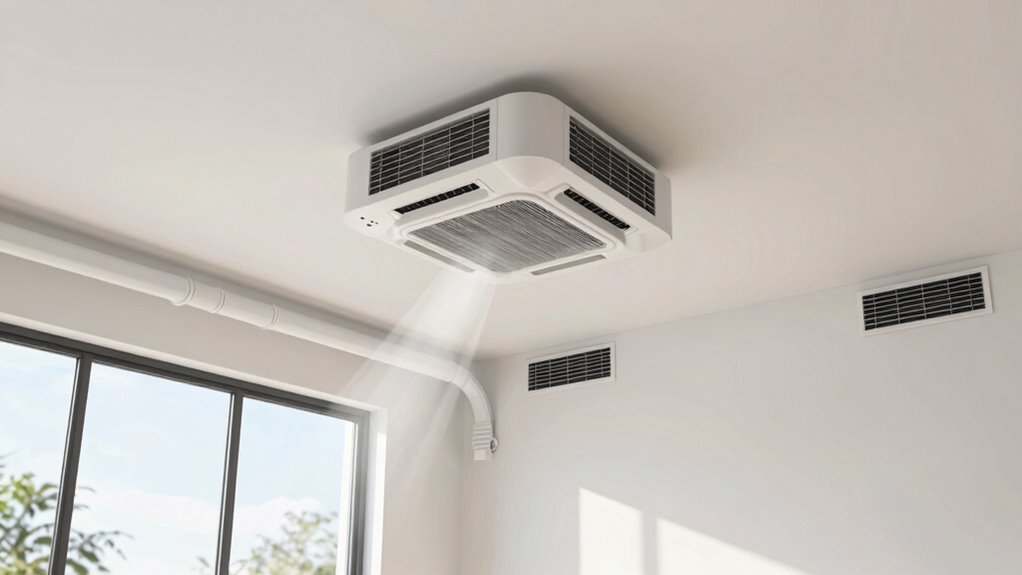
Energy Recovery Ventilator ERV for home
As an affiliate, we earn on qualifying purchases.
As an affiliate, we earn on qualifying purchases.
Frequently Asked Questions
How Do ERVS and HRVS Affect Indoor Humidity Levels?
ERVs and HRVs help manage indoor humidity levels by exchanging stale indoor air with fresh outdoor air. They promote indoor humidity control, preventing excess moisture or dryness. The system’s effectiveness depends on proper sizing and installation, ensuring ideal moisture exchange. By balancing humidity, these systems improve comfort and air quality, reducing mold risk and maintaining a healthier environment in airtight homes.
Can ERVS and HRVS Reduce Outdoor Pollutant Infiltration?
Yes, ERVs and HRVs can reduce outdoor pollutant infiltration by providing outdoor air filtering and acting as pollutant barriers. These systems exchange stale indoor air with fresh outdoor air while filtering out dust, pollen, and other pollutants. By doing so, they help maintain healthier indoor air quality, preventing harmful outdoor contaminants from entering your home, especially in areas with high pollution levels.
What Maintenance Is Required for ERV and HRV Systems?
You need to regularly maintain your ERV or HRV system by replacing filters as recommended—generally every 6 to 12 months—to guarantee ideal airflow and indoor air quality. Additionally, schedule system calibration annually to keep performance efficient and energy use low. Regularly inspecting and cleaning the core components also helps prevent dust buildup and maintains system effectiveness, ensuring your home stays healthy and well-ventilated.
Are ERVS and HRVS Energy-Efficient in All Climates?
ERPs and HRVs are like trusty engines, but their energy efficiency varies by climate. In moderate climates, they use less energy, helping reduce energy consumption and extend system lifespan. However, in extreme cold or heat, they may work harder, increasing energy use. So, their efficiency isn’t universal; it depends on your climate. Proper sizing and installation can optimize performance and save energy over time.
How Do ERVS and HRVS Impact Indoor Air Quality Over Time?
ERVs and HRVs improve your indoor air quality over time by continuously exchanging stale air for fresh, filtered air, which reduces pollutants and indoor toxins. Their system integration guarantees consistent air quality improvement without sacrificing energy efficiency. As you use these systems, you’ll notice better ventilation, lower humidity, and fewer allergens, creating a healthier living environment. Over time, this ongoing process maintains ideal air quality and supports your overall well-being.
Conclusion
By using ERVs and HRVs, you improve air quality, enhance comfort, and protect your health. You guarantee fresh air flows in, stale air flows out, and your home remains balanced. You prevent mold and allergens, promote energy efficiency, and create a safe, healthy environment. With these systems, you breathe easier, feel better, and live healthier. Embrace ERVs and HRVs, and turn your airtight home into a sanctuary of fresh, clean, and breathable air.
NFL season / tailgating Picks
team gear
As an affiliate, we earn on qualifying purchases.