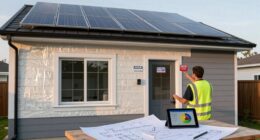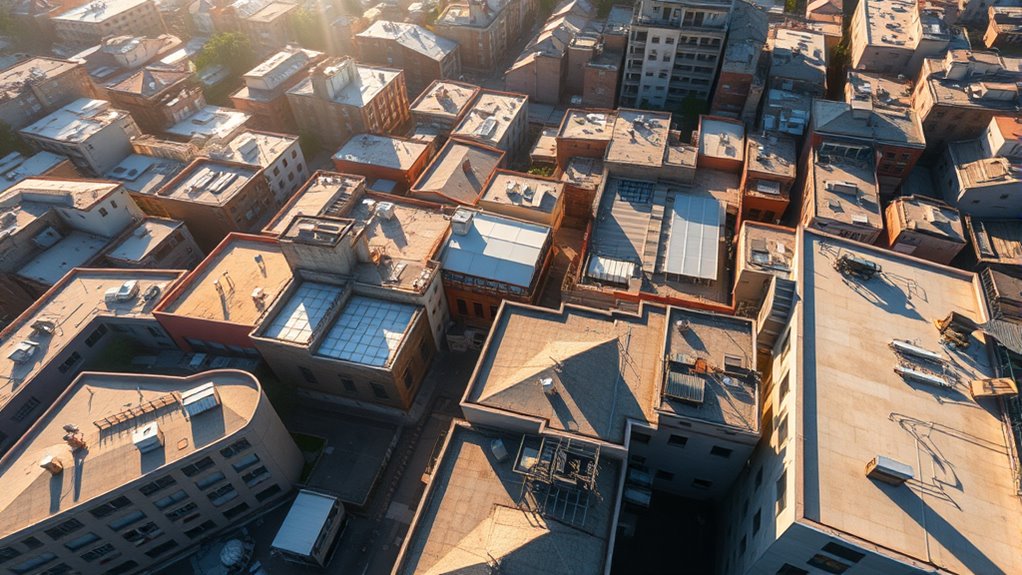

A solar shading analysis helps you understand how sunlight interacts with your rooftop throughout the year, revealing shadow patterns and best locations for solar panels or shading devices. It allows you to manage thermal gain, improve occupant comfort, and boost energy efficiency by making informed design choices. By analyzing seasonal sun paths, you can prevent excessive heat, glare, and shading issues. Continue exploring to discover how to apply these insights for better rooftop performance and sustainability.
Key Takeaways
- Analyzes seasonal and daily sun paths to optimize rooftop shading and sunlight exposure.
- Helps identify shadow patterns for effective placement of shading devices like overhangs and louvers.
- Guides positioning of solar panels to maximize solar energy capture and efficiency.
- Supports rooftop design decisions, including gardens and installations, by understanding sunlight distribution.
- Enables proactive adjustments for thermal comfort, energy efficiency, and occupant well-being.

Solar shading analysis helps you understand how sunlight interacts with a building’s design throughout the year. When it comes to rooftops, this analysis reveals critical insights into shadow patterns and how they change with the seasons. By studying these shadow patterns, you can determine where sunlight naturally falls and where it’s blocked, helping you optimize your rooftop space for energy efficiency, comfort, and sustainability. This process allows you to see exactly how different times of day and different seasons influence the amount of sunlight reaching your rooftop. With this knowledge, you can make informed decisions about installing shading devices or other measures to control sunlight exposure effectively.
Understanding seasonal shadow patterns enhances rooftop energy efficiency and comfort.
Shading devices play a pivotal role in managing solar gain and reducing cooling loads. Once you understand the shadow patterns on your rooftop, you can identify the best locations for shading devices such as overhangs, louvers, or adjustable screens. These devices are designed to block direct sunlight during the hottest parts of the day or peak seasons, preventing excessive heat gain and glare. Proper placement and sizing of shading devices, guided by a thorough shading analysis, can markedly improve comfort levels inside your building and lower energy costs. For example, a well-placed overhang can shade windows from high summer sun while still allowing low winter sunlight to enter, balancing natural light with thermal comfort.
By conducting a solar shading analysis, you also gain the ability to plan for future modifications or additions to your rooftop. If you’re considering installing solar panels, for instance, understanding shadow patterns helps you position panels where they’ll receive maximum sunlight exposure, avoiding areas shaded by nearby structures or shading devices. Additionally, this analysis can inform the design of landscaped rooftop gardens, ensuring plants receive adequate sunlight without being exposed to harsh, direct rays that could harm them. Understanding building orientation as part of the analysis can further enhance the effectiveness of your shading strategies.
Ultimately, an all-encompassing solar shading analysis empowers you to design a rooftop that’s optimized for sunlight management. It helps you choose appropriate shading devices, position solar panels for maximum efficiency, and create a comfortable environment that minimizes energy consumption. By understanding how shadow patterns shift throughout the year, you can implement strategies that mitigate unwanted heat, reduce glare, and improve overall building performance. This proactive approach not only enhances your building’s functionality but also contributes to sustainable, energy-efficient design that benefits both your occupants and the environment.
solar shading devices for rooftops
As an affiliate, we earn on qualifying purchases.
As an affiliate, we earn on qualifying purchases.
Frequently Asked Questions
How Does Climate Variation Affect Shading Design?
Climate variation critically impacts your shading design by requiring climate adaptation to optimize shading solutions. As temperatures, sunlight, and weather patterns change, you need to adjust shading features to guarantee comfort and energy efficiency. By considering local climate, you can enhance shading optimization, reducing heat gain in hot climates and maximizing sunlight in colder areas. This proactive approach helps your building stay comfortable and sustainable despite climate fluctuations.
What Software Tools Are Best for Rooftop Shading Analysis?
Did you know that over 30% of rooftop energy savings come from effective shading? To optimize shading design, you should consider software like SketchUp with Solar Analysis plugins, Autodesk Insight, or Ladybug Tools. These tools help you analyze shading device materials and their impact on solar access, enabling precise shading design optimization. By using these programs, you can guarantee your rooftop shading effectively reduces heat gain while maximizing natural light.
Can Shading Devices Be Integrated With Existing Rooftops?
Yes, you can integrate shading devices with existing rooftops, especially when considering urban integration and aesthetic considerations. You should consult with architects or engineers to design shading solutions that complement your building’s style and blend well with the urban environment. Customizable options like louvers or canopies can be added without compromising rooftop access or functionality, enhancing energy efficiency while maintaining visual harmony.
How Does Shading Impact Rooftop Solar Panel Efficiency?
Shading impacts rooftop solar panel efficiency profoundly by reducing the amount of sunlight that reaches the panels, which lowers their energy output. To optimize efficiency, you should consider strategic shading designs that minimize unnecessary shadows during peak sunlight hours. Proper shading analysis helps identify the best panel placement, ensuring maximum sunlight exposure and efficiency optimization while still providing necessary shading for comfort or equipment protection.
What Are the Maintenance Requirements for Shading Structures?
Ever wondered how to keep your shading structures in top shape? You should regularly follow cleaning schedules to prevent dust, debris, and bird droppings from blocking sunlight. Check material durability to make certain structures withstand weather conditions over time. Inspect for rust, corrosion, or wear, and perform necessary repairs promptly. Proper maintenance extends the lifespan of shading, ensuring your rooftop solar panels stay efficient and protected, saving you money in the long run.
Conclusion
By understanding solar shading, you hold the key to revealing your rooftop’s true potential. Don’t let shadows cast doubts—embrace the insights that help you maximize sunlight and energy efficiency. Think of shading analysis as your secret weapon, turning obstacles into opportunities. With this knowledge, you can design smarter, greener spaces that shine brighter than ever, proving that when you master the sun’s dance, you’re unstoppable in harnessing its power.