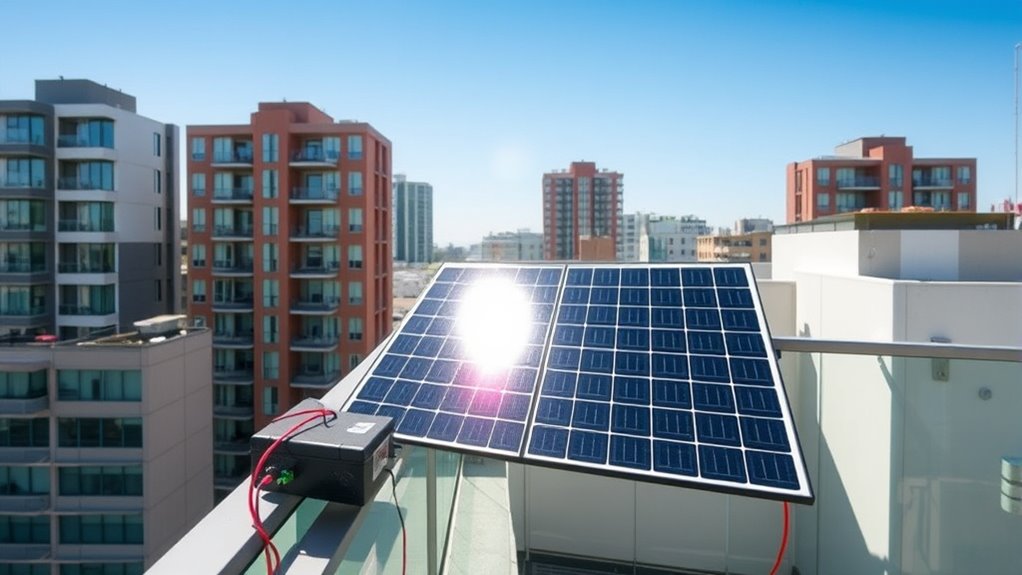

As a renter, you can tap into solar power through leasing options and portable solar systems that bypass common property restrictions. Leasing lets you access renewable energy without ownership worries or needing landlord approval, while portable solar offers mobility and ease of use without permanent modifications. These solutions help you save on energy bills and reduce your environmental impact effortlessly. Keep exploring, and you’ll find simple ways to harness solar energy tailored just for renters.
Listen free for 30 days with Audible
Thousands of audiobooks and originals — cancel anytime.
As an affiliate, we earn on qualifying purchases.
Key Takeaways
- Solar leasing allows renters to access renewable energy without ownership or property modifications.
- Portable solar systems offer mobility and independence, ideal for outdoor activities or multiple locations.
- These options bypass landlord restrictions, making solar adoption easier for renters.
- Both solutions help reduce utility bills and environmental impact with minimal upfront costs.
- Resources like step-by-step guides can simplify the process of choosing and implementing solar for renters.
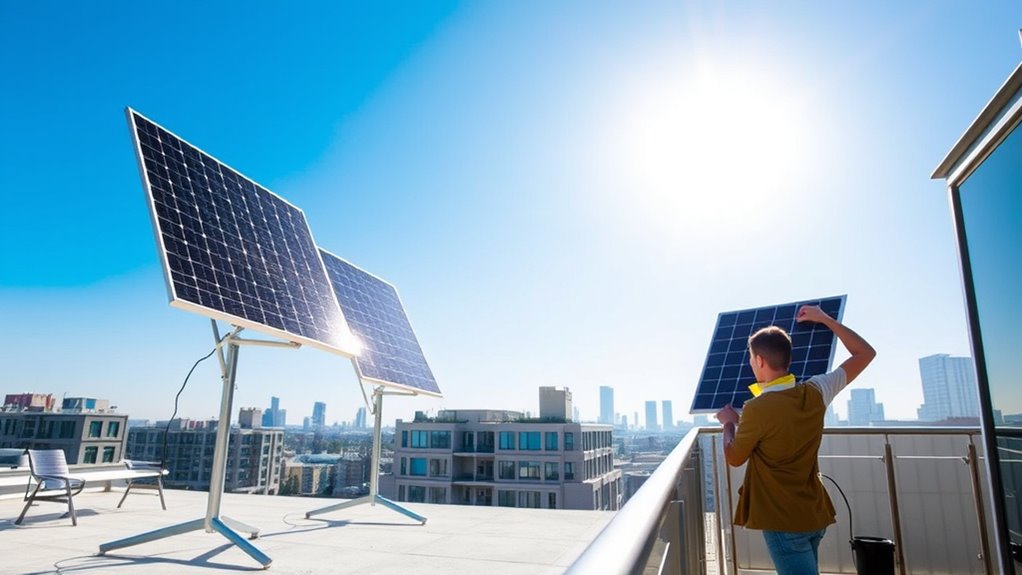
Both solar leasing and portable solar systems are great options for renters who want to make an impact without making permanent changes to their living space. Solar leasing lets you tap into solar energy without ownership responsibilities, while portable solar offers mobility and independence. These options also help you sidestep the common barriers renters face, such as restrictions from landlords or the inability to modify the property. By choosing solar leasing or portable solar, you’re taking control of your energy use, saving money on utility bills, and contributing to a greener environment all at once. It’s easier than ever to go solar, even if you don’t own your home, thanks to these innovative solutions. So, if you’re ready to embrace renewable energy, you don’t have to wait until you buy a house—these options are designed to fit your lifestyle and power your life sustainably.
Frameworks and step‑by‑step how‑tos can help you navigate the process of adopting solar solutions effectively.
As an affiliate, we earn on qualifying purchases.
Frequently Asked Questions
Can Renters Install Solar Panels on Their Own Without Landlord Approval?
You can’t typically install solar panels on your own without landlord approval, especially for DIY installation involving rooftop modifications. Most rental agreements prohibit altering property without permission, and rooftop changes often require landlord consent for safety and liability reasons. To go solar, talk to your landlord first, explore portable or ground-mounted options, or consider community solar programs. This way, you can enjoy solar benefits without risking your tenancy or violating lease terms.
Are There Government Incentives Specifically for Renters to Go Solar?
Yes, there are government grants and generous incentives designed specifically for renters looking to save on solar. You might qualify for tax credits and financial incentives that make solar more affordable, even if you don’t own the property. These programs aim to promote power purchase agreements and community solar initiatives, empowering renters to participate in solar savings without needing landlord approval. So, explore incentives and start shining sustainably today!
How Does Solar Leasing Affect a Renter’s Monthly Utility Costs?
Solar leasing can lower your monthly utility bill by providing access to solar panel ownership without the upfront costs. With a lease, you typically pay a fixed monthly fee, which often results in immediate utility bill savings. This arrangement allows you to enjoy the benefits of solar energy without the long-term commitment, making it a cost-effective option for renters seeking to reduce their energy expenses.
What Are the Best Portable Solar Options for Renters?
A stitch in time saves nine, so choosing portable solar options is smart. You should consider portable panels and solar backpacks, which are ideal for renters on the go. Portable panels easily set up on balconies or windows, while solar backpacks power devices during outdoor adventures. Both options are lightweight, convenient, and help you harness solar energy without permanent installations, making them perfect for renters wanting sustainable energy solutions.
Can Renters Sell Excess Solar Energy Back to the Grid?
Yes, you can sell excess solar energy back to the grid through net metering programs. When your portable solar system generates more energy than you use, your utility company often provides energy credits, which offset future electricity bills. Check if your utility supports net metering, as policies vary. This way, you can benefit financially from your solar setup without needing permanent installation, making it ideal for renters.
Conclusion
Embracing solar as a renter is like planting a seed in a shared garden—you can still nurture change and bask in its warmth. While the sun’s rays may not belong solely to you, you hold the power to harness its energy and light up your space with hope. Every small step you take becomes a ripple, blending your efforts into a brighter, sustainable future. Keep shining bright, knowing you’re part of a larger, unstoppable sunrise.
Flea & tick season Picks
flea and tick prevention
As an affiliate, we earn on qualifying purchases.