Building codes and energy standards are the guidelines that guarantee your building is safe, efficient, and environmentally friendly. They specify minimum insulation levels to reduce heat transfer, promote good ventilation for healthy indoor air, and set requirements for air quality and moisture control. These standards are based on research and industry best practices, shaping how structures are designed and built. If you want to understand how these rules improve your space and save energy, keep exploring.
Key Takeaways
- Building codes and energy standards ensure structures are safe, energy-efficient, and sustainable by setting minimum requirements for insulation and ventilation.
- Insulation standards specify minimum R-values to control heat transfer, enhancing comfort and reducing energy consumption.
- Ventilation requirements promote healthy indoor air quality through proper airflow rates and exhaust systems.
- These standards are based on research and industry best practices, guiding builders to create efficient, durable buildings.
- Compliance with codes and standards improves indoor safety, air quality, thermal comfort, and overall building longevity.
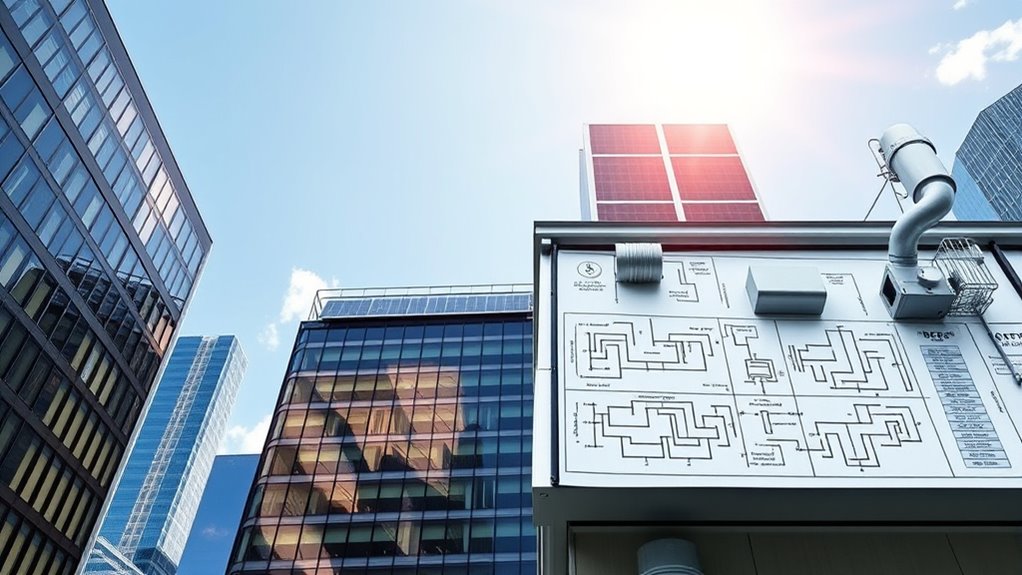
Have you ever wondered how building codes and energy standards shape the structures around you? These regulations are the blueprint for safe, efficient, and sustainable buildings, ensuring that every space you inhabit meets specific safety and energy performance criteria. When it comes to insulation requirements, building codes specify the minimum R-values for walls, ceilings, and floors, which determine how well a building resists heat transfer. These standards help keep temperatures consistent inside, reducing the need for excessive heating or cooling, saving energy, and lowering utility bills. You might not see these insulation layers directly, but they’re essential in maintaining comfort and energy efficiency. By setting clear insulation requirements, codes prevent under-insulated structures that waste energy or over-insulated buildings that trap moisture and cause damage over time. Proper insulation also supports compliance with energy standards, which are designed to promote sustainable building practices.
Ventilation standards are equally critical, ensuring that indoor air quality remains healthy and comfortable. Building codes mandate proper ventilation systems that supply fresh air and remove stale air, controlling humidity, odors, and airborne pollutants. These standards specify the types of ventilation, airflow rates, and exhaust systems needed in different spaces, from residential homes to commercial buildings. Good ventilation prevents problems like mold growth, which can cause health issues, and ensures that indoor environments remain safe and breathable. The standards also address energy efficiency, encouraging the use of mechanical systems that minimize energy consumption while maintaining adequate airflow. For example, you might notice exhaust fans in bathrooms or kitchen vents that meet specific airflow requirements, helping to keep indoor air clean without wasting energy. Additionally, adherence to these standards often involves integrating building codes and energy standards into the overall design and construction process.
These standards are not arbitrary; they’re based on extensive research and industry best practices designed to protect your health, safety, and comfort. Building codes incorporate insulation requirements and ventilation standards into a thorough framework that builders and contractors must follow. This ensures that every structure is up to code, operating efficiently over its lifespan. As a result, you benefit from buildings that are safer, more energy-efficient, and environmentally friendly. Whether you’re in a new home, an office, or a public space, these regulations influence how those buildings perform and how comfortable you feel inside them. So, next time you step into a well-insulated or properly ventilated room, remember that behind the scenes, building codes and standards are working tirelessly to make that environment possible.

SmartSHIELD -5mm 16" x50ft R15 Reflective Foam Core Insulation roll, Cold and Heat Shield, Radiant Barrier, Thermal Insulation – White / Foil
EXTREMELY EFFECTIVE – reflects 95% of radiant energy, R15 insulation
As an affiliate, we earn on qualifying purchases.
As an affiliate, we earn on qualifying purchases.
Frequently Asked Questions
How Often Are Building Codes and Energy Standards Updated?
Building codes and energy standards typically get updated every three to five years through code updates and standard revisions. You should stay informed about these changes, as local authorities and agencies often adopt new versions to improve safety, energy efficiency, and sustainability. Regular updates make sure you’re following the latest requirements, so check with your local building department or relevant agencies periodically to keep your projects compliant and up-to-date with the newest standards.
Do All States Follow the Same Building Codes and Standards?
While it might seem like a straightforward question, the truth is, not all states follow the same building codes and standards. You’ll find regional standards and state variations that reflect local climate, resources, and priorities. Some states adopt nationwide models, but many customize them to suit unique needs. So, if you’re planning a project, it’s essential to verify your specific state’s codes to guarantee compliance and safety.
What Are the Penalties for Non-Compliance With Energy Standards?
If you don’t comply with energy standards, you could face penalty fines and legal sanctions. Authorities may impose monetary penalties, halt your project, or require costly corrective actions. Non-compliance can also lead to delays in permits or even legal action, which might damage your reputation and incur additional expenses. Staying within the standards helps avoid these penalties, ensuring your project proceeds smoothly and legally.
How Can Builders Ensure Their Projects Meet Current Codes?
To guarantee your projects meet current codes, you should schedule regular building inspections throughout construction and stay updated on code changes. Invest in contractor training to guarantee your team understands all requirements. Collaborate with certified inspectors and utilize checklists to catch issues early. Keeping documentation of inspections and training helps demonstrate compliance, reducing the risk of penalties and ensuring your project adheres to all necessary building and energy standards.
Are There Exemptions for Historic or Special-Use Buildings?
Yes, you can often qualify for historic exemptions and special use accommodations for historic or unique buildings. These exemptions recognize the cultural significance or unique functionality of such structures, allowing you to modify or bypass certain standard code requirements. To get approval, you typically need to submit detailed documentation and work with local authorities, ensuring that safety and preservation goals are balanced while respecting the building’s historic or special-use status.

Broan-Nutone® Bathroom Exhaust Fan, 50 CFM Modern Grille, Energy Star Fan, 2.0 Sones
50 CFM BATHROOM EXHAUST FAN: 50 CFM is sufficient ventilation to remove, moisture, odor and pollutants from your…
As an affiliate, we earn on qualifying purchases.
As an affiliate, we earn on qualifying purchases.
Conclusion
Think of building codes and energy standards as the blueprint to your home’s fortress—guarding it against the storms of inefficiency and waste. By following these guidelines, you become the architect of a resilient, sustainable haven. Just as a ship’s sturdy hull ensures safe passage, adherence to standards keeps your home secure and eco-friendly. Embrace these rules as your compass, guiding you toward a future where comfort and conservation sail hand in hand.

Attic Stairway Insulation Cover – Premium Energy Saving Attic Stairs Door Ladder Insulator Pull Down Tent with Zipper 25 in x 54 in x 11In (Attic Cover)
【Attic Insulation Cover】Attic Door Insulation Cover works during the entire year, hot summers and cold winters; Creates a…
As an affiliate, we earn on qualifying purchases.
As an affiliate, we earn on qualifying purchases.

Aprilaire V22BEC Energy Recovery Ventilator (ERV), 120 CFM Air Exchanger for Homes up to 6,000 Sq. Ft. – Whole-House Fresh Air Ventilation System (HRV/ERV) with Wall, Ceiling, or Floor Mount Bracket
HEALTHY INDOOR AIR – Replaces stale indoor air with fresh outdoor air to improve Indoor Air Quality throughout…
As an affiliate, we earn on qualifying purchases.
As an affiliate, we earn on qualifying purchases.