
Producer responsibility for e-waste means that manufacturers are accountable for the entire lifecycle of their electronic products, from design to disposal. They are encouraged to create easier-to-recycle, durable, and environmentally friendly devices. This approach motivates companies to establish proper collection and recycling systems, reducing environmental harm and supporting a circular economy. By understanding these practices, you’ll gain insights into how e-waste management benefits the environment and influences corporate responsibility—keep exploring to learn more.
Key Takeaways
- Producers are responsible for managing electronic waste throughout the product lifecycle under EPR policies.
- EPR encourages manufacturers to design products that are easier to recycle and environmentally friendly.
- Companies implement take-back programs and recycling schemes to ensure proper e-waste disposal.
- Producer responsibility helps meet regulatory compliance and demonstrates corporate sustainability commitments.
- It promotes a circular economy by recovering valuable materials and reducing environmental impact.
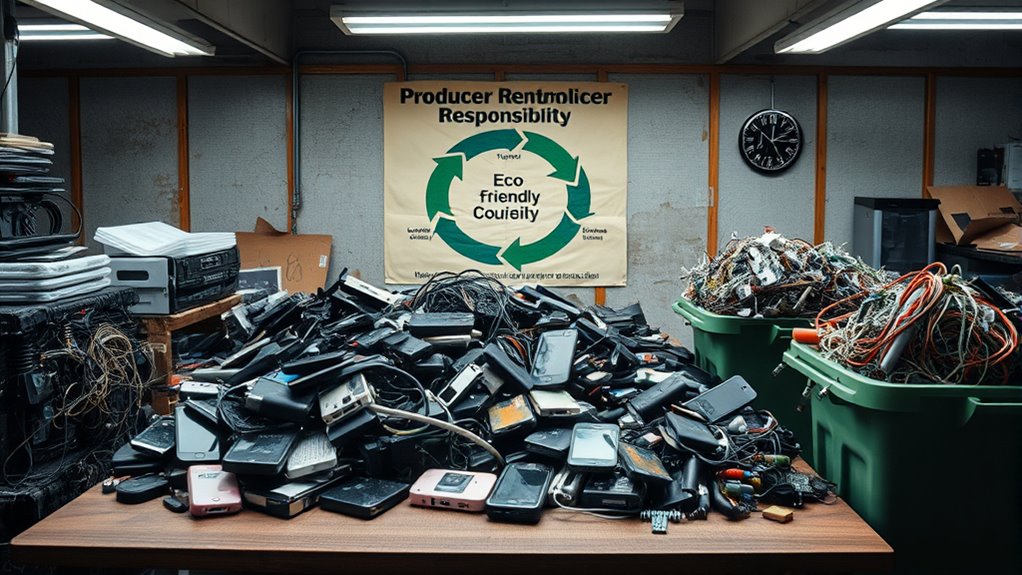
As electronic waste continues to grow globally, producers play a crucial role in managing its impact. You, as a producer, are increasingly expected to take responsibility for the entire lifecycle of your products, from design to disposal. This approach, known as extended producer responsibility (EPR), shifts the burden of waste management from local governments to manufacturers like you. EPR encourages you to design products that are easier to recycle, last longer, and generate less hazardous waste. By embracing EPR, you can reduce environmental harm and demonstrate corporate responsibility, which can build trust with consumers who are increasingly conscious of sustainability issues.
Producers must take responsibility for e-waste through design, recycling, and sustainability to reduce environmental impact and build consumer trust.
One of the key tools in this framework is providing recycling incentives. These incentives motivate consumers to return used electronics rather than dispose of them improperly. You might offer discounts, deposit-refund schemes, or reward programs that make recycling more attractive. When consumers see tangible benefits, they are more likely to participate actively in recycling initiatives, reducing the volume of e-waste ending up in landfills or informal disposal sites. Recycling incentives also encourage you to create efficient take-back systems, making it easier for consumers to return their devices. This, in turn, helps you recover valuable materials, reduce manufacturing costs, and lessen the demand for virgin resources, creating a circular economy around your products.
Implementing extended producer responsibility involves establishing collection points, collaborating with certified recyclers, and ensuring the proper treatment of e-waste. It’s not just about compliance but about proactively reducing environmental impact. You might invest in developing eco-friendly product designs or support community recycling programs. Offering recycling incentives can be integrated into your marketing strategy, showcasing your commitment to sustainability and appealing to eco-conscious buyers. By doing so, you foster brand loyalty and differentiate yourself from competitors who neglect their environmental responsibilities.
Furthermore, adhering to EPR and providing recycling incentives can help you navigate regulatory landscapes that are becoming increasingly stringent worldwide. Governments are imposing stricter rules on e-waste management, and your proactive engagement can shield your business from penalties and reputational damage. Embracing these responsibilities isn’t just a legal obligation but an opportunity to lead in corporate responsibility. It provides a platform for innovation, sustainability, and consumer engagement—elements that are essential in today’s environmentally aware marketplace. Ultimately, by integrating extended producer responsibility and offering compelling recycling incentives, you play a pivotal role in reducing e-waste and promoting a healthier planet for future generations. Additionally, understanding the role of contrast ratio in image quality can guide you in designing more efficient and sustainable electronic products.
Frequently Asked Questions
How Do Producers Track E-Waste Collection and Recycling Rates?
You can track E waste collection and recycling rates by implementing E waste tracking systems that monitor the amount of electronic waste collected and processed. Use recycling rate metrics to measure efficiency and compliance. Regularly collect data from collection points and recycling facilities, then analyze this information to guarantee accurate reporting. Digital tools and reporting platforms help streamline this process, giving you a clear picture of your environmental impact and adherence to producer responsibility obligations.
What Penalties Exist for Non-Compliance With Producer Responsibility Laws?
If you don’t adhere to producer responsibility laws, you’ll face penalties under product liability and legal enforcement measures. Authorities can impose fines, sanctions, or even revoke your license to operate. These penalties aim to ensure you meet your recycling and disposal obligations, holding you accountable for environmental harm. Staying compliant minimizes legal risks and helps you avoid costly fines, demonstrating responsible corporate behavior and protecting your reputation.
Are Consumers Financially Responsible for E-Waste Disposal Costs?
Imagine a small, shared jar where everyone contributes a little—this is how consumer costs work for e-waste disposal. You’re typically responsible for recycling fees, which are included in the purchase price or paid separately. While manufacturers handle most disposal costs, some expenses may trickle down to you through these fees. So, fundamentally, you do share in the costs, but the system aims to make recycling easier and more affordable.
How Can Small Manufacturers Meet E-Waste Management Requirements?
You can meet e-waste management requirements by adopting sustainable packaging and green manufacturing practices. Focus on designing products that are easier to recycle, use eco-friendly materials, and minimize hazardous substances. Collaborate with certified e-waste recyclers, stay updated on regulations, and implement take-back programs. These efforts demonstrate your commitment to environmentally responsible practices, helping you comply with laws and appeal to eco-conscious consumers.
What Technical Standards Must Producers Adhere to for E-Waste Recycling?
You must guarantee your e-waste recycling processes meet technical standards like obtaining recycling certification and adhering to hazardous material standards. This means following regulations that verify your recycling methods are environmentally safe and compliant, reducing hazardous waste risks. You’ll need to implement proper handling, dismantling, and disposal procedures, and maintain documentation proving your compliance. Staying updated on evolving standards helps you avoid penalties and promotes responsible e-waste management.
Conclusion
By taking responsibility for e-waste, you play a crucial role in protecting the environment, much like a gardener tending to delicate plants. When you guarantee proper disposal and recycling, you help reduce pollution and conserve resources for future generations. Remember, your actions can spark positive change, turning waste into opportunity. So, embrace your role as a responsible producer—because every small step you take is like a drop in the ocean, making a big difference.