
A major court ruling now makes it clear that states must act immediately to cut emissions, marking a significant shift in environmental law and climate policy. You’ll see more emphasis on holding states accountable and enforcing stronger regulations. This means your state may face new legal scrutiny or be compelled to implement stricter standards. If you want to understand how this decision could influence future climate efforts, there’s much more to explore.

Get garden gear delivered free — and shop member deals
- Fast, free delivery on millions of items
- Access to Prime Big Deal Days deals on October 6–7
- Prime Video, Amazon Music and more included
Key Takeaways
- The ruling mandates states to strengthen their efforts on emission reductions under existing environmental laws.
- States may face increased legal scrutiny and potential lawsuits if they do not implement stricter emission policies.
- The decision signals a shift towards legally enforced climate action, emphasizing accountability and proactive measures.
- Governments might need to overhaul current policies, adopt stricter standards, and accelerate renewable energy adoption.
- This ruling enhances the role of legal enforcement in climate strategies, encouraging communities and groups to advocate for compliance.
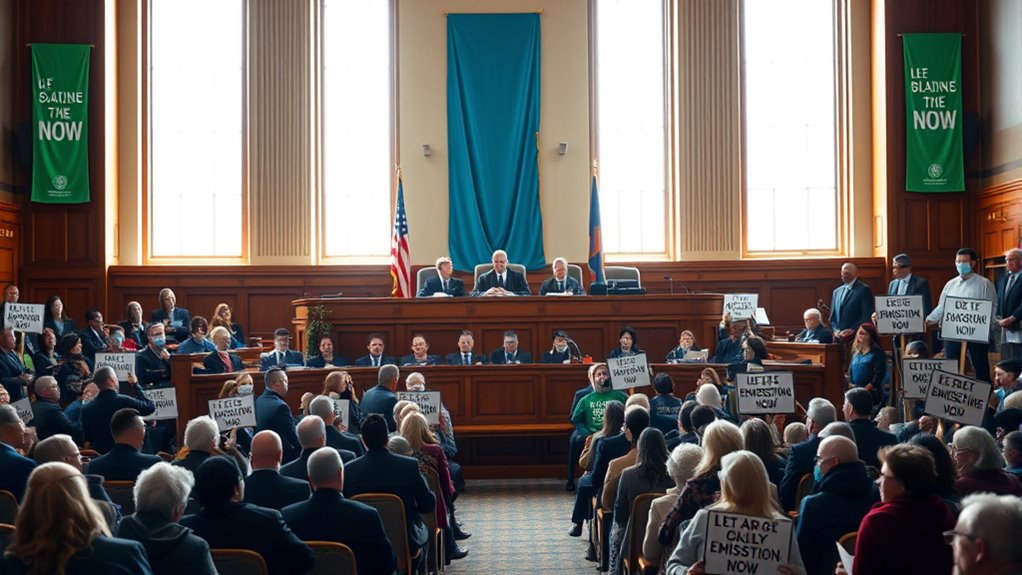
Did you hear about the recent climate court ruling that could reshape environmental laws? It’s a landmark decision that puts pressure on states to take immediate action on emissions. The ruling emphasizes that states have a legal obligation to implement stronger carbon regulations to curb greenhouse gases, directly impacting how they manage environmental policies moving forward. This decision signals a shift in the legal landscape, highlighting the importance of holding states accountable for climate commitments and ensuring they meet their responsibilities under existing laws.
A landmark climate ruling demands states take stronger action on emissions, reshaping environmental laws and accountability.
The court’s ruling underscores the legal implications of inaction, making it clear that states can no longer sidestep their duty to regulate carbon emissions effectively. It establishes that existing laws, such as the Clean Air Act, can be interpreted as requiring more aggressive measures to reduce emissions. This means states may now face increased scrutiny and potential legal challenges if they fail to implement stricter carbon regulations. As a result, governments will need to revisit and potentially overhaul their current policies, investing in cleaner energy sources and setting more ambitious emission reduction targets.
For you, this ruling could lead to a significant shift in local and national climate strategies. States might need to enforce stricter emission standards on industries, accelerate renewable energy adoption, and develop innovative policies to meet new legal expectations. The ruling also opens the door for environmental groups and citizens to hold states legally accountable if they don’t comply. It’s a call for urgency, signaling that climate change mitigation is no longer just a political or economic issue but also a legal priority.
This decision also raises questions about the future of carbon regulations and how they’ll be enforced. States may face increased legal implications if they delay or weaken their efforts to reduce emissions. The ruling could spark a wave of lawsuits aimed at ensuring compliance, which might lead to more stringent federal oversight. For you, this signifies a potential increase in legal actions against states that fall short, incentivizing proactive measures to reduce carbon footprints. It’s a reminder that the law is becoming a more powerful tool in the fight against climate change, and your community could see changes in policy that directly affect your environment and health.
In essence, this court ruling marks a pivotal moment in environmental law. It signals that states are now under legal pressure to act swiftly and decisively on reducing emissions. The legal implications are far-reaching, and they could reshape how governments approach climate policies in the years to come. For individuals and communities alike, it’s a call to stay informed, advocate for stronger measures, and recognize that the legal landscape is evolving to prioritize climate action more than ever before. This shift in legal interpretation may lead to more aggressive enforcement of existing environmental laws, further emphasizing the importance of compliance and proactive climate policies.
As an affiliate, we earn on qualifying purchases.
Frequently Asked Questions
How Will This Ruling Affect Energy Prices Nationwide?
You might see energy prices fluctuate as states work to reduce emissions, impacting energy affordability. This ruling aims to promote cleaner energy sources, which could initially increase costs but eventually lead to more stable markets. By prioritizing sustainable practices, you’ll benefit from long-term market stability and potentially lower energy bills. While short-term prices may rise, the overall effect should support a more resilient, affordable energy system for consumers like you.
What Legal Precedents Does This Case Set for Future Climate Litigation?
Think of this case as a beacon guiding future climate fights. It sets a powerful precedent, showing that federal enforcement can compel states to act on emissions. This ruling symbolizes a shift towards accountability and urgency. It paves the way for stronger legal battles, inspiring hope that justice will drive meaningful climate action. Your voice matters in holding authorities accountable, shaping a sustainable future rooted in legal and moral responsibility.
Which States Are Most Impacted by This Court Decision?
You’ll find that states with stricter climate policies, like California and New York, are most impacted by this decision, as it pushes them to accelerate emissions reductions. Regional impacts vary, with coal-dependent states facing significant challenges in shifting to cleaner energy. This ruling compels states to revise their policies, prioritize renewable energy, and address climate risks more aggressively, shaping future regional efforts to combat climate change effectively.
How Can Individuals or Businesses Comply With New Emission Standards?
You’d better act fast because these new emission standards are a game-changer! To comply, you can leverage renewable incentives to upgrade your energy sources and invest in cleaner technology. Keep emissions tracking diligent—use smart tools to monitor progress and stay ahead. Implementing these measures now not only helps meet the standards but also positions you as a leader in sustainability, making your business future-proof and environmentally responsible.
What Are the Potential Penalties for Non-Compliance by States?
You should be aware that if states don’t meet emission standards, they risk facing fines and sanctions. These legal consequences can include hefty monetary penalties and increased oversight. Non-compliance could also lead to court orders to enforce stricter regulations. Staying proactive and ensuring your state’s policies align with climate goals helps avoid these penalties, safeguarding both your community and the environment.
Conclusion
Now’s your moment to act before the planet turns into an unrecognizable wasteland, a scorched desert of despair. This court ruling demands you to step up, to fight like your future depends on it—because it does. If you ignore this call to action, you risk watching entire cities drown in floods or burn under relentless heat. The time to act is now; otherwise, you’ll be living in a world unrecognizable, a nightmare you helped create.
Fall yard work Picks
leaf blowers
As an affiliate, we earn on qualifying purchases.