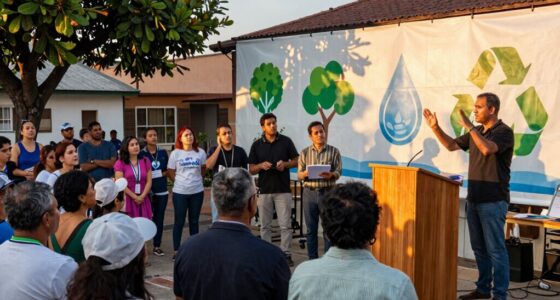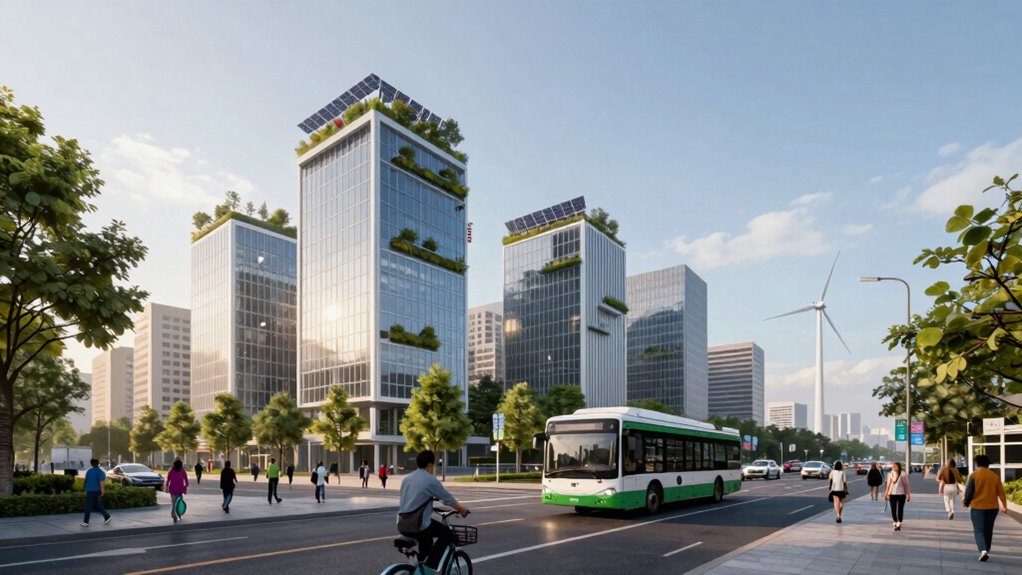

Cities turn climate goals into real programs by adopting innovative technologies, policy alignment, and engaging communities. They integrate renewable energy, green building practices, and smart tech to reduce emissions and improve resilience. Collaboration across government levels guarantees policies support sustainability, while active community involvement fosters shared responsibility. These combined efforts create practical, scalable solutions. If you want to discover how these strategies work together, there’s more to explore that can inspire your own city’s efforts.

Get garden gear delivered free — and shop member deals
- Fast, free delivery on millions of items
- Access to Prime Big Deal Days deals on October 6–7
- Prime Video, Amazon Music and more included
Key Takeaways
- Cities adopt innovative technologies like renewable energy and green building practices to align with climate goals.
- Data and smart technologies enable real-time monitoring, optimizing urban energy use and pollution management.
- Engaging communities fosters shared responsibility and supports the sustainability culture necessary for program success.
- Seamless policy integration across government levels incentivizes sustainable practices and supports urban climate initiatives.
- Combining innovation, policy, and community efforts creates scalable, resilient programs for long-term climate progress.
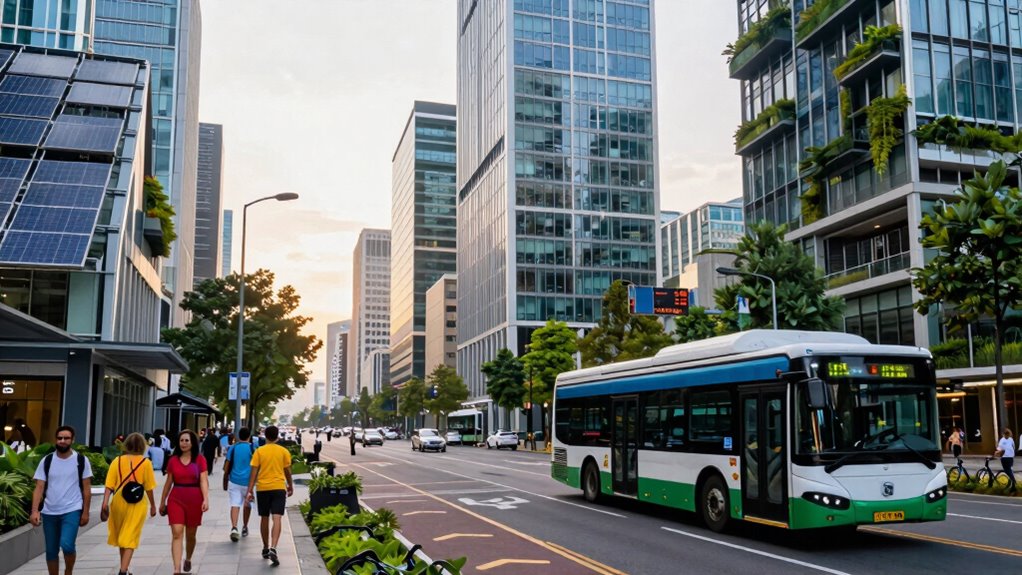
Cities play a crucial role in achieving global climate goals because they are responsible for a significant portion of greenhouse gas emissions. That’s where urban innovation comes into play. You have the power to transform cityscapes into hubs of sustainable progress by adopting new technologies and creative strategies that cut emissions and promote resilience. For example, integrating renewable energy sources into public infrastructure, encouraging green building practices, and promoting sustainable transportation options are just a few ways to turn ambitious climate targets into tangible results. Your city can become a model of urban innovation by leveraging data and smart technologies to optimize energy use, monitor pollution, and enhance urban planning. These innovations aren’t just about new gadgets; they’re about reshaping how cities operate daily, making them more efficient and environmentally friendly. Implementing urban data integration can further enhance these efforts by providing real-time insights that inform better decision-making. Additionally, fostering a culture of sustainability within the community can significantly amplify the impact of these technological solutions. Recognizing the importance of climate resilience can help cities prepare for and adapt to the changing environment, ensuring long-term sustainability. Engaging residents and stakeholders in co-creating solutions can also foster a shared sense of responsibility and commitment.
Cities drive climate progress through innovation, sustainable practices, and smart technologies for a greener, more resilient future
But turning climate goals into real programs isn’t just about innovation—it heavily relies on policy integration. When policies work together seamlessly, they create a cohesive framework that accelerates progress. This means aligning local, regional, and national policies so they reinforce each other, rather than working at cross-purposes. You can advocate for and develop integrated policies that promote sustainable urban development, incentivize clean energy adoption, and prioritize climate adaptation measures. For instance, zoning laws can be adjusted to favor green spaces and energy-efficient buildings, while transportation policies can support the expansion of bike lanes and public transit. When policies are interconnected, they reinforce each other’s impact, making it easier to implement ambitious climate programs.
Effective policy integration also involves engaging a wide array of stakeholders—residents, businesses, community groups, and government agencies. Your role might involve facilitating collaborations and ensuring that everyone’s interests and expertise come together to support climate initiatives. This collaborative approach helps create programs that are not only ambitious but also practical and sustainable in the long term. It ensures that climate goals don’t remain abstract targets but become embedded in the fabric of everyday urban life. Building public support for these initiatives is essential to maintain momentum and ensure lasting change. Moreover, fostering transparency and accountability in policy implementation can build trust and encourage ongoing community participation. Incorporating climate-focused policies can also help guide urban development in a way that aligns with environmental and social goals, creating a more holistic approach to sustainability.
Ultimately, turning climate goals into real programs requires a combination of urban innovation and policy integration. You have the opportunity to catalyze change by pushing for smarter, greener solutions and crafting policies that work hand-in-hand. When innovation and policy work together, your city can make meaningful progress toward a sustainable, resilient future—one that’s achievable and impactful for generations to come.
As an affiliate, we earn on qualifying purchases.
Frequently Asked Questions
How Do Cities Measure Progress Toward Climate Goals?
You measure progress toward climate goals through urban monitoring and data transparency. Regularly collecting data on emissions, energy use, and transportation helps you track changes over time. Sharing this data openly allows for accountability and informed decision-making. By setting clear benchmarks and reviewing reports, you can see how well your city is advancing toward its climate targets, making adjustments as needed to stay on course.
What Financing Options Support Urban Climate Initiatives?
You can support urban climate initiatives through financing options like green bonds and public-private partnerships. Green bonds provide capital specifically for sustainable projects, helping cities fund renewable energy, energy efficiency, and climate resilience efforts. Public-private partnerships enable collaboration between governments and private firms, sharing resources and risks. These funding sources empower you to implement impactful climate programs, accelerate progress, and guarantee long-term sustainability in your city’s climate goals.
How Do City Policies Ensure Community Involvement?
You can see that cities prioritize community involvement through policies that promote transparency and active engagement. Studies show that projects with strong community participation are 40% more successful. You’re encouraged to participate in public forums, surveys, and stakeholder meetings, which guarantee transparency and give residents a voice. These policies foster trust, making it easier to implement climate initiatives that truly reflect community needs and gain widespread support.
What Challenges Do Cities Face in Implementing Climate Programs?
You face several challenges in implementing climate programs, such as building urban resilience and ensuring effective climate adaptation. Limited funding and political support can hinder progress, while coordinating multiple stakeholders often complicates efforts. You also need to address disparities within communities, making sure vulnerable populations benefit. Overcoming these obstacles requires strategic planning, community engagement, and persistent advocacy to turn climate goals into tangible, lasting change.
How Are Private Sectors Encouraged to Participate?
You’re invited to be part of the change through public-private partnerships and incentive programs designed to motivate private sector involvement. Cities encourage participation by offering tax breaks, grants, and recognition, turning sustainability into a smart business move. These strategies create a win-win scenario, compelling businesses to innovate and invest in green solutions. As the stakes rise, your role becomes essential in transforming climate goals into tangible actions that benefit everyone.
Conclusion
You have the power to influence change—cities worldwide are turning their climate goals into tangible programs. Did you know that urban areas account for over 70% of global carbon emissions? By supporting local initiatives and advocating for sustainable policies, you can help transform ambitious climate targets into real progress. Every action counts, and together, we can make cities healthier, greener, and more resilient for future generations.
Fall Picks
fall essentials
As an affiliate, we earn on qualifying purchases.