
Your choice of greenhouse heating impacts both temperature and moisture levels. For example, fossil fuel heaters tend to dry out the air, leading to low humidity, while electric or solar systems with humidification help maintain stable moisture. Radiant heating promotes even warmth and humidity, whereas forced-air systems can cause uneven moisture zones. Understanding how different systems influence not only temperature but also humidity helps create a healthier environment for your plants—if you explore further, you’ll discover more ways to optimize this balance.

Get garden gear delivered free with Prime
- Fast, free delivery on millions of items
- Prime Video, Amazon Music and more included
- Member-only deals all year
Key Takeaways
- Heating systems influence humidity levels by either drying or maintaining moisture, affecting overall greenhouse climate.
- Radiant and electric systems promote uniform humidity, while forced-air can create uneven moisture distribution.
- Incorporating humidifiers or dehumidifiers with heating controls ensures balanced moisture, not just temperature regulation.
- Solar-powered heating with moisture management devices supports sustainable, stable environmental conditions.
- Proper integration of heating and moisture control reduces disease risks and promotes healthier plant growth.
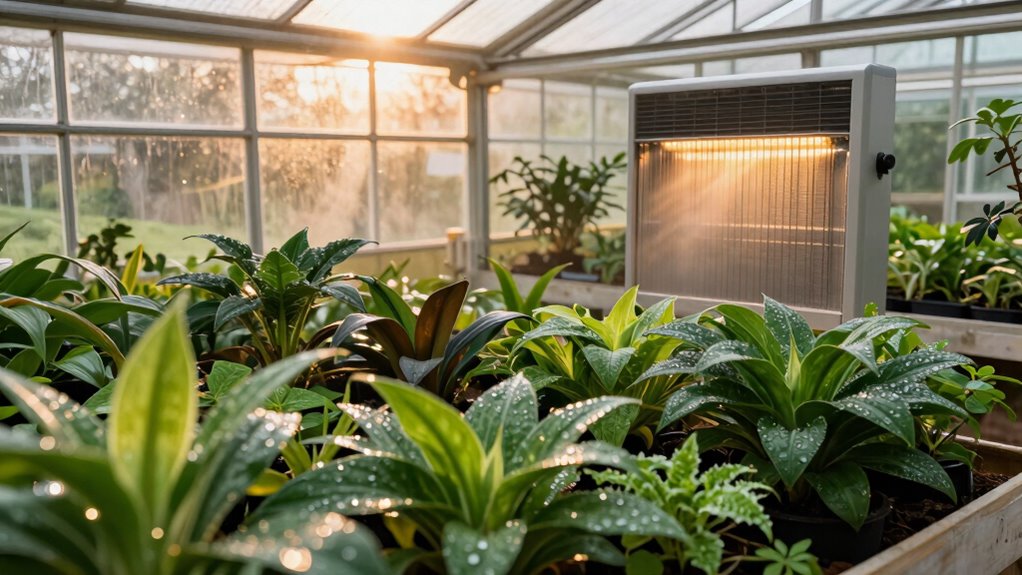
When it comes to maintaining ideal temperatures in your greenhouse, choosing the right heating system is essential. But temperature isn’t the only factor you need to consider. Moisture levels are equally important for healthy plant growth, and your heating choices directly influence humidity and air quality. Different systems impact moisture in various ways, so understanding this relationship helps you create a balanced environment.
Selecting the right heating system balances temperature, humidity, and air quality for healthy greenhouse growth.
For instance, traditional fossil fuel heaters tend to dry out the air, which can lead to low humidity and stress your plants. If you’re using such a system, you might need to add humidifiers or regularly mist your plants to compensate. On the other hand, electric systems, especially those integrated with humidification controls, can maintain a more stable moisture level. They allow you to fine-tune humidity alongside temperature, reducing the risk of mold or dehydration.
Solar-powered heating options are increasingly popular because they align with sustainable goals and can offer significant energy cost savings. When you incorporate solar panels into your greenhouse, you maximize solar panel efficiency, which means you get more energy output for less input. This efficiency translates into lower electricity bills and a more environmentally friendly operation. Because solar heating systems can be designed to work with humidity control devices, they provide a dual benefit: maintaining optimal warmth while managing moisture levels effectively. This balance is crucial, especially in colder months when heating is necessary but overly drying the air can hinder plant health.
The type of heating system you choose also influences how moisture distributes throughout your greenhouse. Radiant heating systems, whether floor-based or panel-mounted, tend to warm the space evenly and minimize air circulation issues. This results in more consistent humidity levels, reducing cold spots and dry areas. Conversely, forced-air systems can create uneven temperature and moisture zones, which might lead to problems like condensation or dry patches. Incorporating moisture sensors into your setup can help you monitor and adjust humidity levels more precisely, ensuring optimal conditions for your plants. Additionally, selecting a climate control system that integrates both temperature and humidity management can streamline your greenhouse operations, leading to healthier plants and less manual intervention.
Your goal should be to select a heating system that complements your moisture management strategies. Efficient solar panels, for example, not only cut energy costs but also support the consistent operation of integrated humidification or dehumidification equipment. This synergy enhances your ability to keep humidity within ideal ranges, fostering healthier plants and reducing disease risks. Additionally, understanding moisture control techniques can help you optimize your greenhouse environment more effectively. For instance, proper ventilation plays a key role in maintaining a balanced environment, preventing problems caused by excess humidity or stagnant air. Ultimately, your choice of heating system affects both temperature and moisture, and balancing the two is key to a thriving greenhouse environment. Understanding moisture control as part of your heating strategy ensures optimal plant health and environmental stability.
As an affiliate, we earn on qualifying purchases.
Frequently Asked Questions
How Does Humidity Impact Plant Growth in Heated Greenhouses?
Humidity considerably impacts plant growth in heated greenhouses. High humidity levels can boost plant transpiration, promoting healthy growth, but too much can cause mold or diseases. Conversely, low humidity slows transpiration, leading to stress and stunted growth. You need effective humidity control to maintain the right balance, ensuring plants transpire ideally. Proper humidity management helps maximize growth conditions, making sure your plants stay healthy and productive in the greenhouse.
Are There Eco-Friendly Heating Options That Control Moisture Effectively?
Yes, eco-friendly heating options like renewable energy sources—solar, geothermal, or biomass—can effectively control moisture in your greenhouse. Combining these with good thermal insulation helps retain heat and regulate humidity, reducing the need for additional heating and moisture management. This approach not only cuts your carbon footprint but also creates a stable environment for your plants, promoting healthy growth while supporting sustainability goals.
Can Heating Methods Influence Pathogen Development Related to Moisture?
Ever wonder if your heating methods influence pathogen development? They definitely can. By controlling soil moisture through effective thermal regulation, you reduce the risk of fungal and bacterial growth. Proper heating maintains consistent temperatures, preventing humidity spikes that encourage pathogens. So, choosing the right heating system not only keeps your plants warm but also helps you manage soil moisture, creating a healthier environment and reducing disease risks.
How Does Ventilation Interact With Heating to Regulate Moisture Levels?
Ventilation works with heating to manage moisture levels by promoting air circulation and reducing humidity buildup. As you heat your greenhouse, proper ventilation prevents condensation, which can cause plant diseases. You should regularly adjust vents and fans to guarantee fresh air flows efficiently, controlling excess moisture. This synergy helps maintain a suitable environment, preventing pathogen development and supporting healthy plant growth through effective condensation control and consistent air circulation.
What Are the Long-Term Cost Implications of Different Heating Choices?
Your choice of greenhouse heating is like planting seeds for future savings. Energy efficiency plays a vital role, reducing ongoing costs, while a higher initial investment can pay off through lower energy bills over time. Cheaper options may seem tempting but often lead to higher expenses long-term. By investing wisely in efficient heating systems, you guarantee consistent growth, minimizing costs and maximizing your greenhouse’s potential for years to come.
Conclusion
Choosing the right greenhouse heating isn’t just about maintaining temperature; it’s also about controlling humidity levels. Your decision impacts plant health, growth, and overall greenhouse success. So, next time you select a heating method, ask yourself—are you considering moisture as much as warmth? Because in the end, a balanced environment guarantees your plants thrive, turning your greenhouse into a lush, productive oasis. Isn’t it worth making informed choices for the best results?
Halloween Picks
halloween
As an affiliate, we earn on qualifying purchases.