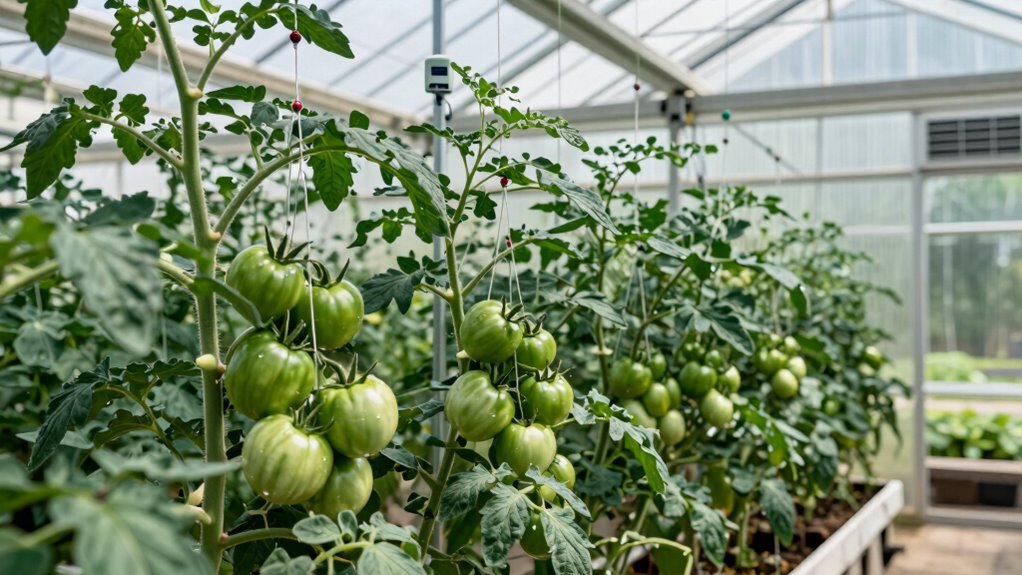

Start your greenhouse automation by focusing on climate control, as it’s vital for healthy plant growth and consistent yields. Automating temperature, humidity, and light regulation helps reduce stress and disease, while improving crop quality. Sensors and real-time adjustments guarantee ideal conditions with minimal effort. By prioritizing climate control, you set a solid foundation for future automation of watering, fertilization, and pest management. Keep going to discover more ways to enhance your greenhouse practices.

Get garden gear delivered free with Prime
- Fast, free delivery on millions of items
- Prime Video, Amazon Music and more included
- Member-only deals all year
Key Takeaways
- Prioritize automated climate control to maintain optimal temperature, humidity, and light levels for plant health.
- Deploy sensors for real-time environmental data collection to inform precise adjustments.
- Implement automatic ventilation, shading, and heating systems for consistent climate management.
- Regularly calibrate sensors to ensure accurate readings and reliable automation responses.
- Use climate control as a foundation to integrate other automation systems like irrigation and pest control later.
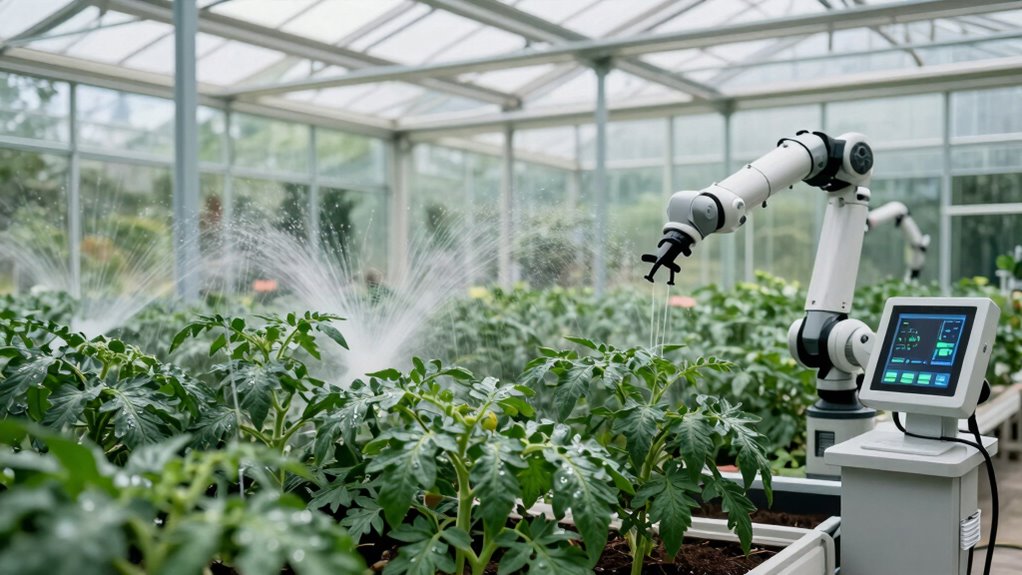
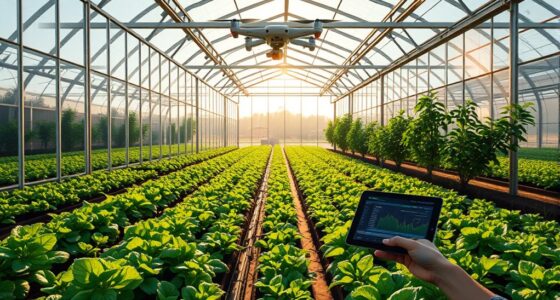
Implementing greenhouse automation first can revolutionize your farming practices by increasing efficiency and consistency. The most vital aspect to start with is climate control. Your crops thrive only when the environment remains within ideal temperature, humidity, and light levels. Automated climate control systems help you monitor and adjust these conditions in real time, reducing the risk of stress or disease caused by unfavorable weather fluctuations. By integrating sensors that continuously collect data on temperature, humidity, and light, you gain precise insights into your greenhouse’s environment. This sensor integration allows your control systems to respond instantly to changes, maintaining perfect conditions without constant manual intervention.
Starting with climate control is fundamental because it directly influences plant growth and health. When you automate this process, you eliminate guesswork and reduce human error. Sensors detect subtle shifts in environmental parameters, triggering automated adjustments such as opening vents, activating fans, or adjusting shading screens. This not only promotes healthier plants but also optimizes resource use, saving energy and water. As your system learns the patterns over time, it becomes more efficient at maintaining the ideal climate, leading to better yields and quality. Additionally, integrating sensor data effectively helps you make informed decisions and fine-tune your environment for maximum productivity.
Automating climate control enhances plant health, optimizes resources, and improves yields through precise environmental adjustments.
Sensor integration is the backbone of effective climate control automation. By deploying a network of sensors throughout your greenhouse, you gather extensive data that paints a detailed picture of your environment. These sensors should be strategically placed in different zones to account for variations within the space. With this data, your control system can make informed decisions, such as increasing airflow during hot spells or humid conditions, or reducing it when the environment is too dry. This automation minimizes manual adjustments and ensures consistency, especially during off-hours or busy periods. Furthermore, sensor calibration is essential to maintain accuracy and reliability over time.
Additionally, sensor integration simplifies the process of troubleshooting and maintenance. You’ll receive real-time alerts if any environmental parameters drift outside acceptable ranges, allowing you to address issues promptly. This proactive approach prevents problems before they impact your crops, saving you time and resources in the long run. As you implement these systems, you’ll notice how automation keeps your greenhouse environment stable and predictable, which is essential for achieving reliable crop production.
In essence, focusing on climate control and sensor integration lays a strong foundation for your greenhouse automation. It ensures your crops are always in their ideal environment, reduces manual workload, and enhances overall productivity. Once this core is established, you can expand automation to other areas like irrigation, fertilization, and pest control, but starting with climate control makes the most immediate and impactful difference.
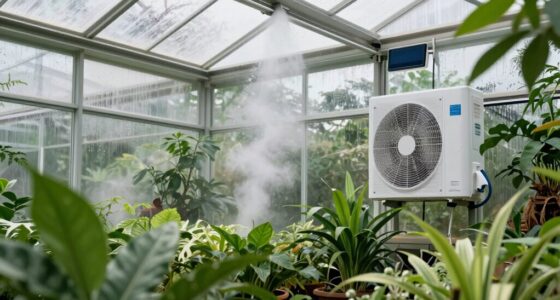
automated greenhouse climate control system
As an affiliate, we earn on qualifying purchases.
As an affiliate, we earn on qualifying purchases.
Frequently Asked Questions
How Much Does Initial Greenhouse Automation Setup Cost?
The initial greenhouse automation setup generally costs between $5,000 and $20,000, depending on your system’s complexity. Cost considerations include sensors, climate control systems, and automation software. You should prioritize budget planning to balance features with affordability. Start small with basic automation like watering and temperature monitoring, then expand as your needs grow. This approach helps you manage costs effectively while gradually enhancing your greenhouse’s efficiency.
What Are the Best Automation Tools for Small Greenhouses?
For small greenhouses, the best automation tools focus on plant monitoring and water regulation. You should consider smart sensors that track temperature, humidity, and soil moisture, providing real-time data. Automated watering systems help maintain ideal hydration without overwatering. These tools simplify your care routine, improve plant health, and save time. Investing in user-friendly, affordable options makes automation accessible and effective for small-scale greenhouse growers.
How Does Automation Impact Crop Quality and Yield?
Automation positively impacts your crop quality and yield by optimizing plant health and pest control. It guarantees precise watering, temperature, and humidity levels, reducing stress on plants and encouraging robust growth. Automated pest detection and management help prevent infestations early, maintaining healthier crops. As a result, your greenhouse produces higher quality produce with better yields, all while saving time and effort through efficient, technology-driven solutions.
Can Automation Systems Be Customized for Different Plant Types?
Yes, automation systems can be tailored for different plant types. You’ll need to make plant-specific adjustments, considering each plant’s unique growth requirements. Customization challenges include balancing system flexibility with complexity and cost. By tailoring your automation to specific plants, you optimize growth conditions, improve yields, and reduce resource waste. Just make certain your system allows for adjustments to accommodate the diverse needs of your plant varieties, making your greenhouse more efficient and productive.
What Maintenance Is Required for Automated Greenhouse Systems?
You’ll need to regularly inspect and calibrate your automated greenhouse systems to guarantee ideal climate control and pest management. Check sensors for accuracy, clean filters, and update software as needed. Keep an eye on mechanical parts like fans and irrigation systems, replacing or repairing them promptly. Consistent maintenance helps prevent system failures, maintains perfect conditions for your plants, and keeps pest issues under control, assuring a healthy, productive greenhouse environment.
Conclusion
So, if you’re serious about transforming your greenhouse, start with automation that can save you hours of endless work—because without it, you’re basically trying to grow plants with a broken compass. Automate watering, climate control, and lighting first, or risk wasting years chasing after nature’s unpredictability manually. Embrace automation now, or forever be a prisoner to your own laborious efforts—your future flourishing plants depend on it!
Fall Picks
fall essentials
As an affiliate, we earn on qualifying purchases.