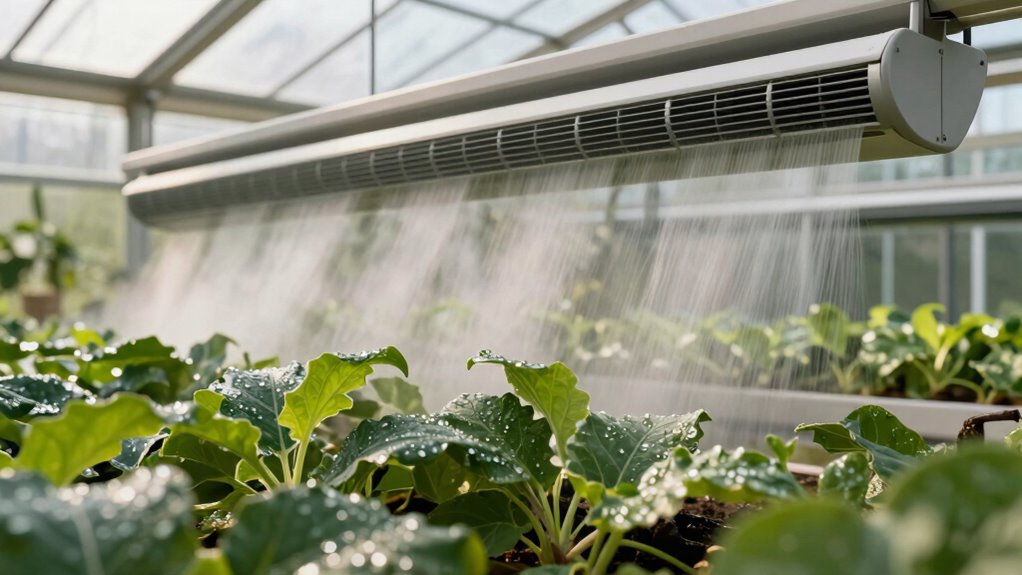

Good airflow does more than just keep air moving — it enhances temperature, humidity, and CO2 levels simultaneously. By improving ventilation, you prevent heat spots, reduce humidity that fosters pests and diseases, and guarantee fresh CO2 for healthier plants. Proper airflow also inhibits fungal growth and discourages pests by creating less hospitable conditions. You might be surprised how much airflow influences your greenhouse health; keep going to discover the full range of benefits.

Get garden gear delivered free with Prime
- Fast, free delivery on millions of items
- Prime Video, Amazon Music and more included
- Member-only deals all year
Key Takeaways
- Proper airflow enhances climate control, reducing heat stress and uneven temperatures that growers often overlook.
- It naturally manages humidity levels, preventing mold, mildew, and disease development beyond basic ventilation expectations.
- Improved airflow ensures consistent CO2 distribution, boosting photosynthesis and crop uniformity more effectively than anticipated.
- It disrupts pest habitats and dries surface moisture, significantly lowering disease and pest risks.
- Efficient ventilation reduces reliance on energy-intensive cooling and dehumidification systems, saving costs and improving sustainability.
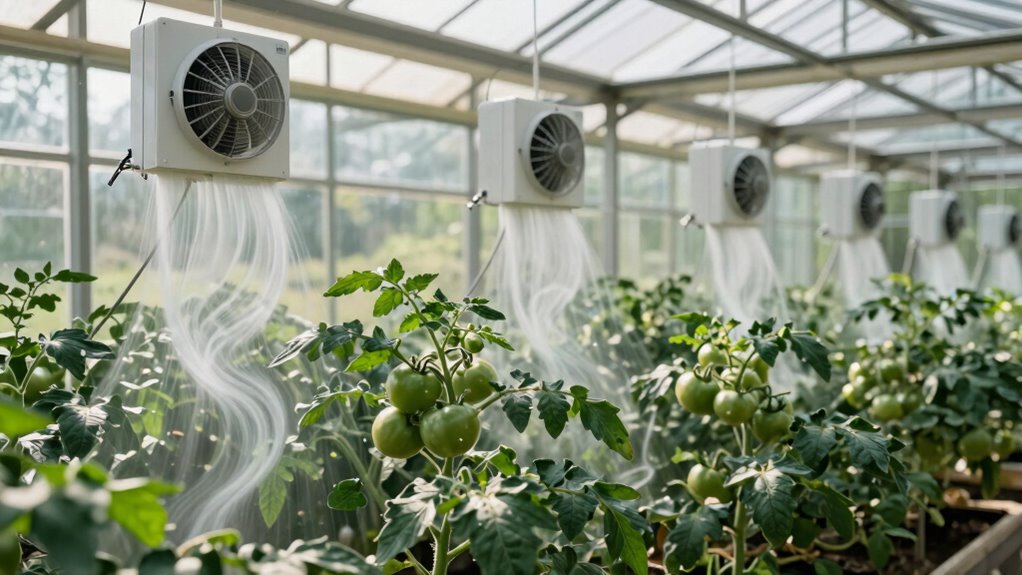
Have you ever wondered how airflow impacts the health and productivity of a greenhouse? When you optimize airflow, you’re doing more than just moving air around; you’re enhancing ventilation efficiency, which directly influences plant health and overall greenhouse performance. Good airflow helps remove excess heat, replenish CO2 levels, and prevent the buildup of humidity—factors that are essential for thriving plants. If you focus on improving ventilation efficiency, you’ll notice a significant reduction in problems like mold, mildew, and fungal diseases, which often thrive in stagnant, humid environments.
Optimizing airflow boosts ventilation, reduces humidity, and prevents mold and disease for healthier, more productive greenhouse plants.
Humidity control is another critical aspect that airflow influences profoundly. Too much humidity creates a perfect environment for pests and diseases to flourish, while too little can stress plants and inhibit growth. By increasing airflow, you help balance humidity levels, making the environment more stable and less prone to outbreaks. You might not realize it, but proper airflow acts as a natural dehumidifier, dispersing excess moisture and preventing condensation on leaves and surfaces. This means fewer issues with rot and disease, which can devastate crops if left unchecked. Additionally, improved airflow can help prevent condensation and reduce the likelihood of fungal issues forming on plant surfaces.
When you pay attention to ventilation efficiency, you also improve temperature regulation. Without adequate airflow, heat can become trapped, creating hot spots that stress plants and impede photosynthesis. Conversely, good airflow disperses heat evenly, maintaining a consistent temperature that promotes healthy growth. This balance reduces the need for costly cooling systems and minimizes energy consumption, saving you money in the long run. Additionally, ventilation efficiency plays a vital role in optimizing energy use, making your greenhouse more sustainable. Proper airflow also contributes to the microclimate inside your greenhouse, ensuring ideal conditions for plant development. Enhancing air circulation can further prevent the buildup of harmful gases and pollutants, creating a safer environment for your plants and workers.
Moreover, airflow influences your ability to maintain ideal CO2 levels, which are essential for photosynthesis. Stagnant air often leads to depleted CO2 in certain areas, causing uneven growth or reduced yields. By ensuring good ventilation, you keep fresh CO2 circulating throughout the greenhouse, supporting uniform plant development. This simple change can lead to noticeable improvements in crop quality and productivity.
Lastly, airflow helps in controlling pests and diseases. Many pests prefer still, humid environments to thrive, but proper ventilation creates an inhospitable environment for them. It also helps in drying out any water droplets on leaves that could harbor fungi or bacteria. When you understand how airflow impacts your greenhouse’s microclimate, you realize that many issues you face—like disease outbreaks, uneven growth, or high energy costs—are solvable through better ventilation and humidity management.
In the end, improving airflow isn’t just about comfort; it’s a strategic move that enhances your greenhouse’s health, efficiency, and productivity. You’ll find that problems you once thought were unavoidable become much easier to control with the right approach to airflow management.
As an affiliate, we earn on qualifying purchases.
Frequently Asked Questions
How Does Airflow Impact Pest Control in Greenhouses?
Airflow plays a vital role in pest control by disrupting pest habitats and limiting their movement. When you improve airflow, you create airflow barriers that make it harder for pests to settle and reproduce. This reduces infestations and keeps pests from thriving in your greenhouse. By maintaining proper ventilation, you help guarantee pests can’t establish strong habitats, making your pest management efforts more effective and less reliant on chemicals.
Can Airflow Adjustments Reduce Energy Costs Significantly?
Think of airflow adjustments as your greenhouse’s secret dance move—smoothing out energy use like a gentle breeze. By fine-tuning airflow, you boost energy efficiency and cut costs, turning your greenhouse into a well-oiled machine. When you optimize airflow, you reduce cooling and heating needs, leading to significant cost savings. It’s a simple step that makes your energy bills shrink, while keeping your plants happy and thriving.
What Are the Risks of Improper Airflow Management?
If you manage airflow improperly, you risk disrupting ventilation efficiency and creating uneven air circulation patterns. This can lead to areas with excess humidity, which promotes mold and disease, or zones that become too dry, stressing plants. Poor airflow can also cause temperature fluctuations, reducing crop quality and increasing energy costs. To avoid these risks, guarantee your ventilation system is balanced, promoting consistent air movement and ideal environmental conditions across your greenhouse.
How Does Airflow Influence Plant Disease Prevention?
Airflow plays a crucial role in preventing plant diseases by improving ventilation efficiency and regulating humidity. When you guarantee proper airflow, it reduces excess moisture that fosters mold and fungal growth. This consistent air movement helps maintain ideal humidity levels, minimizing disease risk. By managing airflow effectively, you create a healthier environment where plants can thrive without the threat of moisture-related illnesses, leading to healthier, more resilient crops.
Are There Eco-Friendly Airflow Solutions for Greenhouses?
Think of eco-friendly airflow solutions as the lungs of your greenhouse, breathing fresh life into it. Natural ventilation is your best bet, using passive or wind-driven methods to improve air quality without energy waste. These systems reduce reliance on fans and filters, cutting down emissions. By embracing natural airflow, you create a healthier environment for plants and the planet, promoting sustainability and reducing your greenhouse’s ecological footprint.
Conclusion
You might think airflow is just about ventilation, but it’s so much more. Proper airflow can reduce disease, improve plant health, and save you money—all while making your greenhouse a better place to work. Sure, it takes some effort to get it right, but the benefits far outweigh the hassle. Don’t let doubts hold you back—trust that airflow can truly transform your greenhouse and protect your plants for years to come.
Fall yard work Picks
leaf blowers
As an affiliate, we earn on qualifying purchases.