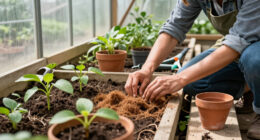
Aquaponics integration in a greenhouse combines fish farming with plant cultivation to create a sustainable, closed-loop system. You can maximize resource efficiency by managing water quality, temperature, and oxygen levels, ensuring healthy fish and vibrant plants. The system relies on natural nutrient cycling, reducing the need for synthetic fertilizers. Proper maintenance and environmental control can boost productivity and promote eco-friendly growth. If you continue exploring, you’ll discover how to optimize every element for success.

Get garden gear delivered free with Prime
- Fast, free delivery on millions of items
- Prime Video, Amazon Music and more included
- Member-only deals all year
Key Takeaways
- Combines fish farming and plant cultivation in a controlled greenhouse environment for sustainable food production.
- Maintains optimal water quality and fish health to support nutrient cycling and system stability.
- Uses natural biological processes to convert fish waste into plant nutrients, reducing synthetic fertilizer needs.
- Regulates temperature, humidity, and light to maximize plant growth and system efficiency.
- Requires regular system maintenance, water testing, and environmental adjustments for successful integration.
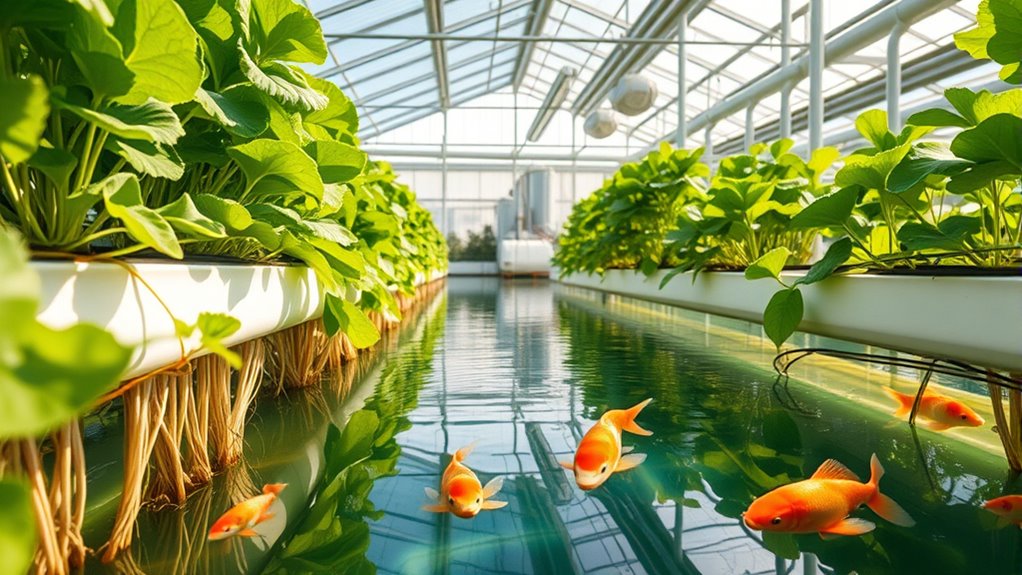
Have you ever wondered how to grow fresh produce efficiently while conserving resources? If so, integrating aquaponics into your greenhouse might be the perfect solution. This innovative technique combines fish farming with plant cultivation, creating a symbiotic environment that maximizes productivity and minimizes waste. When you set up an aquaponic system, you’re essentially creating a closed-loop cycle where fish health and nutrient cycling work hand in hand to support healthy plant growth. Maintaining fish health is essential because healthy fish produce clean, nutrient-rich water that feeds your plants. If fish become stressed or diseased, their ability to generate the nutrients necessary for plant growth diminishes, disrupting the entire system. That’s why monitoring water quality, temperature, and oxygen levels is crucial. Regular testing and prompt adjustments keep your fish thriving, ensuring a steady supply of nutrients for your plants.
Nutrient cycling plays an important role in this process. As fish excrete waste, bacteria in the system break down ammonia into nitrites, then further convert these into nitrates—an ideal form of fertilizer for most plants. This natural conversion reduces the need for synthetic fertilizers, making your greenhouse more sustainable. You’ll want to pay close attention to the balance of nutrients in the water, as over- or under-supplying can lead to issues like algae growth or nutrient deficiencies. Properly managing this cycle involves adjusting fish stock density, controlling feeding practices, and maintaining ideal environmental conditions. When done correctly, nutrient cycling ensures your plants receive a consistent, natural supply of nutrients, promoting vigorous growth and higher yields. Additionally, choosing vetted vacuum cleaners for cleaning your system can help maintain water quality and system hygiene efficiently.
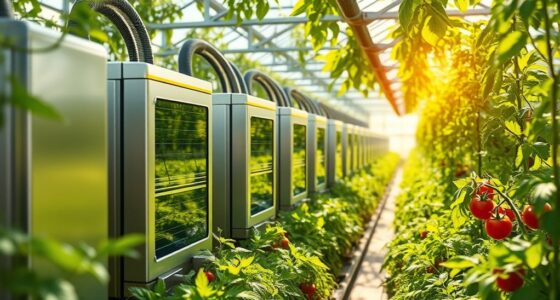
In addition, integrating aquaponics in a greenhouse allows you to control environmental factors more precisely. You can regulate temperature, humidity, and light to maximize both fish health and plant productivity. By doing this, you create a resilient system where pests and diseases are less likely to take hold, and resource consumption is minimized. Aquaponics also reduces water usage because the water circulates continuously, with minimal loss due to evaporation or runoff. This conservation benefits both the environment and your operational costs. As you become more experienced in managing the balance between fish health and nutrient cycling, you’ll notice your greenhouse becomes a highly productive, eco-friendly space that produces fresh vegetables and fish with fewer inputs. It’s an efficient, sustainable way to grow food while protecting natural resources, making your greenhouse a model of modern, integrated agriculture.
aquaponics system kit for greenhouse
As an affiliate, we earn on qualifying purchases.
As an affiliate, we earn on qualifying purchases.
Frequently Asked Questions
What Are the Initial Setup Costs for Aquaponics in a Greenhouse?
You should expect initial setup costs for aquaponics in a greenhouse to range from $2,000 to $10,000, depending on your scale and equipment choices. Your cost estimation includes equipment expenses like tanks, pumps, grow beds, and plumbing, which are essential for system operation. Keep in mind, investing in quality components upfront can improve system efficiency and reduce long-term maintenance costs.
How Do I Prevent Fish Diseases in an Aquaponic System?
Did you know that waterborne pathogens cause up to 70% of fish diseases in aquaponic systems? To prevent fish diseases, you should maintain ideal water quality, regularly test for harmful bacteria, and avoid sudden temperature changes. Keep your system clean, avoid overfeeding, and guarantee proper filtration. Disease prevention hinges on consistent monitoring and good hygiene practices, helping you keep your fish healthy and your system productive.
What Are the Best Fish Species for Greenhouse Aquaponics?
You should choose fish species with good fish selection and species compatibility for your greenhouse aquaponics system. Tilapia is popular because it’s hardy, fast-growing, and tolerates varying conditions. Catfish and trout also work well, but make sure they thrive in your water temperature and pH levels. Always consider how the fish interact with plants and other aquatic life, maintaining a balanced ecosystem for ideal growth.
How Does Climate Control Impact Aquaponics Efficiency?
Climate regulation and humidity control play vital roles in your aquaponics system’s efficiency. When you maintain ideal temperatures, your fish stay healthy, and plant growth accelerates. Proper humidity control prevents mold and disease, ensuring a stable environment. By actively managing these factors, you create perfect conditions that boost productivity, reduce stress on your fish, and maximize nutrient cycling, making your greenhouse aquaponics system more sustainable and fruitful.
What Are Common Challenges Faced During Integration?
When you integrate aquaponics into your greenhouse, you often face challenges like system imbalance and maintaining water quality. These issues can disrupt nutrient flow and fish health, making it harder to sustain a productive system. You’ll need to monitor water parameters regularly and adjust your system to prevent imbalances. Addressing these common challenges early helps ensure your aquaponics system runs smoothly and efficiently.
Conclusion
By integrating aquaponics into your greenhouse, you open a farming revolution that could transform your entire operation. You’ll harness the power of nature itself, creating a sustainable, efficient system that outperforms traditional methods. This approach isn’t just a trend—it’s a game-changer capable of feeding the world’s growing population. Embrace aquaponics and watch your greenhouse become a beacon of innovation, proving that with vision, you can achieve the impossible and nurture a greener, more resilient future.
Columbus Day / Indigenous Peoples' Day Picks
long weekend sales
As an affiliate, we earn on qualifying purchases.