Trellis systems with clips, hooks, and twine help you support and train your plants for better growth and easier harvesting. They keep vines and stems secure, prevent sagging, and improve airflow to reduce fungal issues. These tools also make pest management simpler by elevating plants away from ground pests. Using these materials boosts plant health and maximizes space, all while making garden maintenance more manageable. If you continue exploring, you’ll discover how to optimize your trellis setup for success.
Key Takeaways
- Clips and hooks secure vines and stems, preventing sagging and facilitating easy adjustments as plants grow.
- Twine supports flexible, customizable plant training for optimal sun exposure and airflow.
- Support materials help reduce pest access and improve visibility for early pest detection.
- Using support elements promotes healthier plant development and easier harvesting.
- Support systems enhance garden organization, sustainability, and ecological balance.
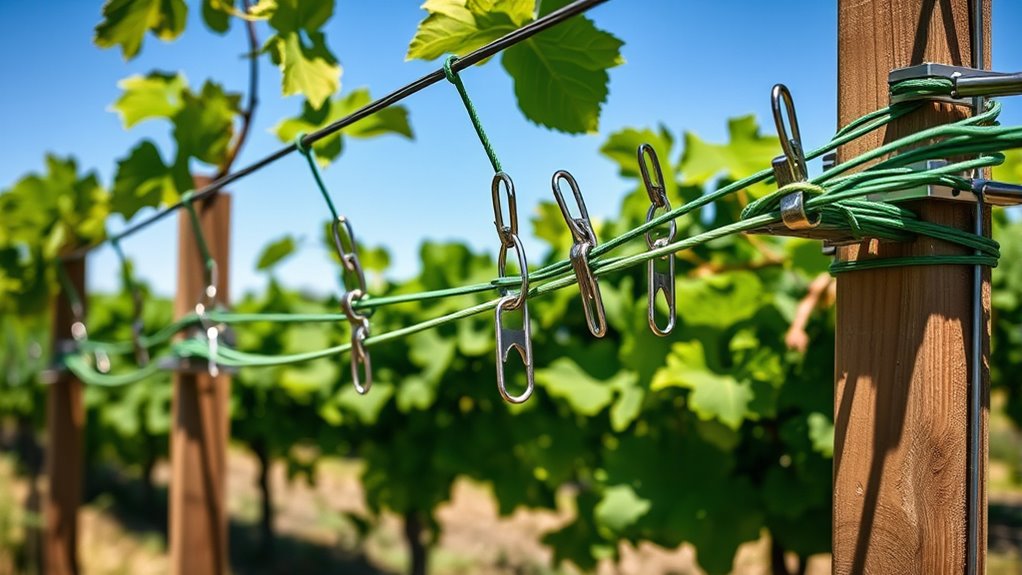
Have you ever wondered how trellises can transform your garden or vineyard? These simple structures do more than just add visual appeal; they serve as essential tools for plant support and pest management. When you set up a trellis system, you’re providing your plants with a sturdy framework to grow upward, which promotes healthier development and maximizes space. This vertical growth keeps fruits and vegetables off the ground, reducing the risk of rot and disease. Plus, it makes harvesting much easier, saving you time and effort.
Using trellises with the right clips, hooks, and twine allows you to customize your plant support system for various crops. Clips and hooks are practical for securing vines and stems, ensuring they stay upright and don’t sag under their weight. Twine, on the other hand, acts as a flexible, adjustable support that you can weave through the plant’s branches or stems. This combination gives you a versatile way to train plants, encouraging better airflow and sun exposure. As a result, your plants grow stronger and healthier, and you can more easily monitor their progress.
Beyond supporting your plants, trellis systems play a crucial role in pest management. When plants are grown vertically, pests like aphids, beetles, and caterpillars are less likely to find their way onto the foliage and fruits. The elevation makes it harder for ground-dwelling pests to reach them, and you can more easily spot any intruders before they cause significant damage. Additionally, a well-structured trellis system promotes better air circulation around your plants, helping to prevent fungal diseases that thrive in damp, crowded conditions.
Incorporating clips, hooks, and twine into your trellis setup also makes it easier to keep your garden tidy and organized. You can quickly adjust or replace support elements as plants grow or as seasons change, ensuring continuous support without causing harm to your crops. This flexibility allows you to optimize plant health and productivity while minimizing the need for chemical pest controls. Not only does this promote a more natural and eco-friendly garden, but it also encourages a healthier environment for beneficial insects and pollinators.
Frequently Asked Questions
What Are the Best Materials for Trellis Clips?
You should choose trellis clips made from durable materials like stainless steel or plastic. Stainless steel offers excellent material durability and corrosion resistance, making it ideal for outdoor use and long-lasting support. Plastic clips are lightweight and resistant to moisture, but verify they’re UV-stabilized to prevent degradation. Both options provide reliable support, but stainless steel generally offers superior longevity and resistance to environmental elements.
How Do I Install Trellis Hooks Securely?
You won’t want your trellis hooks slipping loose when it matters most. To guarantee a secure DIY installation, start by choosing the right hooks for your surface. Use sturdy securing techniques like anchoring into wall studs or using appropriate fasteners. Tighten the hooks firmly but avoid over-tightening, which can cause damage. Regularly check and tighten them as needed. With careful attention, your trellis system will stay strong and reliable.
Can Trellis Twine Be Reused Season After Season?
Yes, you can reuse trellis twine season after season, making it an eco-friendly garden option. To do so, carefully remove the twine after harvesting, clean off any debris or plant residue, and store it in a dry place. Reusing trellis twine reduces waste and saves money, while also supporting sustainable gardening practices. Just check for any damage or fraying before reusing to make sure it stays sturdy for the season ahead.
What Plants Benefit Most From Trellis Systems?
Think of a trellis system as a stage for your plants’ vertical growth, highlighting their best features. You’ll find that climbing plants like tomatoes, beans, cucumbers, and peas benefit most from plant support. These plants thrive when they can grow upward, stay healthy, and produce abundant fruit. Using trellises helps maximize space, improve air circulation, and makes harvesting easier, turning your garden into a thriving, organized showcase.
Are There Eco-Friendly Options for Trellis Twine?
Yes, there are eco-friendly options for trellis twine. You can choose biodegradable twine made from natural fibers like jute, hemp, or sisal, which break down easily in the environment. Additionally, look for trellis twine made from recycled materials, reducing waste and supporting sustainability. These options help you garden responsibly while providing sturdy support for your plants. Switching to eco-friendly twine is a simple step toward greener gardening.
Conclusion
Trellis systems are your garden’s backbone, supporting growth much like a sturdy frame that holds up a delicate vine. Whether you choose clips, hooks, or twine, each option is a tool to help your plants reach their full potential. Remember, a well-structured trellis isn’t just a support—it’s the guiding hand that helps your garden flourish. With the right system, you’re nurturing a thriving ecosystem, where every plant can climb toward success.