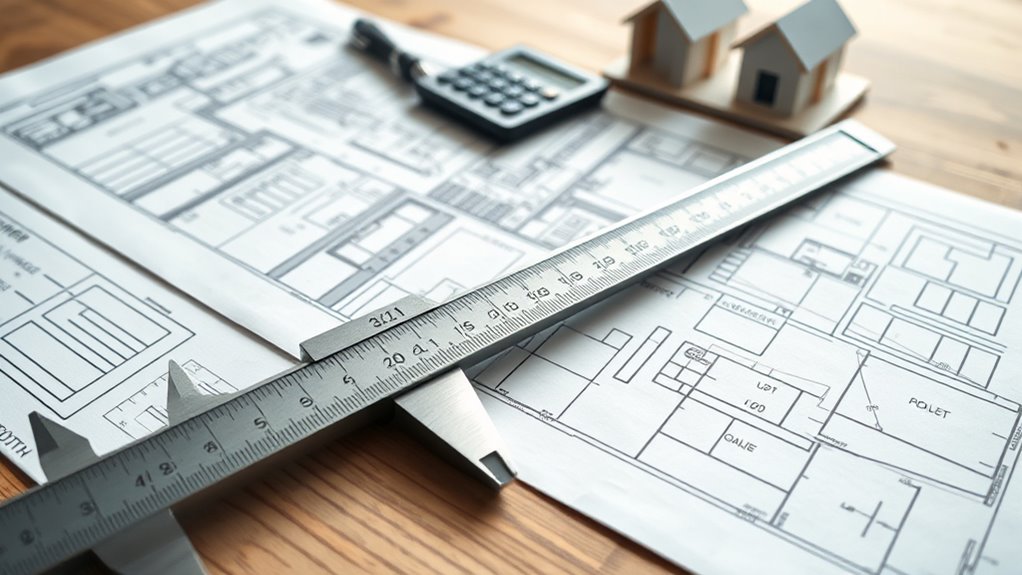

Understanding the cost per square foot helps you assess property value quickly. It’s calculated by dividing the sale price by the property’s total square footage. A lower cost per sq ft can indicate a better deal, while a higher one might reflect premium features or location. Remember, it’s just one part of evaluating a property, so consider other factors too. Keep exploring to see how market trends influence this key measure.

Get garden gear delivered free with Prime
- Fast, free delivery on millions of items
- Prime Video, Amazon Music and more included
- Member-only deals all year
Key Takeaways
- Cost per square foot measures property value by dividing sale price by total square footage.
- It helps compare properties quickly and assess if a listing is overvalued or undervalued.
- A lower cost per sq ft generally indicates a better deal, while a higher suggests premium features or location.
- Market trends and comparable sales are essential for accurate interpretation of cost per square foot.
- Limitations include property condition, neighborhood amenities, and local market fluctuations that influence valuation.

Have you ever wondered how the economy works? Understanding the fundamentals can seem complex, but breaking it down into simple concepts helps. One such concept is the cost per square foot, a key real estate metric that offers insight into property valuation. When you’re evaluating a property, knowing its cost per square foot helps you compare different listings efficiently and make smarter investment decisions. It’s a straightforward way to gauge how much you’re paying for space and whether a property is fairly priced.
Property valuation is all about determining the worth of a property based on various factors, and cost per square foot is among the most widely used indicators. It involves dividing the property’s sale price by its total square footage. For example, if a home sells for $300,000 and measures 1,500 square feet, its cost per square foot is $200. This simple calculation provides a quick reference point to compare with other properties in the same area. It helps you identify whether a property is overvalued or undervalued relative to similar properties, giving you an edge in negotiations and investment planning.
Property valuation uses sale price divided by total square footage to assess market value.
Real estate metrics like cost per square foot are essential because they normalize differences in property size, location, and features. When analyzing multiple properties, these metrics enable you to make apples-to-apples comparisons. For instance, if two homes are similar in size but one has a lower cost per square foot, it may be a better deal. Conversely, a higher cost per square foot might indicate a premium location or superior quality, which could justify the price difference. Learning to interpret these metrics allows you to assess whether a property’s price aligns with its value in the market.
However, keep in mind that cost per square foot shouldn’t be the sole factor in your decision. It’s important to consider other elements like property condition, neighborhood amenities, and future development plans. Additionally, understanding local real estate market trends is crucial, as they influence these metrics — in hot markets, prices tend to be higher, inflating the cost per square foot. Hence, understanding local trends and comparable sales is essential for accurate property valuation.
As an affiliate, we earn on qualifying purchases.
Frequently Asked Questions
How Is Cost per Square Foot Calculated Precisely?
To calculate cost per square foot, you divide the total price of a property by its measured square footage. First, determine the accurate measurement using proper measurement techniques, such as measuring length and width and multiplying them. Then, use the formula: price calculation divided by the square footage. This gives you the cost per square foot, helping you compare property values and make informed decisions efficiently.
What Are Common Factors Affecting Cost per Square Foot?
Imagine you’re back in the days of the roaring twenties, where market trends and construction materials drive costs. These factors heavily influence your cost per square foot today. Fluctuations in market demand, material prices, labor costs, and project size all play roles. Stay updated on market shifts and choose quality materials wisely, because these elements directly impact your overall expenses and value when planning your building or renovation project.
How Does Location Influence Cost per Square Foot?
Location impact considerably influences your cost per square foot because properties in prime neighborhoods tend to be more desirable, driving up prices. The neighborhood value, including amenities, safety, and accessibility, directly affects this cost. When you choose a high-value area, you’ll pay more per square foot, but you also benefit from better investment potential and quality of life. Conversely, less desirable locations typically have lower costs, but may lack certain conveniences.
Can Cost per Square Foot Vary by Property Type?
Yes, cost per square foot can vary by property type. When you’re doing property valuation or investment analysis, you’ll notice that residential, commercial, and industrial properties often have different costs due to their unique features and uses. Commercial spaces might have higher costs because of location and amenities, while residential properties could be lower. Understanding these differences helps you make smarter investment decisions and accurately assess property value.
What Are Typical Costs per Square Foot in Different Markets?
They say “you get what you pay for,” and this rings true in real estate costs. In luxury markets, you might pay $300 to $1,500+ per square foot for high-end homes, while commercial spaces range from $10 to $50 in smaller markets and up to $200+ in prime locations. Keep in mind, costs vary widely by location, property type, and market demand, so research is key.
Conclusion
Understanding cost per square foot helps you make smarter financial decisions in real estate. Did you know that homes in prime locations can cost up to 50% more per square foot than similar properties elsewhere? By grasping this concept, you can better evaluate property value and negotiate effectively. Keep this statistic in mind as you navigate buying or selling, and you’ll be one step closer to making confident, informed choices in the market.
Halloween Picks
halloween
As an affiliate, we earn on qualifying purchases.