
To start a school greenhouse program, begin by evaluating your available space and resources, and choose a sunny, accessible location. Involve students early through surveys and planning, encouraging them to contribute ideas and take ownership. Set up the greenhouse with eco-friendly materials, sustainable systems, and beginner-friendly supplies. Connect the greenhouse activities to classroom lessons and projects, such as growing herbs or composting. Establish maintenance routines and seek community support. Keep exploring how to build a successful, long-lasting program.

Get garden gear delivered free — and shop member deals
- Fast, free delivery on millions of items
- Access to Prime Big Deal Days deals on October 6–7
- Prime Video, Amazon Music and more included
Key Takeaways
- Assess school space, resources, and select a sunlit, accessible location with eco-friendly design elements.
- Involve students early through surveys, meetings, and assigning roles to foster ownership and responsibility.
- Develop a sustainable greenhouse environment using organic soil, eco-friendly materials, and educational tools.
- Integrate greenhouse activities into the curriculum with project-based learning, science lessons, and sustainability projects.
- Secure funding through grants and partnerships, establish maintenance routines, and involve the community for long-term success.

Starting a school greenhouse program can be a rewarding way to engage students with hands-on learning about science, sustainability, and agriculture. When you develop such a program, you create an environment where students can explore sustainable practices firsthand, making lessons more meaningful and memorable. To begin, assess your school’s available space and resources. Find a suitable location that receives ample sunlight and is easily accessible for students. Once you identify the space, plan your greenhouse design, keeping sustainability in mind—use eco-friendly materials, incorporate rainwater collection systems, and select energy-efficient lighting and ventilation. These steps not only reduce environmental impact but also serve as teachable moments about sustainable practices. Promoting environmentally conscious practices within the program can inspire students to adopt sustainable habits beyond the classroom.
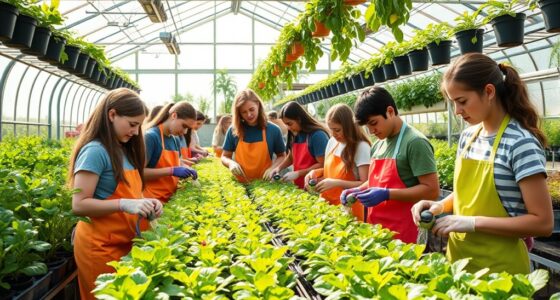
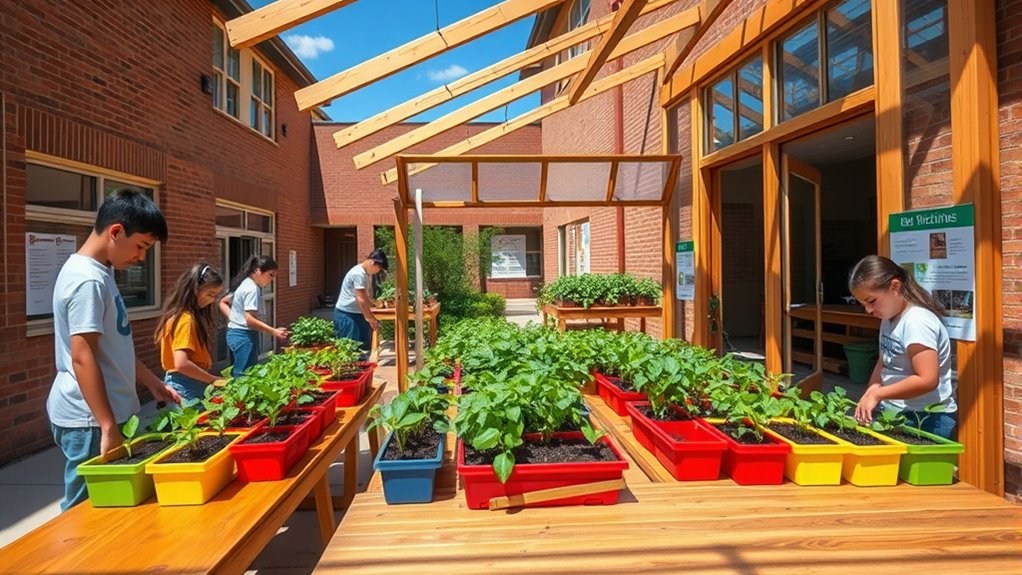
Next, involve your students early in the planning process. This boosts student engagement, as they feel ownership over the project and are more motivated to participate. Conduct surveys or hold meetings to gather input on what they’d like to grow or learn about. Incorporate their ideas into the greenhouse design and planting plans. Assign roles such as planting, watering, and maintaining the greenhouse, ensuring everyone has a chance to contribute. This active involvement fosters responsibility and teamwork, essential aspects of a successful program.
Engage students early to foster ownership, teamwork, and responsibility in your greenhouse program.
When it comes to the actual setup, focus on creating a nurturing environment. Invest in beginner-friendly gardening supplies and provide clear instructions on plant care. Use organic soil and sustainable pest control methods to demonstrate environmentally conscious practices. As students observe plant growth, teach them about the science behind photosynthesis, plant biology, and ecosystems. Connecting these concepts to real-life experiences strengthens their understanding and curiosity.
Develop a curriculum that integrates greenhouse activities with classroom lessons. For example, science classes can study plant genetics or environmental science, while math lessons can involve measuring growth rates and calculating yields. Incorporate project-based learning, such as growing herbs for the school cafeteria or creating a composting system. These projects show students the tangible results of sustainable practices, reinforcing their importance and encouraging ongoing participation.
Finally, ensure your greenhouse program is sustainable over the long term by establishing regular maintenance schedules, seeking funding or grants, and involving the entire school community. Partnering with local farms or environmental organizations can provide additional resources and expertise. As you implement the program, continually seek feedback from students and staff to improve and adapt. By fostering a hands-on, sustainable approach, you create a vibrant learning space where student engagement thrives, and environmental stewardship becomes a core value.
As an affiliate, we earn on qualifying purchases.
Frequently Asked Questions
What Are the Initial Costs of Establishing a School Greenhouse?
The initial cost estimation for establishing a school greenhouse varies but generally ranges from $1,500 to $10,000, depending on size and materials. You should explore funding sources like school budgets, grants, and community fundraising to cover expenses. Costs include building materials, heating, lighting, and soil. Planning ahead helps you guarantee the necessary funds and ensures your greenhouse project starts smoothly, providing a valuable educational resource for students.
How Can I Involve Students in Greenhouse Maintenance?
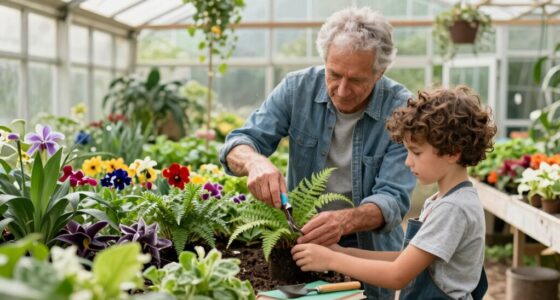
Imagine students happily digging in soil, their hands muddy and faces bright with enthusiasm. You can involve students in greenhouse maintenance by organizing student-led activities, like watering schedules and plant care, giving them ownership. Integrate a gardening club to foster teamwork and responsibility. Encourage them to track growth and troubleshoot issues, turning maintenance into engaging learning experiences that inspire a lifelong love for gardening and sustainability.
What Safety Precautions Are Necessary for Greenhouse Operation?
You need to prioritize safety by requiring students to wear appropriate safety gear like gloves, goggles, and aprons. Make sure everyone is familiar with emergency procedures, such as how to use fire extinguishers and where to find first aid kits. Regularly inspect equipment and guarantee proper ventilation. By enforcing these precautions, you create a safe environment that minimizes risks and promotes responsible greenhouse operation.
How Do I Select the Best Plants for Educational Purposes?
You should consider plant selection that aligns with your educational goals, such as easy-to-grow plants like beans or herbs for hands-on learning. Think about plants that demonstrate key concepts like photosynthesis or life cycles, offering clear educational benefits. Choose species suitable for your climate and students’ skill levels, ensuring they can actively participate and observe growth. This approach maximizes engagement and enhances learning experiences through relevant, accessible plant choices.
Are There Grants Available for Starting a School Greenhouse Program?
Like explorers seeking treasure, you can find grant opportunities and funding sources to start your school greenhouse program. Many local, state, and federal agencies offer grants for educational and environmental projects. Check foundations, non-profits, and government websites for application details. You might also explore corporate sponsorships or community grants. Act quickly and thoroughly, and you’ll uncover the resources needed to nurture your green thumb and grow young minds.
Conclusion
Starting a school greenhouse program is like planting the seeds for a brighter future. With patience, passion, and a little bit of effort, you’ll nurture young minds and cultivate a love for science and nature. Remember, every great garden begins with a single seed—your dedication will grow into a thriving educational oasis. Stay committed, and watch how your efforts blossom into a lasting legacy that inspires students for years to come.
Fall Picks
fall essentials
As an affiliate, we earn on qualifying purchases.