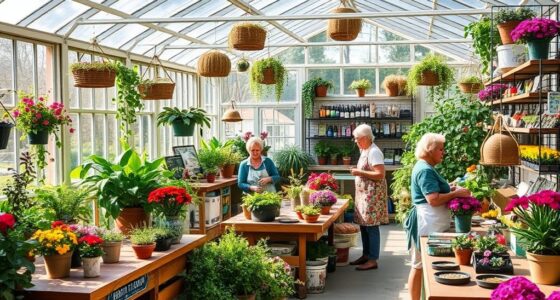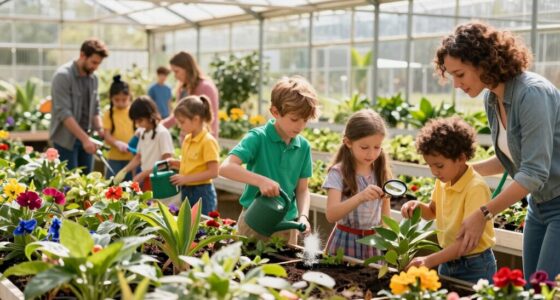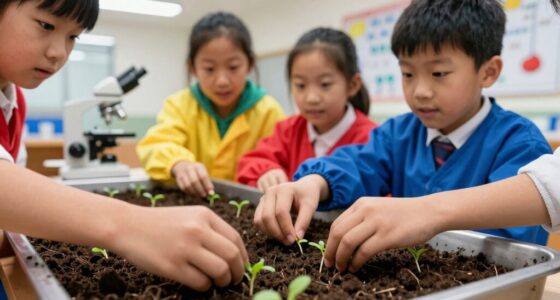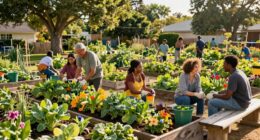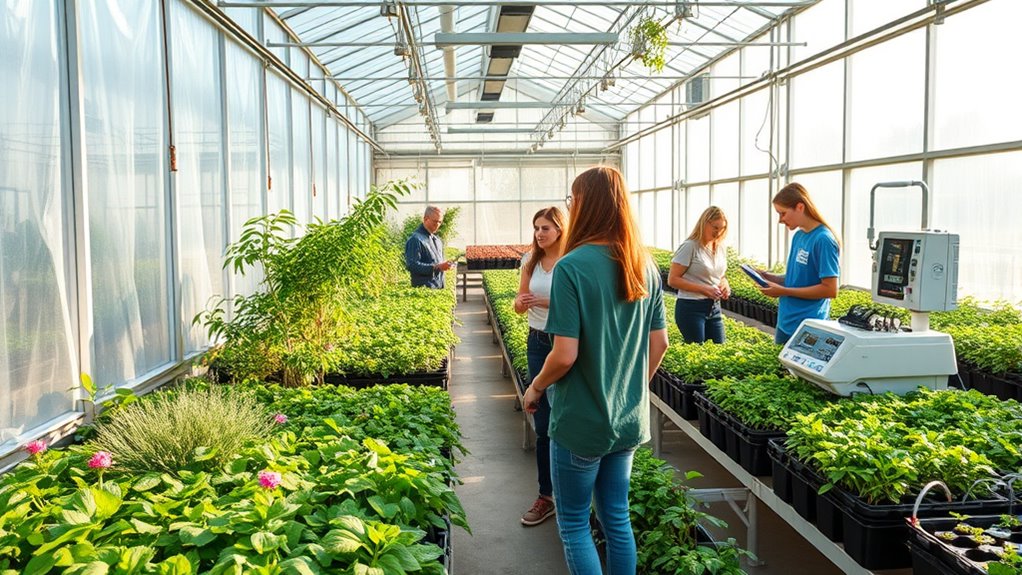

Greenhouses serve as hands-on climate labs where you can actively observe plant adaptation and response to changing conditions. You’ll manipulate variables like temperature, humidity, and light, gaining direct insight into how plants handle stressors like drought or heat. By experimenting with design features and technology, you observe resilience strategies and sustainable practices in action. Keep exploring, and you’ll uncover how these controlled environments can help you understand vital climate concepts firsthand.
Key Takeaways
- Greenhouses serve as controlled environments for hands-on climate change experiments, enabling direct observation of plant adaptation processes.
- Their flexible design allows students to manipulate variables like temperature and humidity, illustrating climate concepts practically.
- Incorporating technology and data visualization tools enhances understanding of plant responses and environmental interactions.
- Greenhouses demonstrate resource management and sustainability practices, teaching effective strategies for climate-resilient agriculture.
- Active participation in greenhouse experiments fosters experiential learning and deeper insight into climate concepts.
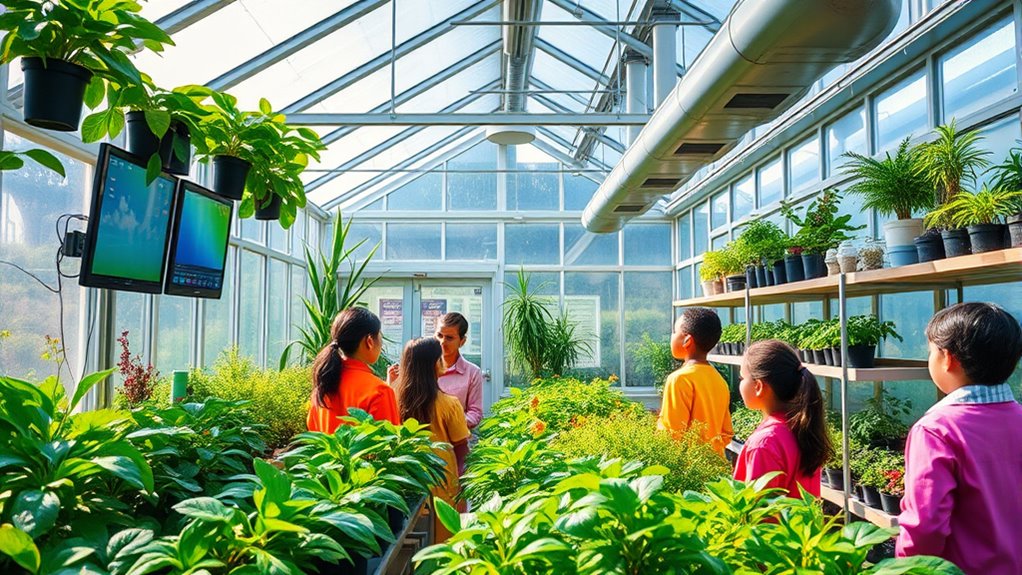
Greenhouses are transforming into essential climate labs where scientists and farmers experiment with new ways to adapt to changing environmental conditions. Inside these controlled environments, you have the opportunity to observe and influence plant adaptation processes firsthand. By manipulating variables like temperature, humidity, and light, you can see how different plant species respond to stressors similar to those caused by climate change. This hands-on approach helps you understand the resilience of various plants and the strategies they use to survive when conditions shift unexpectedly. It’s not just about growing plants; it’s about learning how they adapt and thrive amid adversity.
Greenhouses serve as climate labs for hands-on plant adaptation experiments under changing environmental conditions.
The way you design your greenhouse plays a pivotal role in these experiments. Greenhouse design isn’t just about creating a space for plants to grow; it’s about building a flexible, responsive environment that mimics natural conditions while allowing precise control. You can incorporate features like adjustable shading, ventilation systems, and heating elements to simulate seasonal changes or extreme weather events. Such design choices enable you to test how different plant varieties respond to specific climate scenarios, providing insight into which species are best suited for future conditions. When you optimize greenhouse design, you create a dynamic laboratory where plant adaptation becomes a visible, measurable process. Additionally, incorporating climate control technologies can enhance the accuracy and effectiveness of your experiments.
By experimenting with different design configurations, you gain a deeper understanding of how environmental factors influence plant growth. For example, you might discover that certain plant varieties develop drought tolerance when exposed to reduced watering schedules combined with higher temperatures. Alternatively, you could observe how increased airflow impacts disease resistance or flowering times. These insights directly inform strategies for crop resilience and food security. As you refine your greenhouse design, you’re not just growing plants—you’re shaping a mini-ecosystem that reveals the complex interplay between environmental stress and plant response. Considering drainage and soil conditions can further improve the success of your plant adaptation experiments. Recognizing the importance of soil health can help you optimize plant growth and resilience further.
Furthermore, your hands-on experiences in these climate labs teach you to think critically about the sustainability of agricultural practices. You see firsthand how innovative greenhouse designs can reduce resource consumption while maximizing plant health. This knowledge empowers you to develop adaptive farming techniques that will be essential in a world experiencing unpredictable climate patterns. The lessons learned through plant adaptation experiments deepen your understanding of climate resilience, making you better equipped to contribute to sustainable agriculture.
In essence, your role in these climate labs is active and indispensable. Through thoughtful greenhouse design and close observation of plant responses, you become part of a larger effort to understand and combat climate challenges. Every experiment provides new insights, pushing forward the boundaries of what’s possible in sustainable, climate-resilient agriculture. Understanding the importance of high-quality projectors can also aid in visualizing and analyzing data collected from these experiments, enhancing your ability to interpret results effectively.

Inkbird ITC-308 Digital Temperature Controller 2-Stage Outlet Thermostat Heating and Cooling Mode Carboy Homebrew Fermenter Greenhouse Terrarium 110V 10A 1100W
- Display Units: Supports °C/°F display
- Dual Relay: Controls heating and cooling devices
- Dual Display: Shows measured and set temperatures
As an affiliate, we earn on qualifying purchases.
As an affiliate, we earn on qualifying purchases.
Frequently Asked Questions
How Do Greenhouses Simulate Different Climate Conditions Effectively?
You can simulate different climate conditions effectively by controlling humidity and temperature within the environment. Adjusting humidity control helps mimic wet or dry conditions, while temperature regulation allows you to create hot, cold, or temperate scenarios. By fine-tuning these factors, you create realistic climate models that help students understand diverse ecosystems and climate change impacts, making your greenhouse a dynamic, hands-on learning space.
What Are the Costs Associated With Setting up a Climate-Focused Greenhouse?
When setting up a climate-focused greenhouse, you should consider both initial investment and ongoing expenses. The initial investment includes costs for land, construction, climate control systems, and specialized equipment. Ongoing expenses involve energy, maintenance, and supplies to keep the environment ideal. While startup costs can be significant, planning for these expenses helps guarantee your greenhouse can effectively simulate climate conditions and support your educational or research goals.
How Can Greenhouses Be Adapted for Urban Climate Education?
You can adapt greenhouses for urban climate education by integrating them into urban design, making them accessible community hubs. Use local materials and renewable energy to minimize costs and environmental impact. Engage community members through workshops and volunteer programs, fostering a sense of ownership and learning. This approach not only educates about climate concepts but also strengthens community ties, encouraging sustainable urban development and climate resilience.
What Safety Precautions Are Necessary for Students Working in Greenhouses?
When working in greenhouses, you need to prioritize safety by wearing personal protective gear like gloves, goggles, and aprons to prevent injuries. Make certain proper ventilation safety to avoid buildup of heat or harmful fumes. Always follow safety guidelines, keep pathways clear, and handle tools carefully. By staying vigilant and prepared, you protect yourself and create a safe environment for everyone, making the greenhouse a productive and secure space for learning.
How Do Greenhouses Contribute to Local Climate Change Mitigation Efforts?
Greenhouses help mitigate local climate change by promoting carbon sequestration, capturing CO2 from the atmosphere through plant growth. You can enhance this effect by using renewable energy sources like solar or wind power to run greenhouse operations, reducing carbon footprints. This hands-on approach allows you to actively participate in climate solutions, demonstrating how local efforts in greenhouses contribute to broader environmental benefits and support sustainable practices in your community.
Conclusion
As you step into a greenhouse, you realize it’s more than just a plant sanctuary—it’s a glimpse into our planet’s future. The warmth, humidity, and diverse life inside mirror the climate challenges outside, making every visit a practical lesson. You might find it’s no coincidence that these green spaces teach you about resilience and adaptation, showing how small actions inside can echo larger changes beyond. In this cozy lab, you connect the dots between science and sustainability, naturally.