
TL;DR

Get garden gear delivered free with Prime
- Fast, free delivery on millions of items
- Prime Video, Amazon Music and more included
- Member-only deals all year
A newly developed deep-watering tool is now available to help trees survive intense heat waves by delivering water directly to their roots. Experts believe this innovation could boost tree resilience amid rising global temperatures. The device is currently in early deployment stages and is gaining attention from arborists and urban planners.
A new deep-watering tool has been introduced to help trees better withstand increasing heat waves by delivering water directly to their roots. This innovation aims to address the growing challenge of urban and rural tree mortality caused by extreme heat, which is expected to intensify with climate change.
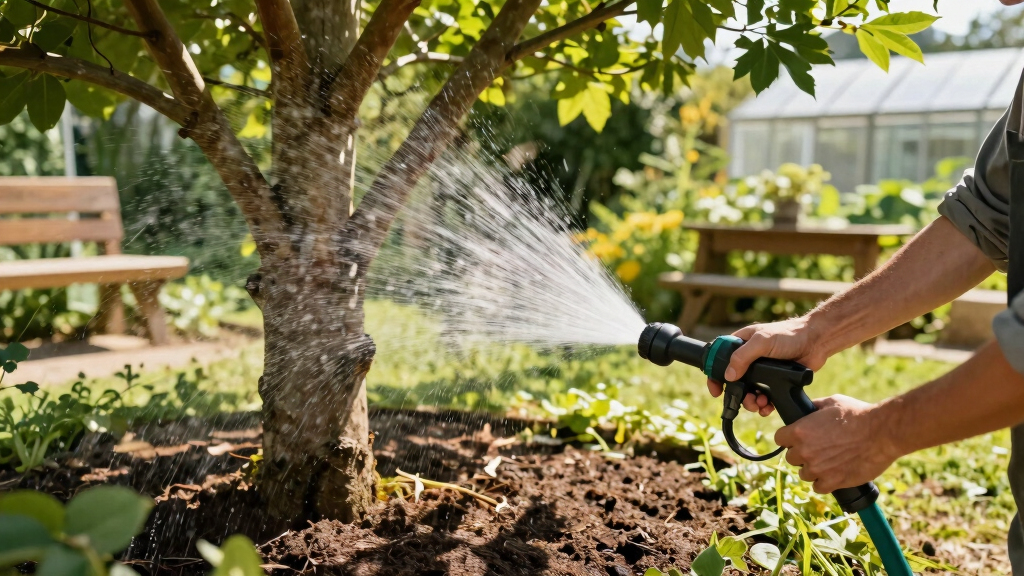
The device, developed by a team of horticultural engineers and arborists, uses a specialized nozzle to inject water deep into the soil around trees, reaching roots that are typically inaccessible to surface watering methods. Initial trials in urban parks and community gardens have demonstrated that trees receiving deep watering maintain better health and show less stress during heat waves compared to those watered traditionally.
According to the developers, the tool can be operated manually or integrated into automated irrigation systems. It is designed to minimize water waste by targeting only the root zone, which is critical for tree health. The device is portable, easy to install, and adaptable to different tree sizes and soil types.
Experts from the University of Green Sciences have endorsed the technology, noting that deep watering can significantly improve tree resilience in heat-prone environments. They emphasize that as climate change increases the frequency and severity of heat waves, such innovations will be vital for urban forestry and conservation efforts.
Potential Impact on Urban and Rural Tree Survival
This development could be a game-changer for urban forestry, where heat stress and drought are major causes of tree mortality. By ensuring water reaches the deeper roots, the device may help extend the lifespan of trees, improve urban air quality, and support biodiversity. Rural land managers could also benefit by protecting orchards and native forests from heat-related damage, which can threaten local ecosystems and agricultural productivity.
As an affiliate, we earn on qualifying purchases.
Rising Heat Waves and Tree Mortality Trends
Recent studies indicate that heat waves are becoming more frequent and intense globally, leading to increased stress on trees in both urban and rural environments. Conventional surface watering methods often fail to reach the deeper roots, which are essential for long-term tree health. Experts warn that without effective watering strategies, many trees may not survive future heat extremes, threatening green spaces and ecosystem stability.
The new device builds on ongoing research into deep-root watering techniques, which have shown promise but have not yet been widely adopted due to cost and practicality concerns. This innovation aims to make deep watering more accessible and efficient for widespread use.
“This tool could significantly improve the resilience of urban trees, which are under increasing stress from heat and drought. Targeted deep watering is a proven method, and making it easier to implement could save many trees.”
— Dr. Laura Chen, Urban Forestry Expert
Uncertainties About Widespread Adoption and Long-Term Effectiveness
It remains unclear how widely the device will be adopted in different regions and whether it will prove cost-effective at scale. Long-term studies are needed to confirm its durability and overall impact on tree survival during multiple heat waves. Additionally, questions remain about its performance in various soil types and climates, which could affect its general applicability.
Next Steps Include Broader Trials and Deployment
Developers plan to expand trials across different geographic regions and tree species over the coming months. They also aim to collaborate with municipal agencies and environmental groups to facilitate wider adoption. Monitoring will continue to assess the device’s effectiveness over multiple seasons, and feedback from users will inform further improvements.
Key Questions
How does the deep-watering device work?
The device uses a specialized nozzle to inject water deep into the soil around the tree’s root zone, reaching depths that traditional surface watering methods cannot access. It can be operated manually or integrated into automated irrigation systems.
Is this device suitable for all types of trees and soils?
Initial trials suggest it is adaptable to various tree sizes and soil types, but further testing is needed to confirm its effectiveness across diverse environments and conditions.
Will this device reduce water waste?
Yes, by targeting water directly to the roots, it minimizes runoff and evaporation, making watering more efficient and environmentally friendly.
When will this tool be available for widespread use?
The developers plan to expand testing and seek regulatory approvals over the next year, with potential commercial availability by late 2024 or early 2025.
Could this innovation help rural farmers as well?
Yes, deep watering can benefit agricultural settings by improving crop resilience to heat stress, though specific adaptations may be necessary for large-scale use.
Source: rss
Halloween Picks
halloween
As an affiliate, we earn on qualifying purchases.