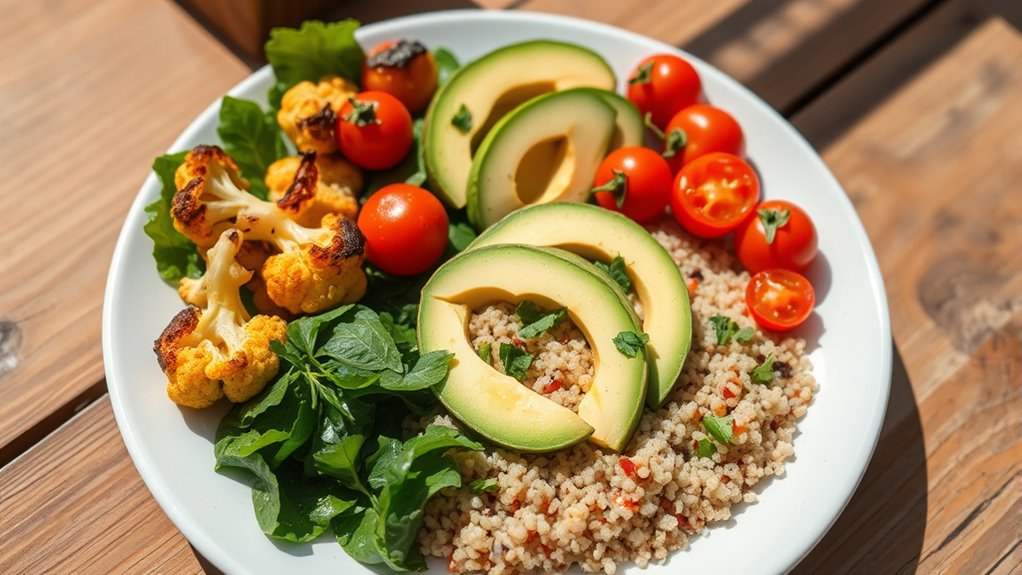

Adopting plant-based diets with delicious recipes helps you enjoy flavorful meals that also protect the planet. You can choose from hearty stews, veggie stir-fries, grain bowls, and plant-based proteins like lentils and meat alternatives that mimic traditional textures. By making these mindful choices, you reduce greenhouse gas emissions, conserve water, and support sustainable farming. Keep exploring to discover even more satisfying ways to eat eco-friendly without sacrificing flavor.

Get garden gear delivered free — and shop member deals
- Fast, free delivery on millions of items
- Access to Prime Big Deal Days deals on October 6–7
- Prime Video, Amazon Music and more included
Key Takeaways
- Plant-based recipes like lentil stews and grain bowls are flavorful and easy to prepare, making sustainable eating enjoyable.
- Incorporating meat alternatives reduces environmental impact while providing satisfying textures and flavors.
- Eating more plant foods conserves water, reduces greenhouse gases, and promotes eco-friendly farming practices.
- Customizable, nutrient-rich plant-based meals support personal health and environmental sustainability simultaneously.
- Choosing plant-based dishes helps protect ecosystems, promote biodiversity, and support a resilient, sustainable food system.

A plant-based diet focuses on consuming mostly or entirely foods derived from plants, including vegetables, fruits, grains, legumes, nuts, and seeds. When you embrace this way of eating, you’re not just choosing healthier options—you’re making a conscious decision to support a more sustainable planet. Meat alternatives play a significant role here, offering tasty, protein-rich options that mimic traditional meat but with a fraction of the environmental impact. These alternatives are often made from ingredients like soy, peas, or mushrooms, giving you the chance to enjoy familiar flavors while reducing reliance on animal agriculture. By incorporating plant-based proteins into your meals, you’re helping to lower greenhouse gas emissions, conserve water, and reduce land degradation caused by conventional farming practices.
Switching to a plant-based diet also means supporting sustainable farming methods. Unlike conventional farming, which often involves heavy use of chemicals, monoculture, and excessive water consumption, sustainable farming prioritizes soil health, biodiversity, and resource efficiency. When you choose plant-based meals, you’re encouraging farmers to adopt practices that are kinder to the environment, such as crop rotation, organic farming, and water conservation techniques. This shift helps preserve ecosystems and reduces pollution from runoff and chemical use. Plus, sustainable farming supports fairer labor practices and local economies, which means your dietary choices can have a positive ripple effect across communities.
Supporting sustainable farming methods helps protect ecosystems, reduce pollution, and promote fair labor practices and local economies.
Making delicious plant-based recipes isn’t complicated, and it’s an excellent way to explore new flavors and textures. Think hearty lentil stews, veggie stir-fries, grain bowls topped with roasted vegetables, and wraps filled with hummus and fresh greens. Many of these dishes can be easily customized to suit your taste, and they often require fewer ingredients and less prep time than traditional meat-based meals. Using meat alternatives can elevate your dishes, giving them a satisfying, meaty texture without the environmental toll. Incorporating raw foods can also add freshness and nutritional variety to your meals, further supporting sustainable eating habits. Not only do these recipes taste great, but they also demonstrate that eating sustainably doesn’t mean sacrificing flavor or satisfaction.
In the end, your choice to incorporate more plant-based foods, including meat alternatives, aligns with a broader goal of protecting the environment. Every meal becomes an act of kindness — toward the planet, future generations, and your own health. By choosing sustainable ingredients and supporting eco-friendly farming practices, you’re helping to create a more balanced, resilient food system. So, whether you’re cooking a quick weeknight dinner or planning a weekend feast, embracing plant-based recipes is a delicious step toward saving the planet one meal at a time.
As an affiliate, we earn on qualifying purchases.
Frequently Asked Questions
How Can I Ensure Adequate Protein Intake on a Plant-Based Diet?
To guarantee adequate protein intake, you should focus on incorporating diverse protein sources like beans, lentils, tofu, tempeh, nuts, and seeds into your meals. Proper meal planning helps you balance these foods throughout the day, making sure you meet your protein needs. By mixing different plant-based options, you’ll get all essential amino acids, supporting your health while enjoying delicious, planet-friendly recipes.
Are Plant-Based Diets Suitable for Athletes and Active Individuals?
You might wonder if plant-based diets suit athletes and active folks. The good news is, plant-based protein sources like beans, lentils, and tofu support athletic performance. With proper planning, you can meet your protein needs and boost energy levels. Many athletes thrive on plant-based diets, finding they enhance recovery and stamina. So, yes, a well-balanced plant-based diet can be perfect for maintaining and improving athletic performance.
What Are the Best Budget-Friendly Plant-Based Meal Options?
You can’t beat the power of affordable staples for budget-friendly plant-based meals. Think beans, rice, lentils, and seasonal vegetables—these ingredients turn into delicious, filling dishes without breaking the bank. When you master budget shopping, you’ll find versatile options that save money while nourishing your body. With a little creativity, you’ll discover that eating plant-based doesn’t have to be expensive; it’s a smart way to fuel your active lifestyle and save money.
How Do Plant-Based Diets Impact Gut Health and Digestion?
You might notice that plant-based diets boost your gut health by increasing microbiome diversity, which helps your digestion run smoothly. Eating more fiber from fruits, vegetables, and legumes encourages the production of digestive enzymes, making nutrient absorption more efficient. As your microbiome becomes more diverse, you’ll likely experience fewer bloating and discomfort, supporting better overall digestion and health.
Can Children Thrive on a Fully Plant-Based Diet?
It’s a surprising coincidence that many believe children can’t thrive on a fully plant-based diet, but with proper planning, they absolutely can. You need to address common plant-based myths, like nutrient deficiencies, by incorporating a variety of foods and dietary supplements when necessary. Ensuring they get enough protein, iron, and vitamins is key. When done right, kids can grow healthy, strong, and happy on a plant-based diet, just like anyone else.
Conclusion
Switching to a plant-based diet isn’t just good for your health—it’s also a powerful way to help the planet. Did you know that reducing meat consumption by just 20% could cut greenhouse gases by nearly 1 gigaton annually? Every meal you choose plant-based options, you’re making a difference. So, keep exploring delicious recipes and remember, every small change adds up to a healthier planet and a better future. Your choices truly matter!
Fall Picks
fall essentials
As an affiliate, we earn on qualifying purchases.