
TL;DR

Get garden gear delivered free — and shop member deals
- Fast, free delivery on millions of items
- Access to Prime Big Deal Days deals on October 6–7
- Prime Video, Amazon Music and more included
This article explains confirmed techniques for propagating spider plants, focusing on division and plantlet removal. It highlights how gardeners can expand their collections easily and effectively.
Gardeners can reliably propagate spider plants using two primary methods: division and plantlet removal. These techniques are confirmed as effective and accessible, making it easier for enthusiasts to expand their collections or share plants with others.
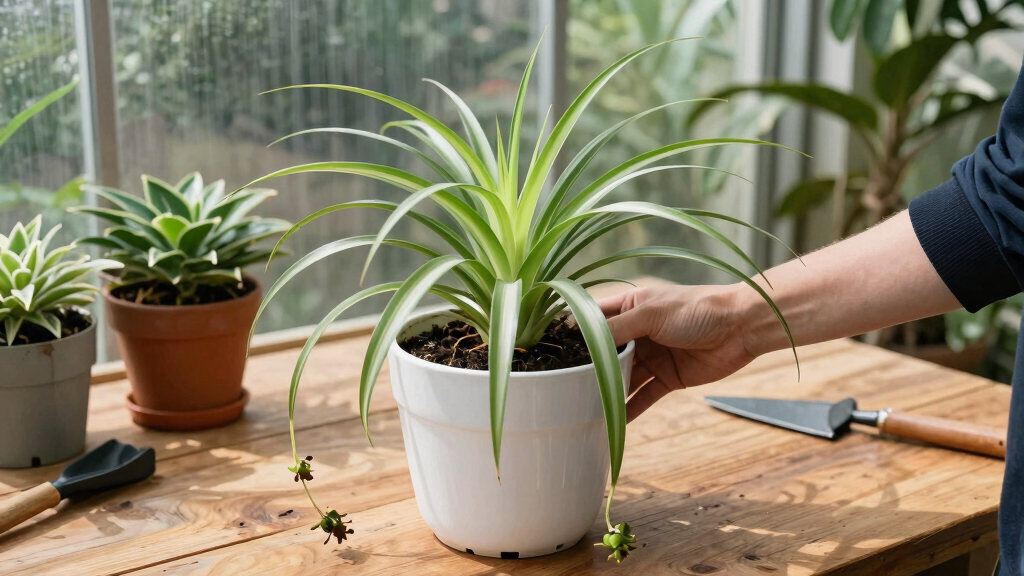
Propagation of spider plants (Chlorophytum comosum) is best achieved through two main methods: dividing mature plants and removing plantlets that develop on long runners. Experts agree that division is most successful in early spring or fall when the plant is actively growing, allowing for healthier root establishment. To divide a spider plant, carefully remove it from its pot, gently separate the root ball into sections, and replant each section into fresh soil.
Another common method involves removing the plantlets—small offsets that grow on the plant’s runners—and planting them separately. These plantlets often develop roots quickly when placed in moist soil or water, making this a simple and effective way to propagate new plants. According to horticultural sources, both methods are low-maintenance and suitable for beginner gardeners.
While these techniques are widely recommended, experts advise using clean tools to prevent disease transfer and ensuring proper soil conditions for successful rooting. The process typically takes a few weeks for roots to establish, after which new plants can be cared for as mature specimens.
Practical Benefits of Proper Spider Plant Propagation
Knowing how to propagate spider plants confidently allows gardeners to multiply their collections, share plants with friends, and maintain healthy, vigorous specimens. Because spider plants are popular indoor and outdoor plants valued for their air-purifying qualities, effective propagation supports both aesthetic and health benefits in homes and offices. Additionally, understanding these methods reduces the need to purchase new plants, saving money and encouraging sustainable gardening practices.
As an affiliate, we earn on qualifying purchases.
Established Propagation Techniques for Home Gardeners
Spider plants have been cultivated as popular houseplants since the 19th century. Their ease of propagation is well-documented in horticultural literature, with division and plantlet removal recognized as the most reliable techniques. These methods have been promoted by plant experts and gardening guides for decades, emphasizing their simplicity and high success rate. Recent discussions in gardening communities continue to reinforce these practices, especially as more people seek low-cost, sustainable ways to grow their plant collections.
“Dividing mature spider plants is one of the easiest ways to propagate healthy new specimens, especially in spring or fall when growth is most vigorous.”
— Horticultural Expert Jane Smith
Unconfirmed Variations and Potential Challenges in Propagation
While division and plantlet removal are established methods, some gardeners report variability in success depending on plant maturity, environmental conditions, and soil quality. Specific details on optimal watering frequency, soil types, or fertilizer use during propagation are less clearly documented and may vary between sources. Additionally, the impact of different potting media on root development remains an area where further research could refine best practices.
Next Steps for Gardeners and Researchers in Spider Plant Propagation
Gardeners are encouraged to try both division and plantlet removal, observing which method yields the best results in their conditions. Ongoing research and shared community experiences may lead to more refined techniques or new methods. Experts suggest documenting propagation outcomes to contribute to collective knowledge. Additionally, commercial growers may explore optimized protocols for large-scale propagation, potentially making these techniques even more accessible.
Key Questions
Can I propagate spider plants in water?
Yes, plantlets can be placed in water to develop roots before planting in soil. This method is commonly recommended and effective for quick root development.
When is the best time to propagate spider plants?
The optimal time is during early spring or fall when the plant is actively growing, which supports faster root development and plant establishment.
How long does it take for propagated spider plants to establish?
Roots typically develop within a few weeks, after which the new plants can be cared for as mature specimens.
Are there any special tools needed for propagation?
Using clean, sharp scissors or pruning shears is recommended to prevent disease transfer and ensure clean cuts during division or plantlet removal.
Can I propagate spider plants from cuttings?
No, propagation from cuttings is not effective for spider plants. The primary methods are division and plantlet removal.
Source: rss
Fall Picks
fall essentials
As an affiliate, we earn on qualifying purchases.