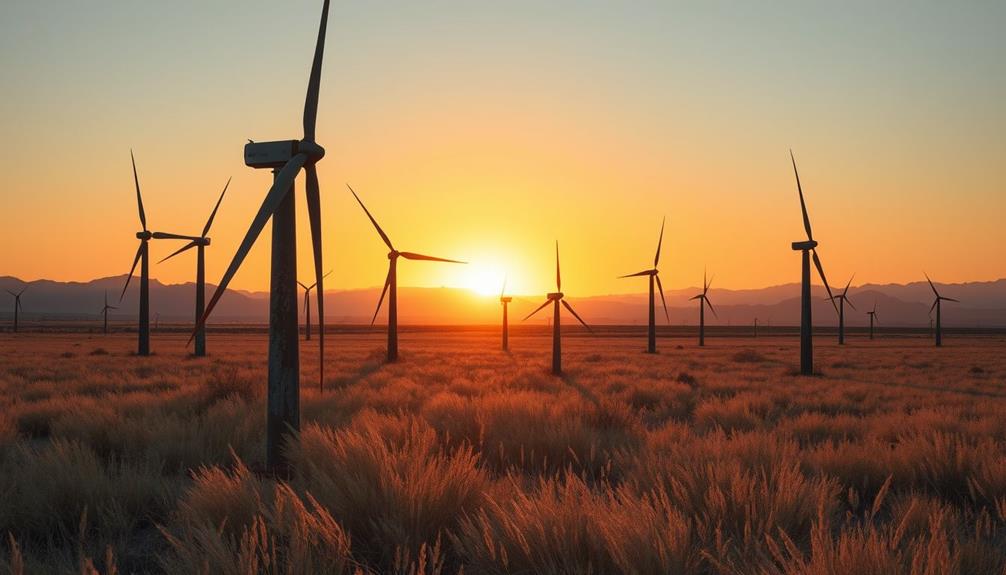
Wind turbine blades play an essential role in renewable energy, with lengths reaching up to 200 meters (656 feet) for offshore turbines. Most new turbines have rotor diameters exceeding 133.8 meters (438 feet), which enhances their power efficiency. The trend towards larger blades allows for greater energy capture while requiring fewer turbines for the same output, thereby reducing costs. As you explore further, you'll discover how these advancements in blade technology are shaping the future of wind energy and contributing to a cleaner, sustainable planet.

Get garden gear delivered free with Prime
- Fast, free delivery on millions of items
- Prime Video, Amazon Music and more included
- Member-only deals all year
Key Takeaways
- In 2023, the average rotor diameter of new wind turbines exceeds 133.8 meters (438 feet).
- GE's Haliade-X features blades measuring 107 meters (351 feet), comparable to a football field's length.
- Offshore turbine blades are projected to reach lengths of 200 meters (656 feet) for enhanced energy capture.
- Doubling the blade length can theoretically quadruple the power capacity of a turbine.
- Larger blades increase electricity generation capacity, reducing the number of turbines needed for the same output.
As an affiliate, we earn on qualifying purchases.
Wind Turbine Blade Length Overview

When it comes to wind turbine blades, their length has really taken off in recent years, transforming the landscape of renewable energy. In 2023, the average rotor diameter of new wind turbines exceeded 133.8 meters (about 438 feet), marking a significant leap from earlier installations. This increase in blade length is essential for harnessing more wind energy, as the weight of wind turbine blades affects their design and efficiency.
For instance, GE's Haliade-X turbine features blades that measure an impressive 107 meters (351 feet)—that's comparable to a football field!
Larger turbines are designed to capture more wind energy, and the relationship between blade length and power capacity is striking. When you double the length of wind turbine blades, you can increase the power capacity by a factor of four.
Offshore wind turbines often have even larger blades than their onshore counterparts, frequently exceeding half the height of the tower. This design maximizes energy capture, allowing for improved efficiency in harnessing wind energy.
As the industry pushes for advancements, these innovative changes in blade length are vital to enhancing the effectiveness of renewable energy solutions and meeting global energy demands.
Factors Influencing Blade Size

Considering the rapid advancements in wind turbine technology, several key factors influence blade size. First, the rotor diameter plays an essential role in harnessing wind power. Larger blades enhance energy efficiency by increasing the wind-swept area, which means that doubling the blade length can quadruple the power capacity.
This is why many companies opt for fewer large turbines instead of multiple smaller ones, greatly cutting down on space and maintenance costs. Additionally, as renewable energy technologies evolve, there's a growing demand for professionals skilled in AI Software Engineer Jobs to develop innovative solutions that improve turbine design and performance.
Air pressure and wind speed are also critical considerations. Higher wind speeds and lower air density can lead to better performance, but they also place additional stress on the blades, necessitating strong materials.
This brings us to material strength, which governs how much bending and flexing a blade can endure. Engineers constantly seek innovative materials that can withstand these forces while still being lightweight.
Ultimately, the interplay of these factors—like air pressure, wind speed, and material strength—determines the ideal size for turbine blades. As technology evolves, we can expect blades to grow even larger, pushing the boundaries of renewable energy generation.
The Largest Turbine Blades Today

The Largest Turbine Blades Today
As advancements in wind turbine technology continue to surge, today's largest turbine blades are pushing the limits of design and efficiency. The GE Haliade-X, for example, boasts turbine blades that measure an astounding 107 meters (351 feet) long—comparable to a football field.
This trend towards longer blades has taken the wind industry by storm, with 98% of new wind turbine installations in the U.S. featuring rotor diameters of 115 meters (380 feet) or larger as of 2023. Understanding the importance of investment strategies is essential as the industry grows, particularly in financing new technologies.
The average rotor diameter for new turbines has even surpassed 133.8 meters (approximately 438 feet), greatly increasing the area swept by the blades. These advancements aren't just about size; they're about maximizing energy generation.
The largest offshore wind turbine blades are specifically designed to optimize output, with future projections suggesting lengths could reach up to 200 meters (656 feet). It's fascinating to think that doubling the length of turbine blades can theoretically quadruple power capacity, underscoring the critical link between blade size and energy output.
Advantages of Larger Blades

Larger wind turbine blades offer notable advantages that transform energy generation. By increasing the wind swept area, these blades can capture more wind energy, greatly boosting the electricity generation capacity of turbines. In fact, doubling the length of turbine blades can increase power capacity by a factor of four, highlighting how essential blade size is for energy output.
Additionally, efficient energy production can be compared to the benefits of diversifying investments, such as using gold as a hedge against volatility in retirement portfolios, proving that strategic choices lead to better outcomes diversification of retirement portfolio.
As of 2023, the average rotor diameter of new turbines exceeds 133.8 meters (about 438 feet), reflecting a strong trend toward larger blades that enable higher energy production. With larger blades, you'll notice fewer turbines are needed to produce the same amount of electricity, leading to lower overall costs for wind energy production. This trend toward larger blades and higher energy production also signifies a shift in the industry toward more efficient and cost-effective wind energy solutions. Additionally, the increasing average rotor diameter reflects the ongoing evolution of wind turbine sizes, with companies continually working to optimize performance and output. As technology advances, we can expect to see even larger wind turbine sizes in the future, further contributing to the expansion of wind energy as a prominent renewable energy source.
This efficiency isn't just a recent development; since 1998-1999, rotor swept areas have increased by approximately 670%, showcasing the remarkable gains associated with larger turbine blades.
Transportation and Installation Issues

The impressive growth in turbine blade size brings significant challenges in transportation and installation. You'll quickly realize that moving these colossal wind turbine blades isn't a straightforward task. The logistics involved often classify them as oversized shipments, impacting route planning and costs. This mirrors the complexities faced in other industries, such as those seen in precious metal investments, where careful planning and execution are vital for success.
Consider these key issues:
- High costs: Transporting a single blade can hit $4 million, with long-haul transport exceeding $100,000.
- Route complexity: Coordinating transportation across state and county lines adds layers of difficulty.
- Disassembly needs: Breaking down turbine components for efficient delivery complicates the logistics further.
- Multi-axle trailers: You can't fold blades, so specialized equipment is required to handle their massive size.
- Escort services: State laws often mandate escort vehicles for oversized loads, adding to the time and expense.
Whether you're looking at average short-haul transport costs between $30,000 to $40,000 or grappling with the challenges of getting these blades to their destination, the complexity of the process is undeniable.
Each step in transporting wind turbine blades requires meticulous planning and coordination to guarantee successful installation.
Future Trends in Blade Design

With advancements in technology, wind turbine blade design is evolving rapidly to meet the demands of a sustainable future.
You'll notice that the trend is leaning toward longer blades, which can greatly increase the wind swept area. This increase translates into a greater power capacity, making these structures more efficient in harnessing renewable energy. The push for ethical hacking in cybersecurity emphasizes the importance of securing these energy systems against potential threats, ensuring their reliability and performance.
Research is underway to develop blades made from sustainable materials like bamboo and mycelium, aiming for compostable alternatives to traditional materials. The UpWind Project is pushing the boundaries of current technology, proposing ambitious designs for next-generation offshore wind turbines with blades up to 200 meters long.
Moreover, prototypes are being tested for their structural resilience against extreme weather conditions, ensuring they can withstand winds up to 85 miles per hour. These innovations not only enhance performance but also align with the growing focus on sustainability in blade design.
As the industry moves forward, you can expect to see the best wind turbine designs that prioritize both efficiency and environmental impact, paving the way for a cleaner energy future.
Frequently Asked Questions
How Long Are the Blades on the Big Wind Turbines?
The blades on big wind turbines can reach impressive lengths, often exceeding 100 meters. These massive blades allow turbines to harness more wind energy, greatly boosting their power generation potential and efficiency in renewable energy production. Innovative wind turbine technology has also led to the development of lighter, more durable materials for turbine blades, allowing them to capture even more energy from the wind. Additionally, advancements in aerodynamic design have enabled turbines to operate more efficiently, even at lower wind speeds. As a result, the potential for wind energy to become a major source of clean, renewable power has never been greater.
How Long Are the Blades on a 2 MW Wind Turbine?
The blades on a 2 MW wind turbine typically range from 40 to 60 meters long. Their size helps capture wind energy efficiently, maximizing power output by increasing the rotor's swept area considerably.
How Long Is a 10 MW Wind Turbine Blade?
Did you know a 10 MW wind turbine can have blades up to 107 meters long? These massive blades greatly enhance energy capture, making them essential for efficient renewable energy generation in today's growing energy landscape.
Are Wind Turbine Blades Bad for the Environment?
Yes, wind turbine blades can be bad for the environment. Their disposal raises landfill concerns, and sourcing materials often contributes to deforestation. However, research is underway to create more sustainable, eco-friendly alternatives for future blades.
Conclusion
In summary, as you explore the world of wind turbine blades, you'll find that bigger isn't just better; it's vital for maximizing energy capture. While some believe that size alone guarantees efficiency, it's important to evaluate factors like design and materials. As technology advances, the future of wind energy hinges on innovative blade designs that balance scale with performance. So, keep an eye out—what seems massive today might just be the beginning of an even larger revolution!
Fall Picks
fall essentials
As an affiliate, we earn on qualifying purchases.